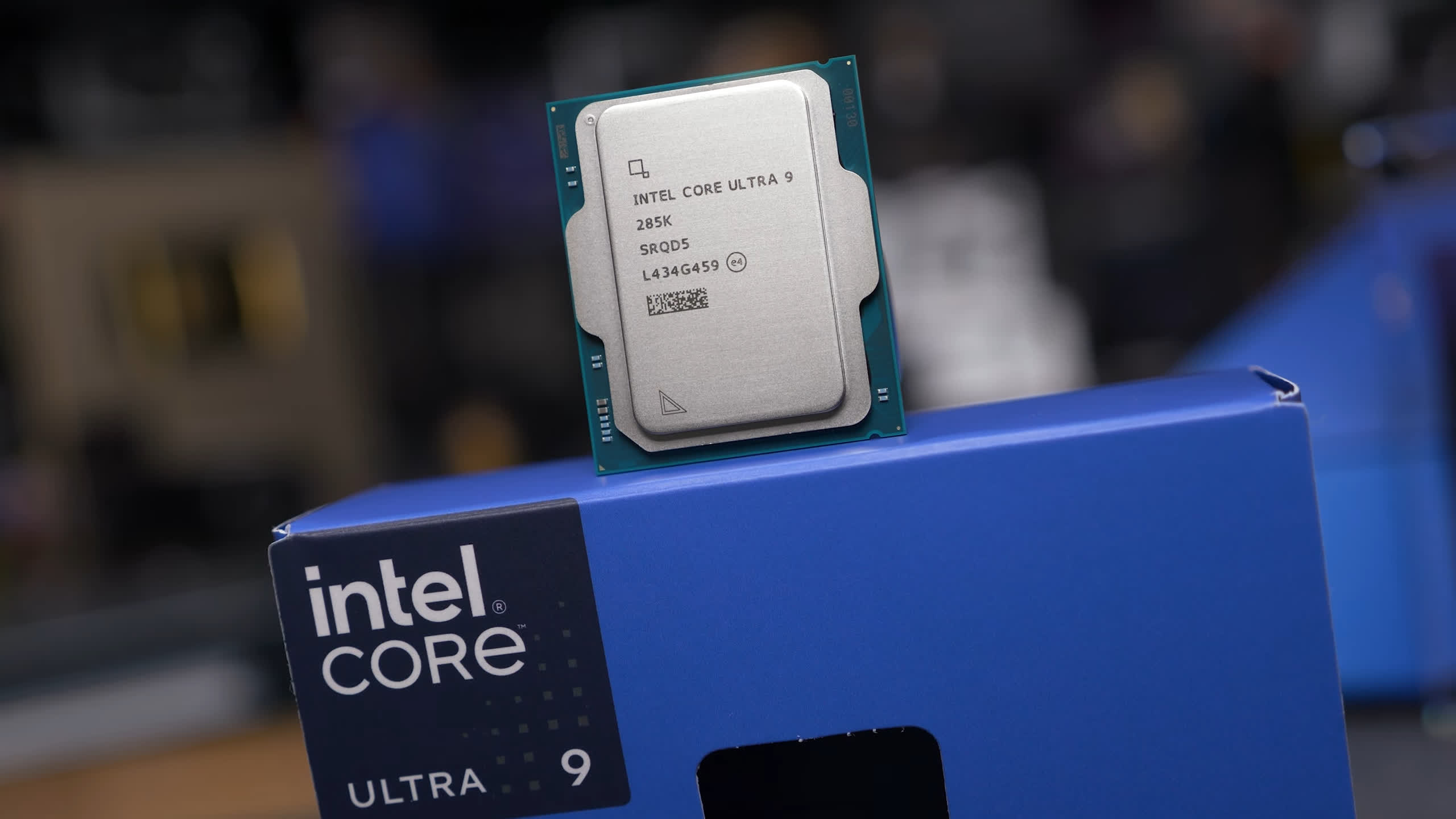
Winners & losers: After years of losing ground to AMD, Intel finally regained a significant chunk of desktop CPU market share from its bitter rival in Q3 2026. The shift marks an unexpected turnaround for Intel amid a weaker broader outlook for the PC market.
According to data from Mercury Research, Intel reclaimed around 5.1 percentage points of desktop CPU market share from AMD in Q3 2026, pushing its total share above 70% and cutting AMD's to below 30% for the first time in years. The report suggests that Intel now holds approximately 70.1% of the desktop CPU market, while AMD accounts for the remaining 29.9%.
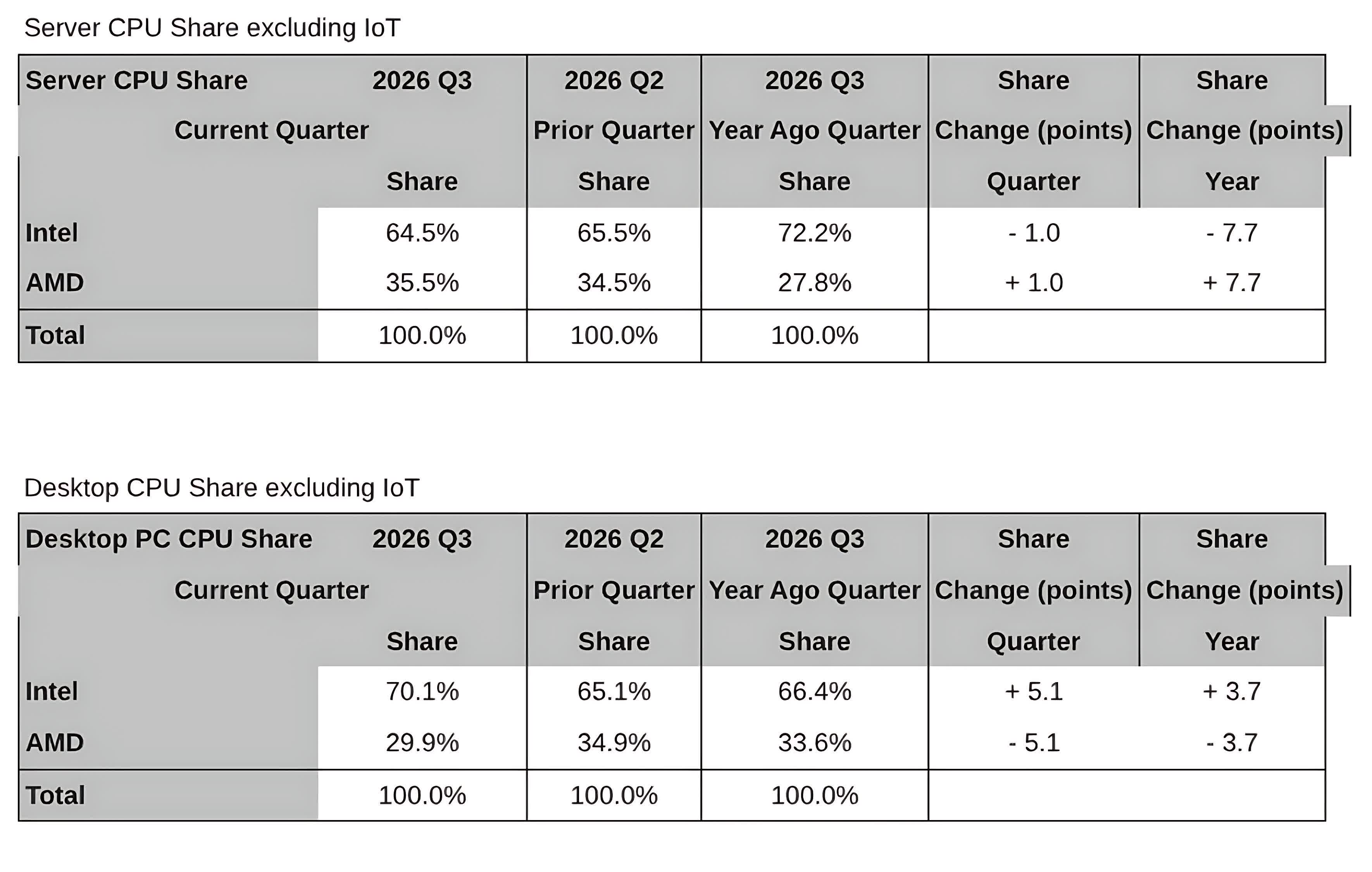
Intel also dominates the lucrative server market, but it continued to lose significant market share to AMD in this segment. Intel reportedly accounted for 64.5% of all server CPUs sold between July and September, down from 72.2% in Q3 2025. The sequential figures were only slightly better, with Intel's market share falling one percentage point from 65.5% in Q2 2026.
AMD, the world's only other mainstream x86 chip vendor, was the obvious beneficiary, with its market share rising 7.7% year-over-year to 35.5%. Sequentially, the company's share grew by one percentage point from 34.5% in Q2 2026, suggesting a marked slowdown compared to previous quarters.
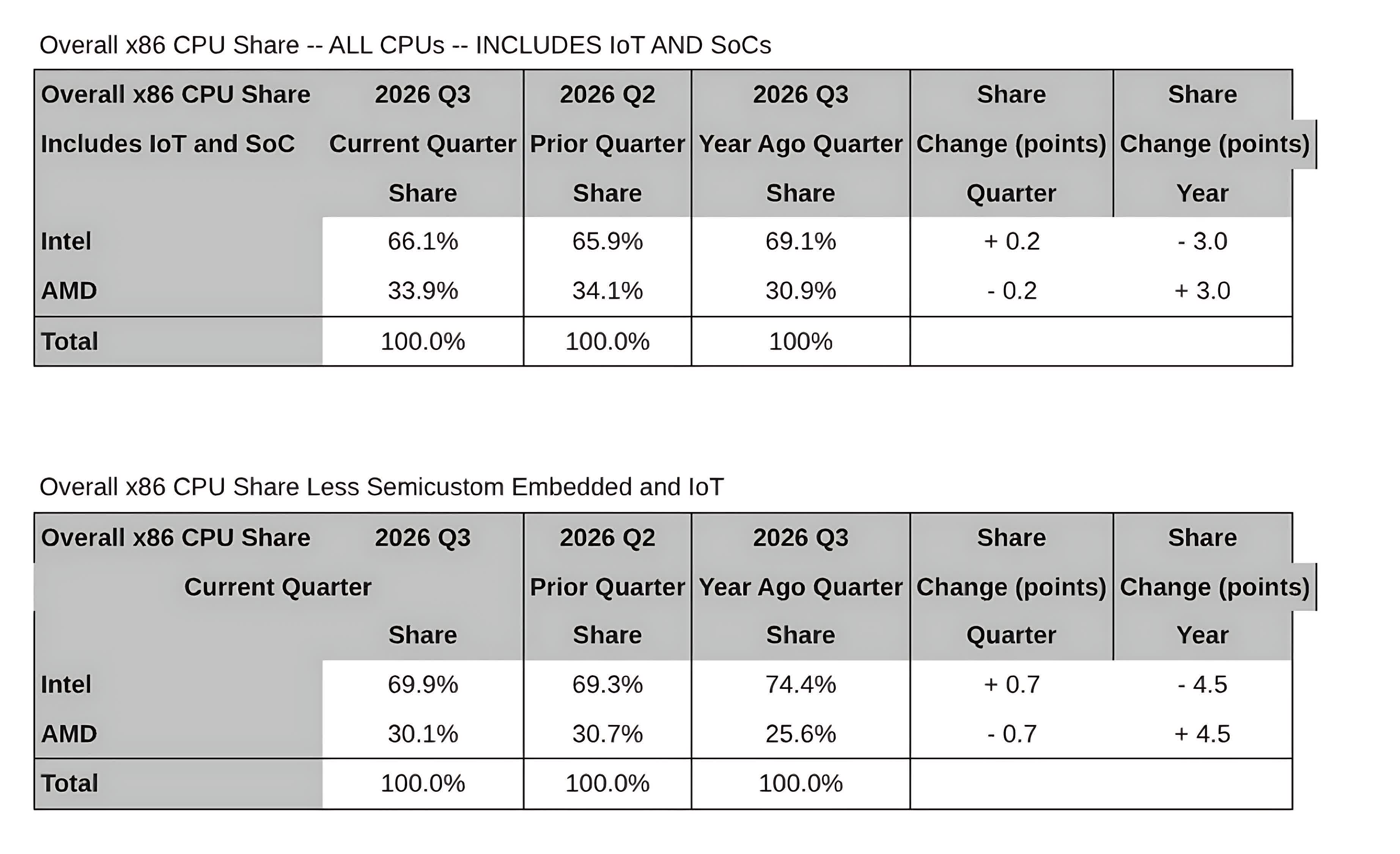
While the aforementioned data excludes embedded SoCs and the IoT market, Intel reportedly performed well in this segment, too. According to the report, Intel's overall CPU market share – including IoT and SoCs – grew by 0.2 percentage points from Q2 2026 to reach 66.1%. However, on a year-over-year basis, its market share fell by 3 percentage points from 69.1% in Q3 2025.
Analysts at Mercury Research believe the primary reason behind Intel's sudden turnaround was the company's decision to reallocate manufacturing capacity toward desktop processors amid lower demand for laptop CPUs. According to the researchers, Intel capitalized on a surge in desktop CPU demand during the third quarter after "under-supplying this market earlier in 2026."
Mercury's researchers also put forward another theory to explain the surprising turnaround. They suggest that Intel maintained strong sales volumes through OEM and system builder channels during the quarter, even as AMD's volumes suffered amid a downturn in its bread-and-butter gaming and enthusiast markets. The slowdown was reportedly driven by soaring PC hardware prices and supply constraints affecting gaming CPUs.
AMD's increasing focus on the high-margin data center market also reportedly hurt its position in the consumer desktop segment. Despite acknowledging that it was unable to meet retail demand, the company prioritized manufacturing capacity and growth in data center and AI chips over consumer desktop volumes, aiming to surpass Intel in total quarterly revenue by the end of 2026.