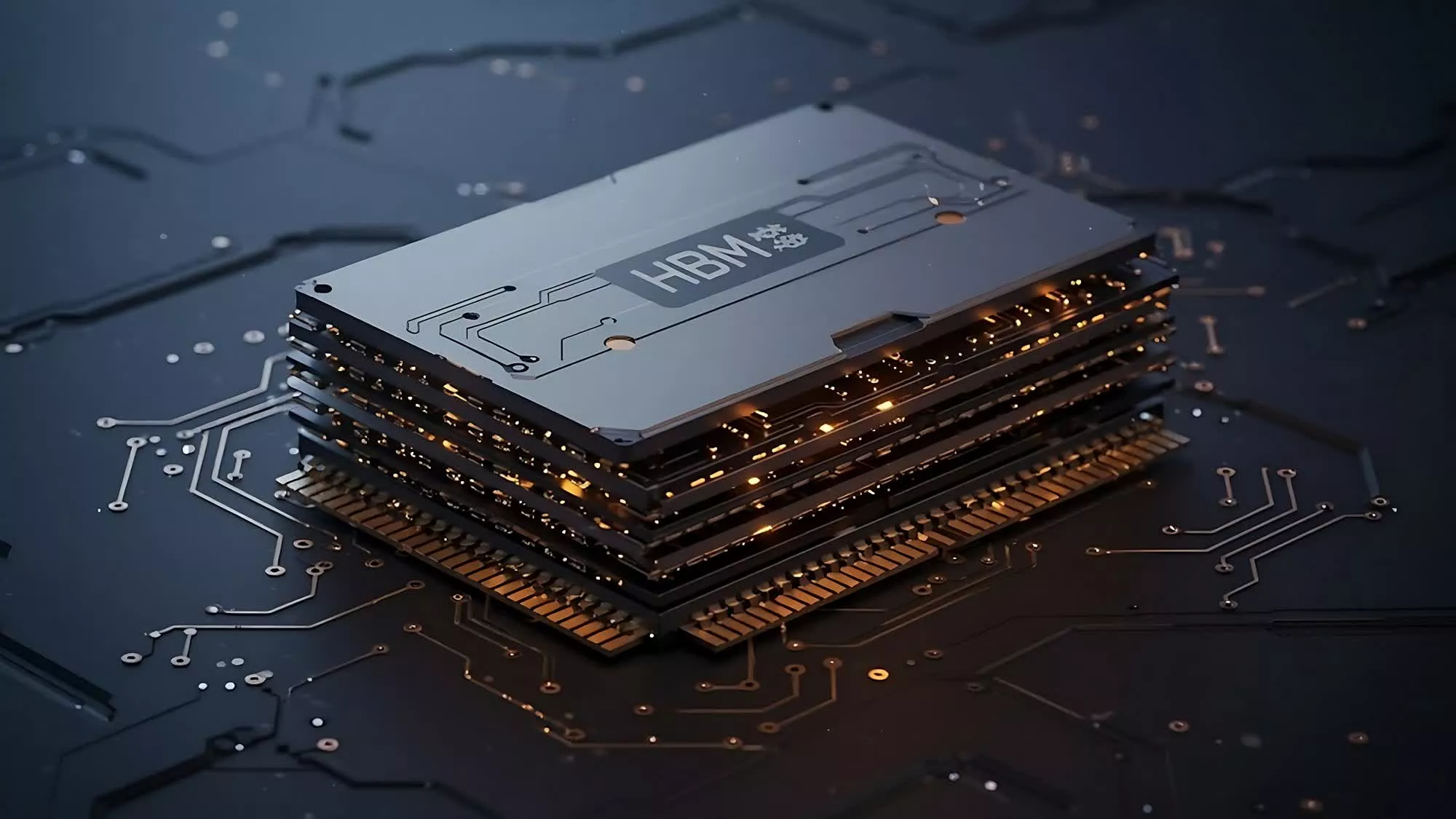
Forward-looking: Tech giant Huawei will reportedly present a white paper on its in-house HBM chip design that some industry insiders speculate could outperform existing products from market leaders Samsung, SK Hynix, and Micron. The presentation will be made at the International Solid-State Circuits Conference in San Francisco on February 16, 2027.
Huawei's novel HBM design reportedly supports twice the data-pin density of the current products from the three leading players. According to Bloomberg, the new interface uses 4,096 data pins split across 64 channels - twice the width of the 2,048-bit interface of existing HBM products from Samsung and Hynix.
To pack twice as many connections into the same physical footprint, Huawei is reportedly using five-layer wafer-to-wafer hybrid bonding to fuse memory controllers directly onto stacked DRAM dies. In theory, the new architecture could deliver higher memory bandwidth and better efficiency, allowing more data to be transferred to the processor at the same time while consuming less power.
If the theoretical improvements translate into real-world gains, Huawei's HBM chips could be better suited for model training, AI inference, data ingestion, and other complex tasks than competing products. However, five-layer wafer-to-wafer hybrid bonding could be difficult to scale, especially without access to advanced lithography, so it remains to be seen how Huawei will overcome the challenge.
Despite the promise of faster and more efficient HBM technology, it's important to exercise caution about Huawei's new design, as tech companies - both hardware manufacturers and software vendors - are known to announce their research results extremely early in the developmental phase, often without an actual working prototype or a sandbox build for external partners.
Huawei's move to design its own high-bandwidth memory is part of a greater push from Beijing to establish domestic semiconductor capabilities amid crippling trade restrictions by the US, which prevent established chipmakers and memory manufacturers from supplying hardware to mainland China, ostensibly over national security concerns.
Despite facing a multitude of sanctions from the US government over potential national security concerns, Huawei has gone from strength to strength in recent years, developing its own processors, AI accelerators, data center supernode architectures, operating systems, AI and Development Frameworks, and domestic EDA tools to bypass US export controls and Entity List restrictions.