The takeaway: Cybercriminals are hiding infostealer malware inside fake Roblox cheat tools, and a child who downloads one may hand over a parent's banking logins and work email along with the game account. A Cybernews analysis of search data found more than 22 million cheat-related Roblox searches between 2018 and 2026, which gives attackers a very large pool of potential victims. Bitdefender and SOC Prime have each documented campaigns this year in which the counterfeit tools did their advertised job while quietly stealing data.
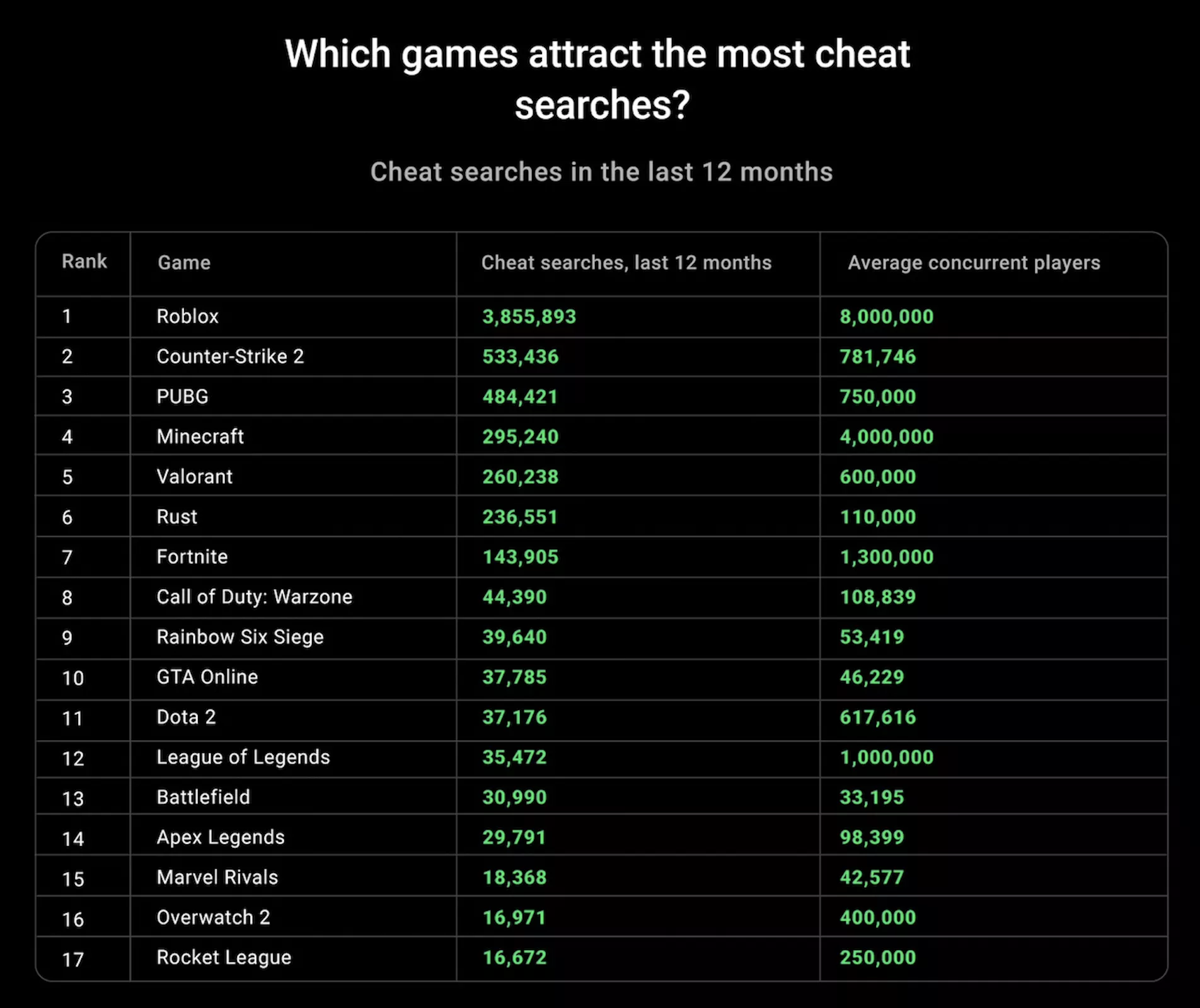
Cybernews measured demand by tracking how often people searched for cheat-related terms on Google and Yandex. It covered 17 games in 184 countries, using the most popular phrases in English and in local languages. Roblox accounted for over half of all the cheat searches. Adjusted for audience size, the platform drew 482 cheat searches per 1,000 players, ahead of Valorant at 434 and Call of Duty: Warzone at 408. Minecraft came in at 74.
The appeal of a free shortcut is easy to see. Roblox costs nothing to download, but experiences inside it can put top weapons, VIP perks and rare items behind paywalls of roughly $5 to $50.
Roblox reported average spending of $12.29 per player in the third quarter of 2026, when it counted 138 million daily active users. Children without access to a credit card look to YouTube and Google for scripts that automate the grinding, and that is where the trouble starts.
Cybernews argues that young players have been conditioned to dismiss Windows Defender warnings triggered by Roblox script executors. Many grant administrator permissions to unverified files pulled from YouTube and Discord servers. Attackers count on that habit.
Bitdefender documented the approach in August. Fake "undetected" versions of the popular Xeno executor circulated through gaming forums and Discord communities. The attackers recreated the full Xeno directory structure, used plausible filenames and included genuine-looking Lua scripts, so the package looked like the real tool.
Credit: Cybernews
The final payload was an information stealer. It went after Roblox accounts, browser data, and cryptocurrency wallets. Cybernews says malware of this kind can also take saved browser passwords, hijack Discord tokens, log keystrokes and capture webcam footage.
SOC Prime reported a similar case in June. A malicious Roblox package disguised itself as an AI-powered cheat and delivered the Yuta and Solara stealers. The loader reportedly disabled or weakened Windows Defender and kept remote-access capabilities. That would let an attacker return to an infected machine after the first theft.
The stolen data has a market. In March, a threat actor listed 50 million allegedly stolen Roblox logins for sale. Cybernews says the records were likely harvested from infected devices by infostealers and calls the listing the tip of the iceberg.
The exposure reaches past the game because children often play on a shared family computer. A browser on that machine may hold a parent's banking logins, work email and personal files. Malware running with administrator rights can reach all of it.
Families have already faced large bills from Roblox spending. An 8-year-old in Ontario ran up $2,000 in unauthorized charges on his grandmother's credit card. In another widely shared case, a 9-year-old spent $118,000 on his father's corporate card promoting a Roblox YouTube channel. Those cases involved unauthorized spending. An infostealer can compromise the same payment information without any purchase being made.
To mitigate the risks, Cybernews advises parents to set up a limited Windows profile for children who play Roblox. That restricts administrator privileges, making it harder for children to install certain types of software or bypass security controls. Parents can also monitor internet traffic and browser history for signs of cheat searches. Linking a parental account lets them control chats and spending.