Sign up for a new account or log in here:
There is no single event responsible for ousting AMD from its lofty position in early 2006. The company's decline is inextricably linked to its own mismanagement, some bad predictions, its own success, as well as the fortunes and misdeeds of Intel.
AMD has long been subject of polarizing debate among technology enthusiasts. The chapters of its history provide ample ammunition for countless discussions and no small measure of rancour. Considering that it was once considered an equal to Intel, many wonder why AMD is failing today. However, it's probably fairer to ask how the company has survived so for long -- a question we intend to explore as we revisit the company's past, examine its present and gaze into its future.
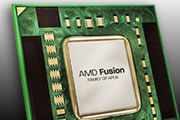
AMD has continued refining its Fusion offerings since launching the first APUs early last year. Just four months ago the company launched Trinity for mobile platforms -- arguably where its APUs provide the most value.
Now AMD is finally prepared to offer a desktop version, which brings a new socket and a new high-end chipset. Given that Piledriver improved Bulldozer's power consumption, we expect Trinity to be more efficient than Llano, while Cayman's VLIW4 architecture should boost the GPU's speed -- or so we hope.
Following in the footsteps of Brazos, AMD is now ready to unleash its bigger brother. Codenamed Llano, the new arrival resides in AMD's Lynx platform and packs four Husky cores (very similar to what's inside Athlon II processors), along with a robust GPU based on the Evergreen family's Redwood architecture.
As a refresher, the Evergreen GPUs powered AMD's last-generation Radeon HD 5000 graphics cards. Llano's graphics core feature anywhere from 160 to 400 stream processors, which should make them considerably more powerful than any other integrated graphics solution we have seen to date.
| Trending | Featured |
Get free exclusive content, learn about new features and breaking tech news.
TechSpot on: