also @ TechSpot: Asus' new lineup of Z87 Haswell motherboards revealed

TechSpot News

nvidia articles


Nvidia Shield arrives in June for $349, pre-orders open now (update)

Nvidia Shield arrives in June for $349, pre-orders open now (update)
  • Posted May 17, 2013, 9:09 AM by Jose Vilches | Filed in Gaming, Hardware With Video
  • Nvidia has decided to open pre-orders today instead of May 20th as originally announced. You can buy yours for $350 at Newegg, GameStop and Nvidia's Shield site. The estimated ship date also appears to have moved up from 'end of June' to June 4th.

HP unveils new Android and Windows hybrid notebooks

HP unveils new Android and Windows hybrid notebooks
  • Posted May 15, 2013, 10:30 AM by Shawn Knight | Filed in Mobile Computing
  • HP on Wednesday unveiled two new hybrid laptops, the Android-powered Slatebook x2 and the HP Split x2 that runs Windows 8. The former system appears to be positioned to compete directly with the Asus Transformer Pad Infinity while the Windows…

Nvidia behind Windows RT with plans to launch multiple tablets

Nvidia behind Windows RT with plans to launch multiple tablets
  • Posted May 10, 2013, 10:58 AM by Dave LeClair | Filed in Industry News, Microsoft
  • Nvidia believes in Windows RT and plans to keep making Tegra ARM-based processors for the operating system going forward. Even in spite of lackluster sales, especially when compared to other models on the market, the company thinks that the platform is…

BlueStacks unveils subscription-based Android console GamePop

BlueStacks unveils subscription-based Android console GamePop
  • Posted May 9, 2013, 11:30 AM by Shawn Knight | Filed in Gaming With Video
  • BlueStacks, the company known for helping users run Android apps on the Mac and PC, is preparing to launch an Android gaming console designed to compete directly with those from Ouya, Gamestick and even Nvidia. The free (well, sort of)…

AMD Radeon HD 7990 Review: Dual GPU Comeback

AMD Radeon HD 7990 Review: Dual GPU Comeback
  • Posted April 23, 2013, 11:00 PM by Steven Walton | Filed in TechSpot, Hardware Breaking News
  • The current generation AMD GPU series collectivelly known as "Southern Islands" were released over a year ago, with the beginning of its rollout in January 2012. Sixteen months later, the Radeon HD 7000 series is still very much relevant, as AMD continues to release new models under the same GPU family.

    Although it's been over a year since AMD launched the Radeon HD 7970, we are just getting an official dual-GPU version. The Radeon HD 7990 takes a pair of 7970 GPUs with overclocked cores and memory, packing 8.2 TFLOPS computer power, 6GB GDDR5 and an upgraded PEX bridge to connect the two GPUs.

Watch this: Mind-blowing water simulation is now a reality

Watch this: Mind-blowing water simulation is now a reality
  • Posted April 23, 2013, 10:36 AM by Gergo Vas | Filed in Gaming, Hardware With Video
  • Simulating the physics of water has always been tricky and game engines sometimes still have to use dodgy mechanics to make it feel real. But the above demonstration of this new fluid simulation technique proves that slowly but surely we're getting there.

GeForce GTX 650 Ti Boost Review, SLI Performance Tested

GeForce GTX 650 Ti Boost Review, SLI Performance Tested
  • Posted April 22, 2013, 3:16 AM by Steven Walton | Filed in TechSpot, Hardware
  • The GTX 650 Ti was our favorite $100 - $150 graphics card last year, as it thrashed the Radeon HD 7770, its direct competitor. Then last month AMD decided to attack the $150 price point with a new HD 7790 GPU, but the reaction didn't take long to arrive.

    Just a week later Nvidia officially countered by releasing the poorly named GeForce GTX 650 Ti Boost, now the third graphics card to carry the GTX 650 name. At $170, the GeForce GTX 650 Ti Boost sits between the Radeon HD 7790 and the 7850. In terms of performance, we actually expect the GeForce GTX 650 Ti Boost to be a lot faster than the GTX 650 Ti, even when it's based on the same GK106 architecture.

The History of the Modern Graphics Processor, Part 4: The Coming of General Purpose GPUs

The History of the Modern Graphics Processor, Part 4: The Coming of General Purpose GPUs
  • Posted April 16, 2013, 10:05 PM by Graham Singer | Filed in TechSpot, Hardware
  • With DX10's arrival, vertex and pixel shaders maintained a large level of common function, so moving to a unified shader arch eliminated a lot of unnecessary duplication of processing blocks. The first GPU to utilize this architecture was Nvidia's iconic G80.

    Four years in development and $475 million produced a 681 million-transistor, 484mm² behemoth -- first as the 8800 GTX flagship and then with cards aimed at several segments. Aided by the new Coverage Sample anti-aliasing (CSAA) algorithm, Nvidia saw its GTX demolish every single competitor in outright performance.

Nvidia reportedly planning to offer Metro: Last Light with GeForces

Nvidia reportedly planning to offer Metro: Last Light with GeForces
  • Posted April 15, 2013, 12:00 PM by Matthew DeCarlo | Filed in Gaming, Hardware
  • Nvidia may be preparing to mount a counterattack against AMD's "Never Settle" game bundle initiative, according to TechPowerUp. The site reports that it has learned Nvidia is "frantically" looking to address its rival's program, which has been largely popular among…

Nvidia demonstrates next generation Kepler Mobile graphics

Nvidia demonstrates next generation Kepler Mobile graphics
  • Posted April 12, 2013, 10:30 AM by Shawn Knight | Filed in Gaming, Hardware With Video
  • Nvidia’s recent investor day was the perfect platform for CEO Jen-Hsun Huang to showcase the firm’s next generation mobile chip. Known as Kepler Mobile, the upcoming mobile hardware is derived from the high-end Kepler architecture that Nvidia uses for current-generation…

The History of the Modern Graphics Processor, Part 3: The Nvidia vs. ATI era begins

The History of the Modern Graphics Processor, Part 3: The Nvidia vs. ATI era begins
  • Posted April 10, 2013, 1:49 AM by Graham Singer | Filed in TechSpot, Hardware With Video
  • With the turn of the century the graphics industry bore witness to further consolidation. Where 3dfx was once a byword for raw performance, its strengths before its dismissal laid in its full screen antialiasing image quality. By the time 2001 dawned, the PC graphics market consisted of a discrete card duopoly (Nvidia and ATI), with both of them in addition to Intel supplying the vast majority of integrated graphics chipsets.

    Prior to the Voodoo 5’s arrival, ATI had announced the Radeon DDR as “the most powerful graphics processor ever designed for desktop PCs.” Previews of the card had already gone public on April 25, and only twenty-four hours later Nvidia countered with the announcement of the GeForce 2 GTS (GigaTexel Shader).

Google's Nexus 7 refresh pegged for July, might drop Nvidia Tegra

Google
  • Posted April 3, 2013, 9:27 AM by Matthew DeCarlo | Filed in Hardware, Mobile Computing
  • According to sources speaking with Reuters, Google plans to launch its next-generation 7-inch tablet this July and it could get even more aggressive on pricing. Based on current information, the search giant could be targeting an aggressive $149 starting rate,…

The History of the Modern Graphics Processor, Part 2: 3Dfx Voodoo, the game-changer

The History of the Modern Graphics Processor, Part 2: 3Dfx Voodoo, the game-changer
  • Posted April 3, 2013, 3:34 AM by Graham Singer | Filed in TechSpot, Hardware With Video
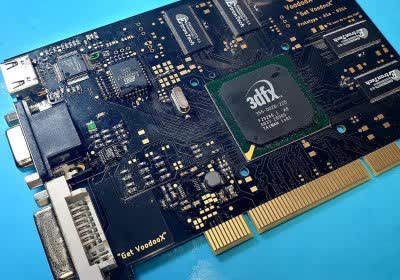
  • Launched on November 1996, 3Dfx's Voodoo graphics consisted of a 3D-only card that required a VGA cable pass-through from a separate 2D card to the Voodoo, which then connected to the display. Voodoo Graphics revolutionized personal computer graphics nearly overnight and rendered many other designs obsolete, including a vast swathe of 2D-only graphics producers.

    The 3D landscape in 1996 favoured S3 with around 50% of the market. That was to change soon, however. It was estimated that 3Dfx accounted for 80-85% of the 3D accelerator market during the heyday of Voodoo’s reign. Later on Nvidia would revive with the RIVA series and eventually land their greatest success with the first GeForce graphics card.

BioShock Infinite Tested, Benchmarked

BioShock Infinite Tested, Benchmarked
  • Posted April 1, 2013, 3:00 PM by Steven Walton | Filed in TechSpot, Gaming
  • Three years having passed since BioShock 2 and the dawn of a new console generation on the horizon, BioShock Infinite has taken the opportunity to mix things up. Along with DX11 effects, folks playing on PC can look forward to higher resolution textures and a healthy range of customization over settings like anti-aliasing, texture detail and filtering, dynamic shadows, post-processing, and so on.

    Our Bioshock Infinite test comprises 24 DirectX 11 graphics card configurations from AMD and Nvidia covering a wide range of prices, from the affordable to the ultra-expensive.

Nvidia announces five new Kepler-based GeForce 700M GPUs

Nvidia announces five new Kepler-based GeForce 700M GPUs
  • Posted April 1, 2013, 12:00 PM by Matthew DeCarlo | Filed in Mobile Computing, Hardware
  • Nvidia has expanded its notebook graphics lineup with a handful of new models that should be rolling out in systems from major vendors over the coming weeks and months. All five new parts are members of the Kepler-based GeForce 700M…

Activision demos incredible lifelike facial rendering technology

Activision demos incredible lifelike facial rendering technology
  • Posted March 28, 2013, 10:00 AM by Shawn Knight | Filed in Gaming With Video
  • Activision’s research and development team has been working hard as of late to produce what they are calling next generation character rendering. The company showed off the new technology at the Game Developers Conference and although the video clip on…

New GeForce WHQL driver boosts Bioshock: Infinite, Tomb Raider

New GeForce WHQL driver boosts Bioshock: Infinite, Tomb Raider
  • Posted March 25, 2013, 3:30 PM by Rick Burgess | Filed in Gaming, Hardware
  • Nvidia just published its WHQL-certified 314.22 GeForce drivers. Simply put, if your PC is armed with a GeForce graphics card and you've recently picked up either Tomb Raider or Bioshock: Infinite -- you're going to want this update.

Future Nvidia 'Volta' GPU has stacked DRAM, offers 1TB/s bandwidth

Future Nvidia
  • Posted March 20, 2013, 9:30 AM by Matthew DeCarlo | Filed in Hardware
  • Nvidia has updated its public GPU roadmap, revealing new details about upcoming products including a graphics solution that will purportedly offer about four times the memory bandwidth of the new $1,000 GeForce GTX Titan. Codenamed "Volta," the GPU family is…

SimCity Tested, Benchmarked

SimCity Tested, Benchmarked
  • Posted March 19, 2013, 1:11 AM by Steven Walton | Filed in TechSpot, Gaming
  • Normally when we benchmark a first person shooter, finding a good portion of the game to test with is simply a matter of playing through the game until we find a section that is rather demanding. But with SimCity things were considerably more complex and time consuming.

    A city with few sims will see graphics cards such as the GeForce Titan or GTX 680 render massive frame rates because they are not being capped by the CPU (yet). As with most simulation and strategy games, SimCity is CPU dependent and overclocking should result in a healthy boost if needed. More inside.

AMD: Radeon HD 7790 to be 10% slower than 7850, 7990 prototype "ready"

AMD: Radeon HD 7790 to be 10% slower than 7850, 7990 prototype "ready"
  • Posted March 12, 2013, 7:00 PM by Rick Burgess | Filed in Gaming, Hardware
  • It's no surprise AMD plans to fill the ill-strategized void left somewhere between its Radeon HD 7700 and 7850 offerings -- a space where Nvidia's GTX 650 Ti is likely getting comfortable. According to hardware.info though, at a recent CeBIT conference…

Tomb Raider Tested, Benchmarked

Tomb Raider Tested, Benchmarked
  • Posted March 12, 2013, 3:24 AM by Steven Walton | Filed in TechSpot, Gaming
  • Although this year's Tomb Raider reboot made our latest list of most anticipated PC games, I must admit that it was one of the games I was least looking forward to from a performance perspective because of previous titles' poor showing.

    However, we were relieved to learn that Tomb Raider supports DirectX 11, which brings access to advanced rendering technologies such as depth of field, hd ambient occlusion, hardware tessellation, and super-sample anti-aliasing. Additionally, compared to the diluted console versions, the PC build offers better textures as well as AMD's TressFX real-time hair physics system.

Nvidia PhysX and APEX support coming to the PlayStation 4

Nvidia PhysX and APEX support coming to the PlayStation 4
  • Posted March 7, 2013, 2:00 PM by Shawn Knight | Filed in Gaming
  • Nvidia has announced support for Sony’s recently-unveiled PlayStation 4 in the form of PhysX and APEX software development kits. These SDKs are used to provide collision detection and simulation of rigid bodies, fluids, clothing and particle systems in a number…

Testing Nvidia's $1,000 Graphics Card: GeForce GTX Titan Review

Testing Nvidia
  • Posted March 7, 2013, 1:44 AM by Steven Walton | Filed in TechSpot, Hardware
  • The new GeForce GTX Titan carries a GK110 GPU with a transistor count that has more than doubled from the GTX 680's to a staggering 7.1 billion The part has 25% to 50% more resources at its disposal, including 2688 stream processors (up 75%), 224 texture units (also up 75%) and 48 raster operations (a healthy 50% boost).

    It's worth noting that there's "only" estimated to be a 25% to 50% performance gain because the Titan is clocked lower than the GTX 680. Given those expectations, it would be fair to assume that the Titan would be priced at roughly a 50% premium, but that's simply not the case. Nvidia is marketing the card as a hyper-fast solution for gamers with deep pockets, setting the MSRP at a whopping $1,000.

Qualcomm says Snapdragon 800 easily beats Nvidia's Tegra 4

Qualcomm says Snapdragon 800 easily beats Nvidia
  • Posted February 27, 2013, 11:07 AM by Shawn Knight | Filed in Industry News, Mobile Computing With Video
  • All eyes in the mobile world are on Nvidia’s upcoming Tegra 4 processor. The hardware maker wisely showcased the chip’s performance potential this week at Mobile World Congress and it came as little surprise that the quad-core Cortex-A15 processor and…

Triple Monitor Gaming on a Budget: SLI vs. Crossfire vs. Single High-end GPU

Triple Monitor Gaming on a Budget: SLI vs. Crossfire vs. Single High-end GPU
  • Posted February 25, 2013, 4:22 AM by Steven Walton | Filed in TechSpot, Hardware
  • Considering next-gen cards are still months away, we didn't expect to bring any more GPU reviews until the second quarter of 2013. However, we realized there was a gap in our current-gen coverage: triple-monitor gaming. In fact, it's been almost two years since we last stress tested games at resolutions of up to 7680x1600.

    We're going to mix things up a little this time. Instead of using each camp's ultra-pricey dual-GPU card (or the new $999 Titan), we're going to see how more affordable Crossfire and SLI setups handle triple-monitor gaming compared to today's single-GPU flagships.

12345next »

TechSpot on:

Subscribe to TechSpot

Get free exclusive content, learn about new features and breaking tech news.