PDFs are structurally hostile to large language models
Looking ahead: Three decades after Adobe introduced the Portable Document Format – a design intended to preserve the appearance of printed pages across devices – PDFs are facing pressure from a completely different kind of reader: artificial intelligence. The same fixed layouts that made PDFs indispensable to human users now make them difficult for large language models to interpret. Unlike web pages or plain-text files, columns, embedded graphics, and hidden metadata in PDFs often confuse machine parsing systems trained to process linear text.
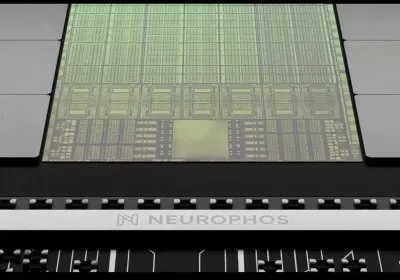
First look: Light, not silicon, may define the next leap in computing power. That's the bet Austin-based startup Neurophos is making as it challenges the idea that Moore's Law still governs the pace of performance progress. The company is developing a photonics-driven processor designed to do what decades of transistor scaling can no longer achieve: massive compute throughput without a proportional explosion in energy use.
Forward-looking: What started as a curiosity at CES 2025 has quietly matured into one of the show's most convincing sustainability narratives a year later. Flint, the Singapore-based startup developing a fully cellulose-based paper battery, is now in production and gearing up to supply its renewable power cells to major electronics partners, including Logitech, Amazon, and Apple accessory maker Nimble.