
See our latest guide: GPU Pricing Update
Eight months into the memory crisis, just how bad have graphics card prices become? That is what we are exploring today. We all know PC components are getting more expensive, gaming hardware manufacturers continue to raise prices, and the recently released Steam Machine arrived with a terrible price tag.
But what has the impact been on the graphics card market? Have prices stagnated, gotten worse, or, by some miracle, actually improved?
We are once again examining graphics card pricing data from 10 countries, giving us a more complete picture of GPU prices worldwide rather than isolating the analysis to a single market. We have data from November 2025, when GPU prices were at their lowest, figures from our previous update in April, and updated pricing for July 2026.

In every case, we are looking at the lowest price for an in-stock, readily available model. We used price comparison websites tailored to each region to find the best prices across a wide range of retailers. This should provide an accurate picture of the minimum cost of purchasing each GPU in every country.
Entry-Level Nvidia Pricing Has Barely Moved
GeForce RTX 5050 + RTX 5060
Let's begin with Nvidia's entry-level models. The GeForce RTX 5050 has changed little since April, outside Canada and the Philippines, where prices increased by more than 10%. In most regions, this model is roughly as expensive as it was three months ago. Across all 10 regions, the average price is now 6% above MSRP.
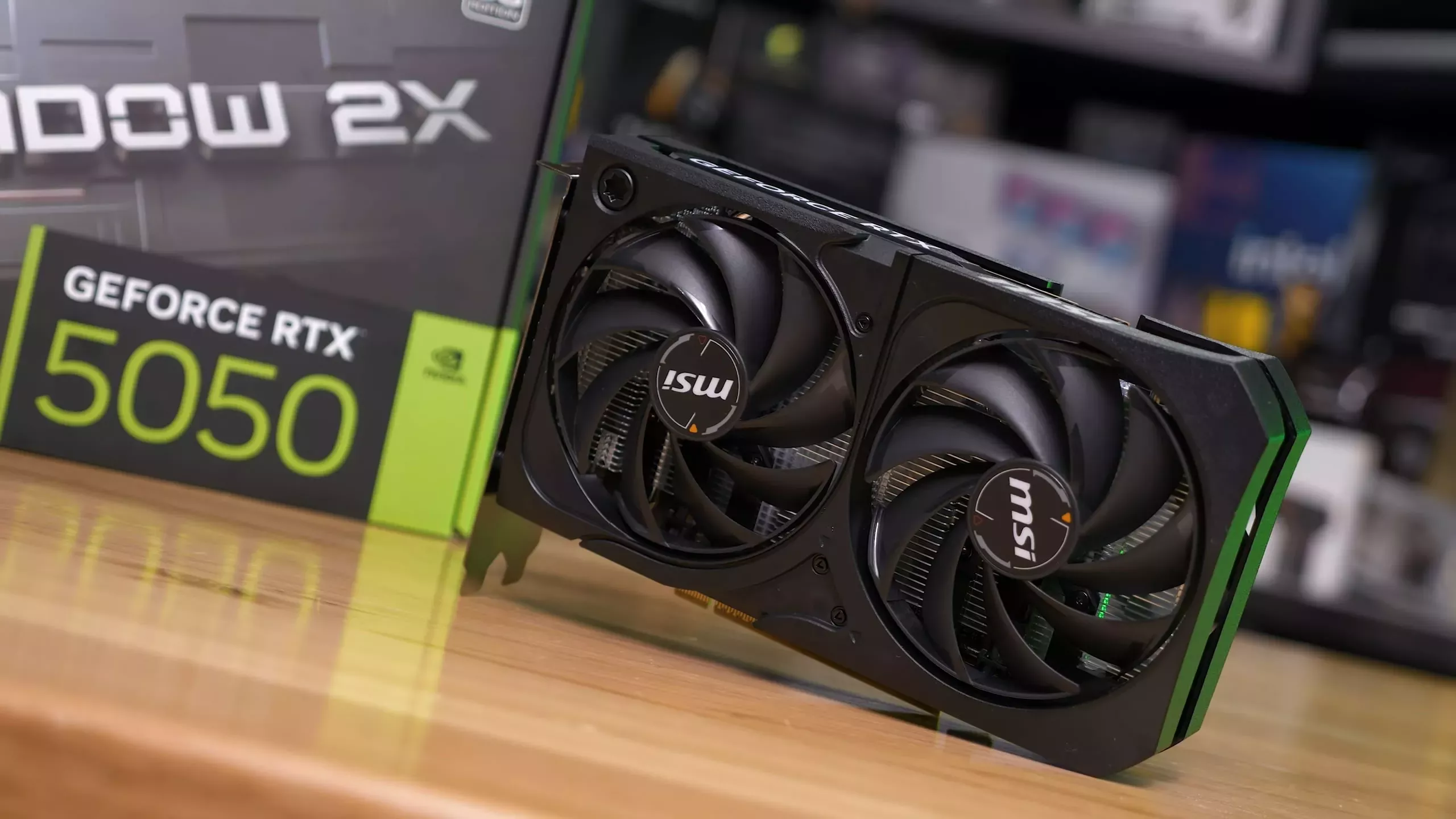
Buyers in the US and Canada are getting screwed the most, with the RTX 5050 pushing into the territory previously occupied by the RTX 5060.
Nvidia GeForce RTX 5050
| USA | Australia | Germany | UK | Canada | India | Philippines | Brazil | Poland | Netherlands | |
|---|---|---|---|---|---|---|---|---|---|---|
| Nov 2025 | $250 | $340 | 246 € | £220 | $340 | ₹25,300 | ₱15,800 | R$1,750 | 1,000 zł | €250 |
| Apr 2026 | $290 | $365 | 270 € | £245 | $380 | ₹29,000 | ₱16,600 | R$1,900 | 1,150 zł | €280 |
| Jul 2026 | $290 | $360 | 270 € | £240 | $420 | ₹28,800 | ₱19,000 | R$1,900 | 1,135 zł | €285 |
| Change | 0% | -1% | 0% | -2% | 11% | -1% | 14% | 0% | -1% | 2% |
Speaking of the RTX 5060, this is one of the more interesting models we tracked in July. Across most regions, the 5060 is actually a little cheaper than it was three months ago, falling by 4% on average. Prices increased slightly in regions such as the US and UK, but across all 10 countries, this 8GB model is now available for roughly its MSRP.
Nvidia GeForce RTX 5060
| USA | Australia | Germany | UK | Canada | India | Philippines | Brazil | Poland | Netherlands | |
|---|---|---|---|---|---|---|---|---|---|---|
| Nov 2025 | $290 | $480 | 280 € | £250 | $400 | ₹28,500 | ₱17,500 | R$2,060 | 1,230 zł | €295 |
| Apr 2026 | $330 | $480 | 305 € | £270 | $465 | ₹35,500 | ₱21,700 | R$2,320 | 1,300 zł | €320 |
| Jul 2026 | $340 | $450 | 305 € | £275 | $450 | ₹33,500 | ₱20,000 | R$2,100 | 1,240 zł | €310 |
| Change | 3% | -6% | 0% | 2% | -3% | -6% | -8% | -9% | -5% | -3% |
We calculated this by taking the heavily advertised launch MSRP and converting it into a local "true" MSRP for each country after accounting for currency conversion and local taxes. This allows us to determine how badly buyers in each country are getting screwed compared with the advertised launch price.

Once again, US buyers are getting the worst deal. The RTX 5060 is currently priced at $340, which is 13% higher than it should be. In most other regions, the 5060 is available close to MSRP. That does not necessarily make it a good deal, but it does mean this model has not yet been heavily affected by the memory crisis.
The RTX 5060 Ti Split Is Getting Even Stranger
GeForce RTX 5060 Ti: 8GB + 16GB
The RTX 5060 Ti 8GB presents a similar picture to the RTX 5060. It is now cheaper in most regions than it was three months ago, with an average price drop of 5%. As a result, the cheapest 5060 Ti 8GB models are selling below MSRP, including in the US, where the card launched at $380.
In several regions, including Germany, the UK, and the Netherlands, the RTX 5060 Ti 8GB has barely changed in price since November, which likely points to very low demand.
Nvidia GeForce RTX 5060 Ti 8GB
| USA | Australia | Germany | UK | Canada | India | Philippines | Brazil | Poland | Netherlands | |
|---|---|---|---|---|---|---|---|---|---|---|
| Nov 2025 | $340 | $600 | 340 € | £320 | $450 | ₹38,500 | ₱23,000 | R$2,400 | 1,500 zł | €350 |
| Apr 2026 | $390 | $570 | 350 € | £350 | $540 | ₹42,500 | ₱26,000 | R$2,600 | 1,600 zł | €340 |
| Jul 2026 | $360 | $500 | 340 € | £320 | $500 | ₹38,300 | ₱28,000 | R$2,460 | 1,450 zł | €350 |
| Change | -8% | -12% | -3% | -9% | -7% | -10% | 8% | -5% | -9% | 3% |
This creates a situation where, in some countries, it makes more sense to purchase a 5060 Ti 8GB than an RTX 5060 if you are interested in a mainstream Nvidia GPU. At MSRP, the 5060 Ti 8GB is supposed to cost 27% more than the 5060, but in countries such as the US, Canada, and Australia, that gap has shrunk to less than 12%.
Across the 10 regions we examined, the RTX 5060 Ti 8GB is now 16% more expensive than the RTX 5060. In our testing, it delivers 17% more performance at 1080p.

We are not saying the RTX 5060 Ti 8GB is a good product, because it still is not. It remains very expensive for a graphics card with just 8GB of VRAM. However, it now makes more sense than it ever has, particularly because the jump to the next tier of Nvidia GPU is substantial. Later, we will see how competitive AMD's alternatives are.
The RTX 5060 Ti 16GB has been affected by rising memory prices over the past three months, although the impact currently appears to be concentrated in the US. The card is extremely expensive there at $570, which is 33% above its $430 MSRP and 58% more expensive than the 8GB model. That is seriously yucky.
Nvidia GeForce RTX 5060 Ti 16GB
| USA | Australia | Germany | UK | Canada | India | Philippines | Brazil | Poland | Netherlands | |
|---|---|---|---|---|---|---|---|---|---|---|
| Nov 2025 | $400 | $715 | 420 € | £380 | $600 | ₹45,000 | ₱28,250 | R$3,160 | 1,910 zł | €440 |
| Apr 2026 | $500 | $730 | 540 € | £470 | $780 | ₹61,500 | ₱34,700 | R$3,800 | 2,300 zł | €550 |
| Jul 2026 | $570 | $750 | 530 € | £500 | $800 | ₹59,800 | ₱34,500 | R$3,800 | 2,300 zł | €560 |
| Change | 14% | 3% | -2% | 6% | 3% | -3% | -1% | 0% | 0% | 2% |
In other regions, prices have remained relatively flat following an initial increase earlier this year. In Poland and Brazil, for example, the 16GB card costs exactly the same as it did three months ago.
On average, the RTX 5060 Ti 16GB has risen by just 2% since April. Unfortunately, without a meaningful price reduction, it remains well above MSRP. Buyers are spending an average of 22% more than the card's true MSRP.

Back in November, the RTX 5060 Ti 16GB could regularly be found at or below its true MSRP, so this is clearly a much worse time to buy one.
The RTX 5070 Series Remains Stuck at Inflated Prices
GeForce RTX 5070 + RTX 5070 Ti
There has been no significant change in RTX 5070 series pricing between April and July. The RTX 5070 is slightly cheaper on average than it was three months ago, while RTX 5070 Ti pricing is flat. Even across individual regions, there has been little movement. The largest change we found was in Brazil, where the RTX 5070 became 8% cheaper.

In some regions, including Australia, Germany, and Poland, the RTX 5070 is now available close to its true MSRP. On average, we are seeing just 6% price inflation for this model, which makes sense given that it has less VRAM than the RTX 5070 Ti.
Nvidia GeForce RTX 5070
| USA | Australia | Germany | UK | Canada | India | Philippines | Brazil | Poland | Netherlands | |
|---|---|---|---|---|---|---|---|---|---|---|
| Nov 2025 | $480 | $870 | 530 € | £470 | $770 | ₹57,500 | ₱36,600 | R$3,900 | 2,350 zł | €550 |
| Apr 2026 | $630 | $900 | 580 € | £530 | $900 | ₹70,700 | ₱42,500 | R$4,550 | 2,700 zł | €590 |
| Jul 2026 | $600 | $860 | 580 € | £530 | $850 | ₹66,800 | ₱43,300 | R$4,200 | 2,640 zł | €620 |
| Change | -5% | -4% | 0% | 0% | -6% | -6% | 2% | -8% | -2% | 5% |
As with the RTX 5060 Ti 16GB, the lack of a meaningful price reduction means the RTX 5070 Ti remains roughly 20% above its true MSRP across the 10 regions. We suppose it is positive that prices have not spiked recently, but that does not make the RTX 5070 Ti a good-value GPU.
Nvidia GeForce RTX 5070 Ti
| USA | Australia | Germany | UK | Canada | India | Philippines | Brazil | Poland | Netherlands | |
|---|---|---|---|---|---|---|---|---|---|---|
| Nov 2025 | $730 | $1,200 | 750 € | £690 | $1,050 | ₹78,500 | ₱50,900 | R$6,100 | 3,350 zł | €765 |
| Apr 2026 | $990 | $1,350 | 910 € | £820 | $1,300 | ₹106,000 | ₱59,600 | R$7,000 | 3,900 zł | €920 |
| Jul 2026 | $960 | $1,300 | 880 € | £830 | $1,320 | ₹104,800 | ₱63,100 | R$7,100 | 4,000 zł | €950 |
| Change | -3% | -4% | -3% | 1% | 2% | -1% | 6% | 1% | 3% | 3% |
High-End Nvidia Pricing Is Still Absurd
GeForce RTX 5080 + RTX 5090
At the high end of the market, RTX 5080 pricing has remained flat over the past three months. This model is still 18% above its true MSRP on average, which appears to be the going rate for a 16GB Nvidia GPU right now.

The RTX 5070 Ti has moved into the price territory previously occupied by the RTX 5080, while the RTX 5080 has climbed even higher. However, the price difference between the two cards remains roughly the same.
Nvidia GeForce RTX 5080
| USA | Australia | Germany | UK | Canada | India | Philippines | Brazil | Poland | Netherlands | |
|---|---|---|---|---|---|---|---|---|---|---|
| Nov 2025 | $980 | $1,700 | 1,000 € | £950 | $1,390 | ₹110,000 | ₱70,400 | R$7,800 | 4,650 zł | €1,070 |
| Apr 2026 | $1,300 | $1,800 | 1,200 € | £1,100 | $1,760 | ₹137,000 | ₱85,000 | R$9,500 | 4,900 zł | €1,250 |
| Jul 2026 | $1,250 | $1,700 | 1,200 € | £1,030 | $1,770 | ₹135,500 | ₱85,800 | R$9,200 | 5,300 zł | €1,250 |
| Change | -4% | -6% | 0% | -6% | 1% | -1% | 1% | -3% | 8% | 0% |
The card with the largest price increase between April and July is, unsurprisingly, the GeForce RTX 5090. This model continues to become significantly more expensive, rising by 12% on average and by as much as 20% in some regions.
That increase comes on top of an already extremely high price, pushing the RTX 5090 even further out of reach for the average high-end PC gamer. It is now 94% above its true MSRP, and this card has never been widely available at MSRP for long. Even in November, it was already overpriced.
Nvidia GeForce RTX 5090
| USA | Australia | Germany | UK | Canada | India | Philippines | Brazil | Poland | Netherlands | |
|---|---|---|---|---|---|---|---|---|---|---|
| Nov 2025 | $2,500 | $4,500 | 2,600 € | £2,200 | $3,700 | ₹261,000 | ₱160,000 | R$18,000 | 10,000 zł | €2,700 |
| Apr 2026 | $3,700 | $6,000 | 3,600 € | £2,850 | $5,000 | ₹390,000 | ₱210,000 | R$22,000 | 16,500 zł | €3,500 |
| Jul 2026 | $3,980 | $6,100 | 4,000 € | £3,400 | $5,650 | ₹446,000 | ₱249,000 | R$22,000 | 18,900 zł | €4,200 |
| Change | 8% | 2% | 11% | 19% | 13% | 14% | 19% | 0% | 15% | 20% |
It is difficult to view the RTX 5090 as a gaming GPU when it costs around $4,000. At this point, it is much more of a workstation card for AI workloads, complete with RTX Pro-level pricing.
That said, it is not actually the cheapest way to access 32GB of VRAM on a Blackwell workstation GPU. The RTX Pro 4500 generally costs around $3,100, although its GPU core is more comparable to an RTX 5080.
AMD's Mainstream Pricing Is Moving in the Wrong Direction
Radeon RX 9060 XT: 8GB + 16GB
Next, we have AMD's mainstream Radeon models, the RX 9060 XT in 8GB and 16GB configurations. Both cards have risen in price by an average of 5% between April and July across the 10 regions. Some countries have taken an especially hard hit, including Canada and the UK for the RX 9060 XT 8GB.

The 8GB model is now sitting 8% above its true MSRP on average, while the 16GB model is 18% above MSRP. That 16GB figure is very much in line with what we are seeing from Nvidia.
AMD Radeon RX 9060 XT 8GB
| USA | Australia | Germany | UK | Canada | India | Philippines | Brazil | Poland | Netherlands | |
|---|---|---|---|---|---|---|---|---|---|---|
| Nov 2025 | $275 | $430 | 260 € | £260 | $410 | ₹29,300 | ₱20,700 | R$2,200 | 1,300 zł | €285 |
| Apr 2026 | $350 | $450 | 310 € | £275 | $450 | ₹32,300 | ₱21,000 | R$2,320 | 1,300 zł | €370 |
| Jul 2026 | $360 | $450 | 330 € | £320 | $520 | ₹32,800 | ₱22,300 | R$2,450 | 1,300 zł | €350 |
| Change | 3% | 0% | 6% | 16% | 16% | 2% | 6% | 6% | 0% | -5% |
With the RX 9060 XT 8GB going up in price and the RTX 5060 Ti 8GB becoming cheaper, AMD's entry-level value proposition has taken a serious hit. In several regions, including the US, UK, and Canada, the two cards now cost the same, despite the Radeon model being intended to cost 21% less at MSRP.

These GPUs deliver very similar performance, so at the same price, buyers may as well choose the GeForce card for its superior feature set. We are now in the wild position where the RTX 5060 Ti 8GB has somehow become an option worth considering in the sub-$400 market.
The RX 9060 XT 16GB is in a better position. It remains more expensive than it should be based on its true MSRP, but its level of price inflation is similar to that of the RTX 5060 Ti 16GB while starting from a lower MSRP.
AMD Radeon RX 9060 XT 16GB
| USA | Australia | Germany | UK | Canada | India | Philippines | Brazil | Poland | Netherlands | |
|---|---|---|---|---|---|---|---|---|---|---|
| Nov 2025 | $350 | $570 | 350 € | £330 | $530 | ₹36,500 | ₱23,000 | R$2,880 | 1,540 zł | €350 |
| Apr 2026 | $440 | $500 | 400 € | £380 | $580 | ₹45,000 | ₱28,800 | R$2,750 | 1,800 zł | €400 |
| Jul 2026 | $450 | $530 | 410 € | £400 | $640 | ₹47,500 | ₱28,000 | R$2,800 | 1,880 zł | €440 |
| Change | 2% | 6% | 2% | 5% | 10% | 6% | -3% | 2% | 4% | 10% |
It is currently the cheapest 16GB GPU on the market and costs 22% less than the RTX 5060 Ti 16GB. That makes it look like a reasonably good deal if you need to buy a mainstream GPU right now.
AMD has also maintained a similar percentage difference between the RX 9060 XT 8GB and 16GB compared with the "good times" pricing we saw in November. However, the actual amount buyers must spend to upgrade from 8GB to 16GB has increased because prices for both cards have risen.
AMD's Radeon 70 Series Holds the Line
Radeon RX 9070 + RX 9070 XT
In better news, Radeon RX 9070 and RX 9070 XT prices have remained steady over the past three months. There have been some price corrections for the RX 9070 in regions where its previous pricing did not make much sense, including India and Brazil. However, in most countries, pricing has barely shifted for these higher-end Radeon cards.

The RX 9070 is now priced 4% above its true MSRP, which is a very good result considering the broader market conditions.
AMD Radeon RX 9070
| USA | Australia | Germany | UK | Canada | India | Philippines | Brazil | Poland | Netherlands | |
|---|---|---|---|---|---|---|---|---|---|---|
| Nov 2025 | $540 | $850 | 540 € | £500 | $830 | ₹59,900 | ₱40,000 | R$4,360 | 2,450 zł | €540 |
| Apr 2026 | $610 | $800 | 580 € | £550 | $860 | ₹65,000 | ₱43,000 | R$4,300 | 2,600 zł | €610 |
| Jul 2026 | $620 | $810 | 580 € | £550 | $870 | ₹58,000 | ₱44,800 | R$3,800 | 2,450 zł | €600 |
| Change | 2% | 1% | 0% | 0% | 1% | -11% | 4% | -12% | -6% | -2% |
The RX 9070 XT is sitting 8% above its true MSRP, which is also a strong result. In regions such as Australia, India, and Brazil, the RX 9070 XT is just as good a deal as it was in November, or even better in some cases. Other regions, including Germany, the UK, and Poland, have experienced only a small increase between November and July.
AMD Radeon RX 9070 XT
| USA | Australia | Germany | UK | Canada | India | Philippines | Brazil | Poland | Netherlands | |
|---|---|---|---|---|---|---|---|---|---|---|
| Nov 2025 | $580 | $990 | 620 € | £560 | $870 | ₹69,000 | ₱44,200 | R$4,700 | 2,710 zł | €640 |
| Apr 2026 | $710 | $880 | 650 € | £600 | $960 | ₹64,500 | ₱46,650 | R$4,500 | 2,750 zł | €650 |
| Jul 2026 | $690 | $900 | 650 € | £600 | $965 | ₹69,700 | ₱48,700 | R$4,000 | 2,850 zł | €720 |
| Change | -3% | 2% | 0% | 0% | 1% | 8% | 4% | -11% | 4% | 11% |
This keeps AMD's 70 series cards in a strong competitive position. Across the 10 regions, the RTX 5070 Ti is 42% more expensive than the RX 9070 XT on average.
Nvidia's RTX 5070 is in a better position, costing roughly the same as the RX 9070 on average. That is where it should be, given that both cards have the same MSRP.
Radeon RX 9070 GRE
We also have the interesting case of the Radeon RX 9070 GRE, which launched between our previous GPU pricing update and this one at a bizarre $550 MSRP, the same as the RX 9070.

This model makes little to no sense in most regions because it is only 6% cheaper than the RX 9070 on average, despite being 17% slower. The Philippines was the only region where the RX 9070 GRE was at least 17% cheaper than the RX 9070. You can safely avoid the RX 9070 GRE for now.
Intel Battlemage Supply Is Drying Up
Intel Arc B570 + B580
Intel's Arc Battlemage cards are becoming harder to find in many regions, with the number of available models declining compared with April. Both the Arc B570 and B580 have become around 5% more expensive on average over the past three months.

Intel Arc B570
| USA | Australia | Germany | UK | Canada | India | Philippines | Brazil | Poland | Netherlands | |
|---|---|---|---|---|---|---|---|---|---|---|
| Nov 2025 | $210 | $200 | 360 € | £185 | $170 | ₹320 | ₱24,500 | 1,800 zł | €950 | |
| Apr 2026 | $260 | $330 | 220 € | £190 | $330 | ₹24,800 | ₱19,400 | R$1,660 | 1,020 zł | €240 |
| Jul 2026 | $230 | $340 | 235 € | £240 | $350 | R$1,790 | 1,120 zł | €220 | ||
| Change | -12% | 3% | 7% | 26% | 6% | 8% | 10% | -8% |
The B580 is in a particularly difficult position, now sitting 17% above its true MSRP. In many regions, it costs roughly the same as an RTX 5060, despite being intended to cost 17% less based on MSRP and compete more directly with the RTX 5050.
Intel Arc B580
| USA | Australia | Germany | UK | Canada | India | Philippines | Brazil | Poland | Netherlands | |
|---|---|---|---|---|---|---|---|---|---|---|
| Nov 2025 | $250 | $250 | 400 € | £240 | $200 | ₹330 | ₱29,500 | R$18,600 | 2,080 zł | €1,100 |
| Apr 2026 | $290 | $400 | 270 € | £290 | $370 | ₹37,900 | ₱19,600 | R$2,100 | 1,250 zł | €290 |
| Jul 2026 | $310 | $390 | 270 € | £320 | $450 | R$2,000 | 1,300 zł | €290 | ||
| Change | 7% | -3% | 0% | 10% | 22% | -5% | 4% | 0% |
Which Country Is Getting Screwed the Most?
Using our GPU price inflation index we easily see which country is getting screwed the most. This time, the answer is Canada, with the United States and United Kingdom not far behind. Given the extreme pricing of the RTX 5090, we have omitted that model from this comparison. This provides a clearer picture of pricing for GPUs that are actually being purchased primarily for gaming.

Interestingly, continental Europe does not appear to have GPU pricing as egregious as North America, at least based on the data from Germany, the Netherlands, and Poland.
Then there is the oddity of Australia, where average graphics card prices are actually sitting slightly below the true MSRP, which is calculated from the advertised launch MSRP. For example, the RX 9070 XT has a true MSRP of 944 Australian dollars but was available for as little as $900 when we gathered this data.
What the Mid-2026 Data Shows
As with our previous GPU pricing updates, the July results are a mixed bag. The good news is that, even eight months into the memory crisis, graphics card prices have not risen substantially over that period. Don't get me wrong, most GPUs are now more expensive than they were back in November, however the scale of those increases has been lower than we expected.
DDR5 prices have more than quadrupled over the past eight months. GPU prices, meanwhile, are sitting just 16% above our "true MSRP" metric across the 10 regions on average.

DDR5 DRAM prices, for example, have more than quadrupled over the past eight months. GPU prices, meanwhile, are sitting just 16% above our "true MSRP" metric on average across the 10 regions. That level of inflation falls to 10% if we exclude the RTX 5090, which has experienced substantially larger increases than the other models. Between April and July, GPU prices increased by 2% on average. Excluding the RTX 5090, however, prices were essentially flat.
The best value cards are AMD's Radeon RX 9070 and RX 9070 XT. Despite both models featuring 16GB of VRAM, AMD has managed to keep their prices under control to some extent. These cards are still selling above MSRP, like most GPUs, but they have not experienced the same level of inflation as Nvidia's 16GB models. Right now, the price gap between the RX 9070 XT and RTX 5070 Ti is enormous in most regions.
The best value cards are AMD's Radeon RX 9070 and RX 9070 XT – despite both models featuring 16GB of VRAM.

Elsewhere, the trends remain similar to what we observed before. Nvidia GPUs with 16GB of VRAM or more have been affected the most. The RTX 5060 Ti 16GB, RTX 5070 Ti, and RTX 5080 are all expensive, sitting roughly 20% above their launch prices on average across the 10 regions.
The RX 9060 XT 16GB and Intel Arc B580 are notably more expensive, which is unfortunate for budget buyers. Outside these models, Nvidia GPUs with 12GB or 8GB of VRAM have been affected to a lesser degree and, in some cases, have fallen in price.
If you were interested in a model such as the RTX 5060 Ti 16GB, the situation is pretty bad. That card has become difficult to afford. On a more positive note, the RTX 5070 is holding up well and is not outrageously priced in most regions. With sufficient VRAM and decent performance, it currently looks like the best option in Nvidia's lineup.
Why Prices Could Rise Again

Although GPU prices have flattened after increases earlier in 2026, they are unlikely to decrease anytime soon. Recent rumors suggest Nvidia has increased the cost of the GPU and memory bundles it sells to AIB partners, which is expected to push retail GeForce prices higher. This is reportedly due to rising GDDR6 and GDDR7 memory module costs.
Retailers tell us that the cost of purchasing a 16GB GeForce GPU has increased by roughly 10 to 15% compared with a few weeks ago, with smaller increases affecting models with less VRAM. Some AIBs are warning that further increases are coming, with prices potentially rising by as much as 40% further down the line. Based on our discussions, it is unclear what will happen to Radeon models. However, because both Nvidia and AMD are equally affected by rising GDDR costs, Radeon pricing is unlikely to remain flat.
These increases are not yet reflected in retail pricing. Much of the inventory and pricing currently available is for GPUs purchased by retailers months ago. GPU sales have slowed because of higher prices, keeping cards on shelves for longer and helping stabilize pricing in the short term. However, once that existing inventory is depleted, retailers say incoming stock will be more expensive, which will push prices even higher.
Should You Buy a GPU Now?

If you need to buy a new graphics card, we recommend doing so sooner rather than later. However, that advice applies primarily to people who are desperate for a new GPU. In general, we would not recommend buying a graphics card right now. If you already have something sufficient, our advice is to keep using it until a new generation of products arrives.
Even if memory prices remain high or continue to rise, you may as well wait until you can get something faster than today's cards for the same high prices being charged now.