007 First Light sold 3 million copies in two weeks but hasn't broken even – it cost $200 million to make

Daniel Sims

Posts: 2,469   +74
Staff
The big picture: IO Interactive's recently released 007 game is off to a healthy start, but it hasn't turned a profit yet. While 007 First Light is the studio's fastest-selling title ever, it's also by far the most expensive entertainment product in Denmark's history. A sequel has not been confirmed, but Amazon Games and IOI have already hinted at where the franchise might go from here.

The CEO of IO Interactive recently confirmed to IGN that the company's latest game, 007 First Light, has sold more than 3 million copies since its May 26 launch. Although the blockbuster has yet to break even, the company is confident it will, stating that its sales far exceed internal estimates.

Local news outlets previously reported that First Light's budget of 1.3 billion Danish kroner, roughly $200 million, makes it easily the country's most expensive entertainment production ever. That's more than seven times the budget of the country's most expensive TV series and more than 10 times its most expensive film. However, IOI later clarified to IGN that the figure included marketing and other expenses aside from core development.
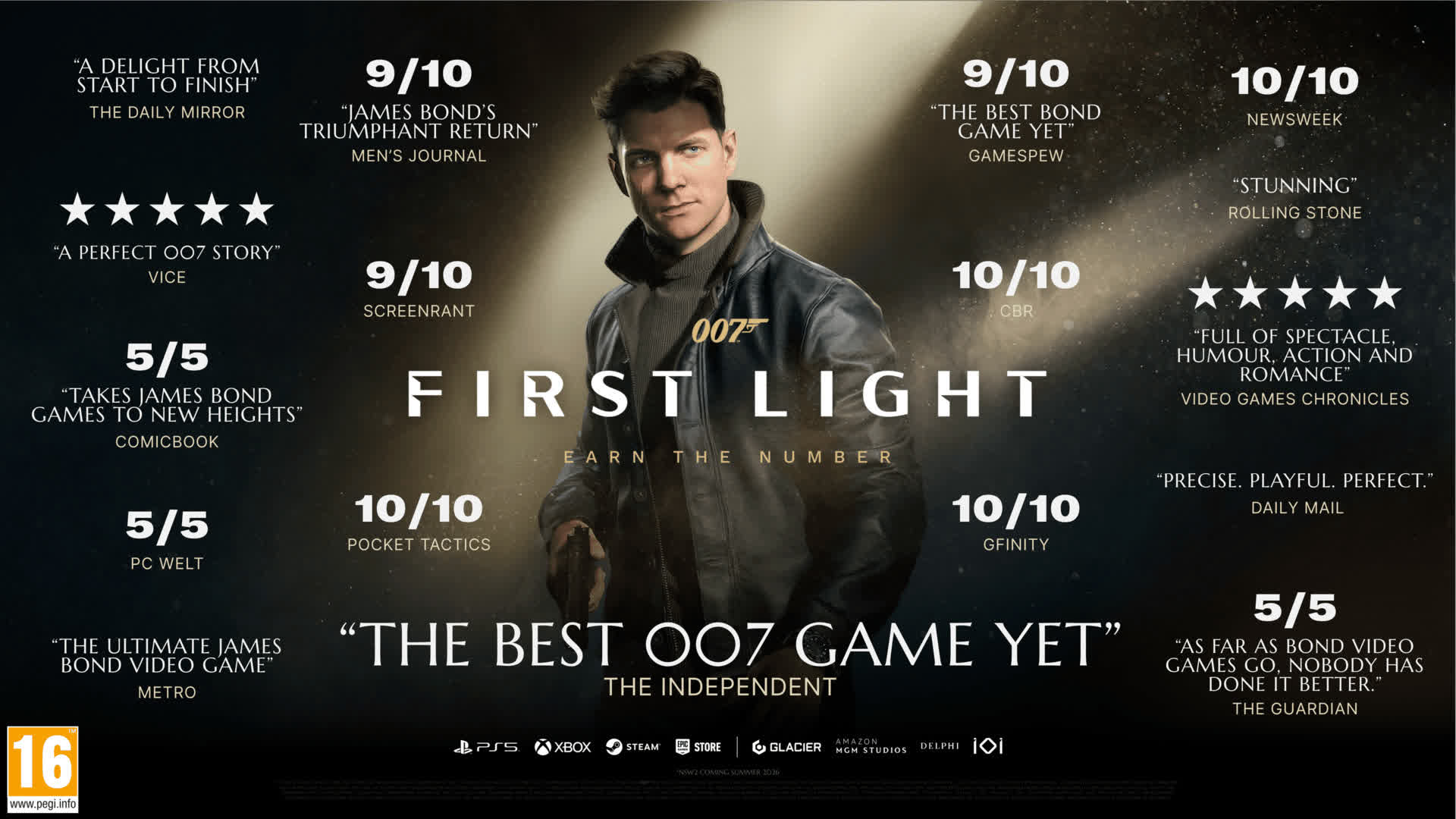
In any case, the company sounds confident in First Light's performance so far. The game sold 1.5 million copies within 48 hours of its release, remains among Steam's top 100 titles, and has drawn positive reviews from critics.

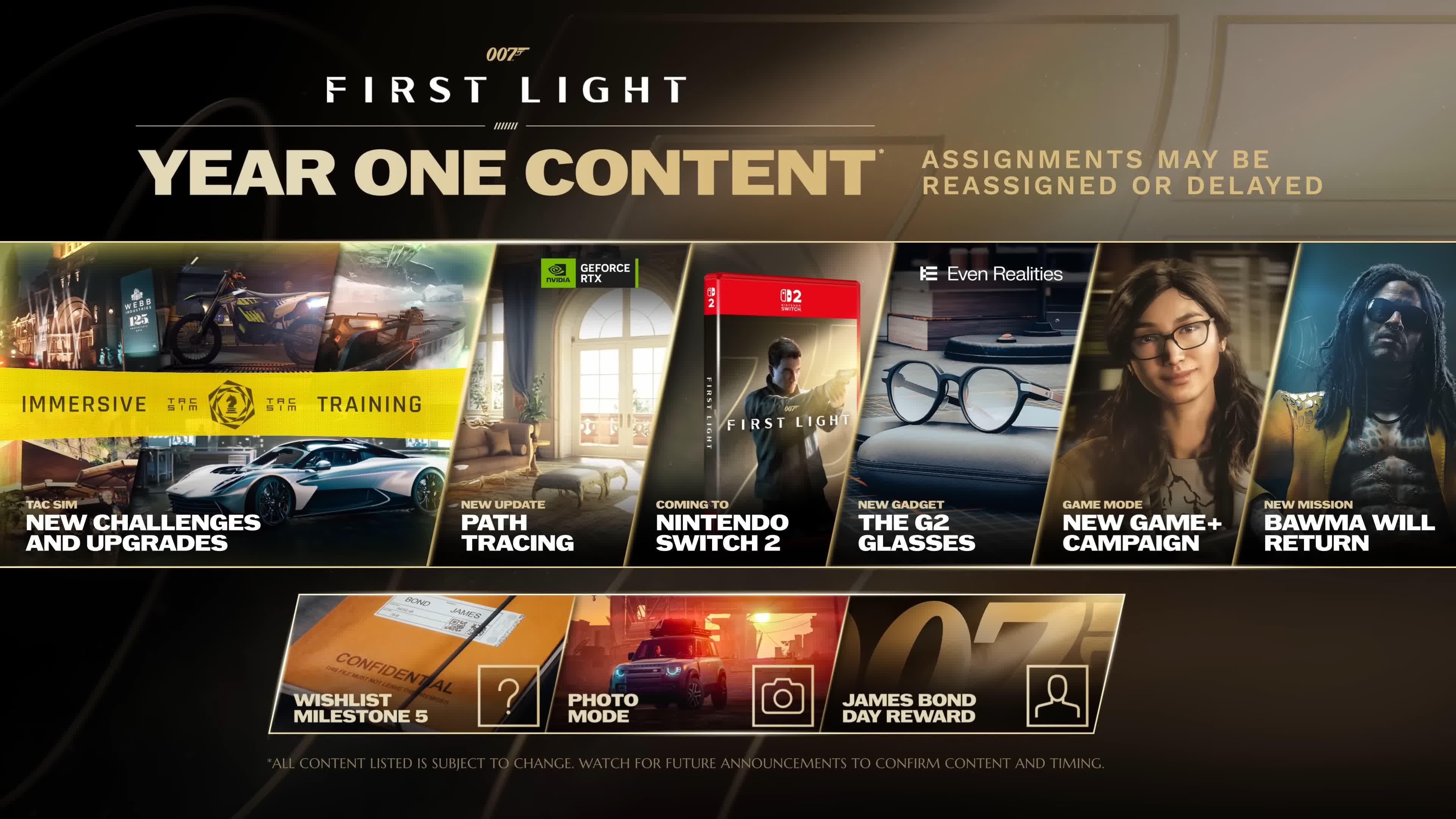
IOI recently outlined the updates it has planned for this year, including new missions, a new game+ mode, a photo mode, a new gadget, path tracing for the PC version, a Nintendo Switch 2 release, and more. While more 007 games from IOI are not yet officially on the books, both the studio and IP owner Amazon are already discussing future ambitions.
Amazon initially sparked concern when it told Polygon that it would publish future 007 games before clarifying to IGN that the change is simply due to timing. IOI self-published First Light because it began work on the game before Amazon acquired MGM and the rights to 007.

While the online retail giant has struggled to break into video games, it stressed that publishing a follow-up to First Light does not necessarily mean developing it. It seems likely that IOI would return, and the company recently told IGN that any sequels would likely be made more quickly and cheaply. IOI explained to the outlet that reusing assets allowed it to develop each of its last three Hitman games in less time and with a smaller budget than the previous entry.

Permalink to story:

 
The development costs of games in the west is absolutely absurd.
Meanwhile we have games like Fatekeeper that was made by 8 people team and costs $8 and runs more smoothly than a of team >100x .

Also have you seen the Blood Message game coming from China? Chinese developers will eat western developers lunch from the looks of things. Compare those to new GOW and Fable games lol.
 
The development costs of games in the west is absolutely absurd.
Development costs certainly are strangling the industry. What's truly ironic is that the only tool capable of reversing this trend is AI ... currently being stridently opposed by the very videogamers it will benefit the most.
 
I found it interesting how much melee fight system was similar to a much more budget game called Samson. I think their game will return the investment. It is a solid game without political aspects that
are too annoying even to an average gamer.
 
The development costs of games in the west is absolutely absurd.

According to the interview, those 200 million are for the game development, marketing and staff bonuses.
It's still a high value, but it's not just the cost of making the game.
 
Development costs certainly are strangling the industry. What's truly ironic is that the only tool capable of reversing this trend is AI ... currently being stridently opposed by the very videogamers it will benefit the most.
Gamers are opposed to specifically the ai corporate vibe coding slop that yields low quality unoptimized and empty virtue signal shenanigans. If developers are using ai to make games better and not just replacing workforce with vibe coding slop gamers will probably be on board. Unfortunately their has to be an outlier that shows the industry the way.
 
Gamers are opposed to specifically the ai corporate vibe coding slop that yields low quality unoptimized and empty virtue signal shenanigans.
Not even remotely correct. Gamers are specifically opposing **any** use of AI, even when it results in quality surpassing that from all-human games. Countless comments on this site and others demonstrate this, but the ultimate proof are incidents like the Indie Game Awards, which judged one title best of the year ... but then stripped away that award because the studio had used an AI tool to generate some placeholder art.
 
Not even remotely correct. Gamers are specifically opposing **any** use of AI, even when it results in quality surpassing that from all-human games. Countless comments on this site and others demonstrate this, but the ultimate proof are incidents like the Indie Game Awards, which judged one title best of the year ... but then stripped away that award because the studio had used an AI tool to generate some placeholder art.
Crimson Dessert sold 5 million copies. Whatever happens with game awards stems from a bigger issue of controlling the market via paid influencers and artificial outrage. So there is that. 5 million copies isn't nothing it's actually net profit is significant compared to next cost based on Pearl Abyss public statements. Sure ai can be used with fillers that you have to play for tens hours on end to find. In reality the game you speak about is profitable compared to lets say COD who uses literal ai slop and hasn't made a profit yet.
 
Whatever happens with game awards stems from a bigger issue of controlling the market via paid influencers and artificial outrage.
And it is this artificial outrage from millions of gamers to which I refer. If end-product quality were the only reason AI was opposed, you could determine that from the product itself. But every major title release, countless slack-jawed cretins begin hounding the studio to "go on the record" as to how much, if any, AI support was involved... and even begin performing "investigative journalism" to determine if the studio may be failing to fully disclose its use.

In the ultimate absurdity, Steam now requires an "AI used" warning label on games, so that virtue-signaling gamers don't accidentally find themselves enjoying a title built with AI assistance.
 
And it is this artificial outrage from millions of gamers to which I refer. If end-product quality were the only reason AI was opposed, you could determine that from the product itself. But every major title release, countless slack-jawed cretins begin hounding the studio to "go on the record" as to how much, if any, AI support was involved... and even begin performing "investigative journalism" to determine if the studio may be failing to fully disclose its use.

In the ultimate absurdity, Steam now requires an "AI used" warning label on games, so that virtue-signaling gamers don't accidentally find themselves enjoying a title built with AI assistance.
We both know ai use in games are inevitable going forward. Some form of the pipeline will have some level of ai intervention. Opposing ai is a good thing because it will stear the direction of where gamers will probably accept it. If the sloppiest games don't break profits and the ones that are more handcrafted do eventually those outliers will become dominant imo and outlook.
 
Amazon has not proven to be a good steward of the IP it acquires. They are like a private equity firm buying up a successful business and liquidating all of its accumulated goodwill. What they did to Lord of the Rings should be considered a war crime. Like the U.N. should have intervened to stop it.
 
Some quick math shows about a 4M copies break even (more with any sale prices) so they are well on their way.

They still have to pay royalties for the Bond IP. It's probably close to 20% on every copy.
So to break even, they will have to sell close to 6 million copies.
 
They still have to pay royalties for the Bond IP. It's probably close to 20% on every copy.
So to break even, they will have to sell close to 6 million copies.
Depends on how the royalties are structured. It could have included a large lump sum with a lower %.

And they clarified "the figure included marketing and other expenses aside from core development" so that could already count IP fees.
 
And they clarified "the figure included marketing and other expenses aside from core development" so that could already count IP fees.
Only if it was structured as a lump sum, not sales royalties. And of course Steam and most other outlets take a cool 30% off the top.
 
IOI were developing this game long before Amazon purchased the rights to James Bond. Just wanted to reiterate this. The game was a success because there was no influence from Amazon. If they do make a deal to publish more games then, unless they just demand autonomy, it's likely they will be awful because Amazon suits and (the antichrists themselves - screenwriters) will be unable to resist getting involved.
 
I really doubt that those games cost even a fraction of what they say or some CEOs are having a huge part of the pie as a prize.

I'm surprised no one mentioned this earlier in the comments. CEO, CFO, COO, CTO, FU#$ING HOBOs, - this is the problem here! Your working on a game and you don't need all these useless people in positions that do SWEET FU#$ ALL! I've seen exceptional games out over the last 3 decades from studios with tight budgets.
 
Development costs certainly are strangling the industry. What's truly ironic is that the only tool capable of reversing this trend is AI ... currently being stridently opposed by the very videogamers it will benefit the most.

Exactly. People are so stupid. I dont get it.
 
I'm surprised no one mentioned this earlier in the comments. CEO, CFO, COO, CTO, FU#$ING HOBOs, - this is the problem here! Your working on a game and you don't need all these useless people in positions that do SWEET FU#$ ALL!
When your studio is five guys working at home and connecting via Zoom, you certainly don't need those positions. But when your studio is several hundred (or several thousand) employees working in multiple offices and controlling hundreds of millions of dollars of revenues and corporate assets, yes, you most certainly do need them.

Luckily, in free-market economies, we can have both types of companies often competing against each other, to see which model is best for a particular task. In the videogame industry, for instance, it's rather clear that if you care about nothing but innovative gameplay, a tiny indie studio will give a much value per dollar spent ... but these tiny studios are not going to create AAA titles with the slickest of modern graphics.
 
But when your studio is several hundred (or several thousand) employees working in multiple offices and controlling hundreds of millions of dollars of revenues and corporate assets, yes, you most certainly do need them.

Well, they are needed in big companies, but certainly not as most work: in all kinds of companies, most CxOs bridge the company with the stock holders and other CxOs from other companies, but most of the time they are there so sign stuff and throw themselves a money/ stock prize at the end of the day.

My company as an example, Europe typical:
A) CxOs: golf, parties and meetings with a horizontal administration (between branch's administrators) to see their excel graphs

B) the Horizontal administration with branches' administrators: the same as above but not as fancy nor they play as often golf

C) branches' administrators: meetings with each head of department and others. The same as B) but even less fun. They really start to work somewhat...

D) head of department: the one with really tough work managing, but sometimes they are not really good at it...

E) workers. The usual guilty and have tough work.

A+B: excel graphs and demand more work but "need" to make cuts. They take most of the money of the cake. Usually their contracts give them a monthly wage + % cut off the earnings + money/stock options (with a good or bad job) + huge fee from the company if they fire the person due to a bad job = so, they'll always win, the question is if massive or just a lot.

So, a big company just exists to introduce a "managing" team that will eat most of the cake. What it is producing and its value, does not correspond necessarily to what the company needs to win to survive.

Lets call it a HUGE overhead. I know companies that, that "overhead" corresponds to 60-70% of the company's earnings... Tesla: I don't know the percentage, but just Elon Musk alone, between wage + prize + stocks eats a big part of the cake.
 
Development costs certainly are strangling the industry. What's truly ironic is that the only tool capable of reversing this trend is AI ... currently being stridently opposed by the very videogamers it will benefit the most.

Ooooor you could, you know, operate much more efficiently..... Like most other non AAA companies.....

Don't let that get in the way of your AI agenda though.
 
Back