After 70 years of false starts, fusion energy is finally gaining momentum

Skye Jacobs

Posts: 2,029   +59
Staff
The big picture: For decades, the promise of fusion power seemed just out of reach – a theoretical miracle of physics that stubbornly refused to move from blueprint to breaker box. Yet in laboratories from France to China, a new generation of reactors is rewriting the story, and the tone has shifted from skepticism to cautious optimism.
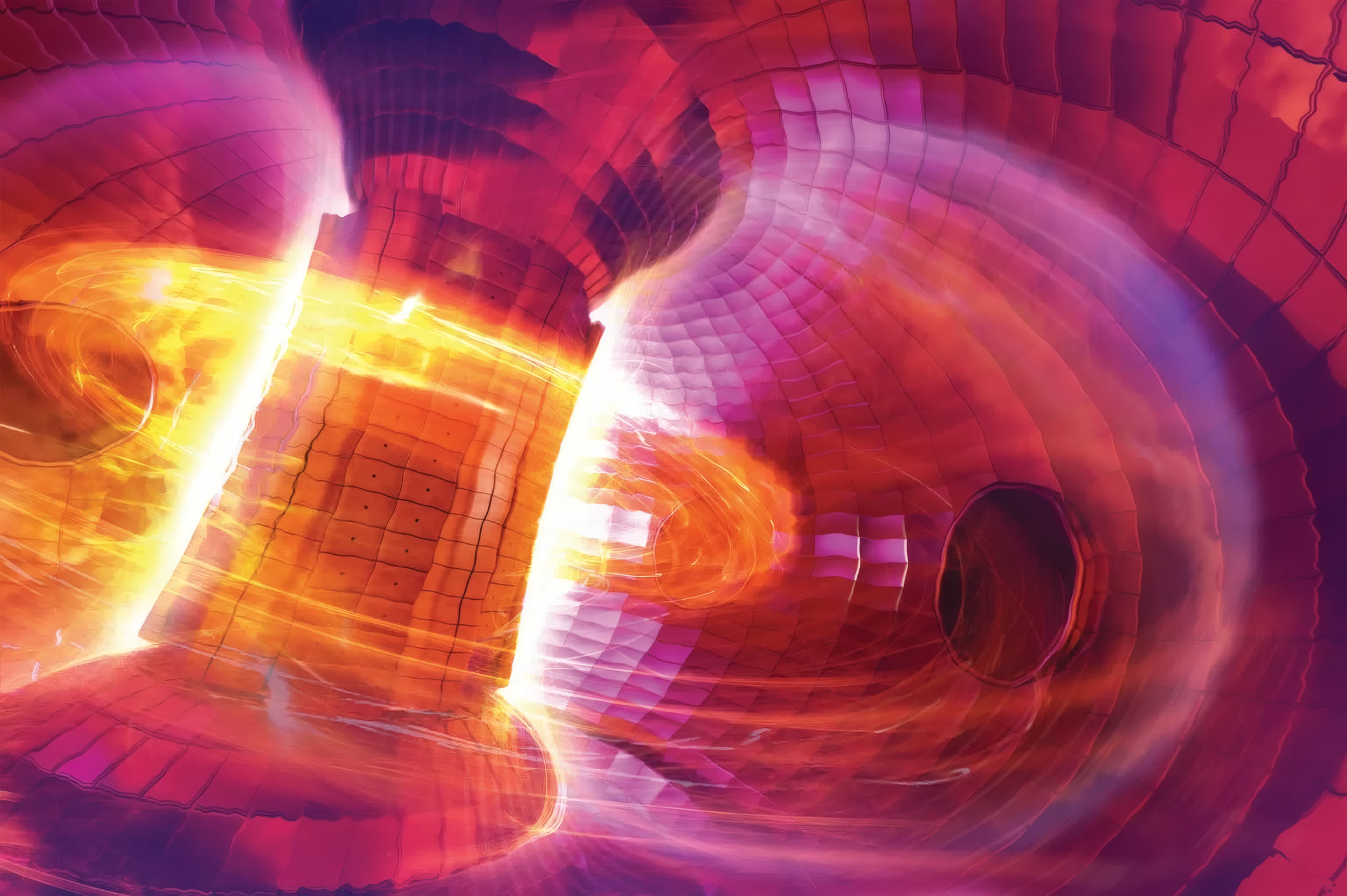
The machines at their center, called tokamaks, have evolved from experimental curiosities into instruments capable of sustaining confined plasma – matter so hot it mimics the interior of stars – for record periods of time.

The fusion process is governed by the same principle that powers the sun: forcing hydrogen nuclei to bond into helium, releasing vast amounts of energy in the process. On Earth, achieving this demands temperatures exceeding 100 million degrees Celsius and magnetic fields powerful enough to corral plasma that would otherwise melt any known metal.

The key challenge has always been maintaining stability under these extreme conditions long enough to achieve net energy, when a reactor produces more power than it consumes.
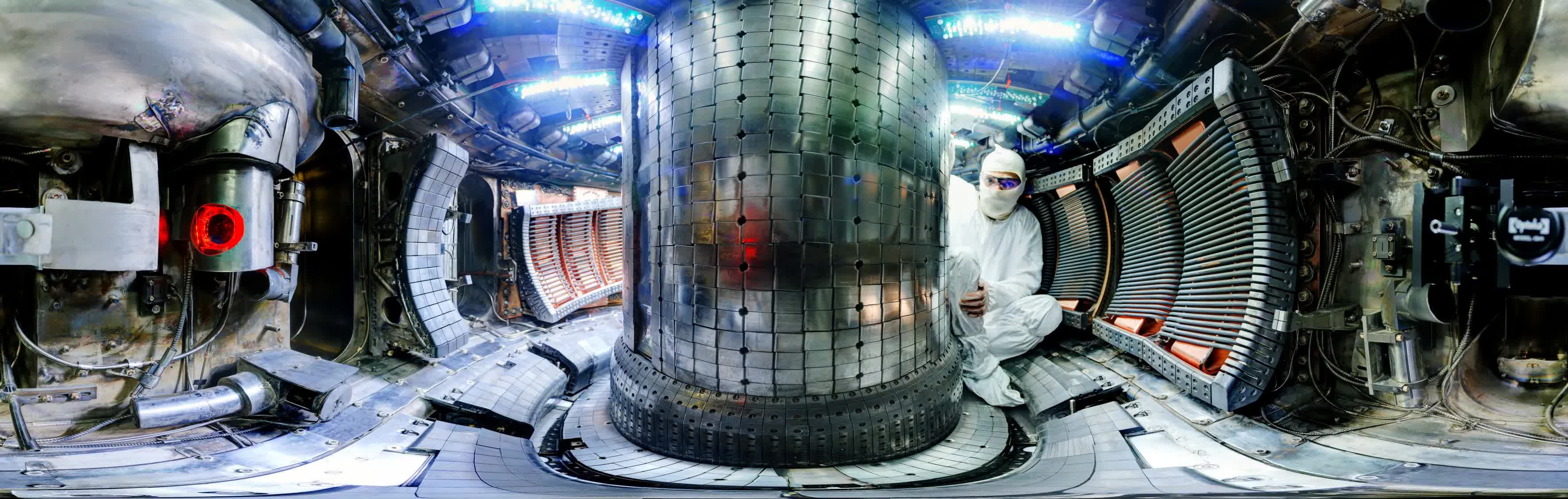
The past few years have seen striking progress. China's Experimental Advanced Superconducting Tokamak (EAST) broke through an empirical density threshold known as the Greenwald limit, showing that tokamaks can operate at higher densities without destabilizing.

The WEST reactor in France and South Korea's KSTAR have also extended plasma durations well beyond previous benchmarks. These testbeds are now feeding real-world data into the next major experiment – ITER, a 23,000-ton reactor under construction in southern France and the most ambitious fusion science collaboration to date.

ITER, backed by more than 30 countries, is designed to demonstrate that controlled fusion can generate more power than it consumes. Its centerpiece, the central solenoid, is the world's most powerful magnet and functions as the beating heart of the system, driving the plasma currents needed for sustained reactions. The arrival of the solenoid's final module in France in late 2025 marked a milestone for the project, which has navigated significant technical delays and engineering hurdles since its inception.
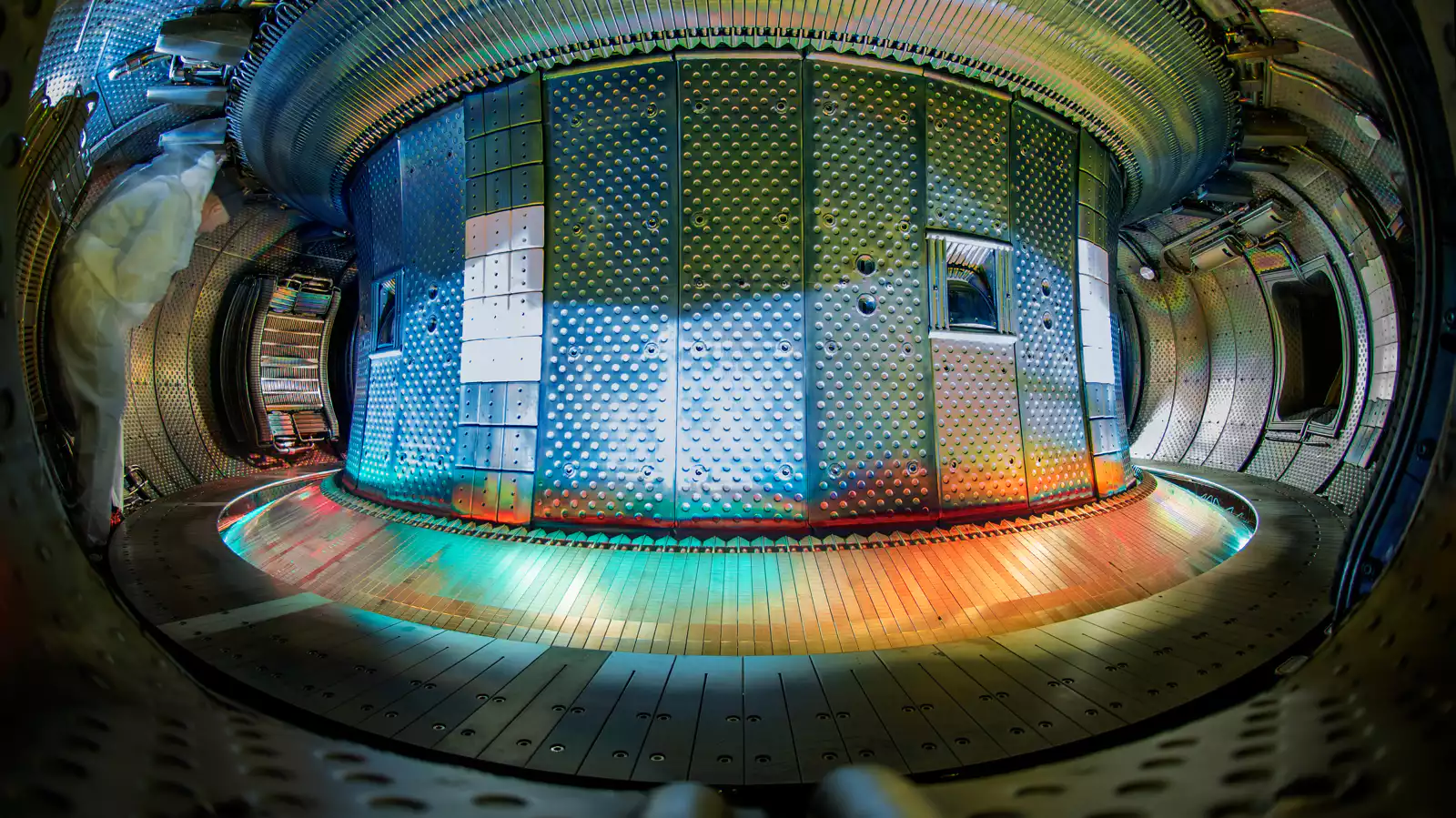
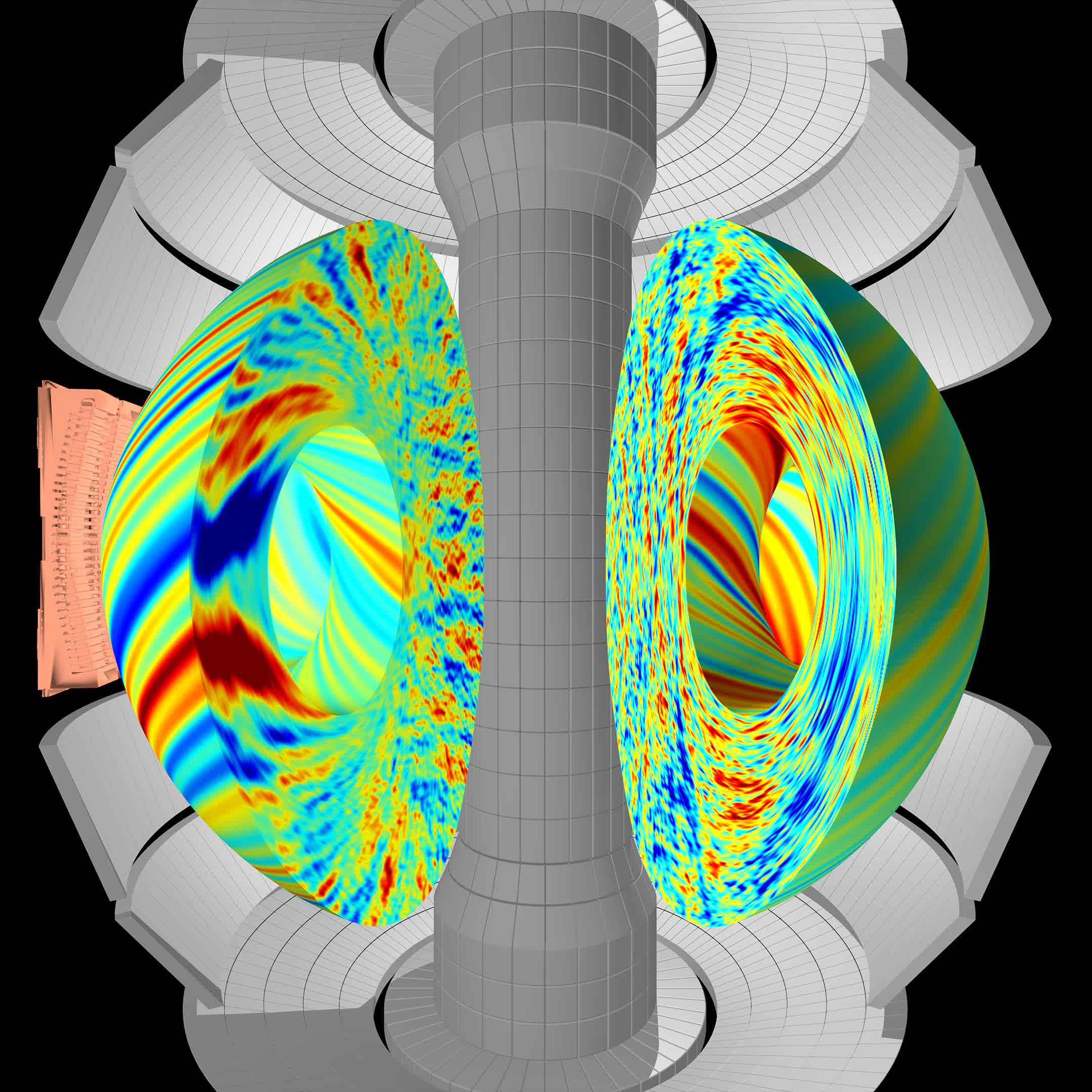
Beyond the reactor halls, artificial intelligence is transforming fusion research. Machine learning models now help predict and correct plasma instabilities in real time, synthesize missing experimental data with statistically reliable estimates, and optimize magnetic confinement patterns at scales too complex for human operators. These tools are compressing the iteration cycle between experiments, accelerating fusion's multi-decade timeline.

The most intractable obstacle remains one of materials. Even if a reactor achieves burning-plasma conditions, the point at which fusion becomes self-sustaining, the surrounding structures must endure intense neutron bombardment and heat flux.

In response, scientists are racing to create alloys, ceramics, and composites that can survive such extremes for practical lifespans. MIT's Laboratory for Materials in Nuclear Technologies, launched in mid-2025, has made this challenge its mandate. Led by physicist Zachary Hartwig, the facility's goal is to combine basic research with large-scale testing to find affordable materials for future fusion reactors.
The convergence of technology, financing, and belief has changed the conversation. After decades of academic seclusion, fusion has become an investment magnet. According to the University of Pennsylvania's Kleinman Center for Energy Policy, private funding surged from just over $1 billion between 2016 and 2020 to nearly $9 billion from 2021 through 2025.

Tech giants such as Google, Microsoft, Amazon, and Meta – each running massive AI data centers with soaring power needs – have joined the search for next-generation energy, forming partnerships with fusion startups. Governments, driven by carbon reduction mandates, are following suit.

Fusion energy's challenges remain formidable: physics still guards its secrets, materials still warp under neutron fire, and economics still favor established energy systems. But the dream of bottling a piece of the sun now feels less like science fiction and more like engineering delayed.

After seventy years of false starts, the race to capture star power may be accelerating.

Permalink to story:

 
A few months ago, I mentioned here that manipulating the local quantum environment would be the key catalyst to improving the tunneling process by helping to bypass the Coulomb barrier. A very recent publication on eurekalert.org from January 20, 2026 verifies that idea.

Quantitative Enhancement of Fusion Probability
Using the Deuterium-Tritium fusion reaction as a benchmark, the study presents striking numerical results. For a collision energy of 1 keV—where fusion probability is typically very low—the application of a low-frequency laser (1.55 eV) with an intensity of 1020 W/cm² can enhance the fusion probability by three orders of magnitude. Increasing the intensity to 5×10²¹ W/cm² boosts the fusion efficiency by nine orders of magnitude.

This enhancement effectively bridges the gap between low-temperature and high-temperature fusion conditions. As the study highlights, the effective cross-section at a low energy of 1 keV with laser assistance becomes comparable to the cross-section at 10 keV without lasers.”

So, this improvement makes Boron Proton fusion, which requires an extreme temperature of 3 billion degrees Celsius, achievable! Boron-proton fusion is the holy grail of fusion because it produces no neutrons (no radioactive waste) and produces three high-speed charged alpha particles (helium nuclei) (~8.7 MeV per event), which can be handled by an electromagnetic field and converted to electricity directly in one step with high efficiency (~80-90%).

That type of fusion of Boron it does not require the typical plasma environment (which will be to difficult to maintain at such high temperature), it is archived on spot via lasers. So, by using the “quantum path interference technique” to control the fusion process, with wavepacket engineering by tailoring the laser pulse can prepare the hydrogen and boron nuclei as specific "quantum wavepackets" and during interference, if align the "phase" of these wavepackets correctly, they can interfere in a way that further boosts the tunneling rate, making fusion much more likely at lower energies.
 
Last edited:
Private funding jumping from $1 billion to $9 billion is wild. Nothing says fusion is getting serious like Big Tech showing up because their AI servers are eating electricity faster than humans can build power plants.
The surge in private funding happened well before the AI power crunch happened.

It all comes down to one thing in the end - The discovery of high-temperature superconductors and their much stronger magnetics now allows the possibility of achieving greater than unity power generation.
 
Stellarators are still a better bet IMO, far less complex than Tokamaks and can be made far smaller and cheaper. Hopefully the AI is being applied there as well.
 
What happens when the power for the super-duper magnets gets cut? You know, like for example, when the local AI factory is sucking up all the juice?
 
At some point the meme of fusion power is x amount of years away will come to an end.
That might actually be another milestone for human civilization, we'll always need more and more energy and this seems a bit more feasible than dyson sphering our sun at least.
 
Another pipe dream used to funnel money. I am old enough to remember the case of magneto-hydro-dynamic machine , also based on powerful magnets, designed to separate electrons from plasma. I am curious if you find anything about that online, it was another epic fail of official science.
 
False. They aren't any closer than they were in 1916, because that's when they stopped studying physics and just moved into absurd metaphysics. Literally every aspect of QM, QED, and QCD has been falsified for decades, so any regurgitation about those principles is just hand-jobbing a dead horse.
 
I have no idea on timeline for us to finally see useable fusion power. But I'm wondering what the social implications will be when we finally do see it. If, and how long till it drives down the cost of power to the point where it's too small to be considered. Will this usher in the "post scarcity" society many people say we desperately need to create an egalitarian society? Or will it be the final tipping point in the struggle between the haves and the have nots? Every time I turn around Elysium seems to be closer to coming true...

https://en.wikipedia.org/wiki/Elysium_(film)
 
At some point the meme of fusion power is x amount of years away will come to an end.
Yes, at some point, but not any time soon. Sorry to burst everyone's bubble who's already celebrating fusion power. We're still a decades away from safe, useable, and reliable fusion power. The current record (achieved last year) is around 22 minutes of sustained fusion reaction. After 70 years of research this is the best we can do. This is a far cry from a reactor that can run 24/7 for months or years without shutting down or having any major issues.

I want fusion power as much as the next gut, but it's just not going to happen in our lifetimes. Yes, all the scientists involved will celebrate all the "breakthroughs" happening every few months. Obviously they want more funding, so they have to put lipstick on their 22 minute pig, so to speak.

PS. - Don't worry though, if you like memes then reliable fusion power will converge with both the Mythical Man Month and the Year of the Linux Desktop.
 
Same article every single year.

No one alive today will see a fusion reactor imo. Maybe someone born in 25 years will see it when they’re very old.
 
Same article every single year.

No one alive today will see a fusion reactor imo. Maybe someone born in 25 years will see it when they’re very old.
The working prototype is a few months away. They just need to model the "Quantitative Enhancement of Fusion Probability Process" and add a low-frequency laser to the mix to achieve fusion at much lower energies. Think of the Coulomb barrier as a hill between two positively charged nuclei. Without help, nuclei need high kinetic energy to climb it or must quantum tunnel through the hill. A low frequency, high amplitude electric field from a laser slowly tilts that hill, shortening the tunneling distance and raising the tunneling probability during the field extrema, like lowering one side of the hill while two hikers try to meet. Because the field form the laser is slow compared with nuclear collision times, nuclei see a quasi-static potential during the critical moment; this is why low frequency is more effective than X-rays for Coulomb barrier suppression. So the best regime comes from strong field amplitude, long wavelength, short interaction time to avoid thermalizing electrons. With even a modest Coulomb barrier thinning can exponentially increase tunneling probability.

There is not enough tritium (only a few kilograms worldwide), and tritium was chosen simply because it has the lowest energy requirements for the reaction. However, with a way to thin the Coulomb barrier, the process will shift to deuterium-deuterium fusion as a first step. In a few years, we will have portable, clean boron reactors that produce only three charged alpha particles, which when later they slow down they will capture electrons and they will become helium-4. You can deaccelerate the positively charged alpha particles with an electromagnetic field, and take their kinetic energy as electricity with high efficiency. The helium is a harmless gas(no neutrons, no gamma rays, no x-rays because electrons stay cool at lower energies).

Furthermore, if the Coulomb barrier proves easy to manipulate, we can reach proton fusion with silicon, which produces an antimatter particle (a positron) every four seconds. We can use that antimatter as a tool to bombard other elements and easily trigger fusion or fission.

Humanity has entered a new era.
 
Last edited:
Sure, it's all optimistic fusion and fun...until a Resonance Cascade is triggered, then it's headcrab zombies running through the streets. We've seen this future people and it's not pretty! ;-)
 
The working prototype is a few months away.

If you are referring to ITER, then ITER is not a prototype. It is a technology demonstrator. It is to demonstrate that we can build a fusion reactor that produces NET power, and operate and sustain it.

If that is successful, say 10-20 years of running and testing and enhancementing and modifying, and I by-god hope it will be, from that they'll build a demonstration power plant, something that proves it is possible to build and operate a power-plant around fusion power. This may or may not be grid connected, but it'll not be intended to power the grid, it'll be to demonstrate sustained operations in a production-like capacity. So, that's about, best case, 30 years away (10-20 years of ITER operations, modifications, development, then 20+ years after that to build the demonstration power plant).

If the demonstration power plant is successful, and again I by-god hope it will be, from that will be derived the prototype for functional grid-connected fusion power generation, again allowing 10-20 years for the demonstration plant to prove itself, inform operations, economics, etc. then another 20+ years to build the prototype grid-connected-production fusion power-plant.

So, best case, it'll be 60 years before we see a grid-connected, functioning, generating, operating prototype (as in first-of-its kind direct model for future ones) fusion power plant.

This all assumes we are following ITER's roadmap at least, no telling what discruptions could come from other developments (other university research, countries (e.g. China), startups, etc.).
 
If you are referring to ITER, then ITER is not a prototype. It is a technology demonstrator. ...
No, he's certainly not referring to ITER. It looks like he's referring to a method that doesn't even use confinement at all.

As for the designation of "prototype" you could say these are all prototypes for technology demonstrators. They tend to get scrapped before they get finished.
 
Back