AI data centers are turning to jet engines and diesel because the grid can't keep up

Skye Jacobs

Posts: 1,913   +58
Staff
Cutting corners: The jet engine – once a symbol of speed and flight – is finding new life on the ground, fueling the world's artificial intelligence infrastructure. Faced with long delays in connecting to electric grids and limited access to large gas turbines, data center developers are increasingly deploying aeroderivative turbines and diesel generators to keep AI systems running.
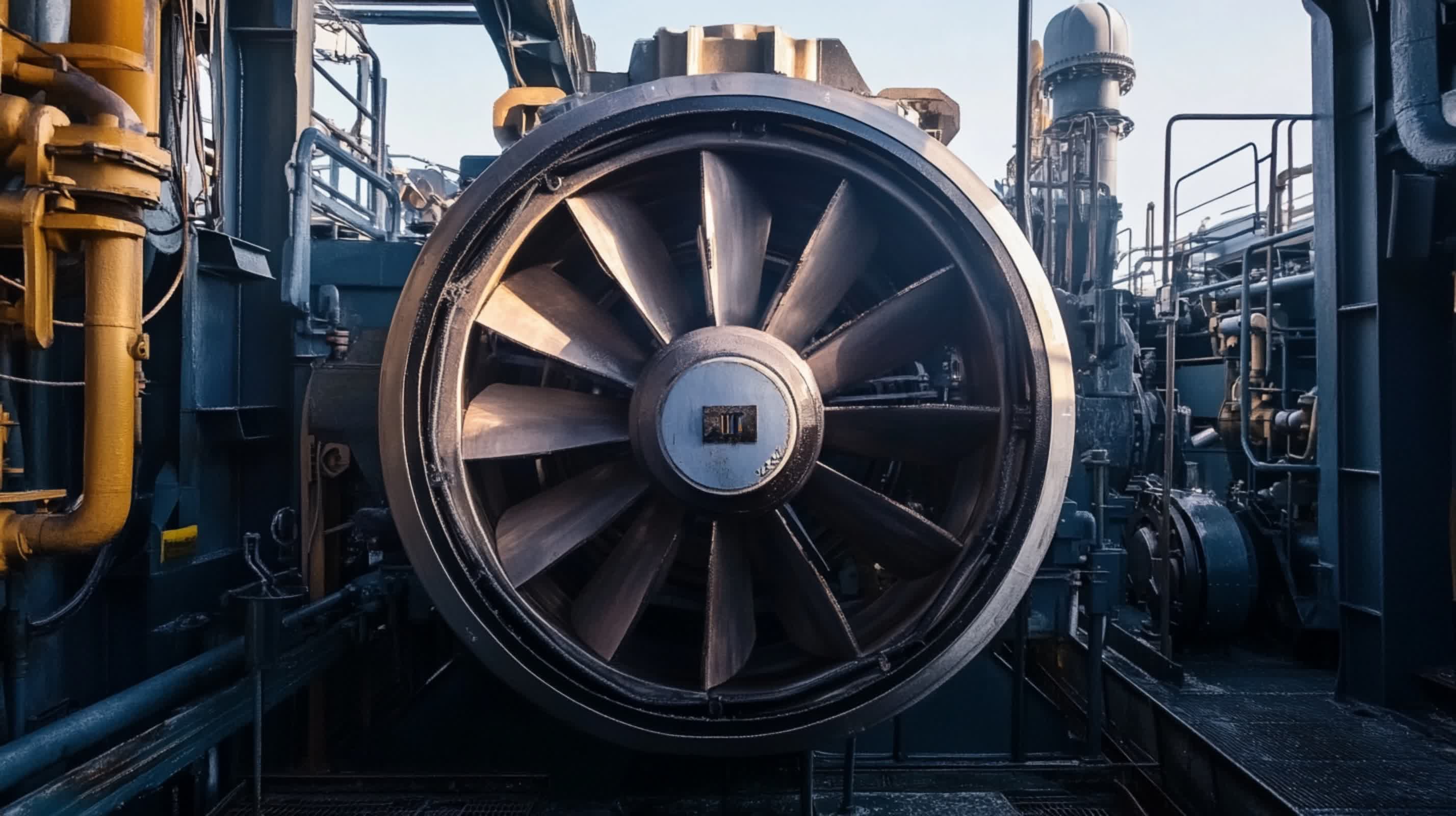
Manufacturers of turbines originally designed for aircraft are now reporting a surge in orders as hyperscale developers seek stopgap ways to secure electricity. "The incentives have never been greater for any sort of technology that can supply power," Kasparas Spokas, director of the Clean Air Task Force's electricity program, told The Financial Times.

Grid connection queues stretching as long as seven years have left developers with few alternatives. While grid power remains cheaper and cleaner, the backlog – combined with growing public discontent over data centers' impact on local utility bills – has made on-site generation a pragmatic choice. By installing turbines and generators directly beside their server farms, companies can continue training and operating AI models without waiting for new transmission capacity.

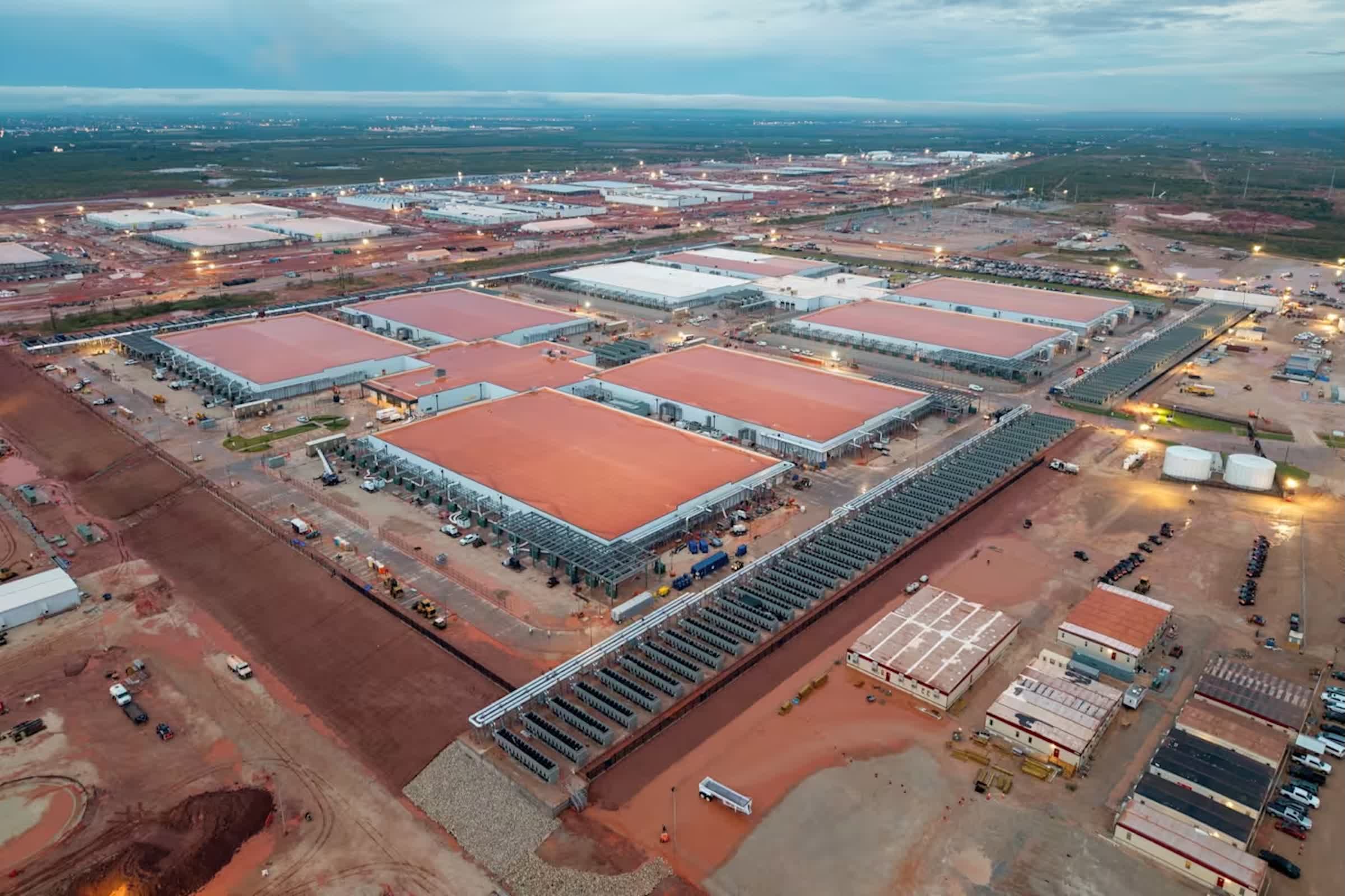
GE Vernova is among the suppliers seeing an uptick in demand. The company is providing data center developer Crusoe with aeroderivative turbines expected to supply nearly one gigawatt of power to the Stargate facility in Texas, a joint project by OpenAI, Oracle, and SoftBank.
GE Vernova Chief Financial Officer Ken Parks told investors in December that the company was experiencing "growing demand" for its aeroderivative and smaller gas units, which "serve as bridge power supporting data center needs." Orders for these turbines rose by roughly one-third in the first three quarters of 2025 compared with the same period a year earlier.

ProEnergy, another supplier, has sold more than 1 gigawatt of its 50-megawatt gas turbines adapted directly from jet engines. The machines incorporate CF6-80C2 cores – engines that once powered Boeing 747s – though the company is now building more components from scratch.

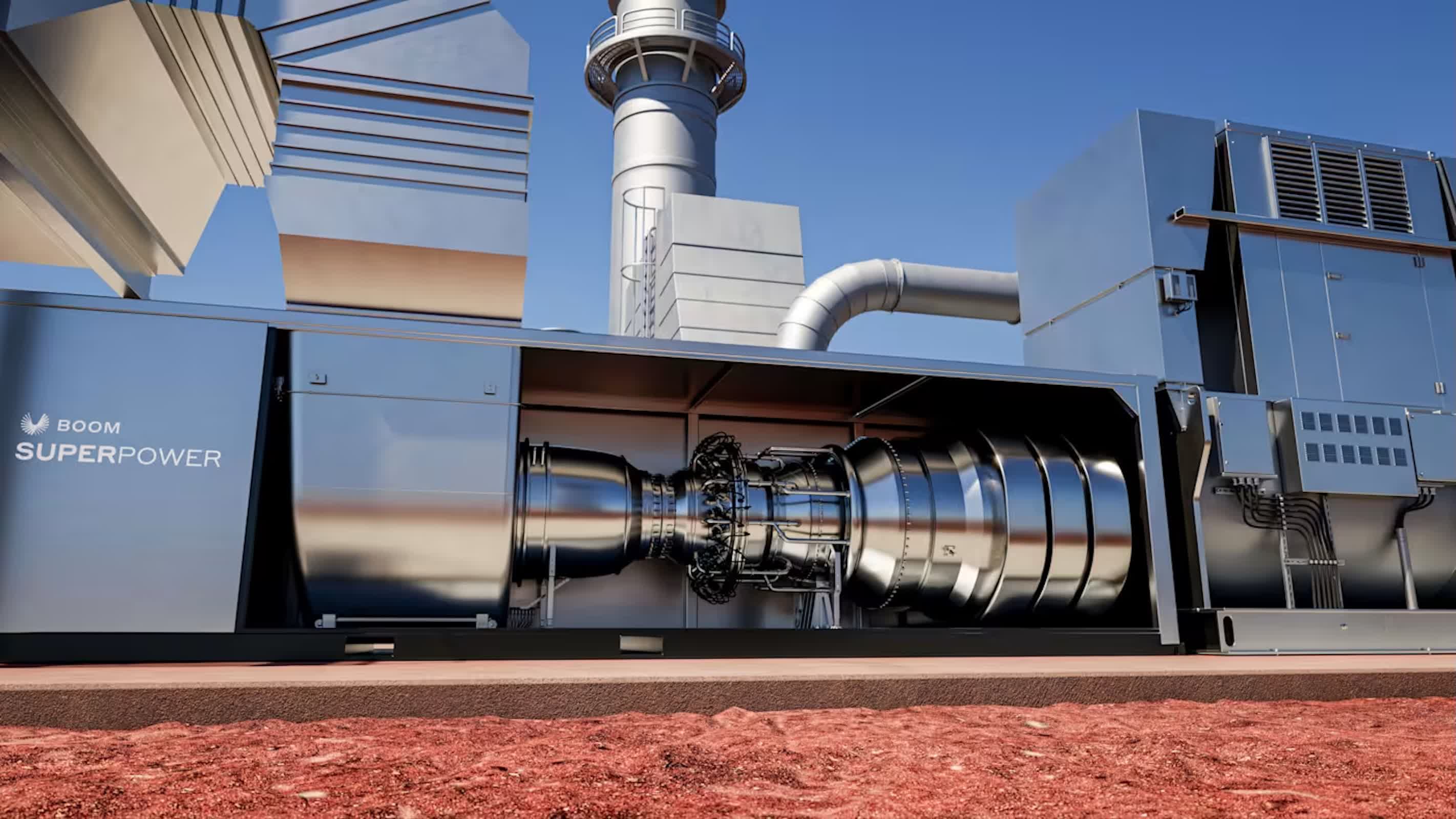
Boom Supersonic, an aviation start-up backed by Sam Altman, has agreed to sell turbines to Crusoe capable of delivering about 1.2 gigawatts of electricity. The units are "virtually identical" to those built for Boom's supersonic jets. "Three or four years ago, I imagined we would do the airplane first and energy second," Chief Executive Blake Scholl said. "But then I got a call from Sam Altman who said, 'Please, please, please make us something.'" Boom expects turbine sales to help finance its aviation program.

Diesel generation is also making a comeback. Cummins, a major manufacturer of industrial generators, has sold more than 39 gigawatts of capacity to data centers and nearly doubled its output this year. While such systems have traditionally provided backup power, the company's data center executive director, Paulette Carter, said Cummins is seeing "growing interest in on-site primary power."

US Energy Secretary Chris Wright told Fox News in November that officials were exploring ways to use these existing units to shore up the grid. "We will take backup generators already at data centers or behind the back of a Walmart and bring those on when we need extra electricity production," he said.
But reliance on fossil-based energy carries substantial environmental costs. Small on-site units are typically less efficient than grid-scale gas turbines or renewable energy sources. Regulators in several states are beginning to relax restrictions on generator use to accommodate rising data center demand.

In Northern Virginia – the region often called Data Center Alley – the Department of Environmental Quality is considering allowing diesel generators to operate for longer periods. The US Environmental Protection Agency has also signaled that such generators could help stabilize local power supplies.

Even as developers race to secure electricity, the financial trade-offs are significant. On-site generation lacks the economies of scale that make utility power cheaper. Analysts at BNP Paribas modeled the cost of electricity from a small behind-the-meter gas plant that Williams is building in Ohio, where Meta will be a customer. They estimated a price of $175 per megawatt-hour – roughly twice the average cost paid by industrial users.

Image credit: The Financial Times

Permalink to story:

 
Any form of electricity generation is fine.
What's most important right now is the blazing fast removal of any bureaucratic restrictions that may delay building or setting in operation of new power generation facilities.
 
Good, get off the public grid, you LLM vultures. If the orange menace brings back the Green Power initiatives, maybe we can keep up with China, who is winning the race right now.
 
Good, get off the public grid, you LLM vultures. If the orange menace brings back the Green Power initiatives, maybe we can keep up with China, who is winning the race right now.
so you're in favor of local power generation methods that will put out more pollution then central solutions? Not very green of you.

The Green Power initiative was a total failure, solar and wind cant power these datacenters. You need nuclear for that, and environmental groups constantly oppose them.
 
The Green Power initiative was a total failure, solar and wind cant power these datacenters. You need nuclear for that, and environmental groups constantly oppose them.
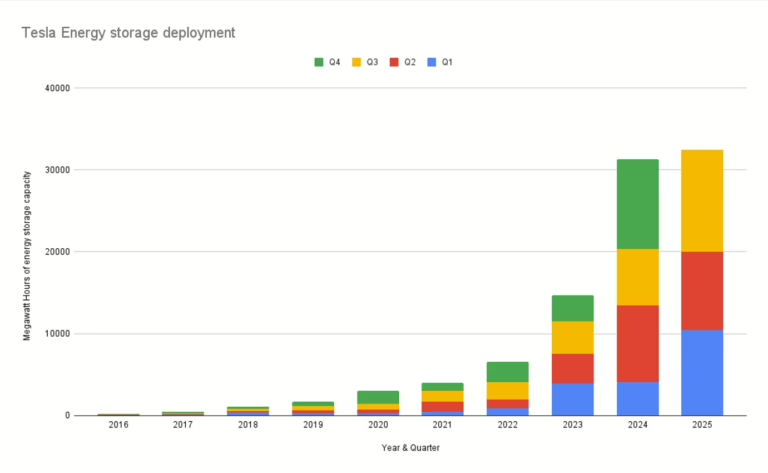
To be fair, Tesla’s battery storage is making renewable energy generation possible. Tesla is making record revenue in the energy sector—$3.4 billion dollars this most recent quarter which is a 44% increase year over year. They deployed 12.5GWh of battery storage in Q3 which is an 81% increase YoY and shows its growth is outpacing solar deployments. Tesla focuses on grid scale solutions, so they’re a key player here.

https://www.ess-news.com/2025/10/28...ed-last-12-months-breakout-q4-quarter-coming/
1TeslaEnergyQ3.image_.1-768x473-jpg.avif


In general, if you want renewables to power data centers overnight, you need to store up to 12 hours of electricity (probably less). These battery deployments will allow 1 GW or more of solar deployments every quarter (and increasing). That can power up to 40 large data centers every year.
 
Last edited:
Perhaps we could slip into a bio-thermoelectric capture pod while we sleep to feed the AI machine.
 
And everyone thought shutting down coal plants along with not building NEW nuclear plants, then trying to force everyone to "buy an EV".
Then, they hyped up the "green" nonsense of wind/solar. The problem with that is the wind doesn't always blow & the sun doesn't always shine, not to mention the amount of material it takes to build the batteries, solar panels, turbine blades (last one have to be replaced often).
Whereas a coal or nuclear plant can just "crank up" the generators more if more power is needed in the event of a very warm or very cold period requiring more energy.
 
Any form of electricity generation is fine.
What's most important right now is the blazing fast removal of any bureaucratic restrictions that may delay building or setting in operation of new power generation facilities.
No, it's not "fine", millions of people die prematurely every single year due to air pollution, how can you say such rubbish?
 
And everyone thought shutting down coal plants along with not building NEW nuclear plants, then trying to force everyone to "buy an EV".
Then, they hyped up the "green" nonsense of wind/solar. The problem with that is the wind doesn't always blow & the sun doesn't always shine, not to mention the amount of material it takes to build the batteries, solar panels, turbine blades (last one have to be replaced often).
Whereas a coal or nuclear plant can just "crank up" the generators more if more power is needed in the event of a very warm or very cold period requiring more energy.
Yeah, it can just "crank up" both the generators, and your cardiovascular conditions. What a lovely tech indeed.
 
Actually being off grid would save the center from having a complete backup power source which it likely has to anyway, issue is generating that much power without the grid is difficult and a massive facility in of itself. Definitely the next step logically in any case.
 
Don't worry. I'm sure that they will STILL manage to pass on some of the expenses to local grid consumers.
I worked on aircraft gas turbines for 40 years. Can't say that I would like to live anywhere near one of these data centres.
 
No, it's not "fine", millions of people die prematurely every single year due to air pollution, how can you say such rubbish?
Seriously? How do you know who dies "prematurely"? I wasn't aware people have shelf life and expiry dates.

Anyway, compare that to how many will die prematurely in the absence of electricity generation.
 
so you're in favor of local power generation methods that will put out more pollution then central solutions? Not very green of you.
You somehow miss-read the scale. Those AI datacenters may gobble more electricity than some countries. Yes. Whole countries. With all industry, transport and homes.

The Green Power initiative was a total failure, solar and wind cant power these datacenters. You need nuclear for that ...
And not one.

... and environmental groups constantly oppose them.
Too much power gives too much independence.
Go back to caves.
 
LMAO, a few years ago they were telling us plebs we can't have gas stoves and to eat bugs instead of red meat. Now all of a sudden they don't care how much carbon THEY put into the atmosphere.

Now hop in your car and go where your boss can see you staring at a screen. It'll make it easier to develop their reallocation of assets plan.
 
Maybe an unpopular opinion, but maybe all of the world governments need to put restrictions in place to try and control how many of these big AI data centers can be built that suck up all of the resources wherever they are built. If having them around makes life harder for the local people and raise costs such as electric bills because the grid is running dry on power output.

If these AI farms are also making everything more costly because they are buying up all of the world's resources such as memory products which makes anything that uses memory chips skyrocket in price. Then we have a problem that needs to be addressed by the world's governments. These AI data farms are growing at a much faster rate than the world has resources for. They need to put caps on how many AI data farms can be built around the world and they need to do it now as we already reached the limited of what the worlds resources can handle. Like I said my opinion is probably unpopular, but it is mostly valid.
 
Back