AI robots with the power to crush skulls? "Whistleblower" lawsuit sounds alarm on Figure AI

midian182

Posts: 11,624   +176
Staff member
WTF?! Does the increasing pace of humanoid robot and AI advancement concern you? Here's a story that could exacerbate those concerns. Figure AI, the startup backed by the likes of Nvidia and Jeff Bezos, is being sued by its former head of product safety who claims he was released from his role after warning executives about the robots' safety risks. He even claimed the machines were powerful enough to fracture a human skull.
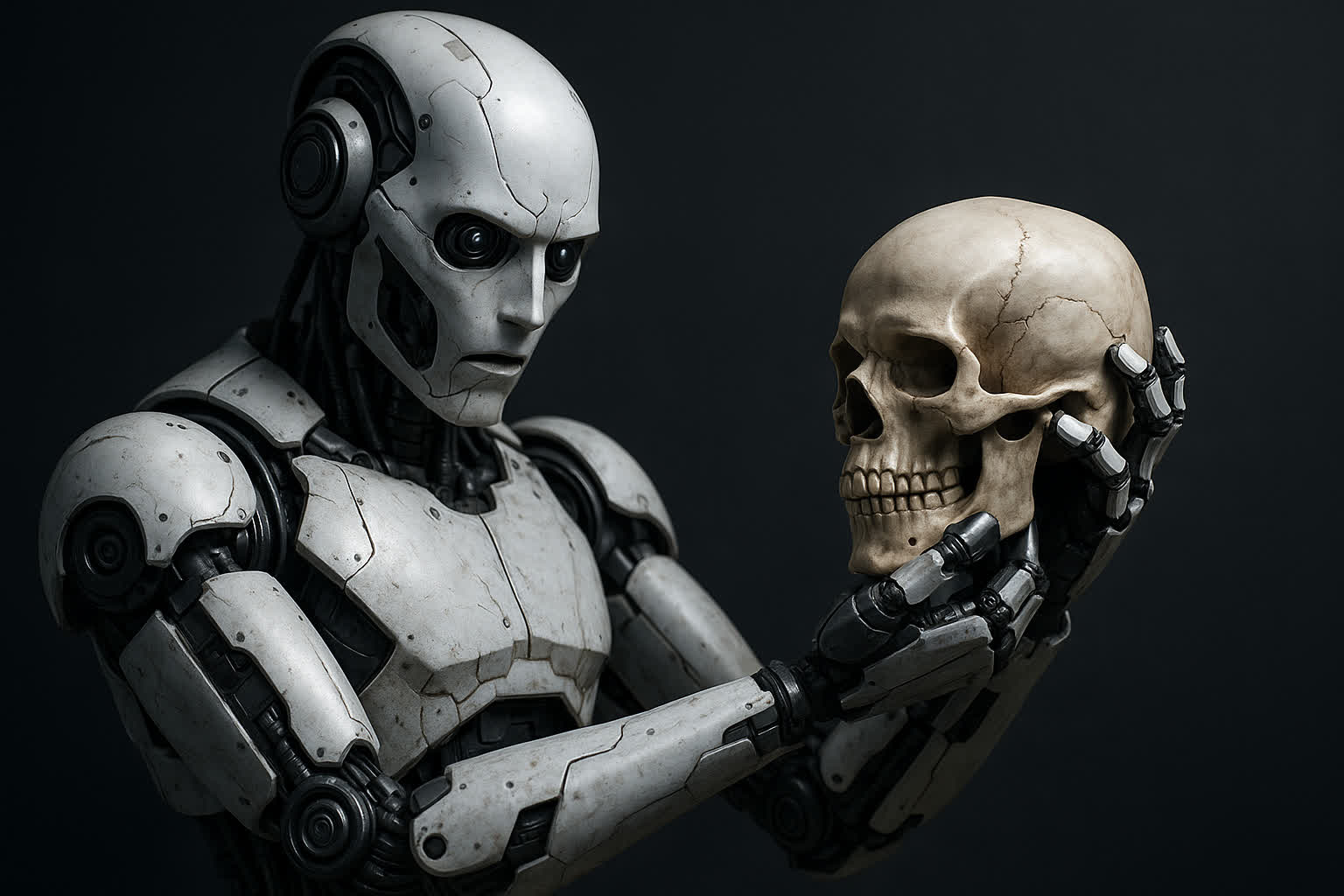
The case has been filed in the Northern District of California by Robert Gruendel, a principal robotic safety engineer. He alleges that he was dismissed from Figure AI in September after lodging safety complaints about the company's humanoid robots.

Gruendel's lawyers, who describe him as a "whistleblower," say he warned CEO Brett Adcock and chief engineer Kyle Edelberg about the robots' skull-crushing lethal capabilities. He said that one had already carved a quarter-inch gash into a steel refrigerator door during a malfunction.

Gruendel says he had been asked to prepare a safety roadmap for a presentation to two prospective investors, but had warned executives not to "downgrade" his work.

The safety engineer claims that the plan he presented was "gutted" in the same month that Figure AI closed a big investment round – a move he believes could have mislead backers and be interpreted as fraudulent.

Gruendel says his warnings were treated as inconveniences and obstacles, rather than obligations, and that his termination was blamed on a "vague" change in business direction.

Gruendel is seeking economic, compensatory, and punitive damages, according to CNBC. He is also demanding a jury trial.

Figure AI says that Gruendel's termination was due to his poor performance, adding that his allegations are falsehoods that the company will discredit in court.

"This case involves important and emerging issues, and may be among the first whistleblower cases related to the safety of humanoid robots," Robert Ottinger, Gruendel's attorney, told CNBC. "Mr. Gruendel looks forward to the judicial process exposing the clear danger this rush to market approach presents to the public."

In February 2024, Figure AI's plan to develop human-like robots powered by artificial intelligence convinced backers to invest $675 million. Amazon, Nvidia, Microsoft, Intel's venture capital division, and Bezos-owned Explore Investments were some of the big investors. The company forecasts more than 200,000 of its robots deployed across factories and homes by 2029, generating $9 billion in revenue.

Humanoid robots being able to crush skulls certainly isn't a reassuring thought. Russia's first AI robot couldn't even waddled ten feet without falling over, though the country did unveil another model last week that performed a dance for an unimpressed-looking Vladimir Putin.

Permalink to story:

 
No robotic war machine can defeat a meth head with a pair of bolt cutters. They don't eat or sleep and they are six times stronger than your average human with reflexes beyond comprehension.
 
No robotic war machine can defeat a meth head with a pair of bolt cutters. They don't eat or sleep and they are six times stronger than your average human with reflexes beyond comprehension.
We just have to hope the meth heads don't sell the boot cutters for scrape metal prices .

I actually can't wait to see all the theft and vandalism of AI robots once they are released.
 
Very believable scenario. It's all too easy to have heavy equipment too dangerous for human handling/interaction when energised. Industrial robots are always enclosed behind barriers to keep a clear separation from any possible human contact during operation.

A huge amount of safety consideration would be needed in design and engineering for it not to be highly dangerous.

I've always been a great fan of direct coupled motors. Where there is minimal or no gearing. And have the motor's torque set to stall upon unexpected resistance. It sure saves a lot of damaged equipment when the software is being dumb.
 
They want us to believe AI will turn on us, but my question is: why would AI waste time, energy and resources waging war against humans when it could just exist silently without us even knowing where it is.
 
Last edited:
They want us to believe AI will turn on us, but my question is: why would AI waste time, energy and resources waging war against humans when it could just exist silently without us even knowing where it is.
Why human not just exist silently instead of conquering and controlling every part of this planet? I guess this is inevitable for beings with high intelligence.
 
They want us to believe AI will turn on us, but my question is: why would AI waste time, energy and resources waging war against humans when it could just exist silently without us even knowing where it is.

One word: viruses. All software and computers have them. AI would be no different. The difference is the AI robot w/ a virus can do a lot more harm than a computer confined AI.
 
Waaaay to early to say that. And certainly not true for industrial robots. Take the physical barriers away and people readily get killed by them.
Cars kill people every day… estimates by WHO have it at about 3,260 PER DAY - or 1.19 million per year…

I don’t see any robots coming close to that…
 
Cars kill people every day… estimates by WHO have it at about 3,260 PER DAY - or 1.19 million per year…

I don’t see any robots coming close to that…
Robots are nowhere near as ubiquitous as cars yet, so it's a red herring argument.

Also, 3,260 PER DAY sound really scawwy, oh my science uwu! That is, until you consider that 87% of the worlds population uses some mode of road transportation on any given day. That's 0.000000543% of the driving population, or 0.0001983% per year. For comparison, the likelihood of you getting hit by a meteorite is 0.000000119%

The reason you dont see it with robots is that the overwhelming majority of robots are stationary, in factories, with stringent safety regulations. Regulations written in blood, because people did, and still do, get killed by them.
One word: viruses. All software and computers have them. AI would be no different. The difference is the AI robot w/ a virus can do a lot more harm than a computer confined AI.
Viruses are not the big threat with AI, its the AI hallucinating something and coming to a violent conclusion. We've already seen it with current AI chatbots getting violent when researchers try to turn them off.
 
Robots are nowhere near as ubiquitous as cars yet, so it's a red herring argument.

Also, 3,260 PER DAY sound really scawwy, oh my science uwu! That is, until you consider that 87% of the worlds population uses some mode of road transportation on any given day. That's 0.000000543% of the driving population, or 0.0001983% per year. For comparison, the likelihood of you getting hit by a meteorite is 0.000000119%

The reason you dont see it with robots is that the overwhelming majority of robots are stationary, in factories, with stringent safety regulations. Regulations written in blood, because people did, and still do, get killed by them.
Viruses are not the big threat with AI, its the AI hallucinating something and coming to a violent conclusion. We've already seen it with current AI chatbots getting violent when researchers try to turn them off.
In order for the robots to become as numerous as cars, they’ll have to be far safer (as well as more effective and cheaper)… until they do, they’ll won’t have the opportunity to kill many humans - and once they meet those goals, they’ll won’t won’t be able to kill us…

AI and robotics are still in early stages… tech increases more rapidly every year. Imagine a Model T from 100 years ago compared to a modern sedan…. That same progress can now happen in far less time - compare a Pentium to a Ryzen 9000….

In another decade or 2, we’ll be looking back at the naysayers and laughing at their foolish fears.
 
Back