Forward-looking: AMD is phasing out its B650 chipset as it shifts focus to the newer B850 platform, positioning it as the core mainstream offering for AM5. The move underscores AMD's effort to streamline motherboard options around more consistent PCIe 5.0 adoption while maintaining flexibility for a broad range of system builders.
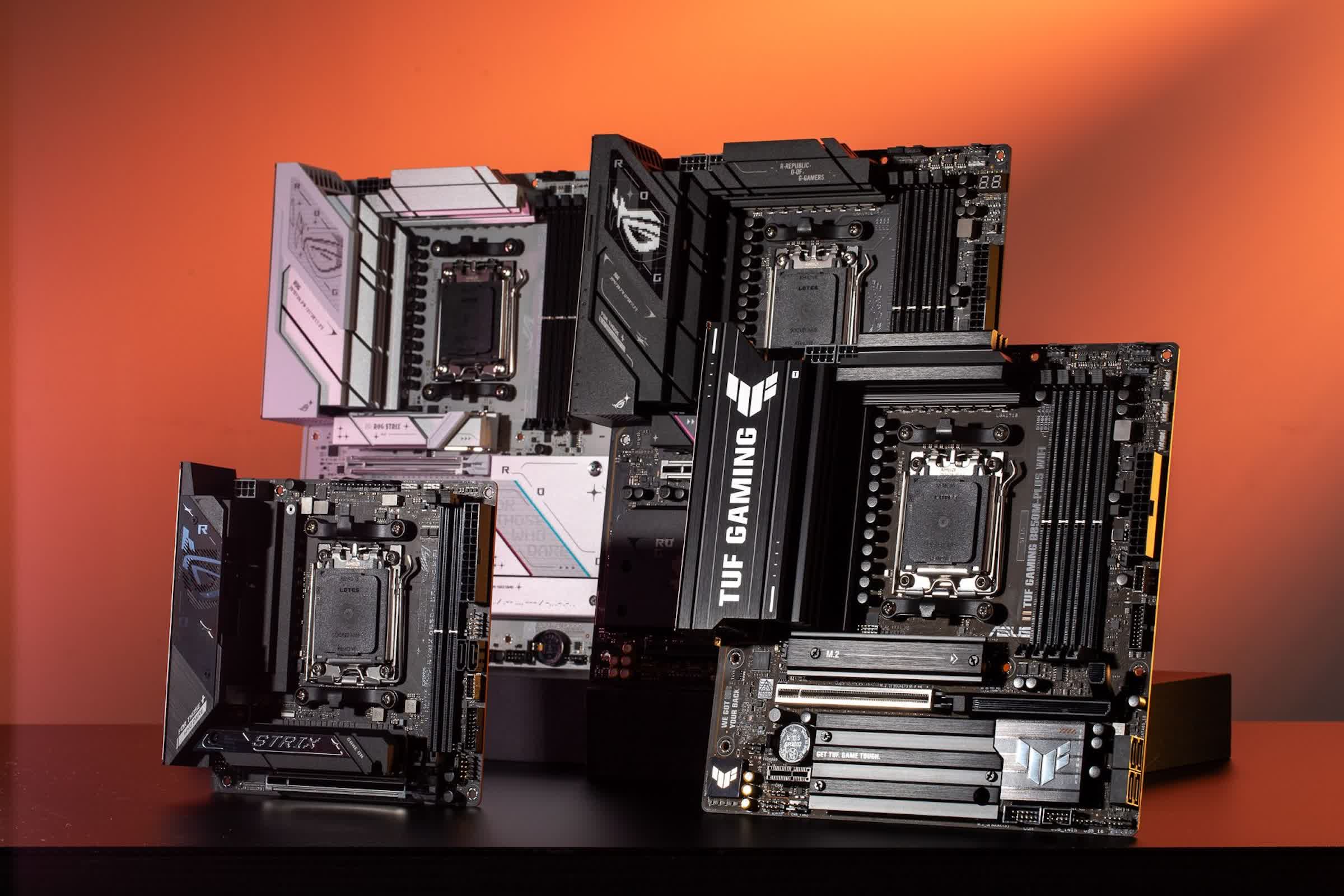
"AMD is working with channel partners to transition the B650 chipset to B850, offering improved connectivity and expanded PCIe Gen 5 support," a company representative told Tom's Hardware. "With faster storage, more flexible expansion, and advanced networking capabilities, the B850 chipset provides a future-ready AM5 platform for gamers, creators, and professionals. The transition is already underway, with existing B650 stock at retail being depleted over the coming quarters."
Launched in 2022, the AMD's B650 chipset played a pivotal role as the first mid-range gateway to AM5, bridging the entry-level A620 and high-end X-series chipsets. However, with steady updates to the AM5 platform – including the arrival of the flagship X870E and X870 in 2024 – the chipset's gradual replacement was widely anticipated.
The AMD B850 chipset introduced in January 2025 now assumes that position in the lineup. Although marketed as a new generation, both the 600- and 800-series chipsets continue to rely on AMD's Promontory 21 silicon. As a result, the B850 shares many architectural similarities with its predecessor but adds refinements designed to better align with the platform's future.
Also see: Guide to AMD Ryzen AM5 Motherboard Chipsets – X870 vs B850 vs B840 vs X670 vs B650 vs A620
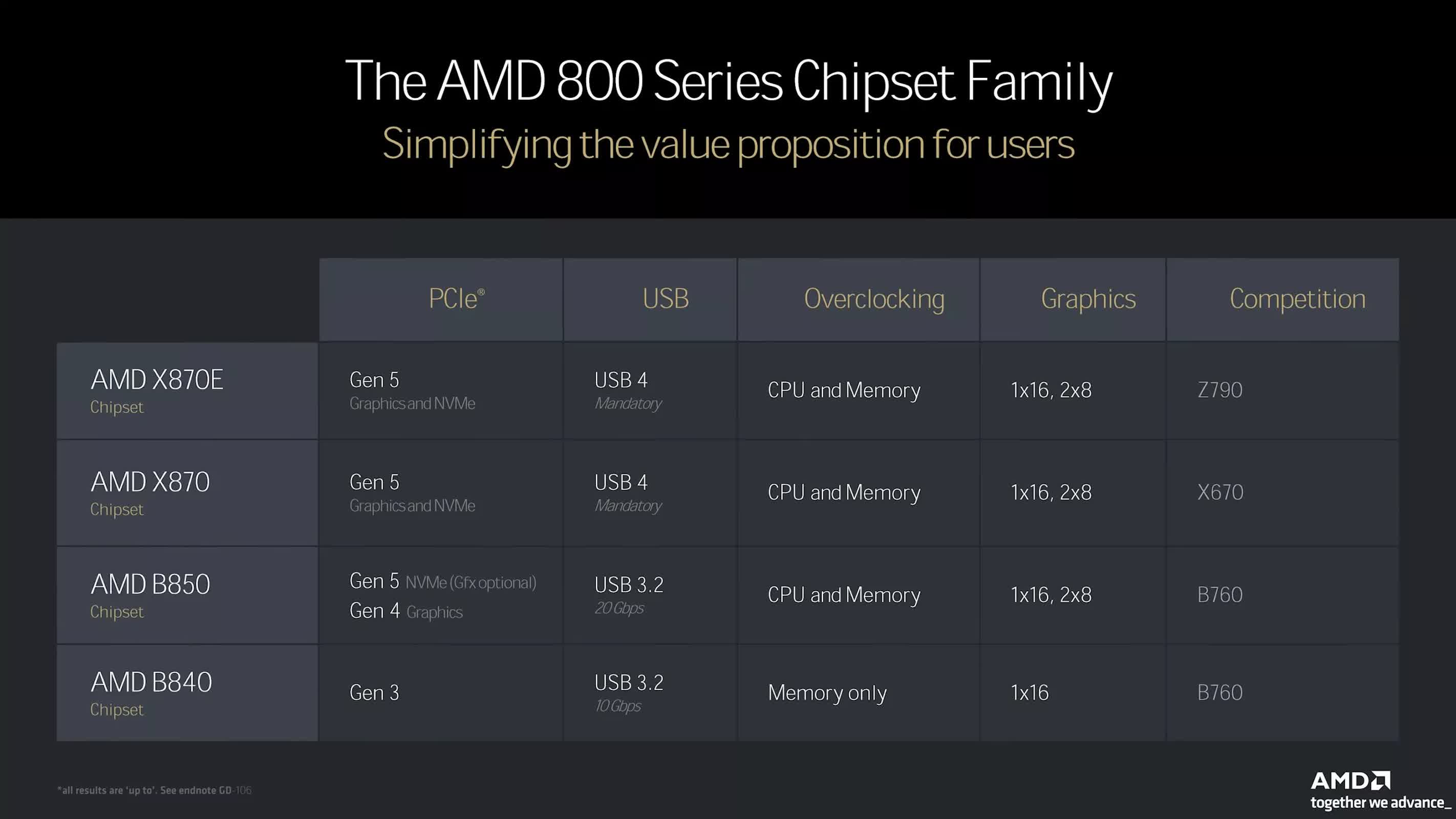
One of the most significant changes concerns PCIe connectivity. On the B650, PCIe 5.0 support for graphics was absent, and PCIe 5.0 storage support was optional. By contrast, the B850 makes PCIe 5.0 mandatory on the primary M.2 NVMe slot.
Graphics slot support remains more flexible: the chipset's primary x16 slot defaults to PCIe 4.0, but vendors can opt to enable PCIe 5.0 depending on the motherboard design. As a result, buyers must check individual board specifications before assuming PCIe 5.0 graphics support. In total, the B850 supports up to 36 usable PCIe lanes of which 4 are PCIe 5.0.
The connectivity package positions the B850 deliberately between AMD's entry-level and flagship chipsets. Out of the box, it offers up to two USB 5 Gbps and one USB 10 Gbps port. Higher-bandwidth options, such as USB 20 Gbps and USB4, are not guaranteed but can be included by vendors on select boards. The chipset also provides four SATA ports and extensive downstream PCIe expansion options.
On the memory side, the B850 continues support for DDR5 with full AMD EXPO profiles, providing headroom for memory overclocking. Unlike entry-level chipsets such as the A620 or B840, the B850 also supports processor overclocking, though the X870E and X870 remain the flagship options with the most robust tuning capabilities.
Motherboard makers are still expected to sell B650 products until inventory is depleted, meaning both chipsets will coexist on shelves for some time. But AMD's decision confirms the B850 as the direction forward for its mainstream desktop market. With its mandatory adoption of PCIe 5.0 storage, broader expansion lane offerings, and balance of connectivity features, the chipset refines the AM5 platform at a lower cost tier than the flagship X-series while moving past the compromises of its predecessor.
Correction (Aug 24): In the original story, we mistakenly reported that the AMD B850 lacks CPU overclocking support, when in fact it does support both CPU and DDR5 memory tuning, just like the B650 predecessor. CPU overclocking is not exclusive to the X870E and X870 platforms.
AMD phases out B650 chipset as B850 becomes new mainstream AM5 platform


