
Looking ahead: Since AMD announced plans to extend FSR 4 support to older Radeon desktop graphics cards earlier this year, users have been waiting for a roadmap for laptop and handheld APU compatibility. The company's latest update on the topic may also fuel ongoing rumors about a new generation of mobile Ryzen chips.
Jack Huynh, senior VP of AMD's Computing and Graphics division, recently told South Korean media that official FSR 4 support will come to a range of APUs, gaming laptops, and handheld gaming PCs before the end of 2026. The Elec reports that the company will also launch a new generation of APUs this year that support FSR 4, possibly the rumored Ryzen Z3 and Z3 Extreme.
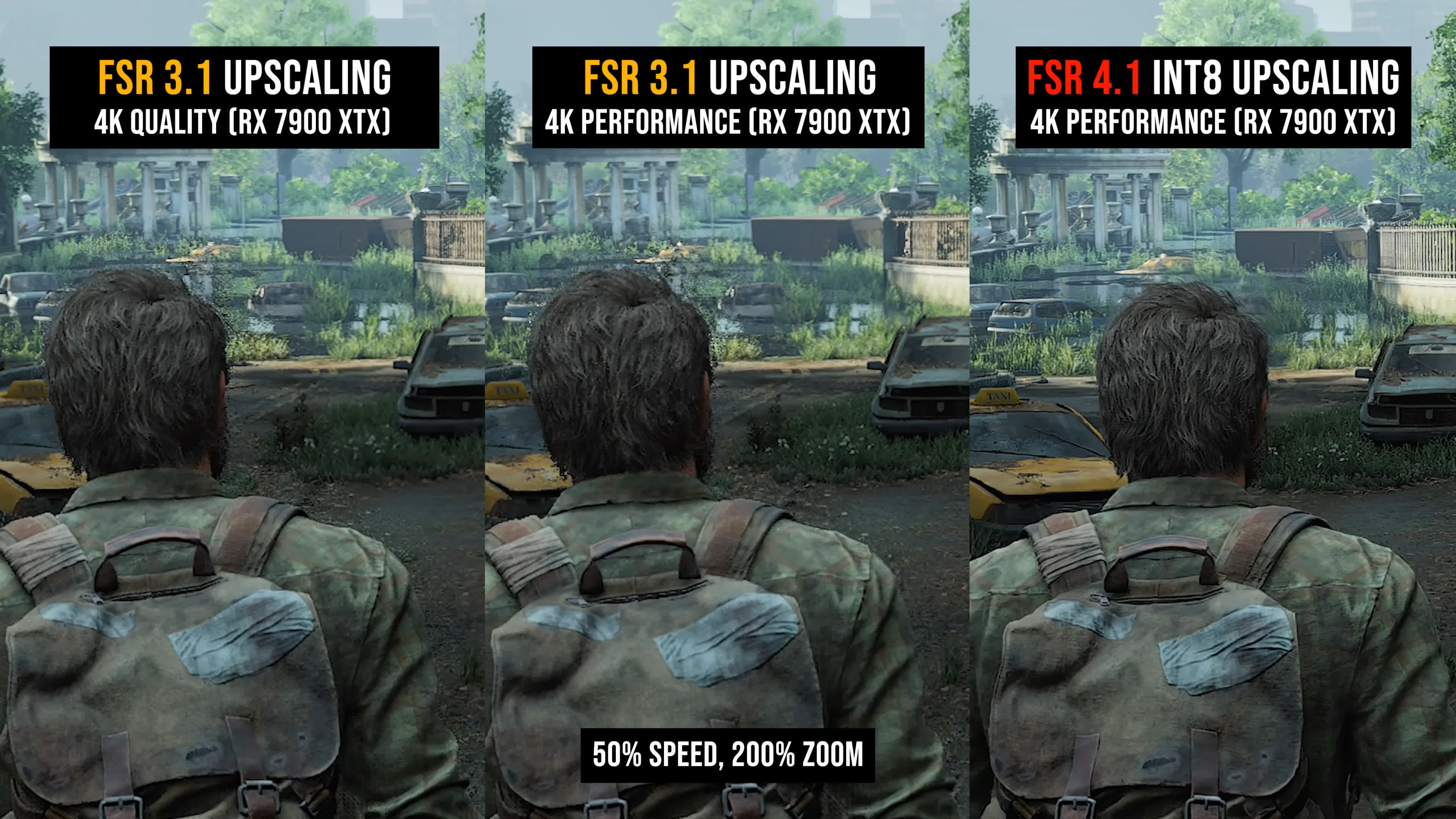
FSR 4, which uses machine learning to upscale games much like Nvidia's DLSS, initially supported only the RDNA 4 architecture, which AMD used in its RX 9000 GPUs. In June, however, the company released a lightweight version for the RDNA 3-based RX 7000 series, swapping FP8 computation for the more widely available INT8.
– Gotou_3rd (@Gotou_kai3) May 6, 2026
At the time, Huynh confirmed AMD was developing an even lighter model for RDNA 3 APUs but offered no further details until this week. That version would bring FSR 4 to devices powered by Ryzen AI Max APUs, as well as handhelds like the GPD Win, Asus ROG Ally X, and Lenovo Legion Go.
The Steam Deck, the standard ROG Ally, and possibly the Xbox Series consoles, however, would likely have to wait until AMD unlocks FSR 4 for RDNA 2 hardware next year.
Meanwhile, the next-generation APUs Huynh mentioned will likely use the "RDNA 4m" architecture referenced in Linux driver updates earlier this year. Last year, AMD said its RDNA 4 strategy was focused on desktop, and the leaked iGPUs aren't really RDNA 4 anyway. Instead, they appear to sit somewhere between RDNA 3.5 and RDNA 4, likely pairing RDNA 4's machine learning support with an RDNA 3.5 base.
Also read: Testing AMD Radeon's Biggest-Ever Software Upgrade: FSR 4.1 on RDNA 3
When leaker Gotou_3rd shared labels for unannounced Ryzen Z3 and Z3 Extreme SoCs earlier this month, well-known tipster Kepler_L2 called them "RDNA 3.5+". Gotou claimed the chips are semi-custom parts in 25mm x 25mm packages, with 12 GPU Compute Units, four Zen 6 CPU cores, and two low-power Zen 5 cores. The Z3 is reportedly optimized for 15W and the Z3 Extreme for 25W.
Import shipping information reported by ITHome also points to a chip codenamed "Gainsborough," which Kepler_L2 says uses the same architecture. That has sparked speculation that it might be the Steam Deck 2 SoC, but it could still be something else entirely.
While the Steam Deck and Steam Deck OLED chips carried Final Fantasy VII-inspired codenames such as Aerith and Sephiroth, those names came from AMD, not Valve. Furthermore, 25mm x 25mm is a bit large for a Steam Deck, and AMD gave the Ryzen Z2 A processor in the ROG Xbox Ally the codename Aerith Plus.
In any case, handheld gaming PCs and other APU-based devices are set to receive substantial upgrades in capabilities later this year or early next year.
AMD says FSR 4 is coming to handhelds and laptops by the end of 2026


