Bottom line: AMD's latest quarter makes clear where the company's business is shifting: toward data centers and AI workloads. The company reported $6.7 billion in data center revenue in Q2 2026, more than double the $3.2 billion it generated in the same period a year earlier and up from $5.8 billion in the previous quarter. Data center now accounts for 58% of AMD's total revenue, underscoring how much demand for AI compute is driving the business.

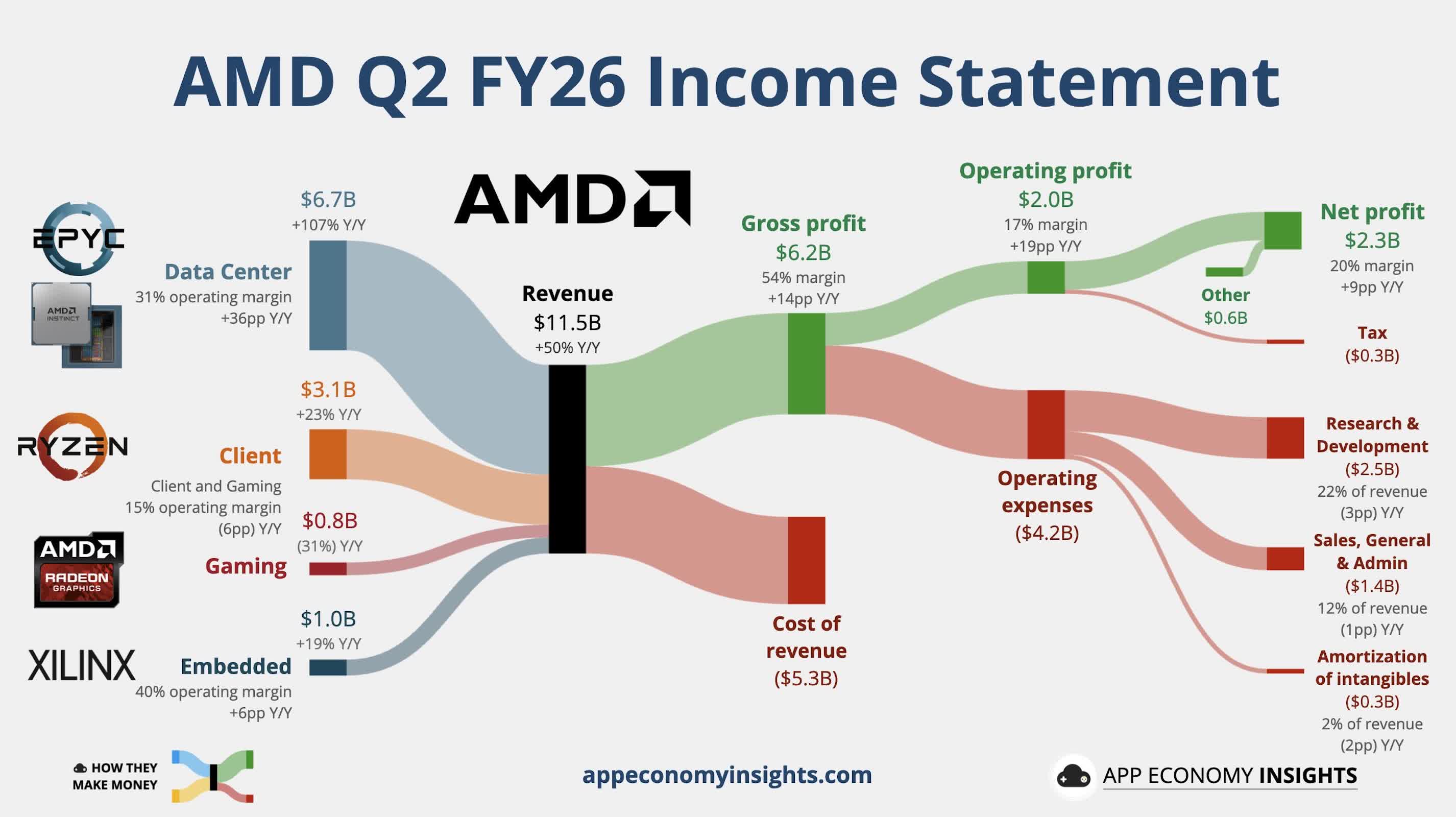
AMD's overall revenue reached a record $11.5 billion, up 50% year-over-year. "Revenue increased 50 percent year-over-year to a record $11.5 billion, driven by continued strength in our Data Center business, which represented 58% of company revenue in the quarter," AMD CFO Jean Hu wrote. That mix puts data center and AI-related compute at the center of AMD's financial results rather than its traditional PC and gaming lines.
On the earnings call, CEO Lisa Su said the company expects this trend to continue. She told analysts that AMD anticipates "data center segment revenue to more than double year-over-year in 2027," pointing to a longer-term build-out of AI infrastructure rather than a short spike in spending. Su tied the current results directly to AI demand: "AI is driving a significant expansion in demand for compute across all of our markets, and our leadership portfolio and growing customer visibility position us exceptionally well to capture this expanding opportunity and deliver substantial revenue and earnings growth in the years ahead."
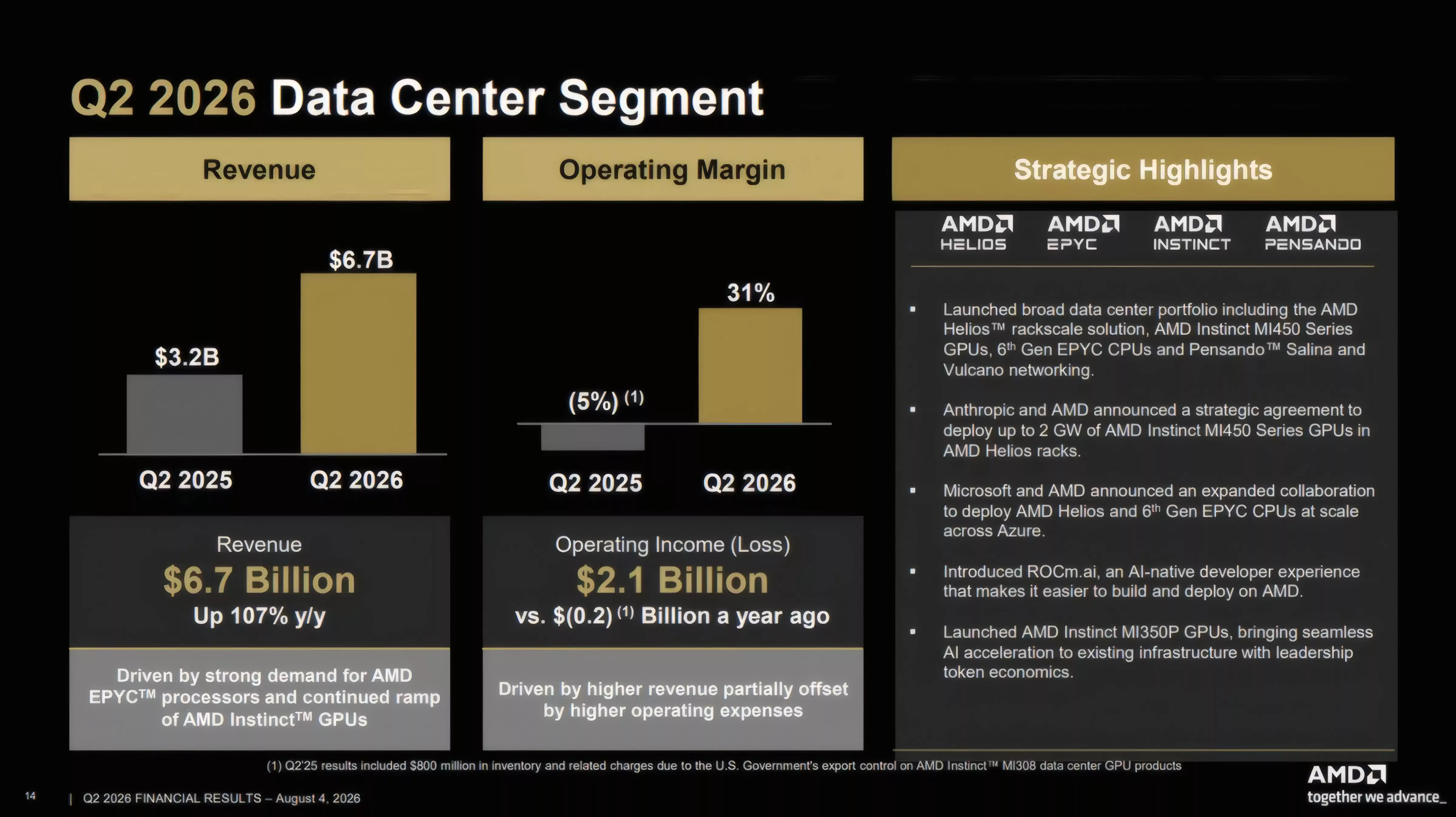
The $6.7 billion data center figure reflects broad use of AMD chips in AI-focused environments – large training clusters, inference systems, and cloud platforms that are layering AI into more services.
While AMD did not break out specific AI products in detail in these comments, the revenue growth and forward guidance point to AI workloads as the main driver inside the data center segment.
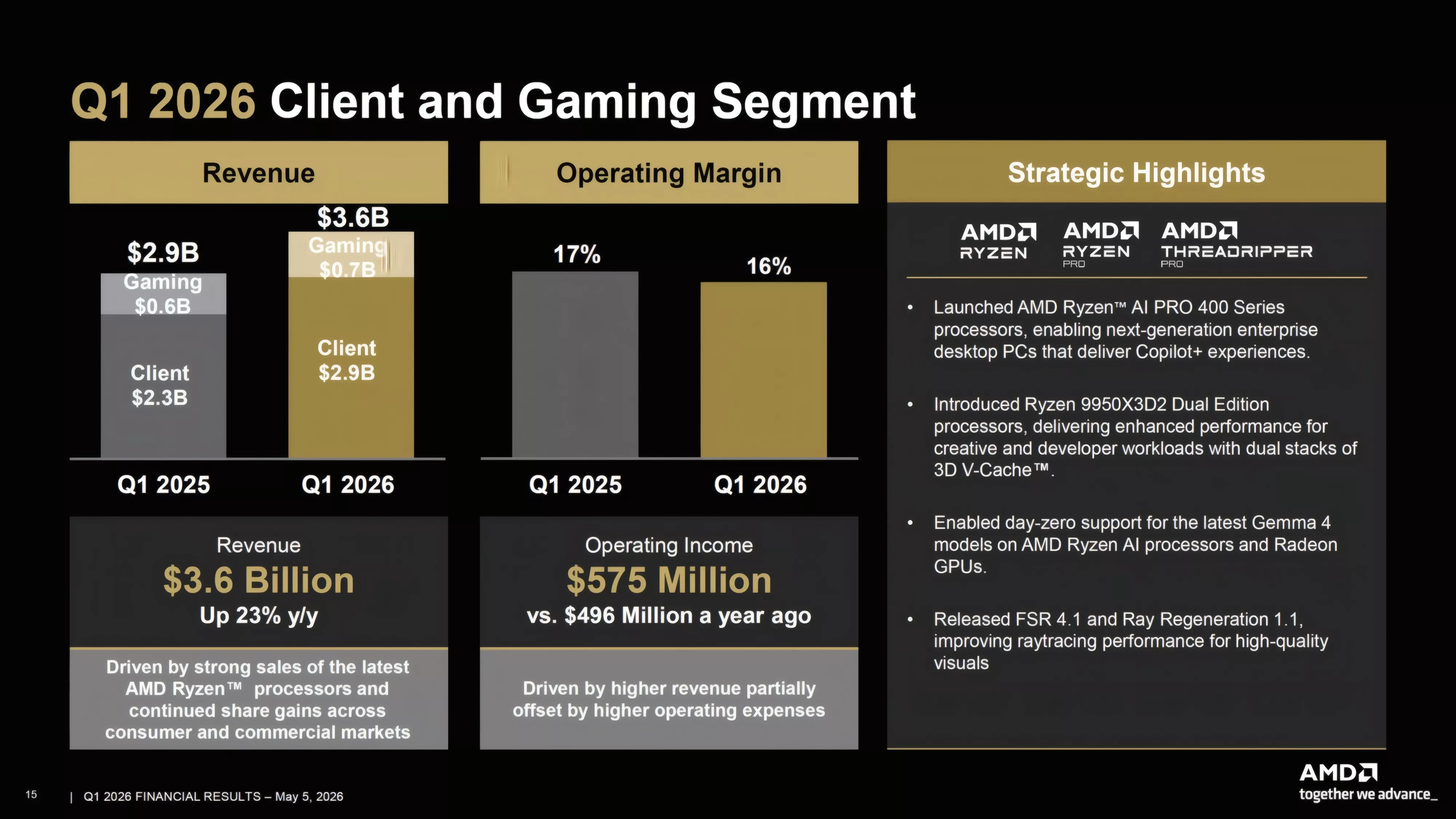
The picture looks different on the gaming side. Gaming revenue fell 31% year-over-year to $779 million. Su said gaming graphics revenue fell compared to a year ago, noting that higher component costs across the industry pushed graphics card prices up and hurt overall demand.
Higher costs and price-sensitive consumers weighed on sales tied to consoles such as the Xbox Series X/S and PlayStation 5, as well as devices like Valve's Steam Deck.
Credit: App Economy Insights
Even with that decline, AMD's combined PC and gaming business still grew 6% compared to last year, helped by stronger client processor sales. Client revenue rose 23%, driven by Ryzen processors. Those chips are increasingly used in systems that advertise AI-related capabilities, such as local inference and AI-powered features, alongside standard performance metrics.
The numbers highlight a company that is now more closely tied to data center and AI spending cycles than to consumer hardware trends. The surge in data center revenue, coupled with AMD's forecast that the segment will more than double year-over-year in 2027, suggests the company will continue investing in dense computing, faster memory, and advanced interconnects to support large-scale AI training and inference.
AMD's data center business just more than doubled, and gaming is paying the price


