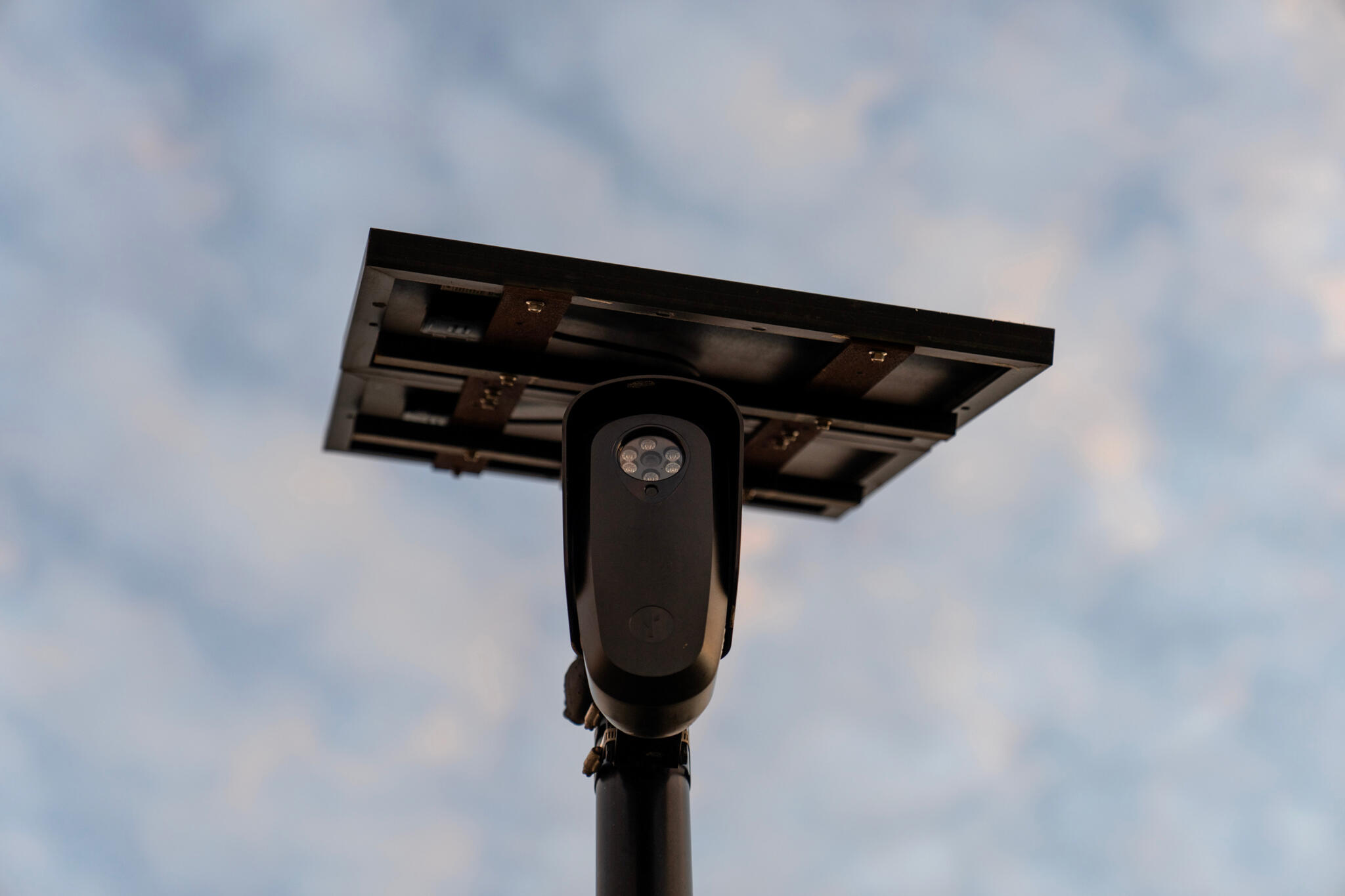
An engineer built a Flock-like camera to detect police cars, says officers visited him afterward

I've kept a Fresnel lens type license plate cover over my vehicle plates pretty much since the red light cameras came along. From directly behind or in front of my vehicle, the plate is easy to see & read.
from an angle, or above, the plate is blurred and unreadable. I've been stopped over the years for speeding and NEVER had a problem with an officer saying it wasn't legal. I'm sure if a lot of people used them, of course they would outlaw them though. ;)
 
tbf, retention period is largely irrelevant to my greater point. Whether its 30 days, 60 days or 90 days, its still happening.
Your main point that there was some sort of “private company loophole” was baseless. Government owned & run networks that function exactly the same way as Flock are legal. It not only has ALPRs but also facial recognition, automated reporting from crime recognition, and much more. The NYPD also allows officers to view data from private/third-party cameras with no warrants needed (allegedly twenty thousand cameras from the NYC Housing Authority alone): https://en.wikipedia.org/wiki/Domain_Awareness_System#Capabilities
Furthermore, the NYPD personally owns and operates their own "mini-Flock" software that lets them do much more with tens of thousands of cameras. It is called the "Domain Awareness System". This is NOT deemed highly illegal unlike you say: https://www.nyc.gov/assets/nypd/dow...m-NYPD-Impact-and-Use-Policy-2.4.26-FINAL.pdf
The reason NYC doesn’t use Flock is because it is far less capable than what they have.
 
Wait till people start catching on that they can satellite track the ip number of your devices, like phones, smart watches and rings ....down to the room that you are occupying in your own home at all times.

Yep...... they know when you are pooping
 
"He told them those were the same concerns civilians had about license-plate surveillance."

Hmm funny when its the other way around.

How would these Billionaires and politicians like it when their every move and action gets recorded.

I believe I've heard the term "earning the hate". Sadly true.
 
Police do set up their own ALPR's lol. Please provide an example of police owned ALPR's that were deemed unconstitutional instead of just claiming that. :

its against our constitutional rights. The 4th amendment is clear.

I am not arguing FOR flock, but how is it unreasonable when it's very clear there is no expectation of privacy in public?

I believe the outrage should be directed squarely at elected officials. These cameras are not showing up because flock decided to install them. Local elected leaders cut a deal with flock without engaging the community they are elected in. If people don't like back room deals, your problem is with the officials making them.
 
Your main point that there was some sort of “private company loophole” was baseless. Government owned & run networks that function exactly the same way as Flock are legal. It not only has ALPRs but also facial recognition, automated reporting from crime recognition, and much more. The NYPD also allows officers to view data from private/third-party cameras with no warrants needed (allegedly twenty thousand cameras from the NYC Housing Authority alone): https://en.wikipedia.org/wiki/Domain_Awareness_System#Capabilities

The reason NYC doesn’t use Flock is because it is far less capable than what they have.
Its not baseless. I explained it and you admitted I was generally right.
 
Wait till people start catching on that they can satellite track the ip number of your devices, like phones, smart watches and rings ....down to the room that you are occupying in your own home at all times.

Yep...... they know when you are pooping
with a warrant, yes. Flock requires no warrant.
 
I am not arguing FOR flock, but how is it unreasonable when it's very clear there is no expectation of privacy in public?

I believe the outrage should be directed squarely at elected officials. These cameras are not showing up because flock decided to install them. Local elected leaders cut a deal with flock without engaging the community they are elected in. If people don't like back room deals, your problem is with the officials making them.
I already explained how it gets around the 4th amendment privacy protections and the issues with how they are implemented.

And you are right, our elected officials are part of the problem. This happened in my town so the town invited a flock employee and the sheriff to tell everyone its fine, nothing to worry about, our police dont abuse it. Yeah ok... I have a bridge to sell you...

We already have real life and very serious violations using this tech.
 
Its not baseless. I explained it and you admitted I was generally right.
Lol no, I didn’t agree with that part. I ignored that part because you ignored that I had already debunked the “private company loophole”. You still haven’t even mentioned NYPD’s DAS. Once again, it is a municipal owned and operated equivalent to Flock and it’s also legal. Unlike Flock, the NYPD’s DAS is far more invasive. For instance, Flock doesn’t have predictive policing while DAS does lol.
 
Lol no, I didn’t agree with that part. I ignored that part because you ignored that I had already debunked the “private company loophole”. You still haven’t even mentioned NYPD’s DAS. Once again, it is a municipal owned and operated equivalent to Flock and it’s also legal. Unlike Flock, the NYPD’s DAS is far more invasive. For instance, Flock doesn’t have predictive policing while DAS does lol.
I did explain how the loophole works. You ignoring it doesnt mean I didnt do it.

In many spots, they are not allowed, this is controlled by local municipalities. And then flock is a loophole to get around those controls. Because NYC allows it, doesnt invalidate what I stated which is factual.
 
I am pro-Flock. Flock cameras provide evidence that crimes are being committed by the kind of people who commit crimes. And the cameras don't care that it's politically incorrect to do so.
The cameras may not be programmed to care which people are surveilled, positively identified, tracked and have their data sold, but the people who use taxpayer money to install them do care. I wonder if there is an opt-out mechanism which allows those paying for Flock services to mask their professional and personal tracks . . .
 
I did explain how the loophole works. You ignoring it doesnt mean I didnt do it.

In many spots, they are not allowed, this is controlled by local municipalities. And then flock is a loophole to get around those controls. Because NYC allows it, doesnt invalidate what I stated which is factual.
You said municipalities doing it themselves was unconstitutional and that companies doing it is the loophole:
its against our constitutional rights. The 4th amendment is clear.

the only reason police are getting away with this is a loophole by having a 3rd party contractor do it. If the police tried to setup these cameras, it would be deemed highly illegal.

There is no reason to support smashing your constitutional rights. it doesnt stop here, this will impact you eventually.
The NYPD is not "having a 3rd party contractor do it" and the NYPD IS setting up their own cameras. There's literally no basis for a 4th amendment "3rd party contractor" loophole. Here is the fourth amendment:
Founding Fathers said:
The right of the people to be secure in their persons, houses, papers, and effects, against unreasonable searches and seizures, shall not be violated, and no Warrants shall issue, but upon probable cause, supported by Oath or affirmation, and particularly describing the place to be searched, and the persons or things to be seized.
This means whoever owns X gets to decide whether a warrant is needed. It's about consent. The government owns things too. It can and does own infrastructure and data. And that is exactly what the NYPD has done. The NYPD cannot stick a camera in your home (neither can Flock) unless you consent them to do so. Nor can they access your camera data without your consent (and that's why the NYPD has access to 20,000 NYC Housing Authority cameras; they voluntarily give it to the NYPD).

You mention Flock can monitor vehicle movements "where the city government has explicitly refused to install police cameras". You do realize the Flock cannot put cameras where the government has "where the city government has explicitly refused" them to, right? If they do, they're liable to lawsuits just like any other company. The individual who actually installed it can be arrested too.

There's not some magic loophole there; governments are just inefficient enough to prefer relying on third-party contractors. The NYPD didn't build the Domain Awareness System themselves either, and that wasn't a loophole being exploited either lol.
 
You said municipalities doing it themselves was unconstitutional and that companies doing it is the loophole:

The NYPD is not "having a 3rd party contractor do it" and the NYPD IS setting up their own cameras. There's literally no basis for a 4th amendment "3rd party contractor" loophole. Here is the fourth amendment:

This means whoever owns X gets to decide whether a warrant is needed. It's about consent. The government owns things too. It can and does own infrastructure and data. And that is exactly what the NYPD has done. The NYPD cannot stick a camera in your home (neither can Flock) unless you consent them to do so. Nor can they access your camera data without your consent (and that's why the NYPD has access to 20,000 NYC Housing Authority cameras; they voluntarily give it to the NYPD).

You mention Flock can monitor vehicle movements "where the city government has explicitly refused to install police cameras". You do realize the Flock cannot put cameras where the government has "where the city government has explicitly refused" them to, right? If they do, they're liable to lawsuits just like any other company. The individual who actually installed it can be arrested too.

There's not some magic loophole there; governments are just inefficient enough to prefer relying on third-party contractors. The NYPD didn't build the Domain Awareness System themselves either, and that wasn't a loophole being exploited either lol.
Please try reading what I stated. Nobody is calling it a magic loophole (except you), its an actual legal loophole.

You literally are leaving out key context so I am just going to repeat myself and hope you read more thoroughly this time and accurately represent what was said instead of just chopping it up in the hopes of "being right". I even bold'd to help this time.

And its not much different than geo fencing which was deemed constitutionally illegal.

Depends on the state regulations. In some municipalities it is illegal. So I guess it depends on where you live. Repeating "But NYC and NYPD" doesnt help your argument. It is a useless point because it depends on the municipality.

The flock police loophole refers to how law enforcement agencies use private surveillance networks and cross jurisdictional data sharing to bypass traditional fourth amendment warrant requirements and local public oversight. Under the Fourth Amendment, police usually need a warrant to track a citizen's long term movements.

While a single camera capturing a passing car is legally considered a "momentary observation," Flock links thousands of cameras into a single, interconnected, searchable database. This allows police to stitch together a comprehensive timeline of where a person travels, lives and works over days or weeks, effectively accomplishing warrantless mass surveillance.

Local city councils frequently pass regulations or transparency rules dictating how their local police department can use surveillance. However, because Flock's network is privately managed, local police departments can often access data collected by private cameras or neighboring jurisdictions. This allows them to monitor vehicle movements even in areas where the city government has explicitly refused to install police cameras

Because Flock operates a cloud based national network, an officer in a state where abortion is illegal can log into the system and query a vehicle's history. Civil liberties groups have exposed instances where out of state or federal agencies (like ICE) gained indirect access to local driver data through shared law enforcement networks, rendering local sanctuary or privacy laws ineffective

Finally, Investigation reports from organizations like the Electronic Frontier Foundation (EFF) have revealed that police departments are sometimes instructed not to mention ALPR or Flock usage in their official complaints. Instead, officers use vague phrases like "county resources" to obscure the fact that an AI mass-surveillance network triggered the stop, hiding the tech from judicial scrutiny.

And that doesn't touch base on the blatant unchecked abuse of the surveillance systems by the police.
 
Last edited:
Please try reading what I stated. Nobody is calling it a magic loophole (except you), its an actual legal loophole.

You literally are leaving out key context so I am just going to repeat myself and hope you read more thoroughly this time and accurately represent what was said instead of just chopping it up in the hopes of "being right". I even bold'd to help this time.
Just because you claim it is a loophole, doesn't mean it is one. You haven't cited a single law that it is a loophole to. Give me a source to claim it is an actual legal loophole. This is necessary for you to continue making your claim. I have cited multiple sources, although you seem to think the "loophole" for a third-party doesn't exist in the state of New York or that there's some state/municipal law that explicitly allows the Domain Awareness System. In reality, there are only laws restricting it like for transparency requirements.

You claim the 4th amendment normally would prevent this, but neither the 4th amendment (nor any Federal law) illegalizes police owned permanent surveillance video or systematic consent to sharing surveillance video with the police. The DAS operates exactly the same way.

You are probably referring to the third-party doctrine which I've consistently referenced (a third party consenting to police). This is not a loophole, nor does it apply to public spaces the police has contracted Flock to record. It might apply to privately owned cameras, but this is legal in all 50 states (anyone who owns a surveillance camera would share the footage with the police if they want to prosecute someone, even this Utah law intentionally leaves out surveillance footage because it is not data shared with a third party). Furthermore, once again police can legally record footage themselves with a pole mounted camera in public spaces without a warrant. Please cite a state law stating otherwise lol.

Now there is a possibility that a new law will be passed to ban a Flock-like network, but that's not closing a loophole because Flock is a third-party. There could also be a future judicial ruling claiming a Flock-like network is a 4th amendment search, but there is no evidence of that yet. Currently, rulings have upheld searches withing Flock's network and do not city any third-party legal loophole: https://www.kqed.org/news/12102922/south-bay-judge-rules-san-joses-flock-cameras-dont-invade-privacy

Anyways, I will not continue discussion with you because you are citing literally zero evidence that there's a third-party loophole to allow Flock (where I'm doing the opposite with sources). Even if you do provide a source, if it does not cite "a loophole because Flock is a third-party" then I will not continue this pointless debate. That specifically is where I chiefly disagree with you, and I've consistently held that across all my replies.
 
Just because you claim it is a loophole, doesn't mean it is one. You haven't cited a single law that it is a loophole to. Give me a source to claim it is an actual legal loophole. This is necessary for you to continue making your claim. I have cited multiple sources, although you seem to think the "loophole" for a third-party doesn't exist in the state of New York or that there's some state/municipal law that explicitly allows the Domain Awareness System. In reality, there are only laws restricting it like for transparency requirements.

You claim the 4th amendment normally would prevent this, but neither the 4th amendment (nor any Federal law) illegalizes police owned permanent surveillance video or systematic consent to sharing surveillance video with the police. The DAS operates exactly the same way.

You are probably referring to the third-party doctrine which I've consistently referenced (a third party consenting to police). This is not a loophole, nor does it apply to public spaces the police has contracted Flock to record. It might apply to privately owned cameras, but this is legal in all 50 states (anyone who owns a surveillance camera would share the footage with the police if they want to prosecute someone, even this Utah law intentionally leaves out surveillance footage because it is not data shared with a third party). Furthermore, once again police can legally record footage themselves with a pole mounted camera in public spaces without a warrant. Please cite a state law stating otherwise lol.

Now there is a possibility that a new law will be passed to ban a Flock-like network, but that's not closing a loophole because Flock is a third-party. There could also be a future judicial ruling claiming a Flock-like network is a 4th amendment search, but there is no evidence of that yet. Currently, rulings have upheld searches withing Flock's network and do not city any third-party legal loophole: https://www.kqed.org/news/12102922/south-bay-judge-rules-san-joses-flock-cameras-dont-invade-privacy

Anyways, I will not continue discussion with you because you are citing literally zero evidence that there's a third-party loophole to allow Flock (where I'm doing the opposite with sources). Even if you do provide a source, if it does not cite "a loophole because Flock is a third-party" then I will not continue this pointless debate. That specifically is where I chiefly disagree with you, and I've consistently held that across all my replies.
You keep citing NYC. Its like I am talking to a brick wall. If you want to have a conversation then READ WHAT I AM SAYING.

If you cant comprehend this, there is no reason to continue on with you just stating something irrelevant over and over:
Depends on the state regulations. In some municipalities it is illegal. So I guess it depends on where you live. Repeating "But NYC and NYPD" doesnt help your argument. It is a useless point because it depends on the municipality.

This could be a discussion, you just dont want it to be.

Source? the source is the 4th amendment. Police need warrants for this type of mass surveillance. Like, try thinking. Not everything is going to be spelled out in a article. There are protections against mass surveillance systems without proper warrants.

Start here and reading up on 4th amendment violations, how its enforced.

"However, Fernandez noted the U.S. Supreme Court has required warrants in other cases involving similar technology police gather, including cell site locations in Carpenter v. United States and GPS trackers in United States v. Jones. He said the key legal question is how much of a person's movements can be tracked through Flock cameras without a warrant and where that line is drawn." - https://www.nbcconnecticut.com/news...heres-what-federal-courts-have-ruled/3762017/


"Owens said the cameras and its database are “ripe for abuse” as it allows agencies outside of Massachusetts to track people. For example, he said people in states with bans or restrictions on reproductive or gender-affirming care could be monitored for seeking legal care in Massachusetts."

Matthew Ross, a Northeastern University associate professor of public policy and economics, said the cameras appear to function as a “loophole around the Fourth Amendment.”

“Because they’re a third-party private entity and because in most states across the country filming in a public place is perfectly legal, Flock is basically able to run these license plate readers and collect the data themselves,” he said. “Because they're collecting them, the data themselves and the criminal justice agency is then purchasing a subscription to that data; it's not the same thing as the criminal justice agency, for instance, having to go get a warrant to track someone's phone, right?" - This is a loophole.
 
Last edited:
Back