Bottom line: The introduction of the N1 chip is a milestone in Apple's quest for hardware independence. By designing its own Wi-Fi and Bluetooth chips, Apple gains greater control over the user experience and can optimize performance for its ecosystem. However, the real-world benefits are incremental rather than revolutionary. While the N1 delivers faster speeds and more reliable connections, it doesn't yet match the cutting-edge capabilities of some Android competitors.
Apple's latest iPhones introduced a significant shift in the company's approach to wireless connectivity. For the first time, Apple replaced third-party Wi-Fi and Bluetooth chips – previously sourced from Broadcom – with its own custom silicon, the Apple N1. This move marks a new phase in Apple's push to control every aspect of its hardware, extending its in-house chip design beyond processors and modems to local wireless communication.
The N1 chip is built to handle Wi-Fi 7, Bluetooth 6, and the Thread smart home protocol. Apple positioned the N1 to improve the reliability of features like AirPlay and AirDrop, but it offered little detail on how users might experience these changes.
To get a clearer picture, Ookla, the company behind the Speedtest app and website, analyzed five weeks of user data from iPhone 17 and iPhone 16 models, as well as a range of Android phones equipped with Qualcomm, MediaTek, and other Wi-Fi chips.
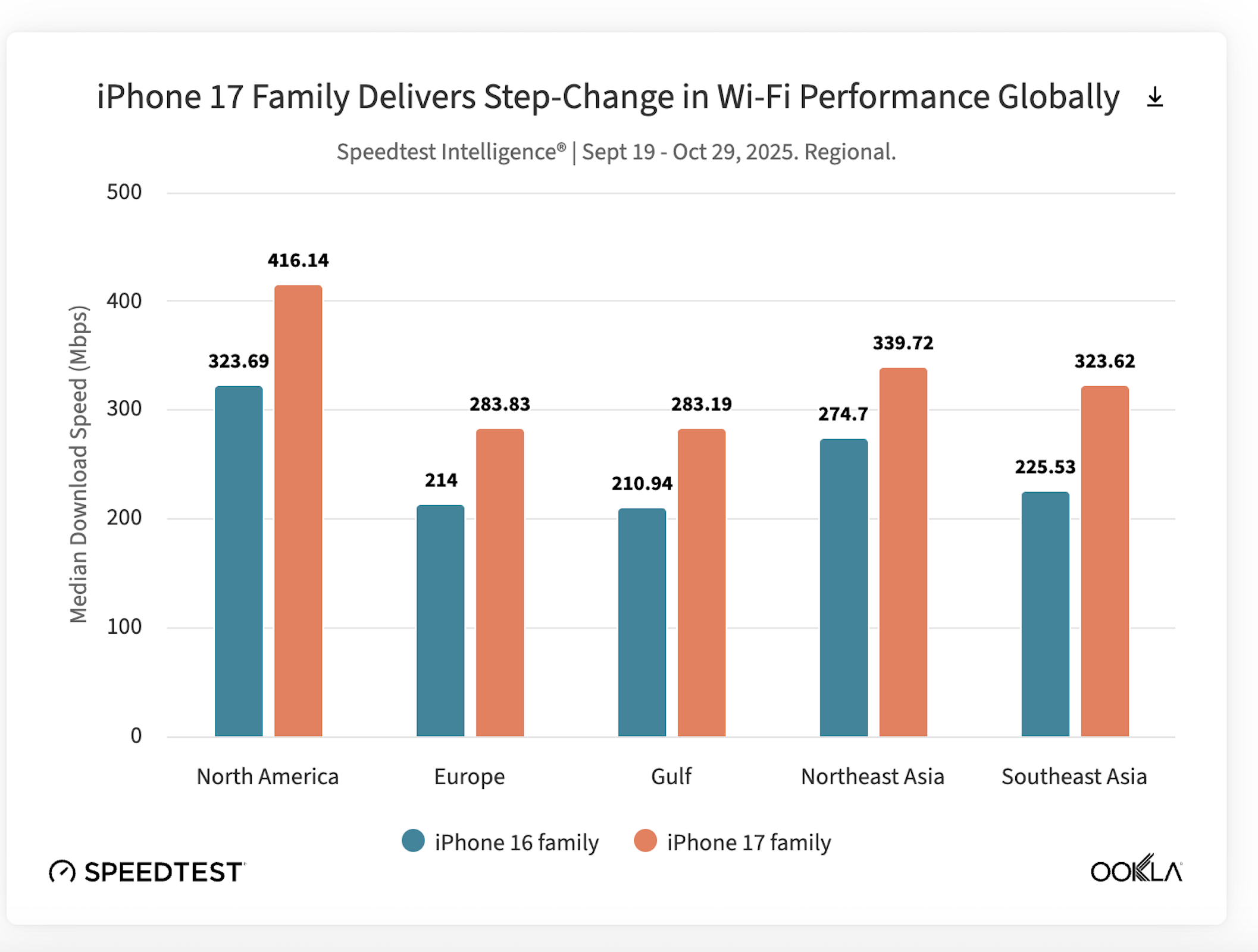
Ookla's findings reveal that the N1 chip delivers higher download and upload speeds compared to the iPhone 16 across every percentile and region. The median download speed for the iPhone 17 series was 329.56 Mbps, a notable jump from the iPhone 16's 236.46 Mbps. Upload speeds also improved, rising from 73.68 Mbps to 103.26 Mbps.
These gains are consistent, but the N1's most significant impact appears at the lower end of the performance spectrum. Ookla noted that the chip "lifts the floor more than the ceiling," meaning users who previously struggled with slow connections saw the most significant improvements.
Despite these gains, the iPhone 17 did not top Ookla's global performance charts. The Pixel 10 Pro series edged out the iPhone 17 in download speed, while the Xiaomi 15T Pro, powered by MediaTek's Wi-Fi silicon, achieved better upload speeds.
Android phones also benefit from faster adoption of new technologies, such as Wi-Fi 7 at 6 GHz with a 320 MHz channel width. The N1's lack of support for these features doesn't significantly affect most users in real-world scenarios, but in areas where these technologies are available, Android devices like the Pixel 10 and Samsung's Galaxy S25 can outperform the iPhone 17.
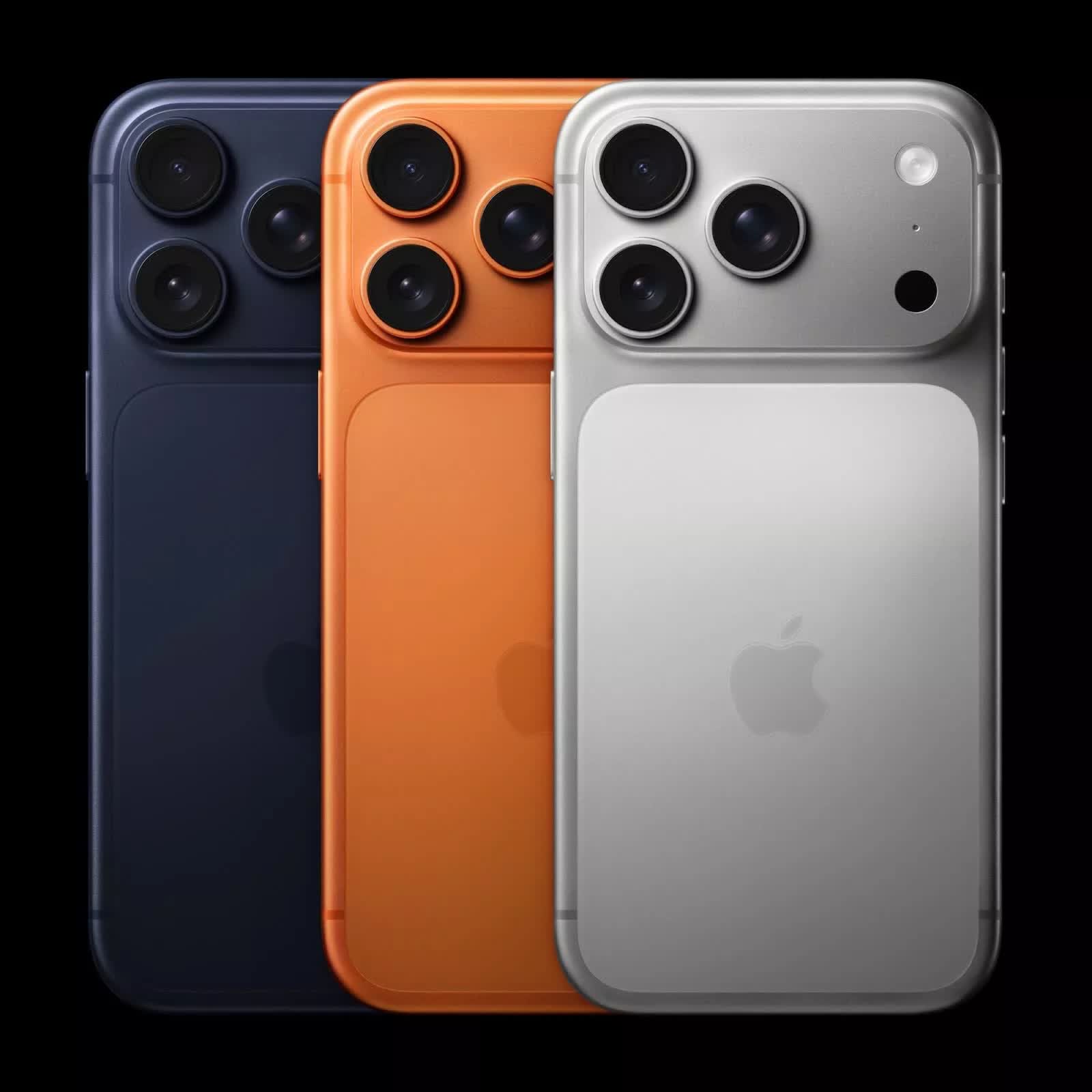
Ookla's analysis is based on median speeds, which helps minimize the impact of outliers caused by factors like distance from Wi-Fi routers, router quality, and ISP limitations. The data includes all models in the iPhone 17 family, such as the 17 Pro and iPhone Air, providing a broad view of the N1's performance. However, the chip's lack of support for the latest Wi-Fi 7 features means it can't match the peak performance of some Android rivals in certain environments.
Apple's strategy is clear: to gradually replace third-party components with custom silicon, starting with processors and modems and now extending to wireless chips. The N1 chip is a step in that direction, but it also highlights the challenges of competing with Android's rapid adoption of new technologies. For now, Apple's wireless ambitions are taking shape, but the race for the fastest and most advanced connectivity is far from over.
Image credit: Ookla
Apple ditched Broadcom for its own Wi-Fi chip, N1 makes the iPhone faster


