TL;DR: When every commercial for a new movie proclaims Certified Fresh from Rotten Tomatoes, it's easy to wonder if something fundamental has changed about the way films are judged – or about the platform itself. Once a strictly objective aggregator, Rotten Tomatoes has become Hollywood's most prominent stamp of approval. But as a swelling majority of releases boast glowing Tomatometer scores, Daniel Parris at StatSignificant asked the question: Is Rotten Tomatoes still a reliable guide for moviegoers?

Rotten Tomatoes began in 1998 as a niche platform compiling reviews for Jackie Chan films, but its founders quickly realized the broader appeal of aggregating movie criticism. The service expanded and, over the following decades, emerged as an essential reference for anyone seeking independent testimony on a film's quality.
The Tomatometer is the technical heart of Rotten Tomatoes. It's calculated by dividing the number of positive critic reviews – those considered fresh – by the total number of reviews. The process is intentionally straightforward: both mild 3-stars and enthusiastic raves count as positive, meaning anything over 60% earns the fresh label. This binary approach – fresh or rotten – has always attracted both fans and detractors for its simplicity.

For over two decades, Tomatometer scores were regarded as steady and trustworthy. However, the past decade has seen a distinct upward drift, according to Parris: more films are scoring higher, and Certified Fresh has become the norm rather than the exception. The technical calibration of the Tomatometer should only shift if underlying movie quality dramatically improves. So, what explains this change?
A key moment in Rotten Tomatoes' story is the 2016 acquisition by Fandango, the leading online movie-ticketing service, jointly owned by industry heavyweights like NBCUniversal and Warner Bros. Discovery. This transaction raised eyebrows for potential conflicts of interest – after all, if the world's largest ticket seller also controls the benchmark for movie quality, it's possible that subtle changes might benefit corporate partners.
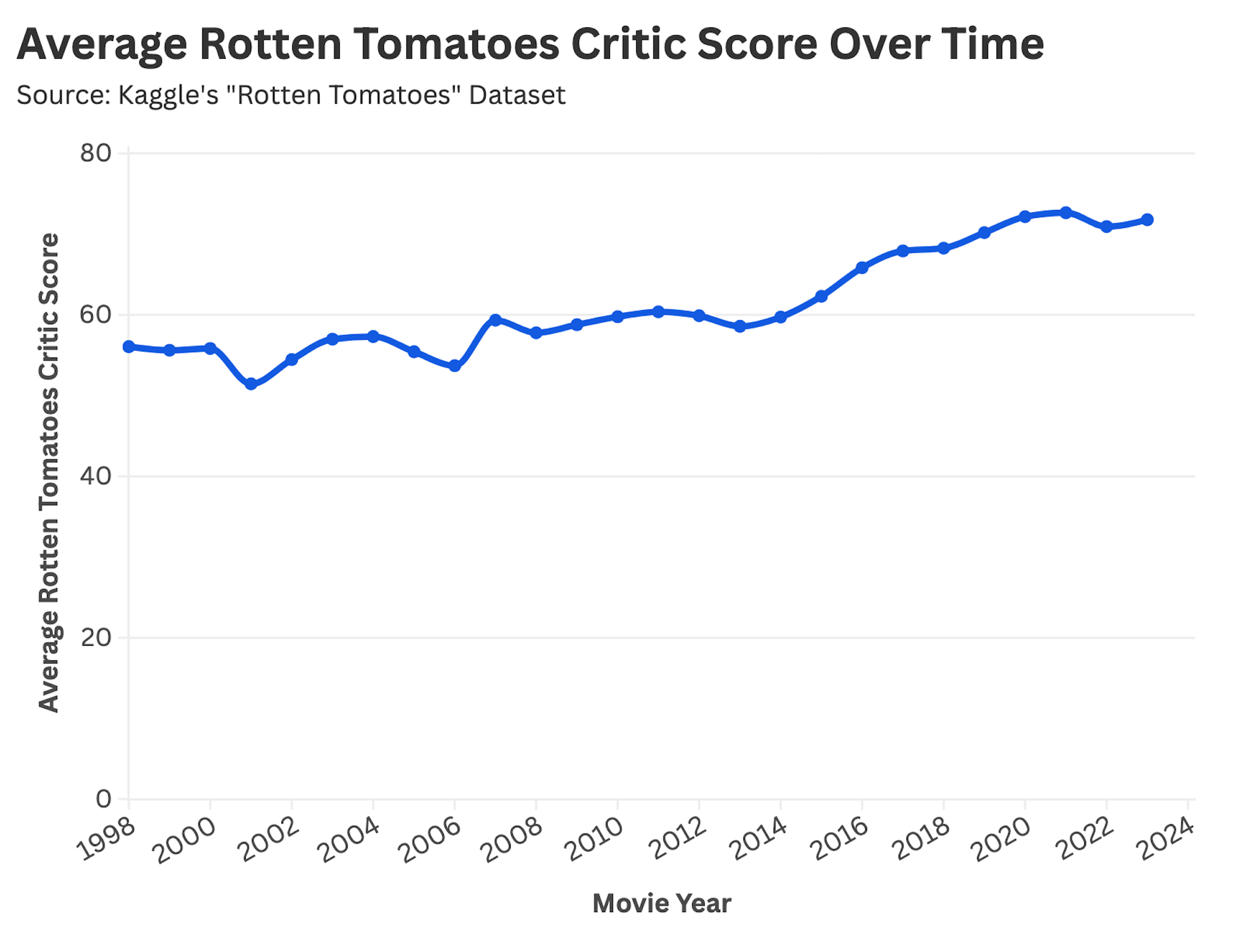
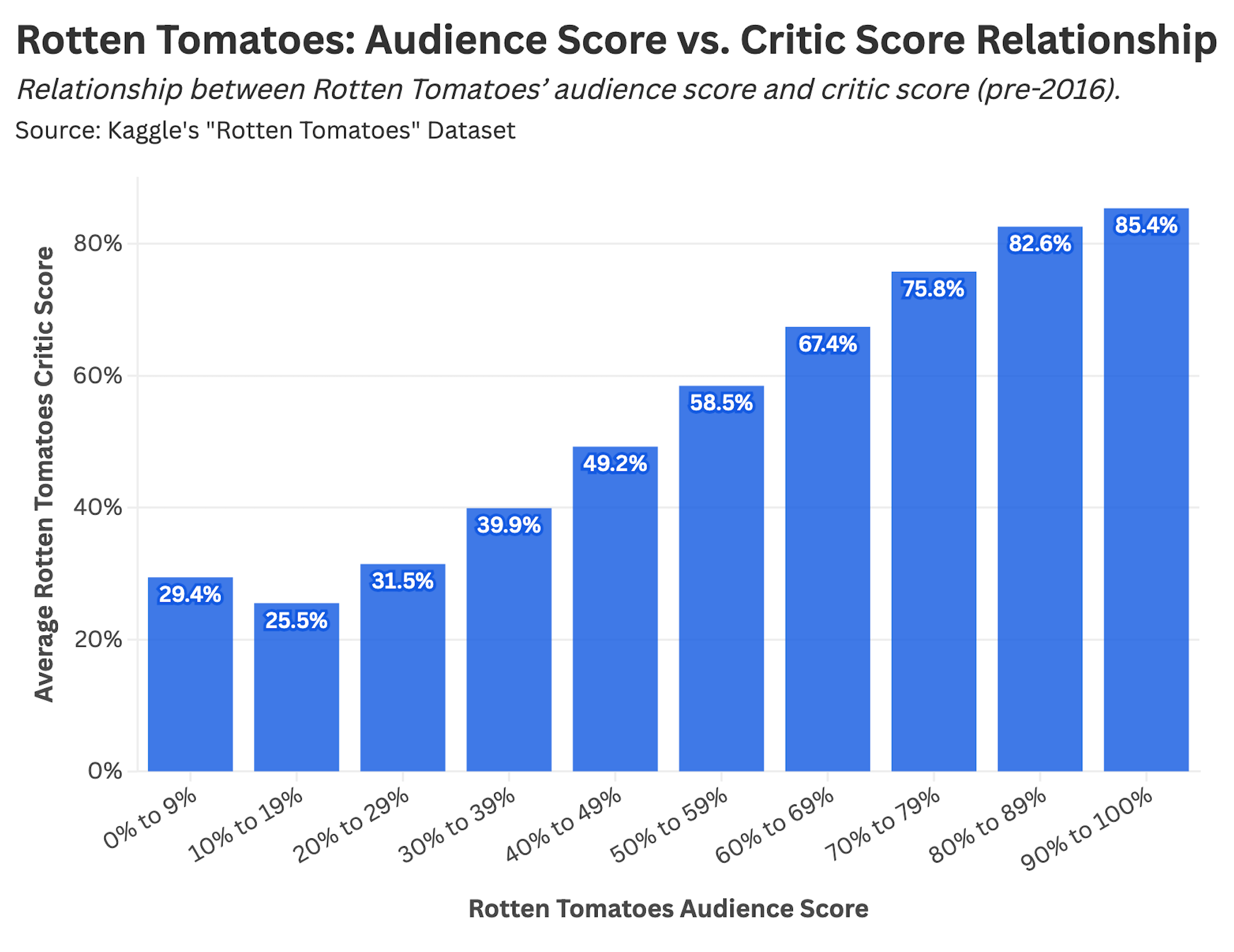
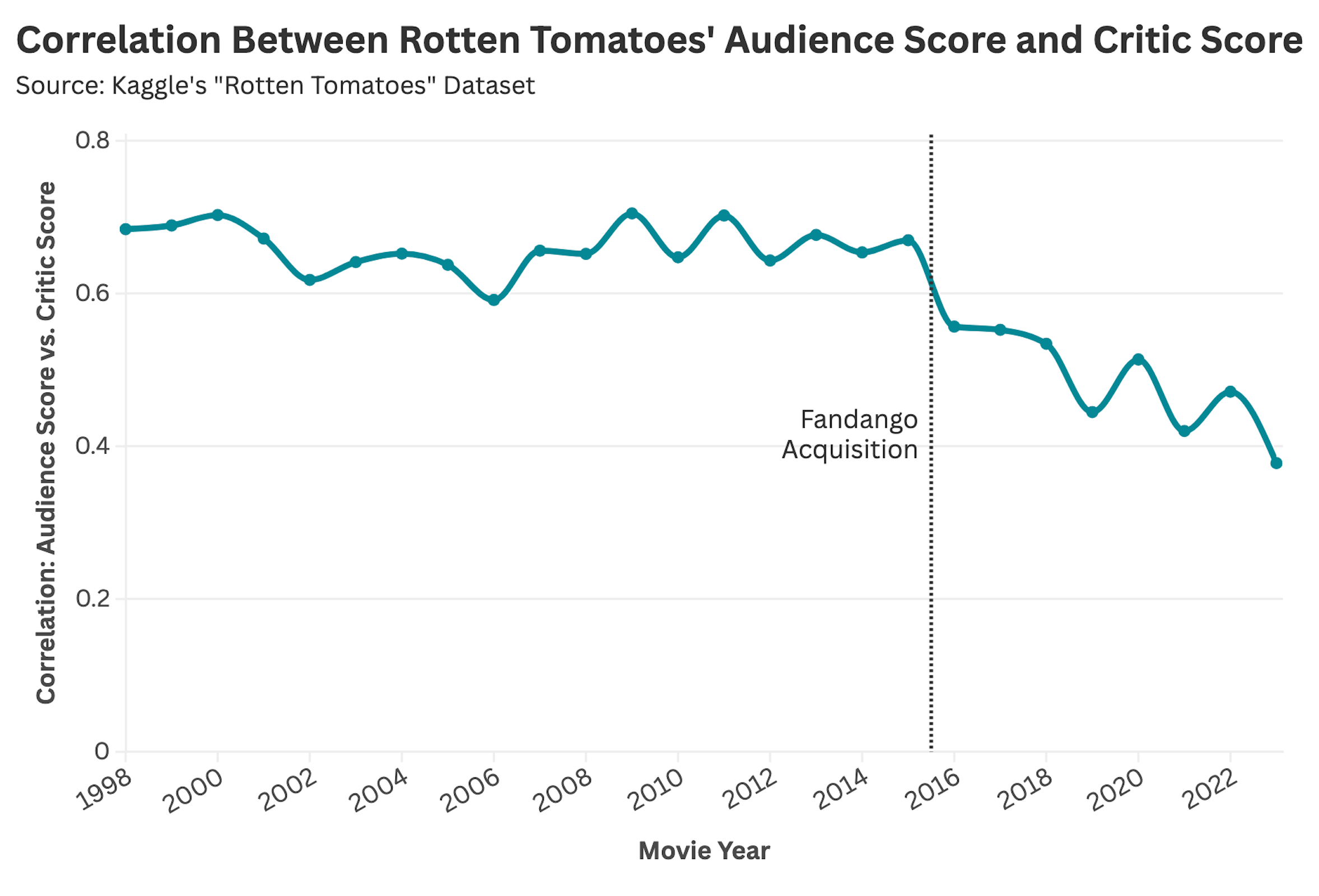
Coinciding with the Fandango takeover, Rotten Tomatoes saw a notable spike in average critic scores, Parris reports. The increase wasn't subtle, nor was it limited in scope. Historical trends show that prior to 2016, Tomatometer scores were closely correlated with audience ratings. These two measures – critics and ticket-buyers – tracked each other closely, with similar rises and falls depending on a film's reception.
After 2016, however, this relationship began to diverge. As Tomatometer ratings continued to rise, audience scores became less tightly linked. It's a shift that hints at changes not in the movies themselves, but in who gets to judge them, Parris determined.
Rotten Tomatoes' methodology relies on two fundamental levers: what constitutes a fresh review and which critics are included in the calculation. Adjusting the definition of fresh would likely provoke backlash and undermine credibility. Instead, the expansion of the critic pool offers a less obvious path to score inflation.
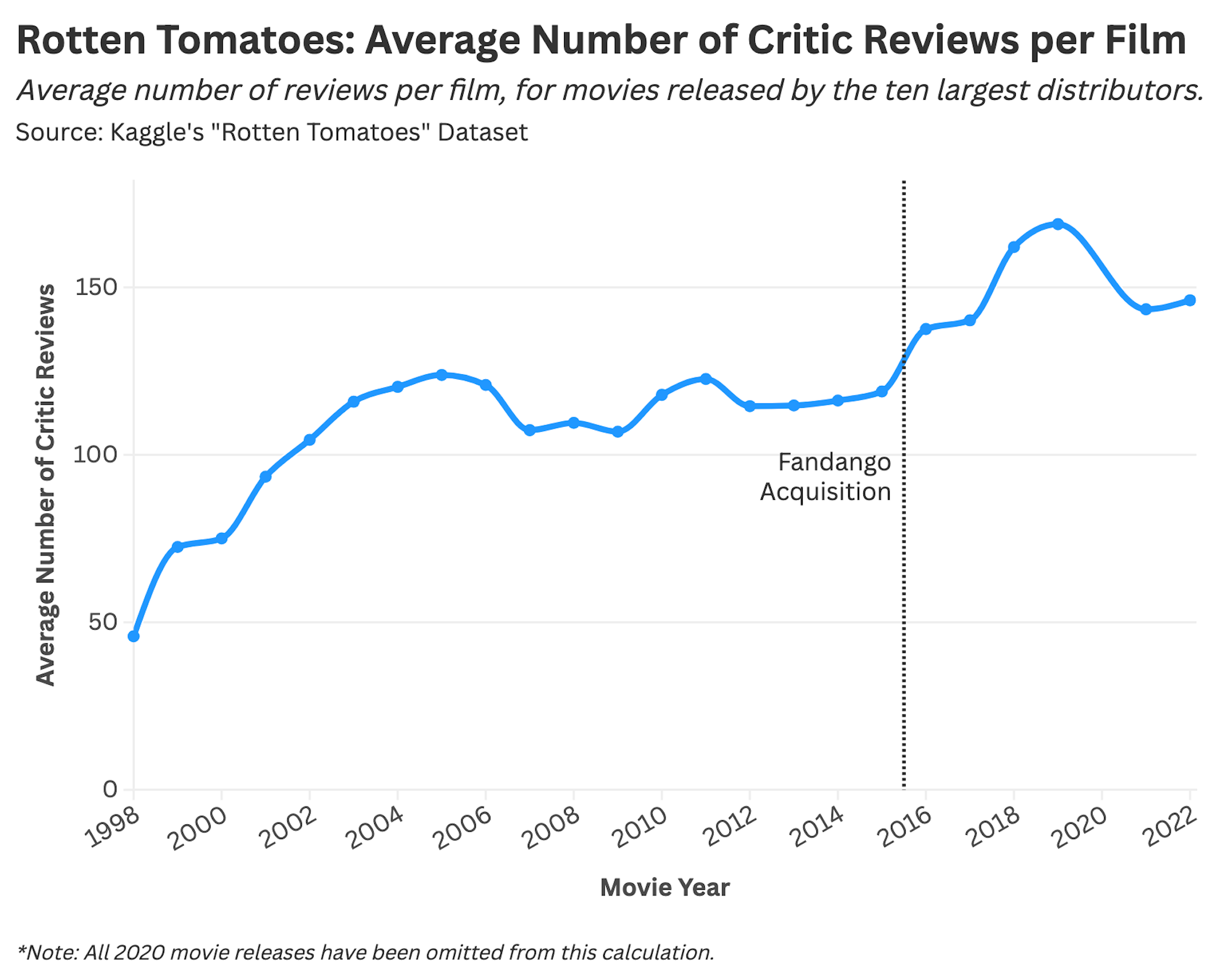
After the Fandango acquisition, the site greatly increased the number of approved critics per mainstream release – rising from about 40 to more than 70. Many new additions came from blogs, independent websites, and local radio outlets, rather than established publications. Some sites lack technical polish and are run as side projects rather than major media operations. This has led many observers to question the expertise and consistency of the new reviewer class.
To mitigate criticism, Rotten Tomatoes introduced a Top Critic designation for voices from prominent outlets. However, the Top Critic rating is not factored into the main Tomatometer score, serving only as an optional filter. Rotten Tomatoes has stated the expansion was meant to improve representation among critics, with more women, people of color, and underrepresented groups. Although the effect on diversity is hard to measure, Parris said that it's clear that the platform's average scores have notably increased as a result.
The expansion of the Tomatometer pool has not gone unnoticed by studios and their marketing teams. According to a 2023 analysis by Vulture, some PR firms actively engage lesser-known reviewers in hopes of securing favorable ratings ahead of a film's release. By encouraging these critics to submit positive reviews, studios can, at least in theory, sway the overall consensus and ensure a fresh label in time for opening weekend.
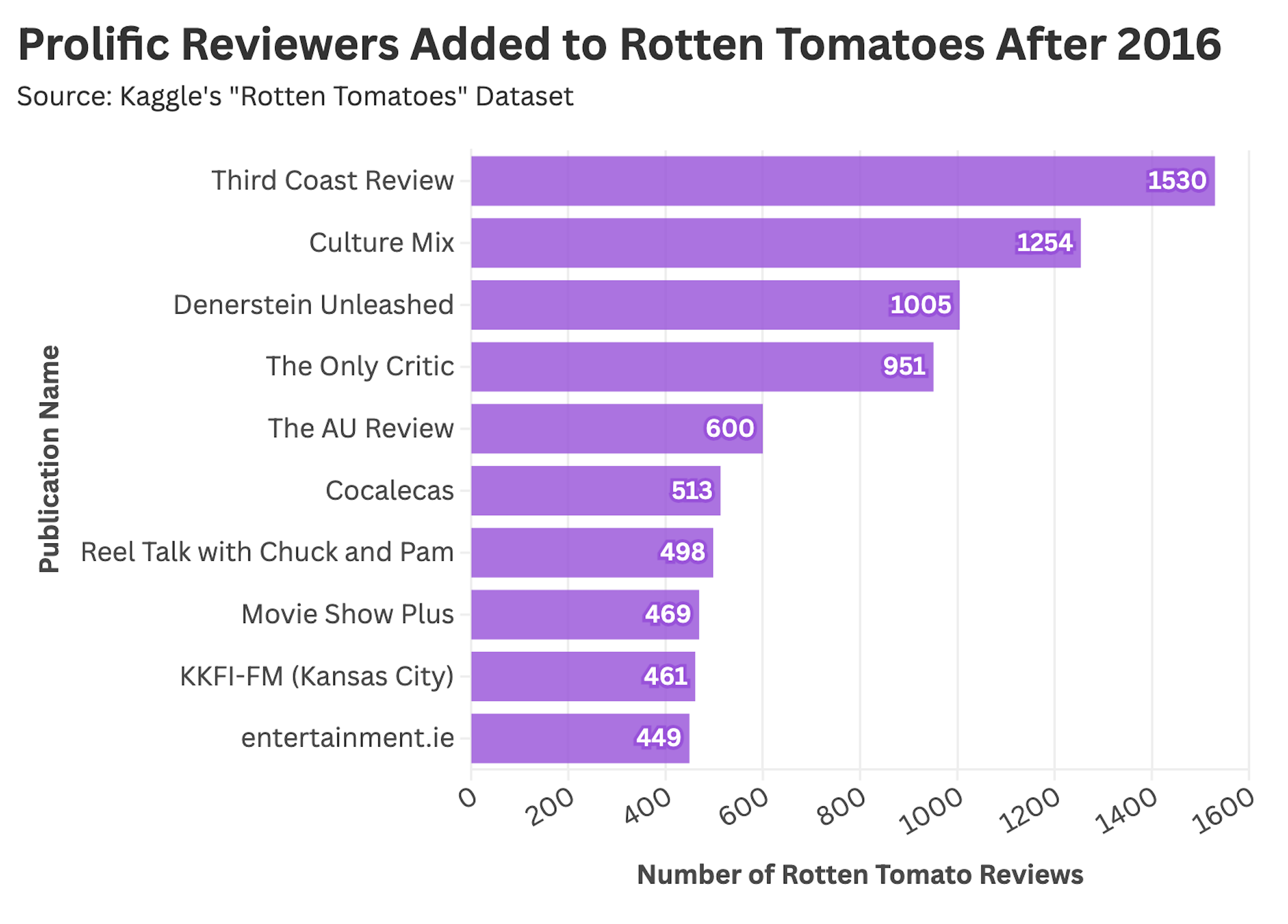
While hard data on the scale of this practice is limited, the technical possibility has emerged alongside a growing cottage industry built around Tomatometer manipulation. The strategy relies on the fact that a sufficient number of fresh reviews – no matter their source – can tip the scores in favor of a film.
Image credit: StatSignificant
Behind the numbers: Why Rotten Tomatoes scores keep climbing


