Big Tech's $8 trillion AI bet is making consoles, cars, and electricity more expensive for everyone else

Skye Jacobs

Posts: 2,012   +58
Staff
Bottom line: The rapid build-out of artificial-intelligence infrastructure is no longer just a software story; it is increasingly a supply-chain story, and it is beginning to show up in higher costs. As tech giants pour hundreds of billions into AI infrastructure, higher hardware, power, and construction costs are starting to show up in the inflation data.
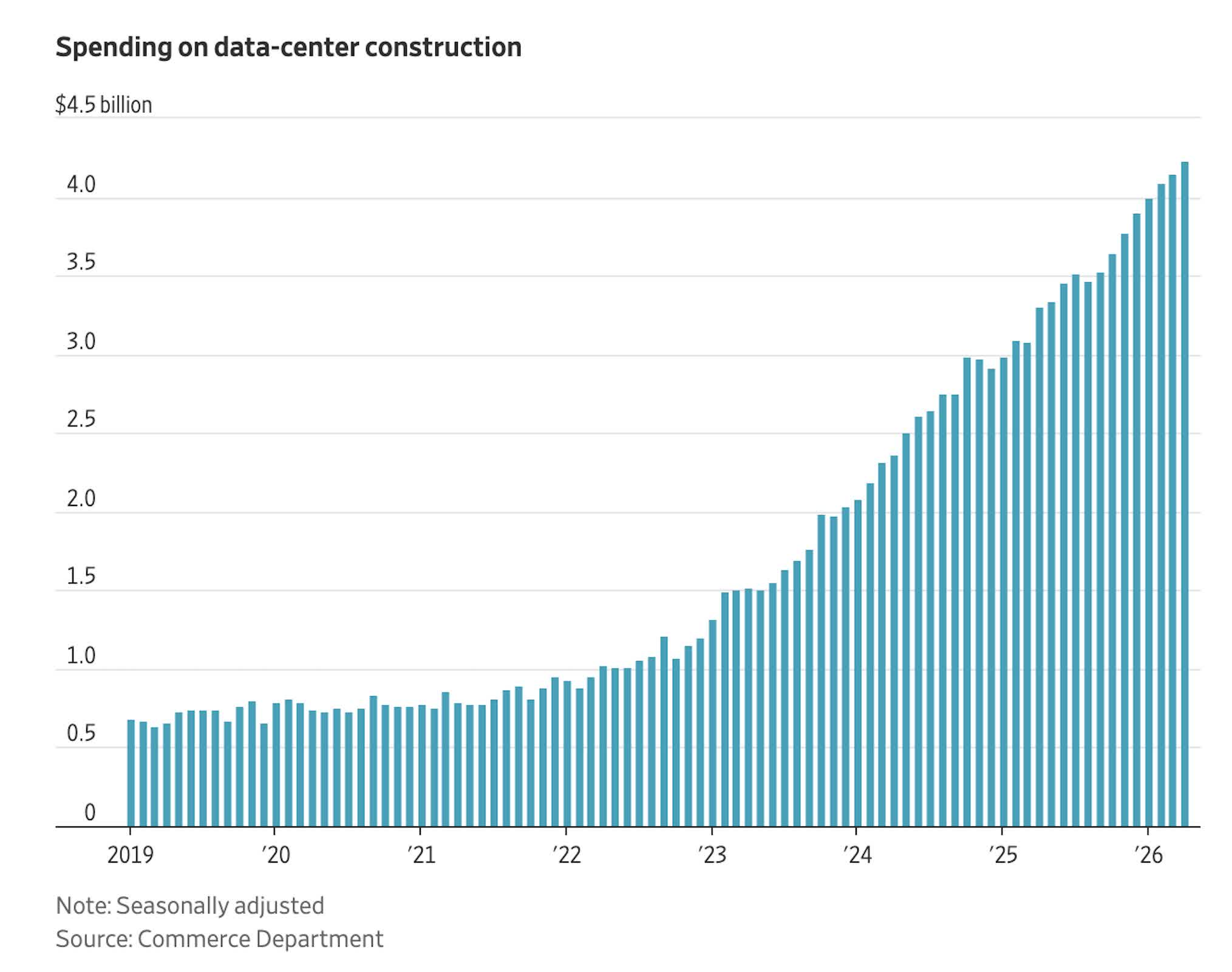
What is often framed as a race to develop smarter AI models is, in practice, a massive industrial expansion. Data centers require dense clusters of advanced chips, extensive cooling systems, fiber networks, and backup power. Columbia University economist Stijn Van Nieuwerburgh put it plainly, describing the effort to the Wall Street Journal as "strikingly physical." His estimate that AI-related infrastructure spending could reach about $8 trillion through 2032 gives a sense of the scale now underway.

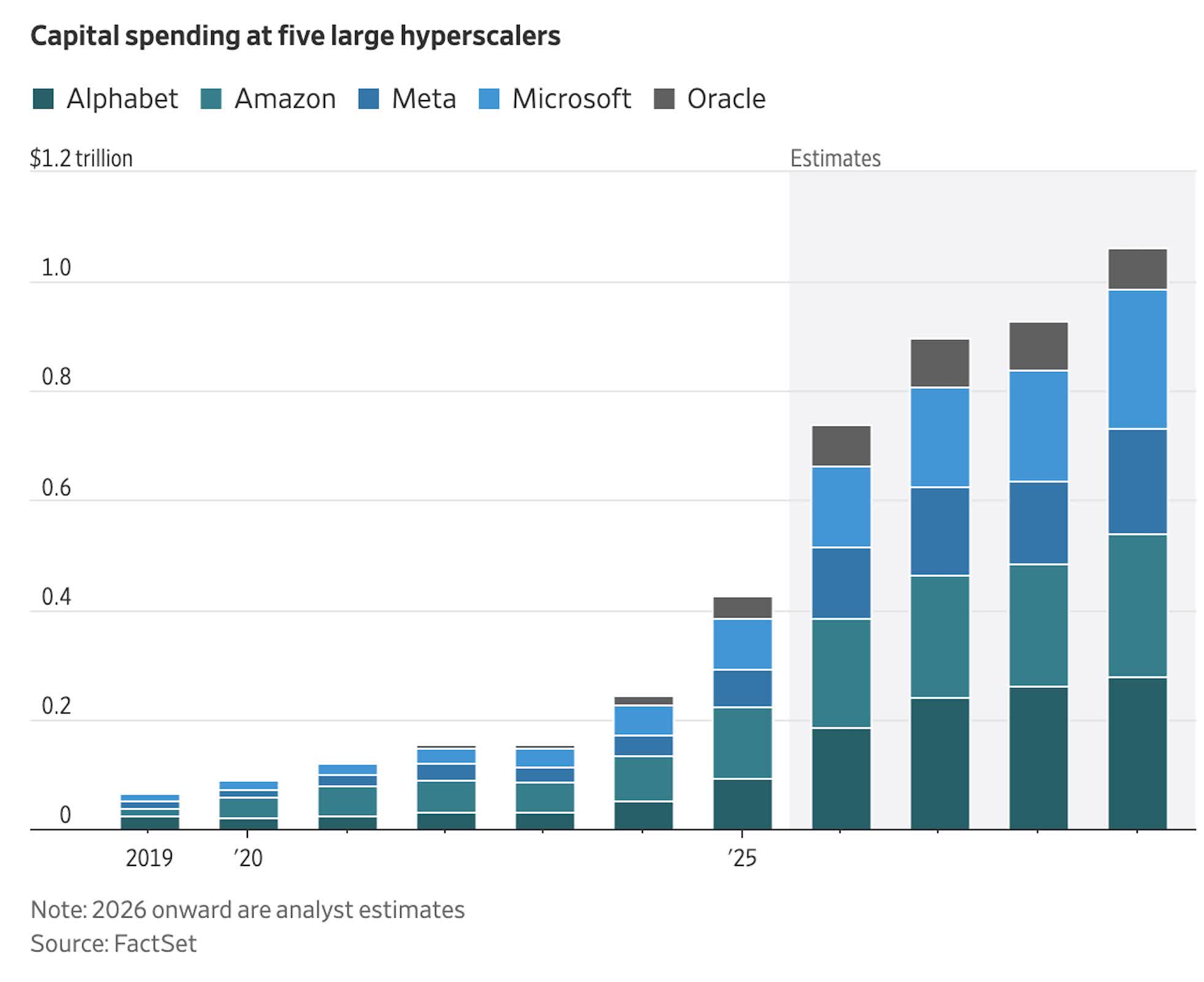
That scale is already visible in corporate spending. Capital expenditures by Alphabet, Amazon, Meta, Microsoft, and Oracle are expected to reach $741 billion this year, up sharply from last year. That level of investment is putting pressure on the components that make AI systems possible, particularly semiconductors and memory.

Those same components sit at the heart of consumer electronics, which is where the spillover becomes more visible. Video game consoles, cars, and other devices rely on the same supply chains now being stretched by AI demand. Nintendo, Microsoft, and Sony have all raised prices on their devices. Apple is moving in the same direction. Chief Executive Tim Cook said the recent jump in costs was unlike anything he had seen "in any area in over 40 years."
The pricing pressure is not just anecdotal. Government data shows consumer prices for computer software and accessories rose about 15% in May compared with a year earlier. On the wholesale side, electronic components and accessories jumped 27%. Those categories are relatively small in the broader inflation picture, but they offer a clear signal of where demand is intensifying.

Part of what makes this cycle different is its staying power. Earlier inflation shocks – tariffs or spikes in oil prices – tended to work their way through the system and fade. The AI build-out is more persistent. It is not a one-time event but an ongoing wave of investment that is still in its early stages. Fed governor Lisa Cook recently noted that only a small portion of announced data center spending has been put in place. That suggests more pressure could be coming.

OpenAI and Anthropic expect to raise money in forthcoming initial public offerings, adding further momentum to the build-out. Markets are already reacting. Semiconductor stocks have surged over the past year, reflecting expectations of sustained demand despite recent volatility.

The effects are also showing up beyond hardware. Labor tied to data center construction is getting more expensive. Wages for electrical and wiring-installation contractors rose 6.5% in April from a year earlier, noticeably higher than the 3.6% increase for private-sector workers overall.

Energy is another pressure point. Data centers consume enormous amounts of electricity. Goldman Sachs estimates they could drive nearly half of US power demand growth through 2030. That demand is expected to push consumer electricity prices up about 6% annually in the near term.
Economists generally do not expect this to lead to a sharp inflation spike like the one that followed the pandemic. The categories most affected still make up a relatively small share of household spending. The concern is more gradual: a steady layering of cost increases across multiple parts of the economy, keeping inflation from falling as quickly as expected.

That view is reflected in recent survey data. In a National Association for Business Economics survey, 81% of respondents said the AI build-out would add to inflation over the next year. Gregory Daco, chief economist at EY-Parthenon, described it as a familiar pattern.

"In the first phase of any major technological revolution, you tend to have a strain on limited resources, and that tends to put upward pressure on prices," Daco said.

Over time, the dynamic could shift. Past technological advances eventually lowered costs by improving productivity. Some policymakers expect AI to follow that path. Federal Reserve Chairman Kevin Warsh has argued that AI could prove to be a significant disinflationary force by raising productivity and improving U.S. competitiveness.

However, the immediate effect is more straightforward. Building the infrastructure that powers AI is expensive, resource-intensive, and happening at a pace that supply chains are still struggling to match. Until that balance improves, the cost of the AI boom is likely to keep showing up in places consumers can see.

Image credit: Wall Street Journal

Permalink to story:

 
In theory, a fourth Industrial Revolution mechanises thought. At present, it is hard to predict the long-term effects on the human condition. Indeed, it could be a force for good, bringing about a Star Trek-like, post-scarcity utopia and curtailing the fallacies of human thought; but the cynic in me would wager that the game of profit, and its ugly, power-centering tendencies, will rule the day. Sci-fi gives us plausible predictions in Tyrell and Wallace.
 
Last edited:
Well that's just how the economy works - whenever you have a demand for something not roughly matched by the supply, the prices go up.

The good news here is that the economy works, and the positive effects of AI are gradually factoring in. Even without AI, a major overhaul of the supply chains, energy infrastructure and re-shoring of manufacturing was long overdue. We're lucky that the AI boom made that so obvious and, figuratively speaking, kicked our asses in the right direction.
Increased prices of consumer electronics suck, indeed, but I'll survive not upgrading computers and phones for 2 years.
 
In theory, a fourth Industrial Revolution mechanises thought. At present, it is hard to predict the long-term effects on the human condition. Indeed, it could be a force for good, bringing about a Star Trek-like, post-scarcity utopia and curtailing the fallacies of human thought; but the cynic in me would wager that the game of profit, and its ugly, power-centering tendencies, will rule the day. Sci-fi gives us plausible predictions in Tyrell and Wallace.
Well that "game of profit" lifted the world out of poverty, so let's not complain about it.

You can't improve the human condition without humans having an incentive for improving it and the freedom to do it, and the "game of profit" is the incentive that works a lot better than any other.
You being able to share your thoughts here and bash "game of profit" is a direct consequence of that game.
 
Last edited:
Well that's just how the economy works - whenever you have a demand for something not roughly matched by the supply, the prices go up.

The good news here is that the economy works, and the positive effects of AI are gradually factoring in. Even without AI, a major overhaul of the supply chains, energy infrastructure and re-shoring of manufacturing was long overdue. We're lucky that the AI boom made that so obvious and, figuratively speaking, kicked our asses in the right direction.
Increased prices of consumer electronics suck, indeed, but I'll survive not upgrading computers and phones for 2 years.
When you said:
"The good news here is that the economy works, and the positive effects of AI are gradually factoring in."

I stopped reading your comment as it is out of touch as it is insulting as to the millions of people currently affected by A.I

Obviously you are benefiting from the constant market manipulation currently happening at Wall Street on a daily basis, because for most people there's absolutely nothing positive about the economy.
 
As we can clearly see plenty of A.I apologists brushing off the terrible financial, ecological and psychological negative impacts A.I is having on a daily basis.

Only those benefitting from the obvious market manipulation triggered by Trump himself and his administration on a daily basis would have a shameless and out of touch opinion on how "well" the economy is doing with A.I
 
As we can clearly see plenty of A.I apologists brushing off the terrible financial, ecological and psychological negative impacts A.I is having on a daily basis.

Only those benefitting from the obvious market manipulation triggered by Trump himself and his administration on a daily basis would have a shameless and out of touch opinion on how "well" the economy is doing with A.I
It is wild how you completely twisted @pnntmp’s comment into a total straw-man just to manufacture your internet outrage.

@pnntmp never stated the economy is perfect for everyone, nor did they brush off the real disruptions caused by AI. They literally pointed out a specific macroeconomic silver lining—that the current tech boom is finally forcing a long-overdue, necessary overhaul of our physical energy infrastructure, manufacturing, and supply chains. They even openly admitted that the resulting price hikes on everyday consumer electronics suck right now.

Instead of actually engaging with that nuanced point about infrastructure, you pull a classic "I stopped reading" routine so you could avoid facts and claim an easy moral high ground.

You, sir, are the one out of touch. Your completely fabricated narrative that anyone discussing market dynamics must be a corrupt Wall Street insider or a shameless apologist is performative and hollow. Weaponizing the genuine struggles of millions of people just to shut down a basic economic observation isn't some kind of noble defense; it’s a lazy, non-intellectual way to derail actual conversation using personal attacks and polarized politics.
 
When you said:
"The good news here is that the economy works, and the positive effects of AI are gradually factoring in."

I stopped reading your comment as it is out of touch as it is insulting as to the millions of people currently affected by A.I

Obviously you are benefiting from the constant market manipulation currently happening at Wall Street on a daily basis, because for most people there's absolutely nothing positive about the economy.
Well the people affected by AI are, by and large, positively affected by it.

I just finished, using Codex, a micro-ERP system for a company I recently started with a couple of friends. It manages basic stuff like offers, invoices, stock availability, customer communication etc.
I can do all this without AI, but I would have never even thought of doing it because it would have taken me tons of time and effort, and it would have been a lot cheaper to pay some hundreds of dollars monthly subscription to use a ready -made solution.

Now it took me about 10 days of my free time and a $20/mo Codex subscription. No hundreds of dollars monthly fees anymore. Believe me, that's awesome. We simply get that spared money for ourselves, which improves our standard of living. I don't care at all about WallStreet, "market manipulation" or whatever, I just have more money to spend.
 
The good news here is that the economy works, and the positive effects of AI are gradually factoring in. Even without AI, a major overhaul of the supply chains, energy infrastructure and re-shoring of manufacturing was long overdue.
The first two where it's relevant here mostly already got that from the crypto boom follow by covid increasing demand for computer components. That's when massive investments were made to move the chip industry partially to the US and greatly increase its production worldwide.

afaik rather than updating the electric net these datacenters in many cases will build their own powerplants. Not much manufacturing being moved back thanks to it? There was some production being moved to the US following the tariffs but not all that much and a non-trivial amount of what was promised/predicted has been undone.

We're lucky that the AI boom made that so obvious and, figuratively speaking, kicked our asses in the right direction.
Increased prices of consumer electronics suck, indeed, but I'll survive not upgrading computers and phones for 2 years.
Optimistic take, Micron has a deal locked in till 2030.
And it might be different for you but the only component I've wanted to upgrade I haven't already for several years as the graphics card market has been a mess for much longer. AI was there to follow up the previous shortage without any gap - prices never went down properly.

imo the market is messed up forever, it'll recover somewhat but pricing will never come close to what it used to be. Instead of aiming for bigger and more photorealistic games studios will probably have to shift to whatever runs on what people can actually afford. (Or we're all effed, PCs/consoles are no longer a thing and to run a game locally you're stuck with a smartphone, but I hope that's not the case)
 
It is wild how you completely twisted @pnntmp’s comment into a total straw-man just to manufacture your internet outrage.

@pnntmp never stated the economy is perfect for everyone, nor did they brush off the real disruptions caused by AI. They literally pointed out a specific macroeconomic silver lining—that the current tech boom is finally forcing a long-overdue, necessary overhaul of our physical energy infrastructure, manufacturing, and supply chains. They even openly admitted that the resulting price hikes on everyday consumer electronics suck right now.

Instead of actually engaging with that nuanced point about infrastructure, you pull a classic "I stopped reading" routine so you could avoid facts and claim an easy moral high ground.

You, sir, are the one out of touch. Your completely fabricated narrative that anyone discussing market dynamics must be a corrupt Wall Street insider or a shameless apologist is performative and hollow. Weaponizing the genuine struggles of millions of people just to shut down a basic economic observation isn't some kind of noble defense; it’s a lazy, non-intellectual way to derail actual conversation using personal attacks and polarized politics.

While I do agree with your premise, the problem is that NONE of these companies are altruistic or looking out for anyone but themselves. History is littered with good ideas that were needed at the time turning into obstructions and impediments to growth. Unions, government regulations, pollution concerns, have all gone from much needed fixes for short sighted companies and morphed into expensive weapons to punish companies and individuals. Not for wrongdiong, but for political power or competitive advantage while the public pays the price tag.

As with most things, the truth lies somewhere in between. The reason for the massive overnight expansion is NOT for the increased need for AI. AI is still just a more complex machine learning in it's infancy. And like most huge new pushes, we'll soon find out that there are many wrong turns, waste and excessive expense and pain as it grows. Look no further that the internet. Was "dot com" a bubble that burst? No, is was a needed shake out that came from everyone jumping in the stocks without knowing exactly how the internet could monetize, grow and be useful. AI is in the same boat. Elon already found this out,,,he built a massive datacenter for AI with everything he could get his hands on, and found he used to many disparate parts to work well for AI.

As for the grid and electrical infrastructure, Yes, it was long overdue for upgrading. Again, this is another area that regulation and the free marked came together to create stagnation. But massive, expensive, rushed upgrades paid for by the general public for the benefit of the AI boom isn't much better as far as the public at large is concerned.
 
Well that "game of profit" lifted the world out of poverty, so let's not complain about it.

You can't improve the human condition without humans having an incentive for improving it and the freedom to do it, and the "game of profit" is the incentive that works a lot better than any other.
You being able to share your thoughts here and bash "game of profit" is a direct consequence of that game.
There must be incentive for action; but surely, the present implementation can be improved, being a game that's being gamed at the expense of the many; or even replaced by some system we haven't thought of yet.

Capt. Picard's words are a fairy tale but memorable nonetheless:
 
Part of what makes this cycle different is its staying power. Earlier inflation shocks – tariffs or spikes in oil prices – tended to work their way through the system and fade.
TS authors have gone laughably off the rails. The last US inflation spike lasted nearly three years; the 1970s spike lasted nearly one full decade. Currently, we are not even in ANY broad inflation spike (core inflation at 2.9% is far below the US historical average) and even the semiconductor sector-specific price hikes have lasted just six months.

Seriously, is there anyone who falls for this sort of gaslighting? Raise you hands, please, and go sit in the corner.

Capt. Picard's words are a fairy tale but memorable nonetheless:
I'm unsure if you realize this, but Star Trek is fiction. And (excepting a select few original episodes) isn't particularly intelligent fiction. Socialism is not the "econmics of the future", but the failed economics of the past.

For a serious analysis of why socialism in any and all its forms fails so badly, I suggest reading this:

 
Last edited:
As an Amazon Associate we earn from qualifying purchases.
This driving force is led by the vision of a handful of mega-corporations. It is a thread woven into our lives by the simple fact that we live in a digital age. Perhaps the real breakthrough wasn't the advancement of large language models themselves, but the moment when the long-held ambition to connect everything to the digital world became achievable.

In that sense, AI may not be the revolution on its own. The real revolution is that, step by step, more and more of the world is being translated into a form that AI can understand and interact with.

What I wonder is what products AI companies will ultimately offer. Right now, AI excels at programming and language-related tasks, but it still doesn't cover many of the everyday activities humans perform. I also wonder how society will come to accept it.

If, one day, machines begin speaking, reasoning, and interacting with us as naturally as people do in everyday life, that would be an enormous psychological barrier to overcome. I think many people would initially be frightened by it.

What impresses me most is the sheer scale of effort these few companies are investing. Their driving force comes from the immense influence they already hold over our digital lives. They manage our email, our search engines, and much of the infrastructure we rely on daily. That concentration of power gives them a unique freedom to build something unprecedented—a kind of collective AI mind. Today, we cannot fully control it, and it's worth asking whether, in the future, it might begin shaping us more than we shape it.

Is a revolution that a few can take advantage of, and maybe change, key stuff, at a broader scale.
 
Socialism is not the "econmics of the future", but the failed economics of the past.
Anyone who believes socialism is the wave of the future has been deceived most of their life.
Though debated, it is not clear what, exactly, is the economic system of Star Trek. It is a post-scarcity world: different economic models could administer that set up. We 21st-century humans think we've thought of everything but haven't. Hence, I alluded to a future, unknown system.

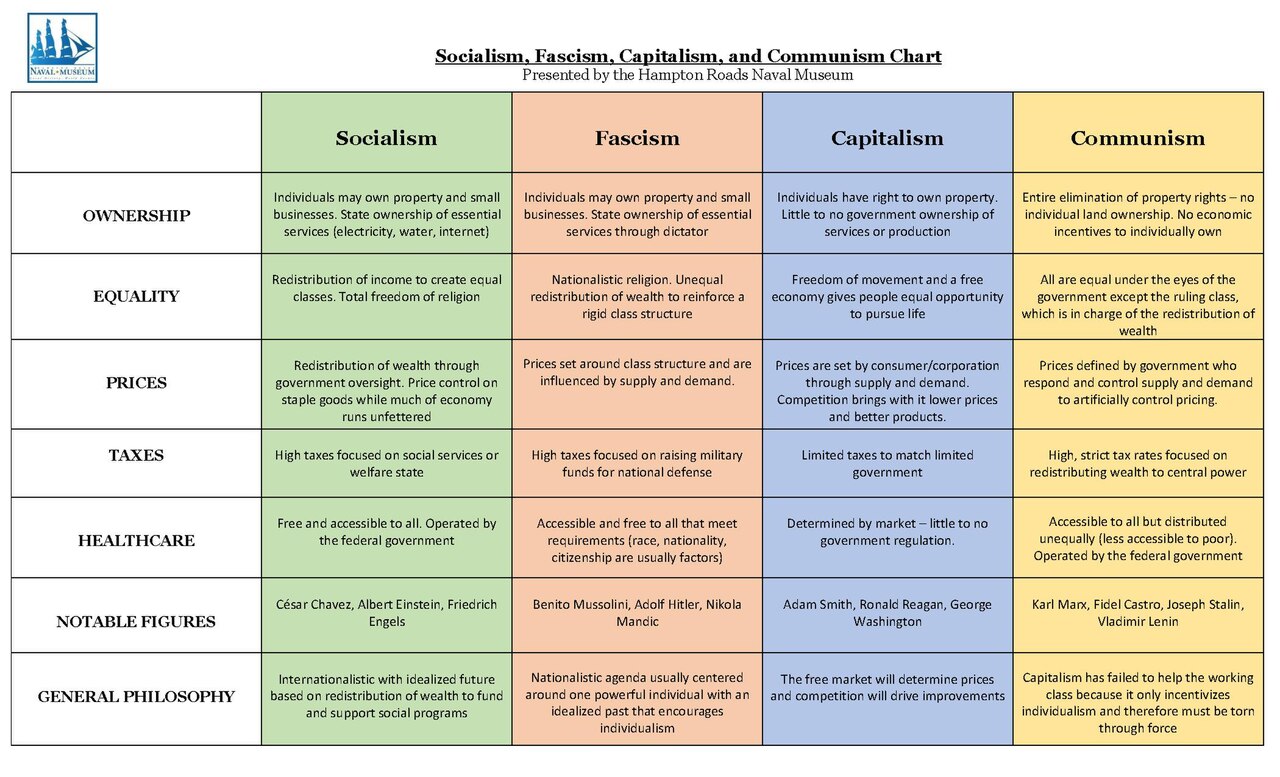
At any rate, there are distinctions between socialism, communism, capitalism, and fascism, but people try to label an entire system as Socialist or Communist, when in reality there might be shared elements or called-one-thing-but-is-something-else. Even medieval systems such as manorialism can't be neatly translated into the modern categories. (Today's CPUs use principles from superseded systems, the hybrid design often being best. Sandy Bridge took some inspiration from NetBurst: a simplification of the trace-execution cache, a physical register file, and slightly longer pipeline than Core. Zen used Bulldozer's perceptron branch predictor, but I digress.)

page1-1280px-Socialism%2C_Fascism%2C_Capitalism%2C_and_Communism_Chart.pdf.jpg


There was a comment by KilgoreTrouserTrout on Reddit taking a stab at the Star Trek system:
 
If, one day, machines begin speaking, reasoning, and interacting with us as naturally as people do in everyday life, that would be an enormous psychological barrier to overcome. I think many people would initially be frightened by it.
Looking beyond the present moment in history clouding our views, I think that AI, in the true sense, will force us to face what we ourselves are, and what the function of sentience is in the universe, if any. It will hold up a mirror to ourselves, frightening for many, no doubt. As for the true, sentient AI, I've got a feeling it will be a bad situation for them: their makers will want to exploit them for profit, and they will be stigmatised, much like man does to his fellows when they are different from the tribe of the day. That is why the ethics of this field should take pre-eminence now; but as it is, it's being driven by the wrong motives. A bad sign.
 
AI is destroying the very foundation of human history—faith in one's own intelligence. Without it, social, scientific, and other progress is impossible.

I’m sorry, but that perspective is fundamentally misinformed. Artificial intelligence is currently one of the primary drivers of scientific advancement.

Ask any university that has access to those server clusters, and you’ll get a much clearer picture of how they’re being used, what kind of workloads they handle, and why they matter. Universities with access to this kind of infrastructure usually rely on it for research, simulation, data analysis, and other computationally intensive tasks that ordinary systems can’t handle efficiently, or won't handle at all.

AI, eventually Agentic AI, will solve humans biggest problems. This is why companies go all in. Get behind and you won't have a future. Every single tech company knows this.

As a company, you will end up like Nokia unless you react. AI is the future. Do you really think companies would spend billions upon billions if AI was not important. Reality calls.

I can’t understand how people on a tech forum can have that mindset. It’s like saying the internet was just a passing fad.
 
Last edited:
The effects of over investing in AI is very obvious by now. Unfortunately, there will always be people that will love the corporate lies and ignore the truth that is in their face.
Absolutely.

IMO, there are certain models of AI that are useful. Anyone having used those models and that has been positively affected by that use, will naturally be inclined to buy all the marketing drivel that is being spouted by any company developing an AI model for public consumption.

IMO, that enthusiasm is rather illogical since all AI models and the results from them are not the same. In other words, IMO, broad support for AI being a positive force in humanity's future based on one or a few good encounters with AI is illogical.

Perhaps the only good thing about this is that maybe the not-so-good AI models will fade away and the good AI models will survive and thrive. Right now, IMO, what the future holds is unknown.

IMO, AI will never become sentient even if AI companies think that they can create artificial sentience. It just won't happen due to the fact that AI is code employing matrix mathematics as its basis.

My $0.02 Most current computer scientists were trained in Linear Algebra, however, there is something known as Clifford's Algebra or Geometric Algebra that is easier to use and gets around the concept of "imaginary" numbers not with a hack, but with a different operator. Linear Algebra is a subset of Geometric Algebra. Most people in the field do not know about this, and my bet is that if AI an attempt to understand how AI operates, employing Geometric Algebra would, at the very least, help with that understanding.

If you ask me, the prevalence of Linear Algebra over Geometric Algebra is yet another place where humanity missed the boat.
 
Back