BYD showcases Blade EV battery with ultra-fast 9-minute recharging

Shawn Knight

Posts: 15,826   +202
Staff member
The big picture: Chinese automaker BYD recently announced its second-generation Blade battery platform and Flash charging system, further blurring the lines between gasoline and electric powertrains in terms of "refueling" times. As the company's reach expands to other parts of the world, more consumers should eventually gain access to the advanced EV tech.
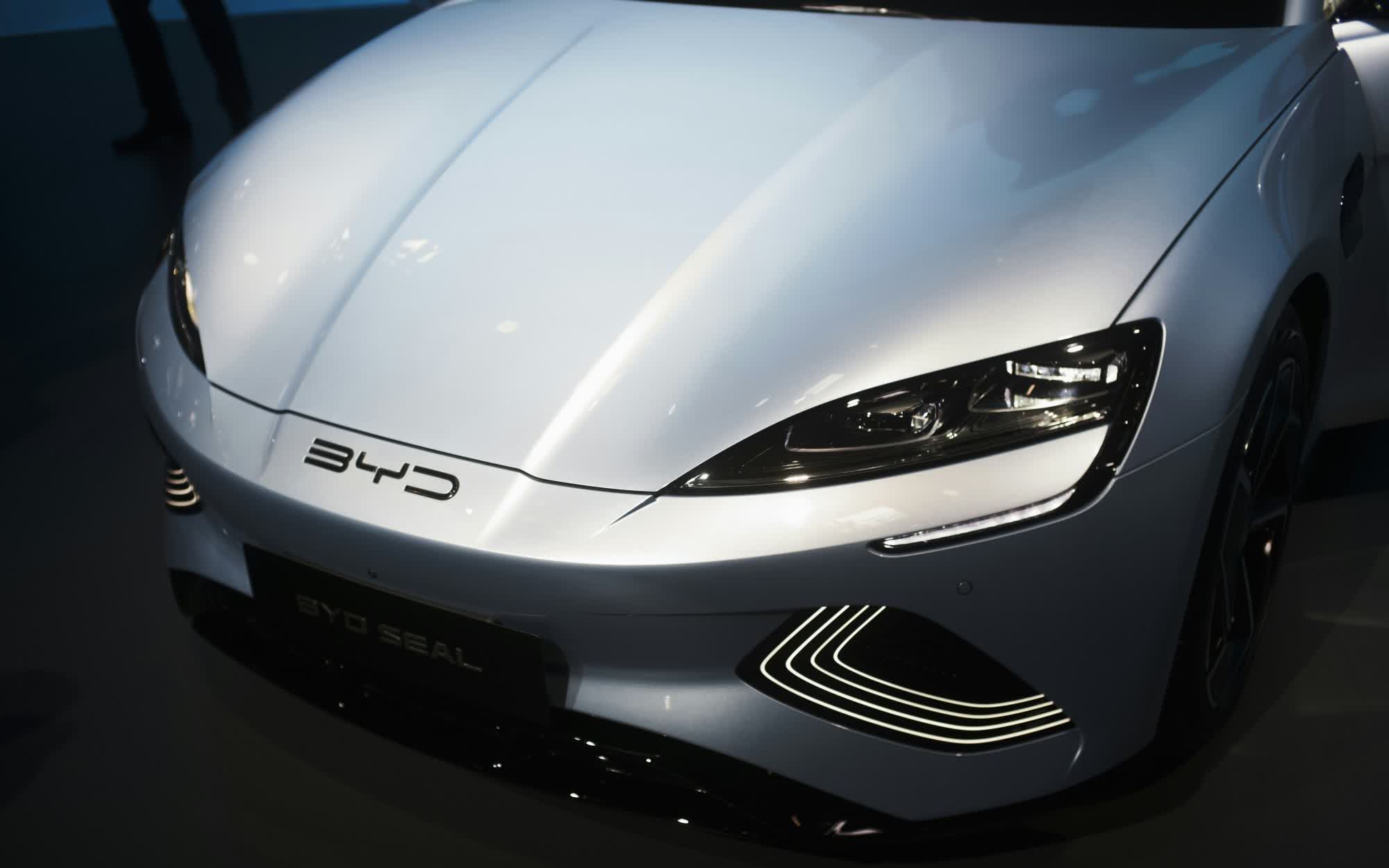
BYD showcased the new platform during its Disruptive Technology event on Thursday. According to the automaker, the Flash charger is able to take the battery from 10% to 70% in just five minutes and from 10% to 97% in only nine minutes when at room temperature. In extreme cold (-30 degrees Celsius), users can expect to go from 20% to 97% charge in roughly 12 minutes.

Per Electrek, BYD CEO Wang Chuanfu noted that charging to 97% is recommended as the remaining three percent is best reserved for gains from regenerative braking.

Range anxiety was a major concern among consumers in the early days of EVs. The fear of not having enough juice in the tank to get through a full day combined with a lack of public charging stations and long recharge times kept some prospective buyers at bay. Nowadays with advancements in platforms and charging technology, that is much less of a concern.

According to the automaker, the platform is rated for up to 1,006 km (625 miles) based on the CLTC scale. For comparison, the company's first-gen Blade system topped out at around 600 km of range.
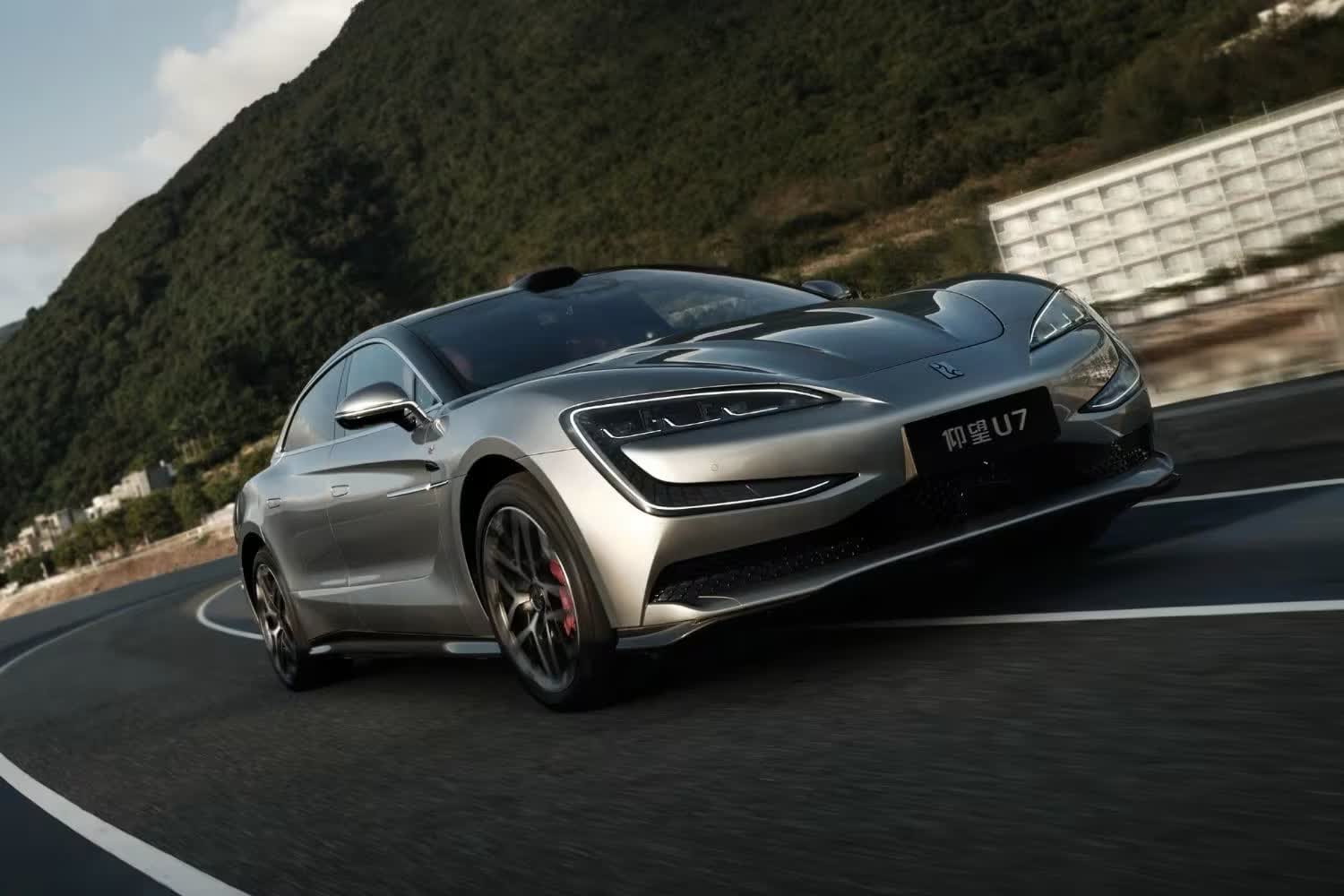
The CLTC standard is a bit more optimistic than systems used in other parts of the world. According to an online range converter, 1,006 km on the CLTC scale translates to 706 km using the EPA scale popular in the US, which is around 439 miles. Even still, for most users, that's more than enough range and with rapid charging, it is even less of a concern.

On X, BYD said it aims to roll the new Flash charging stations out to 20,000 locations across China by the end of 2026.

Permalink to story:

 
Wasn't there a news article recently published that said that those fast charging batteries cut the life of battery by half or something like that?
edit: ok definitely not that much but still degrades the battery faster :/

 
Alternatively, charge your car overnight slowly every night. It's cheaper (no need to pay the big bucks for a fat charger at home or pay a lot for the electricity doing it elsewhere). It's better for the battery and you always start the day at full charge (or cap the charging at 80 percent so the batteries lifetime gets extended).

Need to go somewhere far once in a while grab a bite to eat whilst you charge, no time lost. With a bit of planning range anxiety really shouldn't be a thing for 99 percent of people.
It's like the people buying massive vehicles in case they need the space once a year... Just rent a frigging van. So many people making weird choices when it comes to their second largest purchase for weird edge cases that can be worked around
 
So is this new charging station BYD only?

All in all, the actual infrastructure currently in place will be the limiting factor for years to come. And its not just the charging station, but also power grid. As the ev adoption and charging speeds increase, it is becoming increasingly hard for the infrastructure to scale.
 
So is this new charging station BYD only?

All in all, the actual infrastructure currently in place will be the limiting factor for years to come. And its not just the charging station, but also power grid. As the ev adoption and charging speeds increase, it is becoming increasingly hard for the infrastructure to scale.
Everything you said is nonsense. It's just a list of excuses people use when they want to cling to their gas guzzlers. There's plenty of infrastructure in place to support EV charging already, I see it everywhere. Almost every gas station around here has EV chargers now. I also see them near malls, theaters, shopping districts, etc. EVs have been around for a while now, so they had plenty of time to build out charging stations.

And your comment about infrastructure becoming increasingly hard to scale is again complete nonsense. All the AI companies need massive, and I mean MASSIVE, amounts of power and they've already started building that out. In the coming years AI companies are set to spend ridiculous amounts of money and some of that must go to upgrading infrastructure to support their power hungry hardware. So what you're saying is that it's becoming too hard to build out infrastructure for EV charging, but not for AI?

Not all of the AI companies that are spending all that money will survive. Once the AI bubble bursts there will be plenty of extra power left over that they will no longer need.
 
"Range anxiety" is one of those ridiculous buzz phrases that only applies to fat American drivers. Normal people in the rest of the world have better things to worry about than obsessing over their EVs running out of juice suddenly (which never happens unless you're stupid.)
 
Alternatively, charge your car overnight slowly every night. It's cheaper (no need to pay the big bucks for a fat charger at home or pay a lot for the electricity doing it elsewhere). It's better for the battery and you always start the day at full charge (or cap the charging at 80 percent so the batteries lifetime gets extended).

Need to go somewhere far once in a while grab a bite to eat whilst you charge, no time lost. With a bit of planning range anxiety really shouldn't be a thing for 99 percent of people.
It's like the people buying massive vehicles in case they need the space once a year... Just rent a frigging van. So many people making weird choices when it comes to their second largest purchase for weird edge cases that can be worked around

- Por Que no los dos?

This is the best of both worlds. At home or out somewhere that you will be parked for a few hours? Slow charge to reduce battery wear and tear.

Out somewhere with places to be but get caught with low battery? Use the quick charge option to get back on the road quickly.

I see nothing but upshot with this (except its a Chinese company and all the baggage that brings).
 
Didn't recent studies show that out of all the supposed factors that can degrade a battery and reduce its capacity, frequent fast charger was actually a factor in degrading a lot faster? No wonder the manufacturers all want to peddle it when forcing you to replace your car or the battery after some point is of course financially beneficial to them...
 
The first thing is that you can's skip physics. Current chargers max out at 350-400 kwh. Cutting the time in less that half WILL require an overhaul of the current infrastructure. Especially considering that this "new" battery will charge with the old system. Who's going to rip out a new one to cut the charging time by 2/3 or so?

Next, I would LOVE to have a compete list of all the Chinese "breakthroughs" than never come to pass. Anyone remember Deepseek had the fastest AI results without Nvidia hardware? How about China's breakthrough in lithography, having built a bootleg ASML EUV scanner? China has gained market share through IP ,theft, dumping (selling well below cost), and blackmailing countries with cutting off every market they've already captured unless you let them take over more markets.

By all means, let them in the US and we'll be in an even deeper hole than Europe is in with China dependence. Europe started giving Tesla a hard time because they didn't want a US company selling them EV's. The result is that the Chinese now OWN the European EV market, while the local companies are shutting down EV production just like the US has. The only difference is the US is pulling out due to red ink and lack of buyers. Europe just decided to give their market to the Chinese.
 
EVs are not far off from ideal specs. 100KwH solid state battery, 200 HP front motor, 100HP rear motor, 1.2MwH charger. All of these things exist.
Most people won't need such a large solid state battery. 3x the energy density of current tech, and 2x the range at least. A 50kWh battery will still get you 700-800km and I'd rather save more weight. Combine that with recharging even faster than these blade batteries and most if not all cons of EV's (other than the lack of glorious exhaust note) are gone.
 
Instead of pushing EV's, now (usa) that the credit/rebates are gone, people have spoken. They don't want EV's. Oil isn't going to run out. Heck, if you want an alternative to ICE vehicles, have Doc Brown invent the flux capacitor and be done with all of this silly battery car nonsense.
Not to mention the range of these BYD vehicles will be REDUCED in the USA (even if they were allowed to be imported),because they will need to be upgraded with all of The National Highway Traffic Safety Administration (NHTSA) requirements.
 
Next, I would LOVE to have a compete list of all the Chinese "breakthroughs"

Most of those are "borrowed" anyways. If those come from inventions made in the West, I do believe that they could be worth something.
 
For a bunch of supposedly technology liking individuals, it amazes me the amount of hate towards any new technology or improvements to existing technology when it doesn't originate from "your" side of the border.

At the end of the day, all advancements in technology piggy back of previous research and findings. Argue the merits of said technology, not where it originates from.
 
Here 3 phase 380V with 11KW for home is common. But that still takes 10-12 hours to charge 100KW battery. When EV's will be solving all current issues (general big price, fire hazard), I will think about getting one and install solar panels above my garage to charge during daytime.

Until then I will enjoy the sound of petrol engine coming thru the muffler and getting my hands dirty with engine oil and Vaseline.
 
These news aren't for disbelievers or believers. It's just a proof what might arrive in the future. People think they have a choice, but forget necessity drives purpose, and around the world it is a lot of need for these technologies. At this point is a matter of adapting or being left behind.

Although I see an obstacle. Will the big petrol companies let this become the norm ? Electricity is less profitable than oil, but one scales better.

"Cycle Life: 5,000+ full charging cycles for standard Blade Batteries. Newer, upcoming solid-state/sodium-ion tech targets up to 10,000 cycles.".


If they release batteries with 10000 cycles. Trust me, the rocket would long have flown into deep space, and, in this case, ASIA would either sell this technology, borrow it, or simply create a standard that much faster would spread. Look at current geo politics, how unstable is the lack of energy. This technology is a must, not an option.

Here 3 phase 380V with 11KW for home is common. But that still takes 10-12 hours to charge 100KW battery.

"Range Added: An 11kW charger typically adds around 70 kilometers (roughly 40-50 miles) of range per hour of charging"
 
Last edited:
I wonder what those quick-charge times do to the life expectancy of the battery.
It works fine - due to how each battery is divided into multiple smaller cells. One huge battery cell wouldn't handle that load, but a huge amount of smaller cells works fine. It's all about how they handle the flow of power and cooling
 
So is this new charging station BYD only?

All in all, the actual infrastructure currently in place will be the limiting factor for years to come. And its not just the charging station, but also power grid. As the ev adoption and charging speeds increase, it is becoming increasingly hard for the infrastructure to scale.
Actually the biggest challenge for the power grid now is all the new AI datacenters popping up. We have one being built that will consume the equivalent of 20% of the entire regions power demands alone
 
Here 3 phase 380V with 11KW for home is common. But that still takes 10-12 hours to charge 100KW battery. When EV's will be solving all current issues (general big price, fire hazard), I will think about getting one and install solar panels above my garage to charge during daytime.

Until then I will enjoy the sound of petrol engine coming thru the muffler and getting my hands dirty with engine oil and Vaseline.
I charge with 11kw at home - when I sleep.

Fire hazard for electrical cars has been solved a long time ago. We have millions of electrical cars on our roads and if one catches fire - it's in the headlines, which is maybe 1-2 times a year, and almost always a first generation car.
The battery placement of newer cars makes it very unlikely for them to catch fire during a crash, it's not affected by heat as there are cooling solutions and safety precautions built in - both during charging and when the car is parked.
If your battery cell is perforated, there are sensors that will alert you to that fact and it will make your car undriveable until it's fixed.

Longevity is also fixed, we have electrical cars from 2012 still driving around.

But it's all about the infrastructure - if it's good, it works fine. If your country isn't building enough charging stations, having an EV will be cumbersome ...Just like owning a gas car with no gas stations would be
 
There's plenty of infrastructure in place to support EV charging already...
Fast-charging a 100 KWhr battery to 70% in five minutes requires nearly one megawatt. A station charging a dozen plus EVs at once would need a power feed hundreds of times larger than it already has. Even Tesla Supercharge stations -- 2-3 times slower than this -- can be sited only where spare grid capacity exists. The stations you see around malls and shopping districts are generally in the 150KW range -- very slow -- and capable of being handled by the grid only because there are so very few of them. EVs make up under 2% of US vehicles on the road at present. If that figure rises to even 10%, major grid updates will be required.

So what you're saying is that it's becoming too hard to build out infrastructure for EV charging, but not for AI?
You miss the point. Data centers sites are chosen where power is abundant and spare grid capacity exists. A full conversion to EVs in the US would require 6-8 times as much power as all data centers combined ... and much more importantly, that power must be distributed hundreds of times further in terms of total grid cable miles.

Once the AI bubble bursts there will be plenty of extra power left over that they will no longer need.
The AI bubble will burst the same way the Internet dot-com bubble did. Even at the very peak of the "collapse", Internet usage, Internet penetration, and spending on Internet-related products all continued to rise. Barring global thermonuclear war and the destruction of society itself, total AI usage will increase every year for the next several decades.
 
Back