How BYD engineered breakthrough five-minute EV charging

Skye Jacobs

Posts: 2,026   +59
Staff
Connecting the dots: Chinese automaker BYD has pulled ahead of global rivals in a race many in the industry consider pivotal to mainstream electric vehicle adoption: charging speed. Through tight vertical integration, new battery chemistries, and aggressive infrastructure expansion, the company has shown that refueling an EV can now take minutes rather than half an hour.
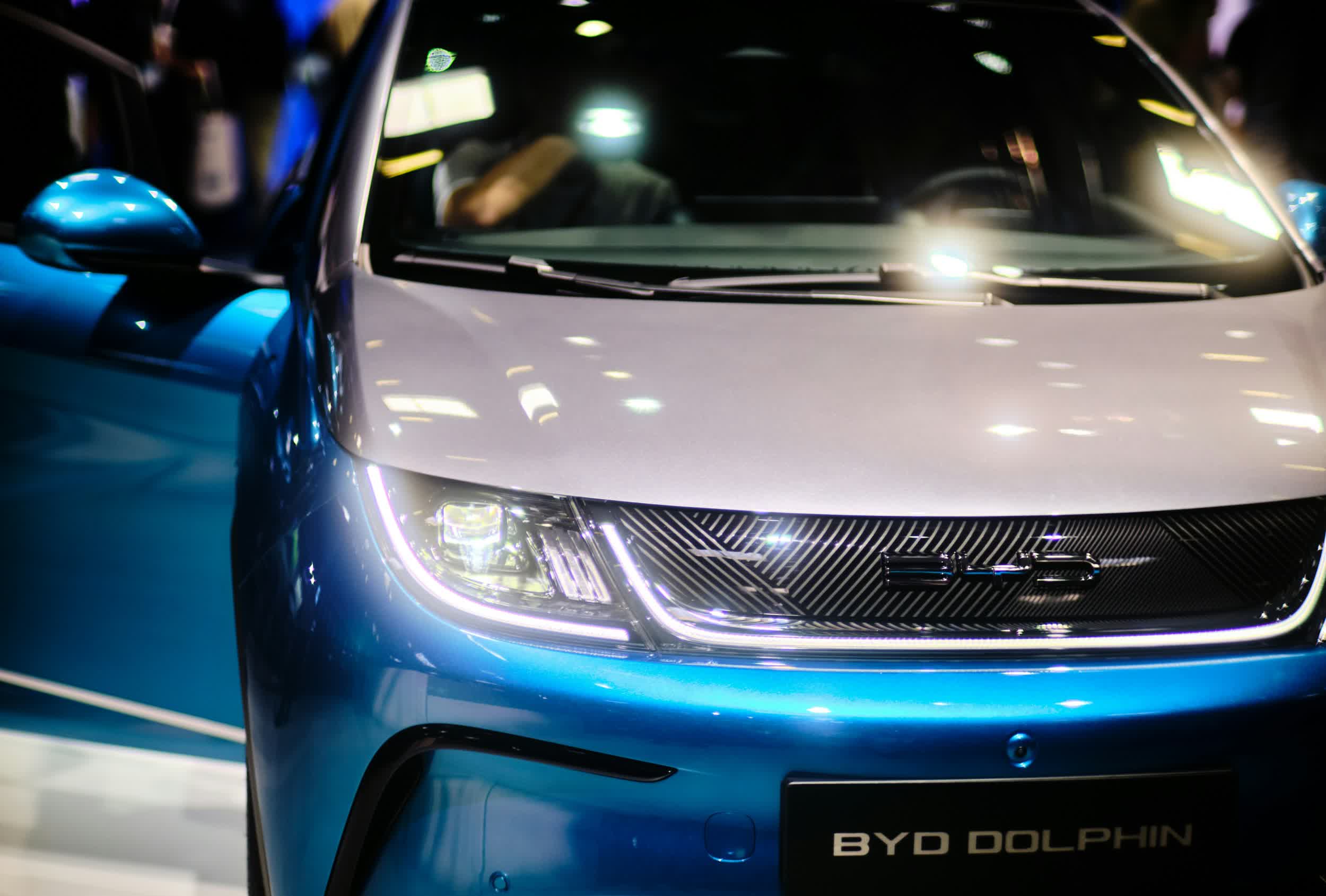
Earlier this month, BYD revealed that its latest Flash Chargers can deliver up to 1,500 kilowatts – roughly four times the power of the "hyper-fast" 350-kW systems common in the US. In tests, select BYD batteries charged from 10% to 70% in about five minutes and from 10% to 97% in roughly nine minutes. If those speeds can be consistently achieved under real-world conditions, drivers could gain more than 600 miles of range in the time it takes to buy a coffee.

The accomplishment reflects a convergence of engineering decisions that BYD controls from top to bottom. Unlike most global automakers, which rely on suppliers for key components, BYD designs and manufactures its own vehicles, battery cells, and charging hardware. This vertical integration has quietly become a core competitive advantage.

BYD Blade battery lies at the heart of the new charging milestone. The company switched its chemistry from lithium iron phosphate to lithium manganese iron phosphate, increasing energy density by about 5% while maintaining stability under heavy electrical loads.

Every component – the electrodes, electrolytes, and separators – has been reworked to handle the intense current of a 1,500-kW charge without overheating or degrading. This co-design of cell and charger allows electricity to flow more efficiently, reducing bottlenecks that limit charging speed in other systems.

In practice, the technology will first appear in BYD's Denza Z9GT, set to debut in Paris next month as the only vehicle currently equipped to exploit the full speed of Flash Charging. BYD plans to install more than 4,000 of the new chargers across China, another 16,000 by the end of the year, and roughly 2,000 units in Europe.

Each charging site will be supplemented with stationary storage batteries to buffer grid demand, offsetting spikes that could otherwise overwhelm the infrastructure.

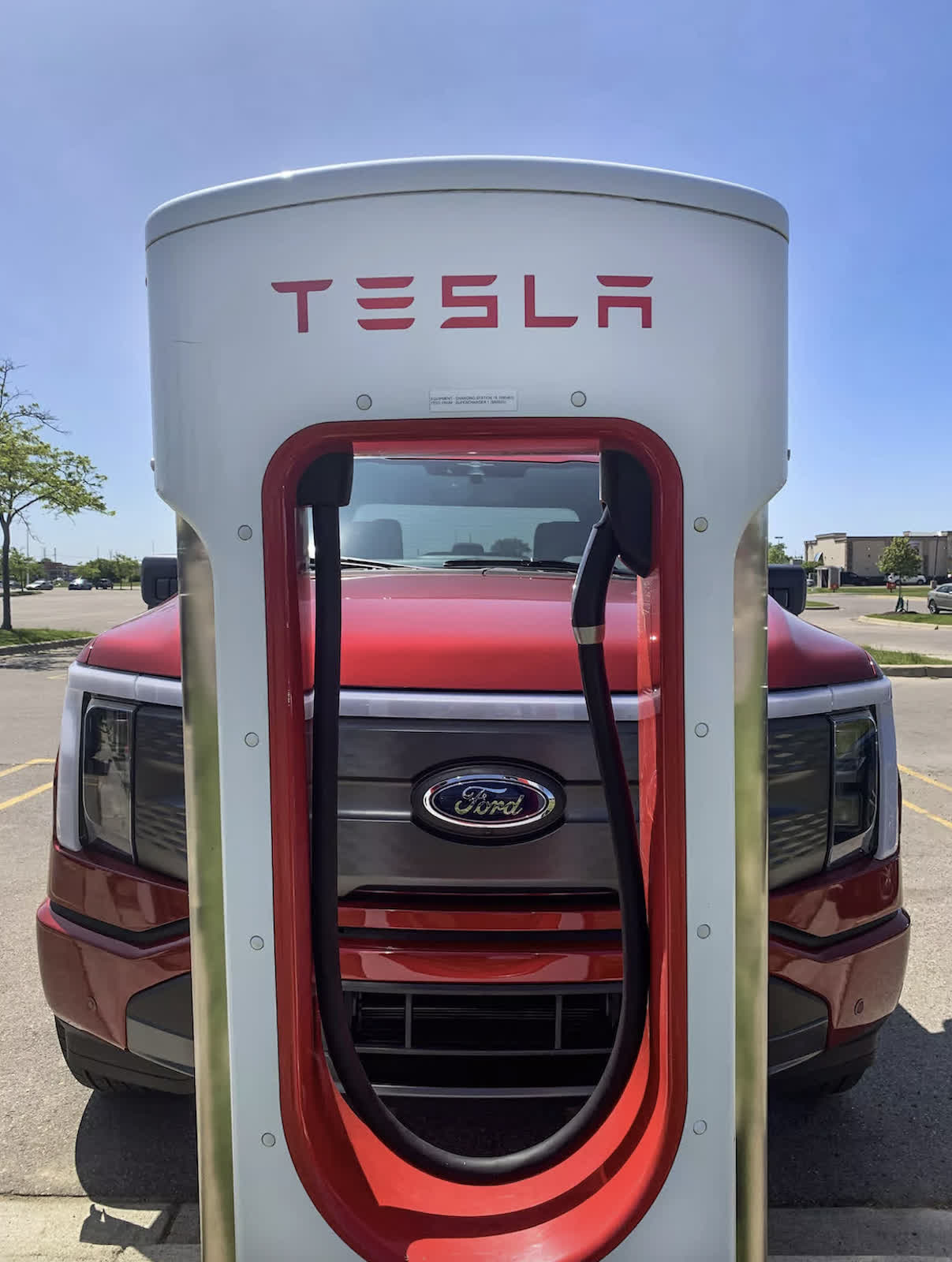
By solving charging speed through integration rather than waiting for industry standards, BYD has effectively positioned itself several steps ahead of competitors. Tesla's Supercharger network remains the closest comparable model, but even those stations peak at only about a third of BYD's claimed power output.
Most established Western automakers, operating within more fragmented supplier ecosystems, will likely take years to replicate similar performance without overhauling both battery design and charging strategy.

Experts say the achievement is technically significant, though its broader impact may be limited in the short term. Gil Tal told Wired that most EV owners already charge at home and rarely rely on public high-speed chargers. Still, he acknowledges that breakthroughs like BYD's could influence perception among drivers making their first switch from gasoline.

Beyond consumer appeal, BYD's system highlights a growing regional divide. China continues to invest in charging infrastructure at a national scale, while European adoption gains momentum through coordinated policy.

The United States, by contrast, remains constrained by grid capacity and conflicting regulations. Retrofitting a 150-kW charger site to handle BYD-level loads would require major utility upgrades, not just equipment swaps.

Whether the Flash Charger becomes a mass-market standard or a halo technology, it underscores BYD's lead in execution. The company has combined chemistry, software, and grid engineering into a single playbook – something its competitors have yet to match. In doing so, it has turned what was once the EV industry's slowest process into its fastest advantage.

Permalink to story:

 
A Uber driving friend of mine in Brazil bought a BYD car. He was using $800 monthly for gas before the new car (costing $US 25k), Now its about $250 a month for electricity, charged overnight at home in similar driving. He is looking forward to fast charging so the car can be used 20 hours daily
 
You could bring BYD in here tomorrow, and all you'd wind up with is all other domestic and imported EV manufactures going out of business while BYD sells EV's below cost to eliminate the competition.

Meanwhile back at the ranch, a 20 "pump" EV charging center will need the grid and generation capacity to provide 30 gigawatts of power at peak times. Mind you all without building more fossil fuel power generating plants.

And lastly, like just about EVERY Chinese breakthrough, this announcement is big on headlines, and short on details, How do they manage heat while charging? What is the lifespan of the battery? How difficult is it to manufacture these wonder batteries in mass production? What is the ACTUAL cost, not the Chinese government subsidized cost?

I'll believe it when the Chinese adopt these on every street corner and no longer use combustion engines.

Then we can ll move to China!
 
You could bring BYD in here tomorrow, and all you'd wind up with is all other domestic and imported EV manufactures going out of business while BYD sells EV's below cost to eliminate the competition.

Meanwhile back at the ranch, a 20 "pump" EV charging center will need the grid and generation capacity to provide 30 gigawatts of power at peak times. Mind you all without building more fossil fuel power generating plants.

And lastly, like just about EVERY Chinese breakthrough, this announcement is big on headlines, and short on details, How do they manage heat while charging? What is the lifespan of the battery? How difficult is it to manufacture these wonder batteries in mass production? What is the ACTUAL cost, not the Chinese government subsidized cost?

I'll believe it when the Chinese adopt these on every street corner and no longer use combustion engines.

Then we can ll move to China!
Gotta love them Americans. Ban BYD from the county, then complain that "I'll believe it when I see it".

Go to China and watch it then? Others already did it for you, but go ahead.

The car comes to Europe on April 8th btw.
 
Last edited:
A Uber driving friend of mine in Brazil bought a BYD car. He was using $800 monthly for gas before the new car (costing $US 25k), Now its about $250 a month for electricity, charged overnight at home in similar driving. He is looking forward to fast charging so the car can be used 20 hours daily
Except the car he has won't support that charging method. He has to buy a new car.
 
This is hilarious, what % of people do you think will have access to these chargers assuming you even have a NEW BYD EV.

Only the most modern 800V architectures could possibly support 1.5MW charging, infrastructure will cost a bomb and imagine the rates they'd want to use this if all the stars align. Already pre-Iran war, Tesla Australia was charging almost petrol like prices for charging per kW/h - and no I would not do much charging outside my own home, but when you travel you have no choice.
 
You have to know, unless they have some new fangled battery, that charging THAT fast will reduce the lifespan of the battery cells, requiring REPLACEMENT which will be expensive.
Not to mention the disposal/renewal of the components of the battery. Also the amount of materials needed to produce the batteries.
 
This is hilarious, what % of people do you think will have access to these chargers assuming you even have a NEW BYD EV.

Only the most modern 800V architectures could possibly support 1.5MW charging, infrastructure will cost a bomb and imagine the rates they'd want to use this if all the stars align. Already pre-Iran war, Tesla Australia was charging almost petrol like prices for charging per kW/h - and no I would not do much charging outside my own home, but when you travel you have no choice.
The news BYD posted says this is going to be in a car with 0-100km time of under 3 seconds, and a 122kWh battery (only pickups have that size batteries). This is going to be a great car, but also priced at probably $100k+.

Also, fast charging generally costs the same and often more expensive than gas does. In the US, Tesla superchargers have been the most affordable compared to the competition. When driving locally it’s cheaper and uses less of your time to charge at home than a gas vehicle, but at long distances EVs have always been a subpar experience. It’s a tradeoff.
 
Can't buy em in the US since Musk controls the government.

Not quite true - Musk and Tesla have the least to fear from Chinese cars. Tesla has superior tech to other US companies. It's the other US companies that ask the government to block Chinese EVs.

It's the same reason you don't see small utility trucks anymore. I would love to have a short cab Nissan or Toyota pickup but they're not available. US companies make far more money on the big trucks. So now EPA has rules that add a surcharge on small trucks which make them uneconomical to produce.
 
In tests, select BYD batteries charged from 10% to 70% in about five minutes and ..
The keyword being 'select', of course. And also 'about'.

The above statement is so incredibly vague ... when I buy a car, I don't care what a 'select' sample could do under special conditions. I care what's the average of a huge randomly picked sample, after ,say, 3 years of use. And I bet the average 10-70% charge times will be nowhere near 'about 5 minutes'
 
In the meantime there's discussion in China as to whether EV's should be banned from underground parking garages after several barbecue events, in which EV's decided to not only barbecue their passengers but also nearby cars and make the garage unusable for days due to smoke.
 
This technology doesn't seem that different from most modern 800v architecture EVs. A Hyundai Ioniq 5 will charge from 10% to 80% in under 20 mins. The new BMW i3 can add and extra 250 miles in 10 minutes. Obviously you'd need chargers that can supply the current but most of the first world is investing in their electricity infrastructure, I'm guessing America doesn't.

Most owners of EVs just charge at home anyway. It's cheaper, it charges while you sleep and you wake up to a full tank each day. If you're the sort of person who has to drive huge distances each day then the chances are you're not in the market for an EV (functionally or financially).
 
Last edited:
If the specs are true, we should do to them what they've done to us for decades - spy and steal their designs haha

The United States, by contrast, remains constrained by grid capacity and conflicting regulations. Retrofitting a 150-kW charger site to handle BYD-level loads would require major utility upgrades, not just equipment swaps.

Consider that if we had 1.5MW chargers, at an equivalent number of EVs on the road, I think the grid load compared to 150kW/350kW chargers would average out. The number of cars simultaneously charging at 1.5MW would be less, because they'd get done and leave the station faster. If EV usage began increasing, then yes you'd need power upgrades to charge sites
 
You have to know, unless they have some new fangled battery, that charging THAT fast will reduce the lifespan of the battery cells, requiring REPLACEMENT which will be expensive.
Not to mention the disposal/renewal of the components of the battery. Also the amount of materials needed to produce the batteries.
If you read the article, you would know they do have a "new fangled" battery.

Give it a few years in production in China and Europe. Then we will know how well the battery performs.
In the meantime there's discussion in China as to whether EV's should be banned from underground parking garages after several barbecue events, in which EV's decided to not only barbecue their passengers but also nearby cars and make the garage unusable for days due to smoke.
That's with an older battery technology.
Considering it requires new battery design that isn't available for purchase yet, yeah, I do know.
You don't know Jack.
This is hilarious, what % of people do you think will have access to these chargers assuming you even have a NEW BYD EV.

Only the most modern 800V architectures could possibly support 1.5MW charging, infrastructure will cost a bomb and imagine the rates they'd want to use this if all the stars align. Already pre-Iran war, Tesla Australia was charging almost petrol like prices for charging per kW/h - and no I would not do much charging outside my own home, but when you travel you have no choice.
In the US, people can keep pissing and moaning about the cost of infrastructure. Chump claimed he was going to invest in infrastructure in his first term, but never did. In this term, I don't think he's even remotely mentioned it. Trump is still in the swamp, digging up Oil and congress in the US, is content to say "Bless you our God Trump."

The fact remains, that infrastructure, in the US, is still in dismal shape, and unless people elect a president willing to do something about it, or there are loud enough protests, nothing will get done even though infrastructure is crap in the US.

As a US citizen, it seems to me that many in the US are placing too much importance on issues that don't matter and cannot recognize issues that do matter; therefore, they don't complain loudly enough about the important stuff and complain too much about stuff that makes little to no difference.
 
If you read the article, you would know they do have a "new fangled" battery.

Give it a few years in production in China and Europe. Then we will know how well the battery performs.

That's with an older battery technology.

You don't know Jack.

In the US, people can keep pissing and moaning about the cost of infrastructure. Chump claimed he was going to invest in infrastructure in his first term, but never did. In this term, I don't think he's even remotely mentioned it. Trump is still in the swamp, digging up Oil and congress in the US, is content to say "Bless you our God Trump."

The fact remains, that infrastructure, in the US, is still in dismal shape, and unless people elect a president willing to do something about it, or there are loud enough protests, nothing will get done even though infrastructure is crap in the US.

As a US citizen, it seems to me that many in the US are placing too much importance on issues that don't matter and cannot recognize issues that do matter; therefore, they don't complain loudly enough about the important stuff and complain too much about stuff that makes little to no difference.
Come on, you're usually better than this. If someone has already bought a car and had it in use, by definition, it does not have the new battery required for this to work.

It's clearly stated it requires a new design and new materials composite.
 
" Chinese automaker BYD has pulled ahead of global rivals in a race many in the industry consider pivotal to mainstream electric vehicle adoption: charging speed."

Now, WTF dares to say BYD copied or stole this Technology from US, Australia or West in general...?!
 
You could bring BYD in here tomorrow, and all you'd wind up with is all other domestic and imported EV manufactures going out of business while BYD sells EV's below cost to eliminate the competition.

Meanwhile back at the ranch, a 20 "pump" EV charging center will need the grid and generation capacity to provide 30 gigawatts of power at peak times. Mind you all without building more fossil fuel power generating plants.

And lastly, like just about EVERY Chinese breakthrough, this announcement is big on headlines, and short on details, How do they manage heat while charging? What is the lifespan of the battery? How difficult is it to manufacture these wonder batteries in mass production? What is the ACTUAL cost, not the Chinese government subsidized cost?

I'll believe it when the Chinese adopt these on every street corner and no longer use combustion engines.

Then we can ll move to China!
First, you complain that every car manufacturer will go out of business if they let BYD sell their cars. I thought competition was good, but apparently it's only good if that competition is exclusively among American car manufacturers. Got to protect those auto makers to keep making the crappiest cars in the world that fall apart in less than 10 years I guess.

Then you complain about the grid not being able to take the extra power draw of EV charging stations. China and Europe can build tens of thousands of charging stations per year, but apparently the richest country in the world can not.

Not only that, the current administration is actually trying to move things backwards. The US government literally just paid some French company a BILLION dollars to NOT build a wind farm offshore (I'm not joking, look it up) because the Orange Turd in the Oval Office hates the wind. America is actually moving back to fossil fuels, you know because we have an unlimited supply of that... oh wait.

And finally, after complaining about domestic automakers going out of business and the country not having the infrastructure to support EV charging, you brush it off as probably not being as good or cheap as they make it sound. EVs are coming no matter how you feel; it's inevitable. The only question is how many years the US will fall behind before it suddenly tries to play catchup when the rest of the world is 5/10/20 years ahead on EV tech.
 
Last edited:
Back