Container-sized batteries are powering the next global energy revolution

Skye Jacobs

Posts: 1,918   +58
Staff
TL;DR: During California's record-setting hot summer this year, battery systems supplied more than a quarter of electricity during evening peaks, eliminating the need for statewide emergency conservation alerts for the first time in years. As gas generation declines and renewable energy rises, large-scale batteries have become not just a backstop but the foundation of grid reliability – the connective technology enabling the world's shift toward stable, low-carbon power.
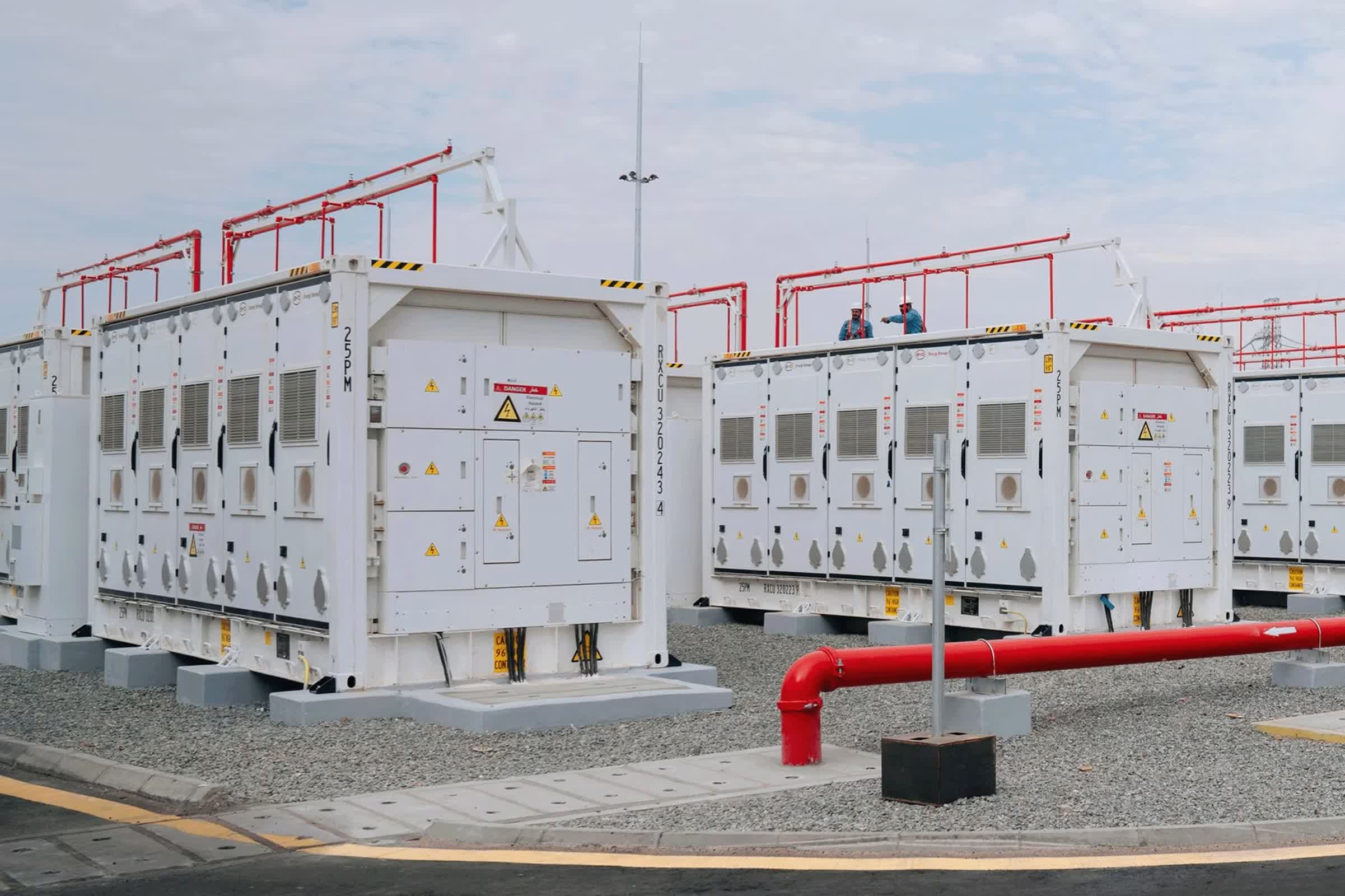
When record heat engulfed California in August 2020, the state's electric grid collapsed under the strain. With air conditioners running nonstop and demand climbing to nearly 47 gigawatts, the grid operator ordered rolling blackouts – the first in nearly two decades. More than 800,000 homes lost power for hours, forcing regulators to confront a growing vulnerability: the dependence on intermittent renewable generation.

The crisis accelerated one of the fastest infrastructure expansions in modern US energy history. In the five years since, battery storage capacity across California has surged more than 3,000 percent – from roughly 500 megawatts in 2020 to about 15,700 megawatts by mid-2025 – transforming how the grid manages supply and demand. Fleets of lithium-ion battery units now absorb surplus solar power at midday and release it during evening peaks when electricity prices soar. Elliot Mainzer, head of the California Independent System Operator, told The Financial Times that the expanded network has "fundamentally altered reliability during peak demand periods."
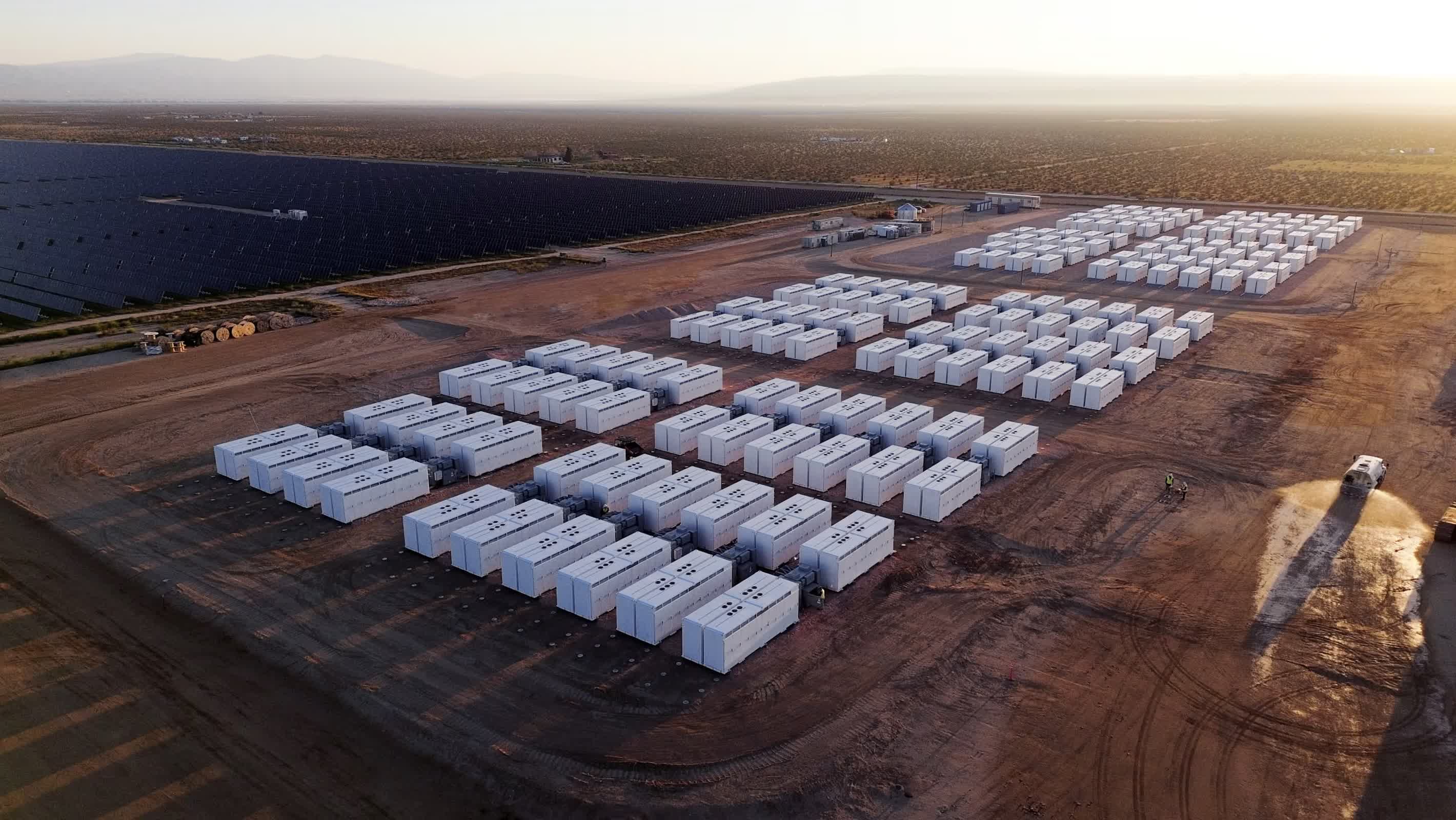
California's transformation is part of a global surge that is redefining electricity systems. BloombergNEF projects worldwide battery storage installations to reach 100 gigawatts by the end of 2025 and more than double within a year as costs continue to fall. China leads the expansion, surpassing 100 gigawatts of new-energy storage capacity in 2025 – more than doubling output in just twelve months, according to the China Energy Storage Alliance. The country's rapid scaling marks a historic shift as lithium-ion systems overtake pumped hydro for the first time and become central to managing renewable energy surpluses across sprawling provincial grids.

The US remains a close competitor. S&P Global projects the country's grid-scale battery capacity will quintuple to 204 gigawatts by 2040 as utilities integrate more variable solar and wind generation. In 2025 alone, battery capacity jumped 63 percent nationwide, with Texas leading new installations. The European Union, Australia, and emerging markets such as Chile and the Philippines are also building large fleets to meet similar demands for flexible, on-demand energy infrastructure. Together, China and the US now account for roughly 70 percent of global capacity and are shaping the direction of the industry through competing approaches to battery manufacturing, materials sourcing, and grid deployment.
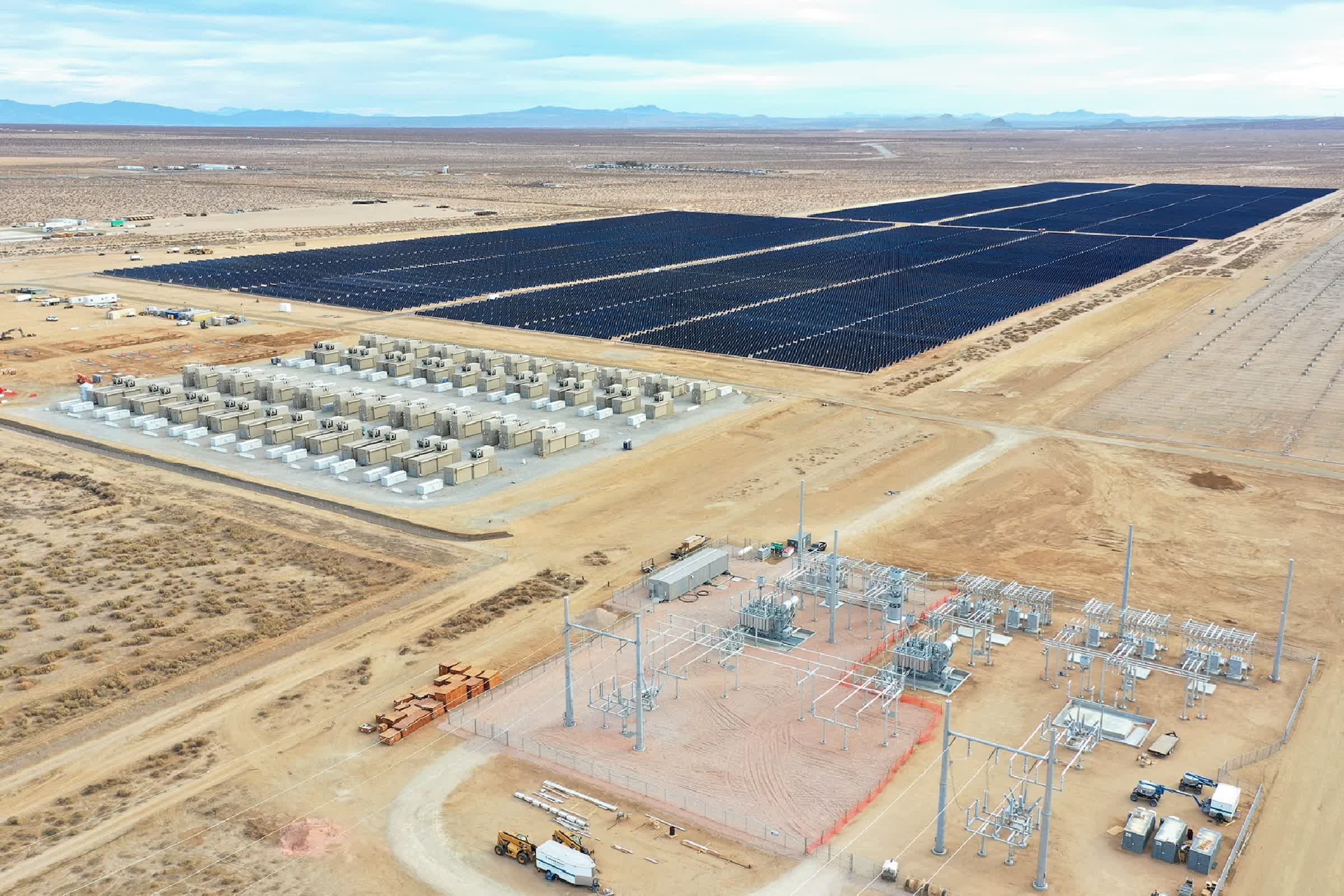
Much of the technology race playing out globally centers on Tesla and China's BYD, the world's two most influential battery producers. Tesla's high-density 4680 cylindrical cells, built with nickel-manganese-cobalt chemistry, prioritize long range and fast charging but require sophisticated cooling to manage heat buildup. BYD's Blade battery uses lithium-iron-phosphate chemistry in a long, prismatic format that favors cost, safety, and thermal stability over extreme energy density. The Blade's LFP design distributes heat more evenly, lowering the risk of fire and reducing maintenance needs, while Tesla's approach supports higher performance suited to premium systems. Analysts say BYD's cost advantage – about $10 per kilowatt-hour less in material costs – and full vertical integration give it an edge in scaling grid applications, while Tesla's technology remains the benchmark for fast deployment and efficiency.

Utility-scale batteries now deliver far more than backup power. They earn revenue through grid-stabilization services, frequency regulation, and price arbitrage. By purchasing surplus wind or solar energy when wholesale prices collapse – sometimes below zero – and reselling it during peak demand, battery operators keep grids stable and renewable power profitable. In Spain, for instance, wholesale prices turned negative for over 500 hours in 2025 as midday solar generation flooded the grid. However, developers still face challenges navigating fragmented markets, uneven policy frameworks, and double-charging fees in some regions.

While investors contend with such policy and pricing barriers, a larger pattern is emerging: energy storage is becoming the pivot around which renewables operate. A July 2025 report by the Energy Transitions Commission found that "sunbelt" nations like India and Mexico, where solar generation follows predictable daily cycles, could meet nearly all balancing needs with batteries alone. By contrast, wind-dominant countries such as Germany and the United Kingdom will require hybrid systems that include pumped hydro, compressed-air storage, and hydrogen to bridge long-duration power gaps.

Image credit: The Financial Times

Permalink to story:

 
Grid Scale Lithium batteries are, well, a waste of Lithium and inflate the cost. Lithium makes good batteries for mobile devices where size and weight are an issue. To make a battery, all you need is a difference in electro-negativity. You can make an anode and a cathode out of any two conducting materials. So for grid scale batteries where size and energy density isn't an issue, we can basically anything. I can't remember who said it, but I remember a saying "if you want to make something as cheap as dirt then make it out of dirt" or something along those lines.
 
Grid Scale Lithium batteries are, well, a waste of Lithium and inflate the cost. Lithium makes good batteries for mobile devices where size and weight are an issue. To make a battery, all you need is a difference in electro-negativity. You can make an anode and a cathode out of any two conducting materials. So for grid scale batteries where size and energy density isn't an issue, we can basically anything. I can't remember who said it, but I remember a saying "if you want to make something as cheap as dirt then make it out of dirt" or something along those lines.
Are you talking about Microsoft's iron air battery?
 
Grid Scale Lithium batteries are, well, a waste of Lithium and inflate the cost. Lithium makes good batteries for mobile devices where size and weight are an issue. To make a battery, all you need is a difference in electro-negativity. You can make an anode and a cathode out of any two conducting materials. So for grid scale batteries where size and energy density isn't an issue, we can basically anything. I can't remember who said it, but I remember a saying "if you want to make something as cheap as dirt then make it out of dirt" or something along those lines.
Comments like this give me a headache. Some random guy does a couple of Google searches or uses ChatGPT for five minutes and suddenly he thinks he's an expert on any subject. Throw in a misquote that sounds smart and it's proof positive he knows what he's talking about. You know, because the _actual_ experts are stupid and they're wasting money and resources. Random internet guy should be in charge of these things instead.
 
Are you talking about Microsoft's iron air battery?
no
Comments like this give me a headache. Some random guy does a couple of Google searches or uses ChatGPT for five minutes and suddenly he thinks he's an expert on any subject. Throw in a misquote that sounds smart and it's proof positive he knows what he's talking about. You know, because the _actual_ experts are stupid and they're wasting money and resources. Random internet guy should be in charge of these things instead.
I don't use Google or ChatGPT. Care to tell me why I'm wrong instead of throwing insults around? It looks like I struck a nerve so you must be familiar with this subject, educate me.
 
no

I don't use Google or ChatGPT. Care to tell me why I'm wrong instead of throwing insults around? It looks like I struck a nerve so you must be familiar with this subject, educate me.

Given the huge roll-out backed by engineers and researchers working on hugely complex grids, I think the burden of proof sits squarely with you to demonstrate why it's a bad idea, rather than for anyone else to try to justify a position that, lets face it, is massively complicated.
 
Given the huge roll-out backed by engineers and researchers working on hugely complex grids, I think the burden of proof sits squarely with you to demonstrate why it's a bad idea, rather than for anyone else to try to justify a position that, lets face it, is massively complicated.
I'm not saying grid scale batteries are a bad idea, I'm saying that using Lithium batteries for it is wasteful. The benefits of Lithium batteries are unnecessary for grid scale batteries, but companies like Tesla lobby the government to buy their products. We're fighting over lithium when there are other chemistries. They aren't being used because noone is really making them at scale, but there is a reason that electric car companies are the ones making grid scale battery packs. They have the infrastructure to do it and profits as an incentive. They don't care about the lithium supply chain as long as they keep selling batteries, whether it be in cars or to utility companies. And we, as the people connected to the grid, need to be concerned about it because these are VERY expensive and it shows up on our electric bills.
 
Grid Scale Lithium batteries are, well, a waste of Lithium and inflate the cost. Lithium makes good batteries for mobile devices where size and weight are an issue. To make a battery, all you need is a difference in electro-negativity. You can make an anode and a cathode out of any two conducting materials. So for grid scale batteries where size and energy density isn't an issue, we can basically anything. I can't remember who said it, but I remember a saying "if you want to make something as cheap as dirt then make it out of dirt" or something along those lines.
I think lithium recovery is already managed? New recycling method ‘recovers 98% of lithium from EV batteries’
 
We need exponentially more lithium than we have and adding grid scale lithium batteries to the mix adds an order of magnitude to that need. We don't have the scale needed to produce those other batteries at the grid scale, but if grid scale batteries are to become the norm then investments in increasing production starts to make sense.
On paper, you are correct. But you neglect two key considerations and so your analysis is short-sighted: Price and Time to Delivery.

Lithium batteries are cost-effective now. If I need 1 GW of capacity installed, the vast majority of that will be lithium batteries because the scale of production already exists for laptops and EVs. That reduces the effective cost to me due to economies of scale. A iron-air battery might be much cheaper in theory but the actual price per GW might be many times higher than lithium batteries.

The second point is even more important. We could argue that by placing a 1 GW order for some replacement battery technology, the costs will naturally drop as production picks up. Whether that is true or not, I need that capacity online within 6 months.

Does the supply chain (parts, labor, support) even exist for a GW of said battery tech to fulfill that order? Am I risking grid stability by going for the optimal solution that might not be realized within deadlines?

Related to all of this is the fact that my staff will need to learn how the new battery tech behaves under real-world usage conditions. That adds BOTH cost and time delay to getting those batteries online in a reliable and sustainable way.

Note that most of the power sector and utilities are actively looking at a whole bunch of different power technologies, including all types of batteries to become the next solution here. But if you need to meet power storage requirements for 2025, 2026, even 2027, lithium batteries are a time-tested and reliable solution with dropping prices and strengthening supply chains.

TLDR = Think less like a scientist and more like a engineer or economist. You are letting the perfect become the enemy of the good.
 
no

I don't use Google or ChatGPT. Care to tell me why I'm wrong instead of throwing insults around? It looks like I struck a nerve so you must be familiar with this subject, educate me.

It is a good alternative for power grid support.
 
On paper, you are correct. But you neglect two key considerations and so your analysis is short-sighted: Price and Time to Delivery.

Lithium batteries are cost-effective now. If I need 1 GW of capacity installed, the vast majority of that will be lithium batteries because the scale of production already exists for laptops and EVs. That reduces the effective cost to me due to economies of scale. A iron-air battery might be much cheaper in theory but the actual price per GW might be many times higher than lithium batteries.

The second point is even more important. We could argue that by placing a 1 GW order for some replacement battery technology, the costs will naturally drop as production picks up. Whether that is true or not, I need that capacity online within 6 months.

Does the supply chain (parts, labor, support) even exist for a GW of said battery tech to fulfill that order? Am I risking grid stability by going for the optimal solution that might not be realized within deadlines?

Related to all of this is the fact that my staff will need to learn how the new battery tech behaves under real-world usage conditions. That adds BOTH cost and time delay to getting those batteries online in a reliable and sustainable way.

Note that most of the power sector and utilities are actively looking at a whole bunch of different power technologies, including all types of batteries to become the next solution here. But if you need to meet power storage requirements for 2025, 2026, even 2027, lithium batteries are a time-tested and reliable solution with dropping prices and strengthening supply chains.

TLDR = Think less like a scientist and more like a engineer or economist. You are letting the perfect become the enemy of the good.
you are absolutely correct on all points. My issue is that grid scale battery packs are the future and alternatives to lithium do exist. If we know that the world will likely be spending trillions of dollars over the next few decades expanding grid scale batteries then we are better served with an alternative chemistry.

We need battery packs today and lithium is what is available at scale today. However, using lithium for all grid scale battery packs will be an enormous burden on the supply chain. It will make EVs even less practical and affordable, but manufacturers are doing a good job of that on their own.

I'm going to try to sum up a complicated opinion in as few words as possible. Grid scale battery packs are the future. Using just lithium for them will increase the cost of lithum while not providing any real benefits to the grid. Using an alternative chemistries will be cheaper in the long run if we know that this is the direction we are going. Using just lithium will strain the supply chain slowing electrification and green energy in general across the board. We should be using lithium in applications where weight and energy density are major considers in the development of products(phones, laptops, EVs) and alternative chemistries for things like home solar battery packs and grid scale batteries.

This is something that's been on my mind over the last few years and I try to talk about it whenever I get the opportunity. I want a future where we don't need to be connected to the grid outside of things like living in cities. In suburban homes were space is largely not an issue, we could have a less dense chemistry that side of a fridge sitting in your garage for pennies of what a small, lithium pack would require. If space is a concern, lithium could be a good option and the extra cost could be justifiable. Lithium does have a place in grid scale in places where property is expensive so space is a concern, but many of these grid batteries are in the middle of nowhere where the cost of lithium and it's benefits in size and weight are useless.

Again, I'm not say it has NO place in grid infrastructure, I'm just arguing that it is wasteful to use it this way and it will slow progress in other areas by doing so.
 

It is a good alternative for power grid support.
I can't find the article, but I was reading about a Nevada based company that was a Iron and sodium battery. It was big and heavy, but the companies argument was that it didn't need to move and size wasn't an issue because you could stuff it in your garage or even store it outside like an AC unit
 
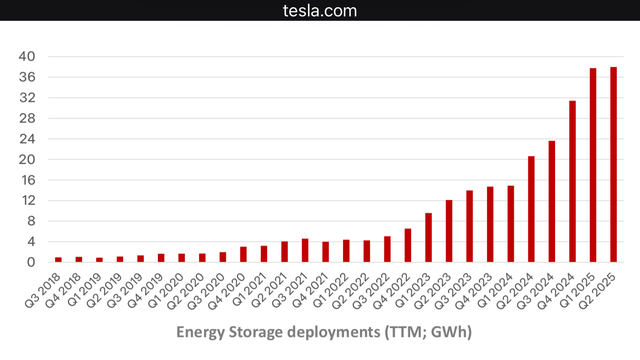
Energy storage has become a big part of Tesla’s business and it’s still growing. In Q3 they also had a record of 12.5 GWh of energy storage deployed (up from 6.9 GWh YoY). Here’s the trailing twelve month graph of their storage deployments through Q2:
IMG-0615.png
 
Grid Scale Lithium batteries are, well, a waste of Lithium and inflate the cost. Lithium makes good batteries for mobile devices where size and weight are an issue. To make a battery, all you need is a difference in electro-negativity. You can make an anode and a cathode out of any two conducting materials. So for grid scale batteries where size and energy density isn't an issue, we can basically anything. I can't remember who said it, but I remember a saying "if you want to make something as cheap as dirt then make it out of dirt" or something along those lines.
I completely agree regarding "waste of Lithium". This solution does not look very promising.
 
LOL, just imagine how much ground will need to be chewed up, just to get enough material to make that kind of a battery.
 
While these things are good for blunting momentary peaks, keep in mind that once used, they have to be recharged. Batteries just shift loads around, they do not create electricity. Meanwhile, how many batteries will it take to buffer peaks for the entire US generating capacity of about 4.18 trillion KWh?
 
While these things are good for blunting momentary peaks, keep in mind that once used, they have to be recharged. Batteries just shift loads around, they do not create electricity. Meanwhile, how many batteries will it take to buffer peaks for the entire US generating capacity of about 4.18 trillion KWh?

*Approximately 400,000 to 500,000 megawatt-hours (MWh) of electricity per hour.

Batteries do not need to store all of this anyway. They only need to create a buffer to equalize production/consumption peaks.
 
LOL, just imagine how much ground will need to be chewed up, just to get enough material to make that kind of a battery.

It helps against surges or demands from the power grid. Without it it would pretty much collapse at this point with EV's and Datacenters consuming more power then complete city's now.

You can't just install nuclear reactors everywhere; saying it's "green" energy is nonsense. There's nuclear waste that will be radioactive and deadly for anything alive on this planet if not stored deeply away.

If I'm not mistaken there are some area's on the world where they deeply drilled a complete facility deep down in the ground, to store radio active stuff for 100's of years to come.

You can't just shoot nuclear waste in space either. It will simply cost billions.
 
If you have the geography for pumped hydro then pumped hydro batteries make far more sense. A new Swiss pumped hydro battery has 20GWH all by itself. The UK currently only has about 25GWH pumped hydro capacity in total but has plans for upping this to 40GWH. We're aiming to produce all our electricity through renewables like wind by 2030.

It honestly amazes me that the US is so far behind with these technologies. Anybody would think that oil and gas companies were trying to hold the country back just for their own profits.
 
On paper, you are correct. But you neglect two key considerations and so your analysis is short-sighted: Price and Time to Delivery.

Lithium batteries are cost-effective now. If I need 1 GW of capacity installed, the vast majority of that will be lithium batteries because the scale of production already exists for laptops and EVs. That reduces the effective cost to me due to economies of scale. A iron-air battery might be much cheaper in theory but the actual price per GW might be many times higher than lithium batteries.

The second point is even more important. We could argue that by placing a 1 GW order for some replacement battery technology, the costs will naturally drop as production picks up. Whether that is true or not, I need that capacity online within 6 months.

Does the supply chain (parts, labor, support) even exist for a GW of said battery tech to fulfill that order? Am I risking grid stability by going for the optimal solution that might not be realized within deadlines?

Related to all of this is the fact that my staff will need to learn how the new battery tech behaves under real-world usage conditions. That adds BOTH cost and time delay to getting those batteries online in a reliable and sustainable way.

Note that most of the power sector and utilities are actively looking at a whole bunch of different power technologies, including all types of batteries to become the next solution here. But if you need to meet power storage requirements for 2025, 2026, even 2027, lithium batteries are a time-tested and reliable solution with dropping prices and strengthening supply chains.

TLDR = Think less like a scientist and more like a engineer or economist. You are letting the perfect become the enemy of the good.

Vanadium Redox Flow batteries are more cost effective. For slightly lower energy density you get much longer life and easier maintenance with lower cost as they are constructed from common cheap materials. Lithium is expensive by comparison and doesn't hold up as well.
 
Any article like this always attracts the same bozos who dismiss expert analysis for one of two reasons…

1.) They are old and fear change.
2.) They are part of the Trump cult and follow his opinion on all matters. They would literally change their mind if he told them to.
 
Vanadium Redox Flow batteries are more cost effective. For slightly lower energy density you get much longer life and easier maintenance with lower cost as they are constructed from common cheap materials. Lithium is expensive by comparison and doesn't hold up as well.

This. PG&E has already begun deploying pilot Vanadium Redox Flow batteries for these very reasons - and importantly, they are 100% non-flammable!
 
We need exponentially more lithium than we have and adding grid scale lithium batteries to the mix adds an order of magnitude to that need. We don't have the scale needed to produce those other batteries at the grid scale, but if grid scale batteries are to become the norm then investments in increasing production starts to make sense.

You keep making up "facts" with nothing to back them up. There's an estimated 30 million metric tons of lithium deposits in the US alone - only a few hundred thousand metric tons of Lithium are mined globally each year to supply the global demand.

Lithium isn't rare. Concentrated deposits are not widespread - but that's pretty much the case for any mineral other than 'the big ones' - Iron, Silicon, Aluminum, Copper, etc.
 
Back