Ex-Windows developer, Task Manager creator says Windows 11 needs an XP Service Pack 2 moment

Daniel Sims

Posts: 2,416   +73
Staff
In context: Mounting controversies have not deterred Microsoft from adding unpopular AI features to Windows 11, which is struggling to gain users despite the end of official Windows 10 support. A legendary former Microsoft developer believes that the company should respond by taking a step back to focus on making a more secure, accessible operating system.
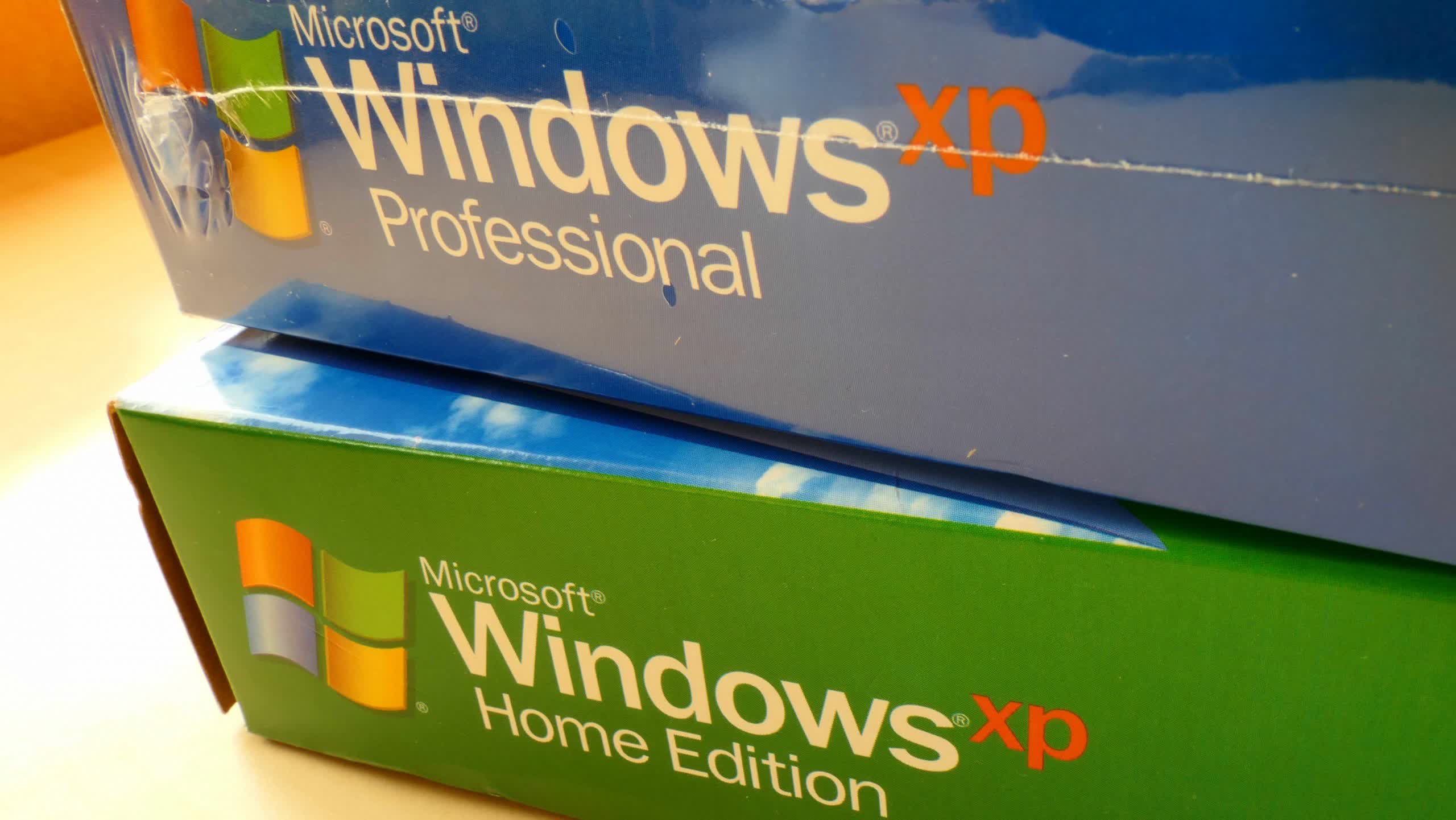
Dave Plummer, who developed several crucial Windows components while working at Microsoft, recently suggested that the company change course on Windows 11's feature rollout. The comments echo widespread frustration withing the Redmond firm's deployment of generative AI features across the operating system.

At the beginning of the latest episode of his podcast, Plummer said that Microsoft should have another "XPSP2 moment" and release a Windows 11 update that focuses entirely on resolving issues and strengthening security, rather than adding features. The former Microsoft developer was referring to Windows XP Service Pack 2, which stabilized and fortified the OS after the emergence of significant cybersecurity threats.

Despite adding few front-end features, Service Pack 2, released in August 2004, represented a significant overhaul for Windows XP. It introduced WPA Wi-Fi encryption after severe vulnerabilities were discovered in WEP. It also added partial Bluetooth support and revised the OS's firewall into an early version of today's Windows Security.

Plummer explained that Microsoft took this direction due to the appearance of the Blaster worm. The malware's threat was significant enough that the company ceased development of new user-facing features and spent months fixing bugs and revising Windows' security.

Echoing the period, the developer suggested that, instead of adding more AI features to Windows 11, Microsoft should stabilize the system and improve performance. Plummer is likely responding to a series of controversies that have made the company's AI push unpopular.

In its rush to keep pace with AI features from OpenAI, Google, and others, Microsoft is trying to turn Windows into an "Agentic OS" despite protests from critics. Since introducing Windows 11, it has added AI features to time-tested applications such as Paint and Notepad. Furthermore, Microsoft has repeatedly attempted to put Copilot AI assistant at the center of the user experience.
Amid the AI push, Windows 11 has encountered numerous serious problems, possibly resulting from AI-written code. Some updates broke Blu-ray playback on PCs, temporarily rendered the Windows Recovery Environment unusable, and made File Explorer more sluggish.

Due to these and other issues, almost a billion PCs still use Windows 10, which recently reached end-of-life. Windows 11 took nearly four years to overtake its predecessor's market share, and around 500 million devices that fail to meet its system requirements remain in use.

Permalink to story:

 
Windows 11 feels "fine" now, pretty much on par with 10, which people also hated in the beginning. Works well after optimizations.

I think Microsoft should relax on the useless features (like Recall etc.) and just launch Windows 12 in the coming years

Sounds better and will be a fresh start (just don't start from Scratch as usual, needs to work decently from day one)
 
Windows 11 feels "fine" now, pretty much on par with 10, which people also hated in the beginning. Works well after optimizations.

I think Microsoft should relax on the useless features (like Recall etc.) and just launch Windows 12 in the coming years

Sounds better and will be a fresh start (just don't start from Scratch as usual, needs to work decently from day one)
They need to start from scratch. There has been no "from scratch" since 2000 or, arguably, Vista.
 
They need to start from scratch. There has been no "from scratch" since 2000 or, arguably, Vista.
From scratch meaning close to beta build filled with bugs, like pretty much all new Windows versions have been. Some turned out good other did not, Windows 8 probably the worst ever, maybe ME beats it

I use Windows, Linux and MacOS almost daily, there is no perfect OS but Windows focus went south lately with all this AI garbage and features no-one asked for, Recall especially

I doubt we will ever see a true "from scratch" Windows as this would be an insane amount of work, if they want to keep backwards comp, which they obviously will
 
Last edited:
They need to start from scratch. There has been no "from scratch" since 2000 or, arguably, Vista.
From scratch meaning close to beta build filled with bugs, like pretty much all new Windows versions have been. Some turned out good other did not, Windows 8 probably the worst ever, maybe ME beats it

I use Windows, Linux and MacOS almost daily, there is no perfect OS but Windows focus went south lately with all this AI garbage and features no-one asked for, Recall especially

I doubt we will ever see a true "from scratch" Windows as this would be an insane amount of work, if they want to keep backwards comp, which they obviously will
Resetting the codebase to 10 and carefully porting good parts from 11—that's what they need to do. This isn't the first time. Longhorn's quality declined because of a lack of vision and feature creep. So, they restarted with the Server 2003 codebase, porting only a subset of features from Longhorn.

Today's Microsoft doesn't have the competence to build Windows from scratch. The brains that designed NT in the late '80s and early '90s are not there any more. Besides, there's nothing wrong with the latter. It's in the shell that Microsoft has made a mess.
 
Last edited:
They need to start from scratch. There has been no "from scratch" since 2000 or, arguably, Vista.
You trust Microsoft being able to do that in a decent way?
They can't even release updates without breaking things. I don't think they have the people (or at least don't give them the time) to do things properly.
A true from scratch is something we'll probably never see, backwards compatibility is too important and would break if they do that. The biggest changes we've seen are XP (switching to the NT kernel) and Vista (Hardware accelerated UI, new driver model etc). Since then it's been iterations on Vista that don't really improve anything.
* Latest service pack Vista to Windows 7 - not much change (People give Win7 too much credit, it wasn't 'finally a good windows'. It was just that by this time you finally had hardware capable of running Windows Vista and the right drivers). Windows 7 was the start of the control panel which still isn't done! (2009-)
* Windows 7 to Windows 8 - Buncha touch optimization stuff no one cared for, or in fact actively hated like the infamous full screen 'start menu' and more control panel overhauling.
* Windows 8 to 8.1 - They listened to their customers and reverted some things back to normal (and more control panel overhauling)
* Windows 10 - I'm guessing it's a repeat of Vista to Win7 where it's basically just Windows 8.1 with all service packs? I never bothered with Windows 8/8.1 (and more control panel overhauling)
* Windows 11 - Well.. the control panel is finally mostly in a new style although imo it's far worse to actually change any settings. There's still old Win95 style windows such as those for sound input/output and network adapters but they're the minority.
Good job Microsoft, you finally almost did it after 12 years (3 trillion dollar company with around 100.000 software engineers?). Something I'm confident I could have done myself in a lot less time.
Oh and there's 'improved security' relying on TPM that no one really asked for but is now obsoleting hundreds of millions of PCs.
--

If we see a fresh start my guess is that it's the Windows UI/Software stack on top of the Linux kernel with an option to easily run 'legacy' apps in a Win11 virtual machine - similar as to how you have an option in win11 to "Run this program in compatibility mode for [List of older windows versions]". I don't think Microsoft even has the know-how left in the company to do it themselves from the ground up.
 
From scratch meaning close to beta build filled with bugs, like pretty much all new Windows versions have been. Some turned out good other did not, Windows 8 probably the worst ever, maybe ME beats it

I use Windows, Linux and MacOS almost daily, there is no perfect OS but Windows focus went south lately with all this AI garbage and features no-one asked for, Recall especially

I doubt we will ever see a true "from scratch" Windows as this would be an insane amount of work, if they want to keep backwards comp, which they obviously will
If you want to hear about lack of focus, how about Microsoft Bob?
250px-Microsoft_Bob_Logo.png

And Windows 8 was basically as stable as you could get; the problem with it was they replaced a lot of new design elements with ones that almost everyone hated.
 
Yeah, too bad they can't do it anymore. It's not that they don't want to, they actually CAN'T. Gen-Z vibe coding only gets you so far.

Ridiculously simple things like LISTING FILES is a challenge to them now. It's been slow for 4 years, now they tried to "solve" it with preloading (srsly), and guess what, it's still slow but now eats twice as much RAM.

Geniuses.

I just moved back to Win10 (supported until 2032, so thanks, I'm good for a while now), and after 4 years of subjecting myself to Windows 11 it feels almost unnatural to have this kind of responsiveness. Like, you click on something, and it opens. WEIRD.
 
Microsoft has separate dedicated teams for security, performance and those implementing AI features, the skill sets between those 2 groups don't necessarily overlap so they can't just put people who do security and performance into an AI role.

These efforts move in parallel, with that being the case unfortunately Microsoft's priorities are not our priorities when it comes to the OSes feature set.
 
If you want to hear about lack of focus, how about Microsoft Bob?
250px-Microsoft_Bob_Logo.png

And Windows 8 was basically as stable as you could get; the problem with it was they replaced a lot of new design elements with ones that almost everyone hated.
Haha yeah, it was stable alright and 8.1 fixed alot of the bad stuff in terms of UI.

Metro UI was a big mistake for the most part, too touch and tablet focussed.
 
Dave is not wrong. Microsoft needs to hit the brakes, take a step back and rethink it's Windows strategy.
 
And Windows 8 was basically as stable as you could get; the problem with it was they replaced a lot of new design elements with ones that almost everyone hated.

I agree. Other than the asinine design changes (especially replacing the start menu with the start screen), Windows 8/8.1 are great and only improved from Windows 7. It's faster and uses less memory (probably the most optimized Windows ever released), more stable, and it brought better and improved tools for power users and sysadmins. In my experience gaming performance was actually slightly better than Windows 7, and it also had better support for very old Win9x and WinXP-era games. Third-party programs to bring back the start menu and make you never see the start screen again, were available since the early days of Windows 8 and fixed pretty much the only problem it had.

People that put Windows 8 in the same tier as Windows Me or Windows Vista RTM, I think they never actually used Windows 8. They installed it, and at the moment they were first greeted with the start screen they instantly backed away and reinstalled Windows 7.

I think Microsoft should reset the codebase to Windows 8.1 while porting the good things from 10 and 11.
 
Been a window user since 3.1. I just want it to work. I dont need 75% of the crap they bundle. That is what always throws a wrench into the works. I was happy at MS DOS 3.31
 
M$FT doesn't care about Windows. That isn't where the money is at for them. Yet they want control over everyone and everything so they can't stop making Windows. They still own the desktop OS market for now, and until that changes they won't be doing anything to make their customers happy. If they start losing market control then maybe they will rethink their strategy.

One another note... apparently transparent glass like appearance on an OS is cool again, because Apple has copied Aero. So maybe its time for Windows 7 Second Edition to come out?
 
M$FT doesn't care about Windows. That isn't where the money is at for them. Yet they want control over everyone and everything so they can't stop making Windows. They still own the desktop OS market for now, and until that changes they won't be doing anything to make their customers happy. If they start losing market control then maybe they will rethink their strategy.

One another note... apparently transparent glass like appearance on an OS is cool again, because Apple has copied Aero. So maybe its time for Windows 7 Second Edition to come out?
You are probably right.

But one thing is for sure. 100%. Windows 11 gets worse and worse. It's trash ware. I moved back to W10 pro. I actually get a sense of security from W10. Non from 11. The main Malware on W11 is utter trash, untested A.I. crap and patches. All from MS.
 
useless features (like Recall etc.)

I wouldn't call Recall useless. It's great for employers to monitor employees and corporations to build profiles on you so you can get targeted ads rather than seeing stuff you're not interested in. It's good for catching shady behavior too so it can be stopped
 
I wouldn't call Recall useless. It's great for employers to monitor employees and corporations to build profiles on you so you can get targeted ads rather than seeing stuff you're not interested in. It's good for catching shady behavior too so it can be stopped
Yeah.. Good thing it can easily be removed. Ressource hog too. Never seen it on an actual retail version yet. Not even on Copilot+ certified PCs. Not sure what Microsofts plan is.
 
Back