In a nutshell: An offhand post on X about an unusually pricey HDMI cable drew close to a million views, spotlighting a niche category of fiber-optic HDMI 2.1 cables built less for hype and more for distance and reliability. For the user who posted it, it was a first encounter with an HDMI cable that looks ordinary on the outside but uses fiber optics inside.
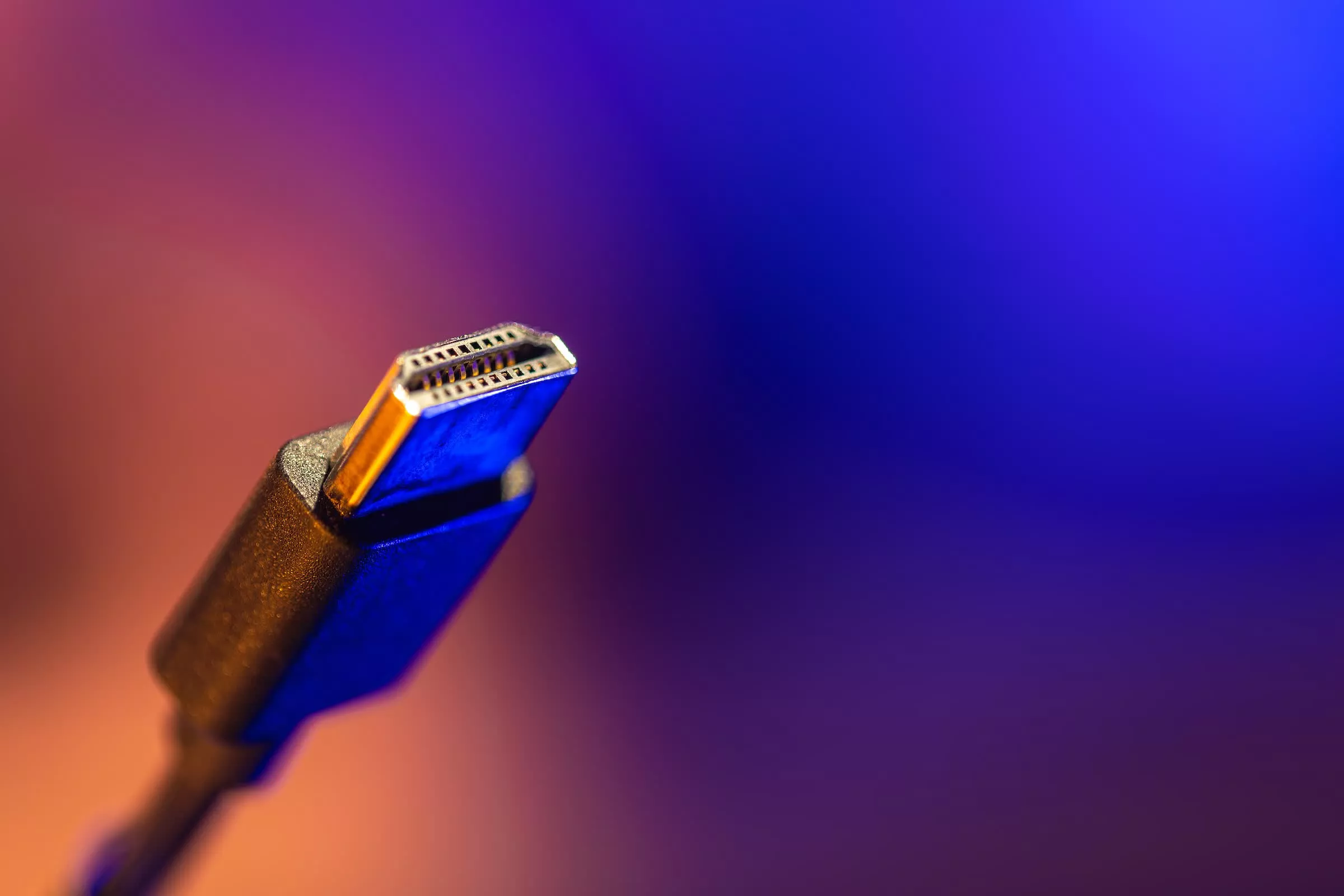
The product is an active optical cable (AOC) for HDMI. Instead of relying solely on copper, it carries most of its signal over fiber-optic strands. Inside the cable, HDMI electrical signals are converted into optical signals for the journey between the two ends, then converted back to electrical signals at the display. Some copper wiring remains in the design for low-priority communication and power, but the heavy lifting is handled by the fiber.
This approach allows the cable to do something conventional copper HDMI cords struggle with: maintain high-bandwidth video over very long distances without visible degradation. In this case, the cable is specified to work over runs of up to 990 feet (300 meters). That performance, not the basic spec sheet, is what makes the product stand out.
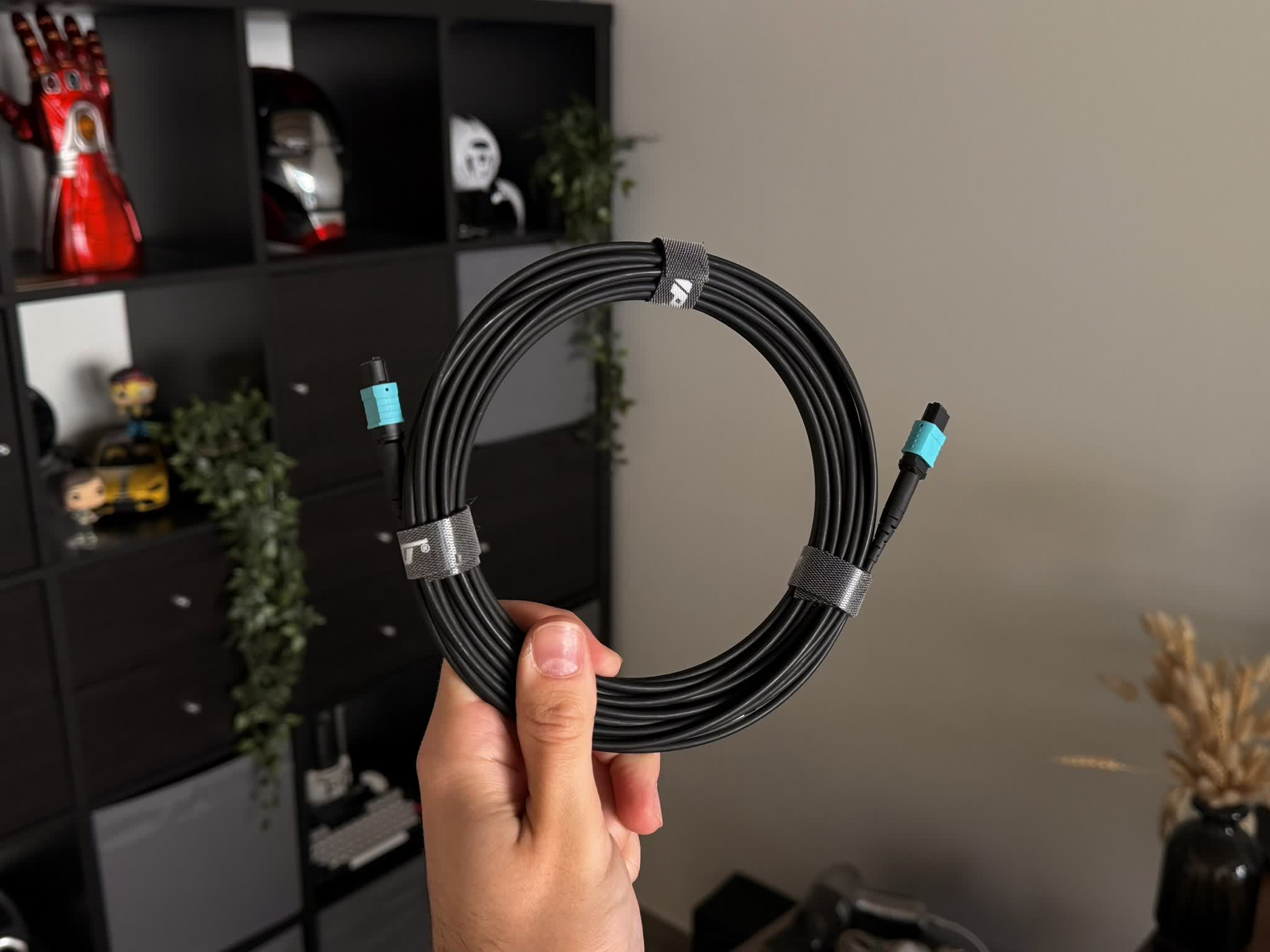
The cable that the user bought from Ruipro looks like a fully featured HDMI 2.1 cable on paper, supporting 8K output at 60 Hz or 4K at 120 Hz without DSC, delivering 10-bit HDR, and offering the full 48 Gbps bandwidth that the standard allows.
Those numbers are not unusual for premium HDMI 2.1, but they are not guaranteed just because a package carries an HDMI 2.1 label. The HDMI Forum's branding rules are loose enough that buyers often pay extra to sidestep uncertainty and get a cable that covers current and near-term needs.
– Ben Geskin (@BenGeskin) March 26, 2026
Pricing is where this particular AOC invites scrutiny. The "entry-level" version is a three-foot cable priced at $116, and at that length, fiber optics is unnecessary for maintaining signal integrity, making the cost harder to justify. The value proposition shifts as distance increases. The 100-foot (30 meter) version costs about $150, with longer options scaling gradually from there. At that point, fiber begins to make practical sense, reaching roughly $379 at 660 feet (200 meters) and about $506 for the full 990-foot run.
Beyond bandwidth and distance, Ruipro emphasizes durability and installation flexibility. The HDMI connectors at both ends are removable, so a damaged plug does not require replacing the entire run. With the ends taken off, the cable can also slide into keystone jacks and wall plates, making it easier to route through walls or tight spaces. The cable is relatively thin for its length, and the connectors are entirely metal to improve durability.
Fiber optics also provides strong resistance to electromagnetic interference. HDMI is generally resilient in this area, and EMI is often used as a scare tactic to justify questionable "miracle cure" cables. Still, in demanding home theater or gaming setups, the added immunity gives fiber-optic cables a tangible, practical advantage.
Fiber HDMI cables enable full-bandwidth 8K over runs up to 990 feet


