
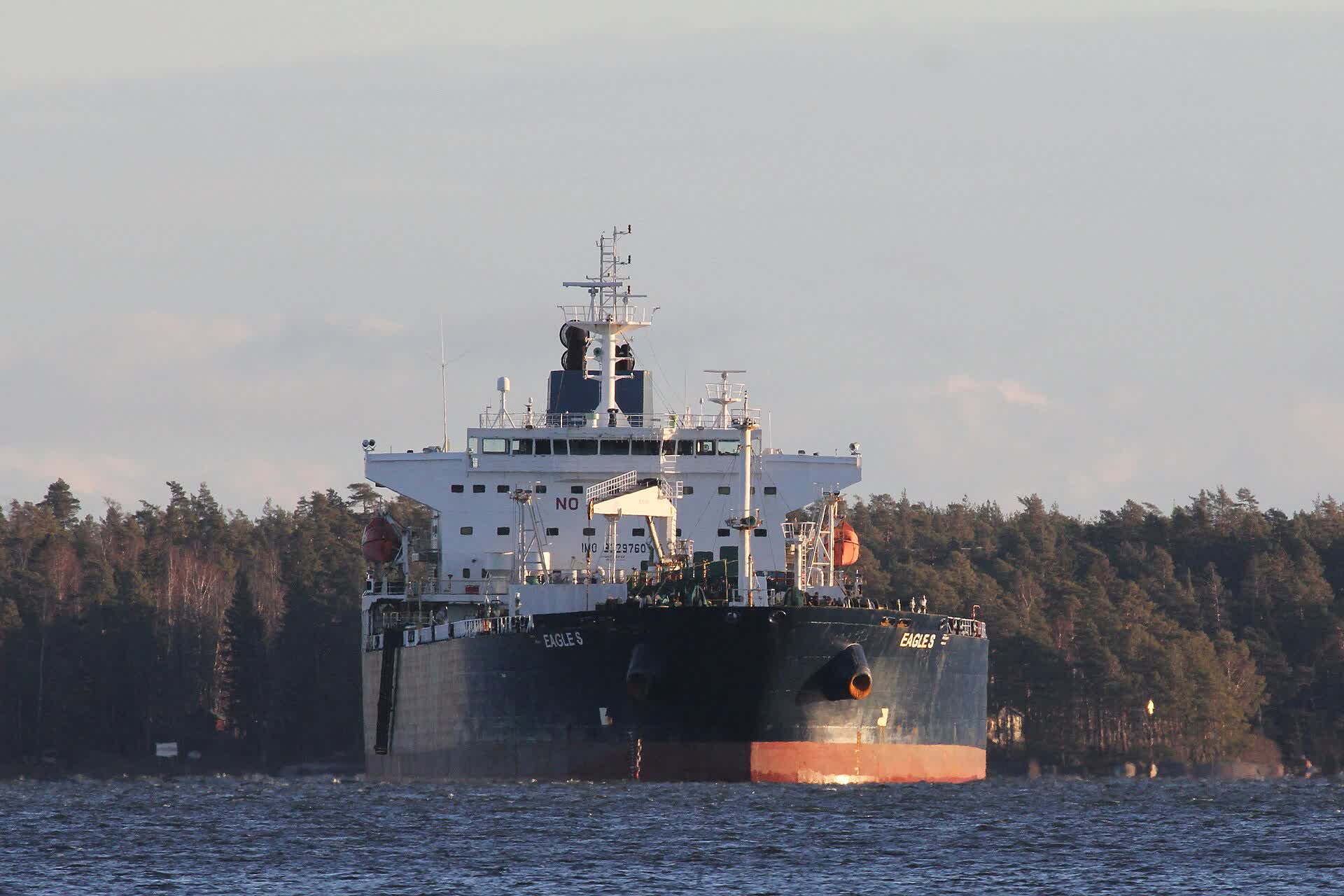
What just happened? Finnish authorities have charged crew members of the Russia-linked Eagle S oil tanker for intentionally damaging undersea cables by dragging its anchor between Finland and Estonia last year. The captain and the first and second officers are accused of aggravated criminal mischief and aggravated interference with communications.
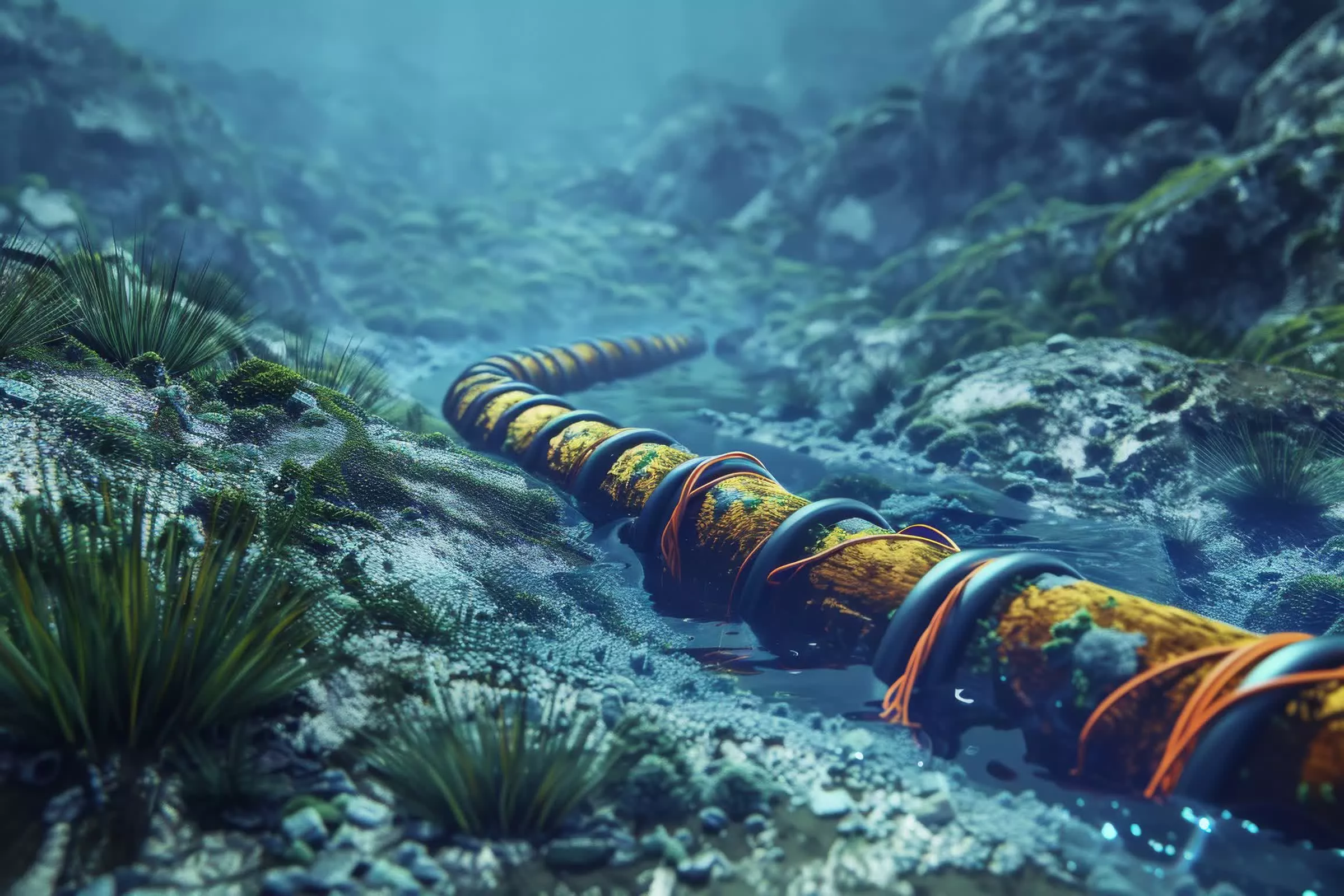
At around 12.26 pm local time on December 25, 2024, the Estlink 2 power cable and several other power and internet cables linking Finland and Estonia were severed. Damage to the cables had cost owners Cinia and Elisa at least €60 million ($70 million) in repair costs alone.
Finnish authorities seized the Eagle S (top), which had been passing through the area at the time, on December 26. The ship was carrying oil from Ust-Luga in Russia across the Gulf of Finland, when prosecutors claim it dragged its anchor along the seabed for about 56 miles.
The Eagle S is registered in the Cook Islands, but it's believed to be part of Russia's Shadow fleet. The vessels have obscured ownership and sail under foreign flags to avoid sanctions.
The office of Finland's deputy prosecutor general, Jukka Rappe, said, "The rupture of the extremely high-capacity electricity transmission and telecommunications cables is also suspected of having caused a serious danger to energy supply and telecommunications in Finland, although services have been secured by using alternative connections."
The defendants and a lawyer for the United Arab Emirates-based Caravella LLC FZ, which owns the Eagle S, claim that Finland does not have jurisdiction in the matter because the sites where the cables were damaged are outside the country's territorial waters.
Sabotaging undersea cables has become worryingly common in recent times. Russia is usually the prime suspect in these cases, though the Kremlin previously denied any involvement in the incident.
In 2024, Nato warned that Russia already has plans in place to target undersea fiber optic cables and scramble GPS signals as retaliation for Western support of Ukraine.
Since then, there have been several initiatives designed to prevent attacks on undersea cables. The UN formed an international organization tasked with enhancing the resilience of submarine communication cables in December. There's also NATO's naval drone fleet, its HEIST project, and the new acoustic sensing technology that is already being used in North Sea cables.
Finland charges Russian "shadow fleet" tanker crew with dragging anchor to cut undersea cables


