FLO's new 320kW fast chargers juice EVs up to 80% in 15 minutes

zohaibahd

Posts: 978   +19
Staff
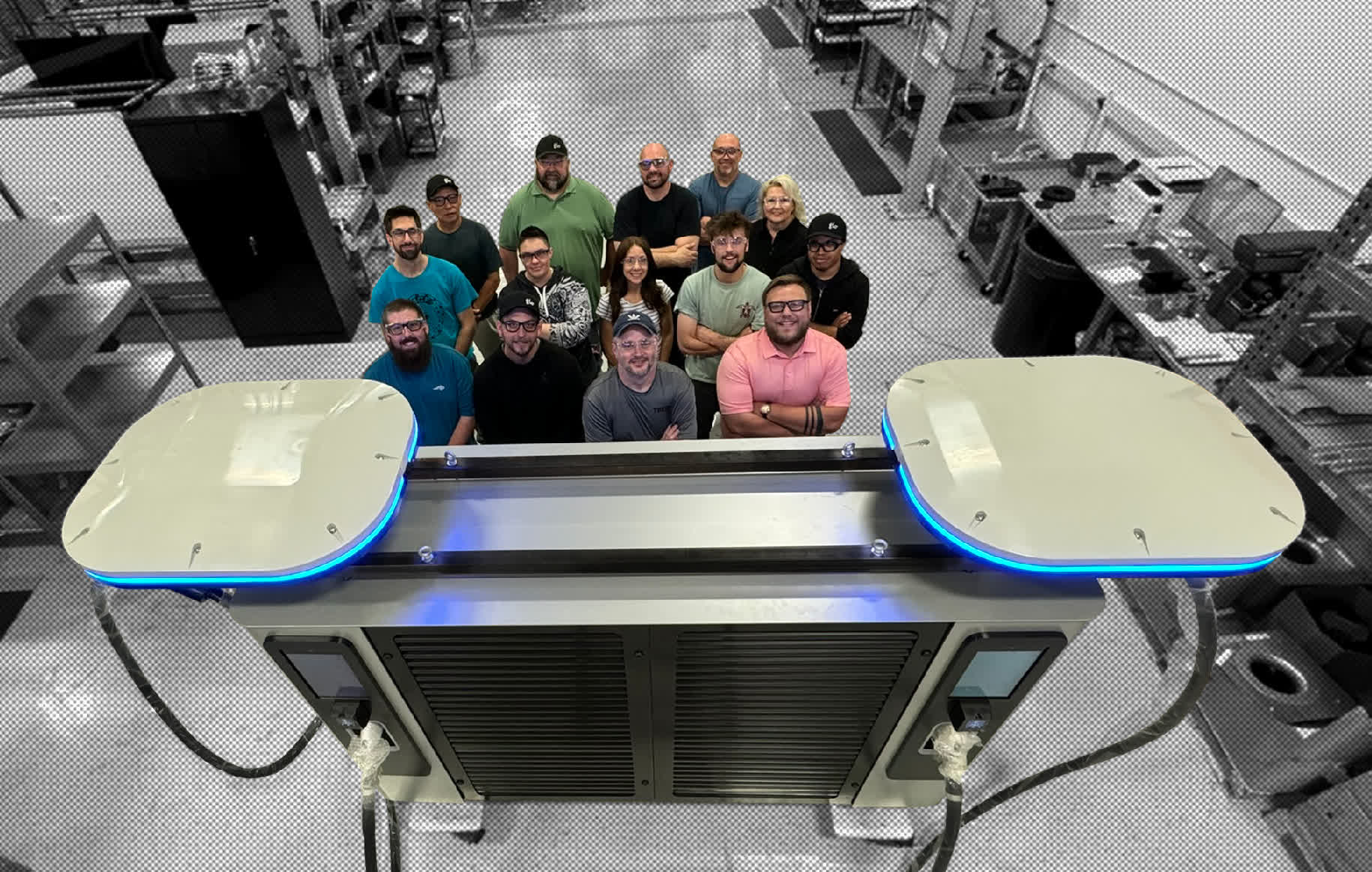
Why it matters: As electric vehicles continue their surge in popularity across America, drivers are clamoring for charging solutions that can keep up with their need for speed. Enter FLO, a pioneering North American EV charging company that just rolled out its Ultra DC fast chargers from the production line in Auburn Hills, Michigan.
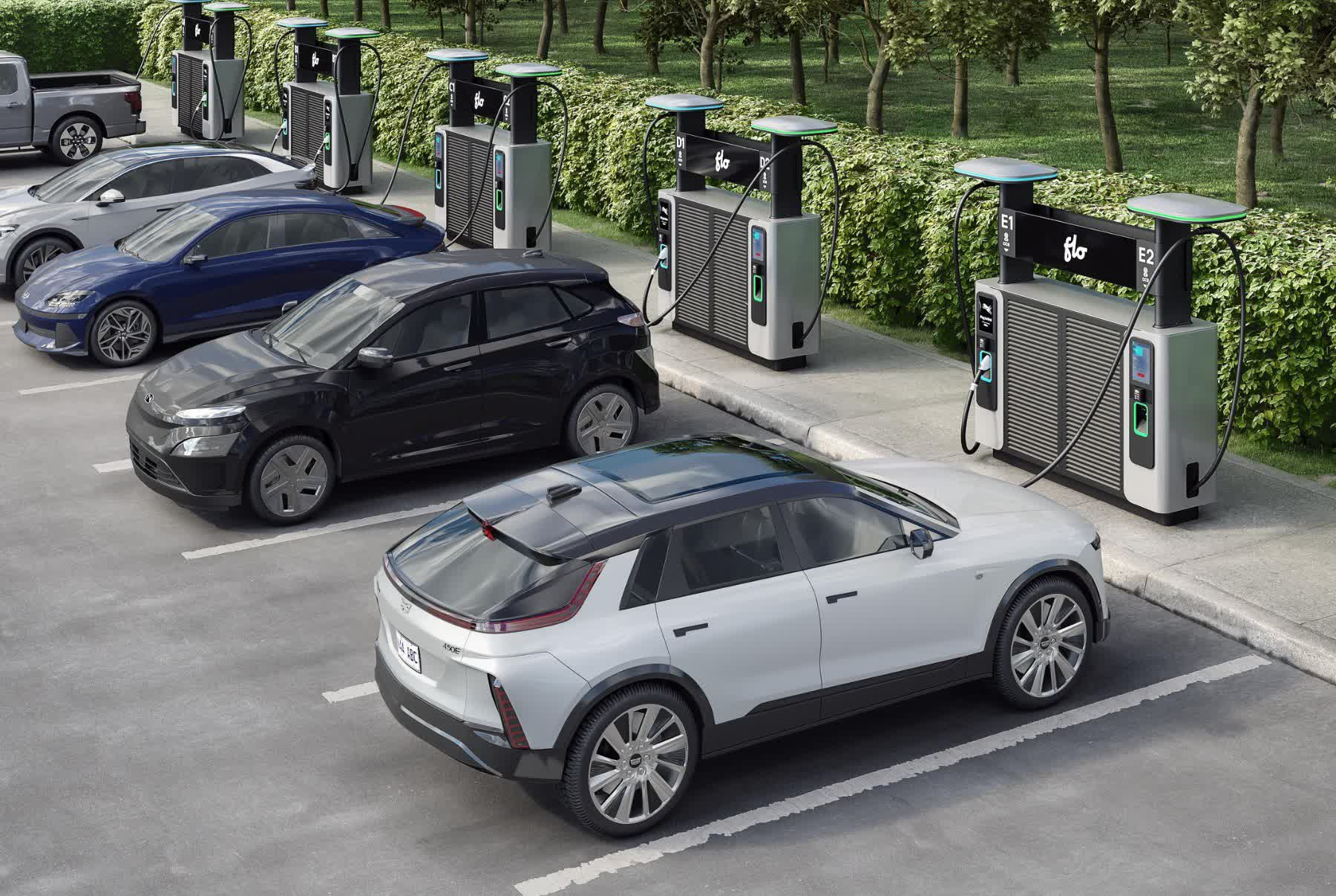
These charging stations pack 320kW of dual-port power, which helps EVs replenish from empty to 80% battery in just 15 minutes. FLO has also designed the chargers to comply with the stringent standards of the federal government's National Electric Vehicle Infrastructure Program (NEVI) and the Buy America Act. They promise an uptime of 98% to ensure drivers can count on finding an operational charger when they need one.

One standout design feature is FLO's innovative EZLift cable management system. The motorized lift keeps the Ultra's charging cables off the ground, providing extended reach to connect with any vehicle's charging port location. That motorization means the cables themselves feel lightweight and ultra-maneuverable.

EV charging is growing into a hotly contested arena, with startups trying to one-up each other in kilowatts even if cars don't yet support such blistering speeds. For comparison, Tesla's recently rolled-out V4 Superchargers are officially rated for 350kW, too, though their power supply is currently housed in 250 kW V3 cabinets. The company will likely upgrade this as the popularity of models with 800V architecture rises. But even with the enhanced power, Tesla's charging speeds appear slower with a 10-minute top-up adding 'only' 40% of the battery range.
At the same time, Gravity, a New York startup specializing in EV infrastructure, has opened up stations featuring 500kW chargers. These are being hailed as the fastest EV chargers in the US. While limited to Manhattan for now, Gravity hopes to expand with thousands more fast chargers each year around the US.

Still, FLO's Ultra DC fast chargers hit the market at an opportune time. A fresh Pew analysis found that 64% of US adults now live within two miles of a public EV charger, and residents with chargers nearby are more likely to consider going electric for their next vehicle purchase.

FLO is contributing to these numbers, boasting a fleet of 100,000 fast and level 2 EV charging stations deployed at public, private, and residential locations. The startup operates its network across North America with facilities in Michigan and Quebec.

"With 42% of users accessing DC fast chargers at least once a month and 60% depending on them for longer, multi-city trips, it's evident that fast charging options are vital to supporting the electric transition," said Louis Tremblay, FLO president and CEO. "At FLO, we're committed to meeting this critical need by providing robust, reliable fast charging solutions like the FLO Ultra charger. Our mission is to ensure that drivers have the power they need, whenever and wherever they need it, to confidently drive an EV."

On Tuesday, FLO secured $136 million in new capital, principally from a Series E funding round led by Export Development Canada. Those funds will help accelerate the rollout of the company's charging solutions across the continent.

Permalink to story:

 
How many of the older batteries can be safely fast charged using this station, though?
I am guessing much slower charging for older batteries, that is standard charging,
and fast for newer EVs.
 
Sounds great in principle, but its not like you can cover a whole car park with these considering the electricity demand from the grid of having many megawatts drawn all in one area, along with the fact that I inagine all this fast charging probably doesn't do the batteries much good (which we know is a thing, especially when people stare in horror at the service bill after 5 years because the shot battery pack needs replacing at insane prices)
And 15 minutes for just 80%, when the advice is that you aren't meant to use the last 10 to 15 % either to preserve the health of the battery, gives you about 65% of range, still seems too long, if you're going to get good adoption, it needs to be like ten minutes tops if you want to emulate the time spent to be similar to a petrol station fill up
 
1. This is not new, electrify America has been able to do 350kw for years.
2. This only applies to 800v cars, most are 400 volt and will not charge anywhere NEAR this quickly.
3. This does not solve range anxiety, anymore then having a gas station every city block would solve range anxiety for a car with a 1 oz fuel tank. Given 99 percent of these chargers will be located either in cities or on interstates, range anxiety will still very much be a thing. LONGER RANGE solves range anxiety, not charge time.
 
Drive up to a pump, pay at the pump, filled in maybe 3 minutes and back out driving. Of course it depends on your vehicle and tank size. For example: I stopped at the gas station yesterday, pulled up to a pump behind a guy with his oversized truck. I pumped in around 11.5 gallons of gas to fill my CX-5 before the guy even finished filling his truck and he had been standing there at least 30 seconds before I started.

Hoping to find an ultra fast super-duper special magnificent ultra lightning quick charger to charge you up to 80% in about 15 minutes.....that's still too long, at least for me.
 
Last edited:
Just once, I'd like to read an EV article on this site that didn't read like an EV industry advertisement. I've said many times, EVs are great for what they are, and they have a place, but I don't think I've read an article yet that wasn't about "the EV boom is right around the corner" or, worse yet, "What EV drawbacks? There's a solution for all of them right around the corner. Every one of them, and they'll outsell standard cars by 2026."

Nothing wrong with articles about progress toward this nirvana, but every "breakthrough" article from revolutionary batteries to new and better chargers from years past has yet to materialize. I've been certified to work on hybrids and EV;s since 2013, and aside from normal tech advances (faster processors, finer energy management, etc. the vehicles of today are still not substantially different from 10 years ago (I'm talking about basic operation, not self driving, entertainment, features,etc. all available in combustion engine cars as well).
 
Charging times don't bother me, but what happens if the system is down? Cold weather? EMP, people hording or vandalizing the charger stations, monopoly and restrictions from wacky mayors or governors etc.
 
Sounds great in principle, but its not like you can cover a whole car park with these considering the electricity demand from the grid of having many megawatts drawn all in one area, along with the fact that I inagine all this fast charging probably doesn't do the batteries much good (which we know is a thing, especially when people stare in horror at the service bill after 5 years because the shot battery pack needs replacing at insane prices)
And 15 minutes for just 80%, when the advice is that you aren't meant to use the last 10 to 15 % either to preserve the health of the battery, gives you about 65% of range, still seems too long, if you're going to get good adoption, it needs to be like ten minutes tops if you want to emulate the time spent to be similar to a petrol station fill up
I think five minutes is what will help people take notice. EV's need to charge as fast as gas fills a tank for the public to accept the changing speed when traveling as reasonable. The higher prices and absurd battery replacement costs are still issues for most middle class folks, though. Hopefully, sodium ion batteries will become commonplace and cheap.
 
I think five minutes is what will help people take notice. EV's need to charge as fast as gas fills a tank for the public to accept the changing speed when traveling as reasonable. The higher prices and absurd battery replacement costs are still issues for most middle class folks, though. Hopefully, sodium ion batteries will become commonplace and cheap.
I think it's a balance. We've already seen EVs push over 400 and fisker and chrysler over 500. With a 500 mile range, at 75 MPH that's 7 hours of driving. Most people wont drive that long without taking a break.

But even if they did, even monsters like the silverado EV can charge from empty to 80% over the course of a nice lunchbreak with a fast charger. A 35-40 minute charge time, or even 15 minute, is a lot more acceptable when you get 7-10 hours of driving out of it VS 3 hours like current EVs. The change in our habit here could be great, if there were chargers at most stores, restaurants, and rest areas, you'd never need a gas station style stop when traveling.

I think solid state batteries would be a solution to cost and weather, as they *should* be more cold and heat resistant and offer far higher capacities in the same space. The issue is building them at any sort of scale for a decent price.
Just once, I'd like to read an EV article on this site that didn't read like an EV industry advertisement. I've said many times, EVs are great for what they are, and they have a place, but I don't think I've read an article yet that wasn't about "the EV boom is right around the corner" or, worse yet, "What EV drawbacks? There's a solution for all of them right around the corner. Every one of them, and they'll outsell standard cars by 2026."

Nothing wrong with articles about progress toward this nirvana, but every "breakthrough" article from revolutionary batteries to new and better chargers from years past has yet to materialize. I've been certified to work on hybrids and EV;s since 2013, and aside from normal tech advances (faster processors, finer energy management, etc. the vehicles of today are still not substantially different from 10 years ago (I'm talking about basic operation, not self driving, entertainment, features,etc. all available in combustion engine cars as well).
PREACH! Much like the Musk articles that are constantly written like the author personally lost out on Amber Heard night to Elon, the EV articles are sacarine sweet BS that one can read on any rag. Techspot should be better then that. Much like their recent EV price article, they COULD have written about the falling EV prices and the models now available for under 50 grand compared to 5 years ago, but instead they used a nonsense metric to make the EV look better.
 
Hoping to find an ultra fast super-duper special magnificent ultra lightning quick charger to charge you up to 80% in about 15 minutes.....that's still too long, at least for me.
Just plug in at home and get cheap rate electricity while you sleep. You pay a fraction of the cost and there's no queuing at all. This obviously only works if you can charge at home and you don't drive more than a couple of hundred miles per day..

In the UK with, something like a Tesla Model 3, it costs nearly £4 ($5) to fully charge from empty at home. That gives you a range of about 250 miles. The fuel for a similar range in a small city runabout would cost £26 ($33). For a car with similar performance to the Model 3 then the costs would be double that again. You also save time (and money) as an EV like the Model 3 doesn't require an annual service.
 
Until these are nearly as prevalent as the fuel pumps in quantity at a "station" and and density in an urban area and along motorways, this doesn't solve anything. And for some people, charge times are a form of anxiety because not everyone is going to need to or even want to wait 15+ minutes. For America, BEV's just won't replace ICE until you have essentially the same or better ranges in the vehicle, charge times of less than five minutes, and essentially the same amount of chargers as you have fuel pumps. Only then will just about everyone be happy to hop on board.

I'm not an EV hater.... I owned one and loved it, and would like to get another one - it just isn't practical for everyone in every situation. I don't know if battery tech will ever reach the desired point. We keep hearing promising breakthroughs, and while things have indeed improved a lot over the decades, there is still a ways to go.
 
Just plug in at home and get cheap rate electricity while you sleep. You pay a fraction of the cost and there's no queuing at all. This obviously only works if you can charge at home and you don't drive more than a couple of hundred miles per day..

In the UK with, something like a Tesla Model 3, it costs nearly £4 ($5) to fully charge from empty at home. That gives you a range of about 250 miles. The fuel for a similar range in a small city runabout would cost £26 ($33). For a car with similar performance to the Model 3 then the costs would be double that again. You also save time (and money) as an EV like the Model 3 doesn't require an annual service.
Careful. I have honestly posted all those things before. I'm not asking to not do it, I'm saying they forgot it as soon as they read it. And they will still post the same bullshit the next time.

But it still doesn't change the fact that an EV is a perfect fit for 95% of people, 95% of the time.
Even the Ford Focus EV with 108 miles of range. Anyone that drives less than 100 miles per day can do it with one, and run it for literally pennies a day.
Still, I wish folks like the flake that claimed he pulls in a gas station, fuels up, pays and leaves in 3 minutes had the capacity to get the fact that even if that were true (And it isn't, not even close) it takes only seconds to plug in an EV once home at the end of the day.
 
Last edited:
I’m an ev enthusiast and early adopter. However, I have to disagree with this article. Range anxiety is not about how fast you can get charged once you get to a charger, it is about worrying you’re going to run out of charge before you can get to the next one.
 
Well, not really. Pretty much anyone that wanted an EV, has one. They are backing up on the lots.
The U.S. electrical grid can't handle what we have now. Ad more and more EV's, get rid of gas stoves
and water heaters and the demand will be even higher.


"As electric vehicles continue their surge in popularity across America"
 
I’m an ev enthusiast and early adopter. However, I have to disagree with this article. Range anxiety is not about how fast you can get charged once you get to a charger, it is about worrying you’re going to run out of charge before you can get to the next one.

Makes you wonder why way back in the early 1900s people didn't start thinking
"I will need more gas soon. Maybe I should I stop and get some".
Shame really. That could have been adopted by drivers when they got an EV.

I'm in rural Arkansas and my 2nd car is an EV. A quick search for level 2\3 charging stations
show 5 within 10 miles of me.
Now, I was at home at the time, while the car was charging.

Well, not really. Pretty much anyone that wanted an EV, has one. They are backing up on the lots.
The U.S. electrical grid can't handle what we have now. Ad more and more EV's, get rid of gas stoves
and water heaters and the demand will be even higher.


"As electric vehicles continue their surge in popularity across America"
 
Putting range anxiety in the rearview mirror
No. What will put range worries in the rear-view mirror is a battery technology that doubles range. There are chemistries that will do that now, but industry pundits are too invested in LiPo tech to reinvest in a MUCH better tech.

Greed, the ultimate defeatist.
 
Careful. I have honestly posted all those things before. I'm not asking to not do it, I'm saying they forgot it as soon as they read it. And they will still post the same bullshit the next time.

But it still doesn't change the fact that an EV is a perfect fit for 95% of people, 95% of the time.
Even the Ford Focus EV with 108 miles of range. Anyone that drives less than 100 miles per day can do it with one, and run it for literally pennies a day.
Still, I wish folks like the flake that claimed he pulls in a gas station, fuels up, pays and leaves in 3 minutes had the capacity to get the fact that even if that were true (And it isn't, not even close) it takes only seconds to plug in an EV once home at the end of the day.

You mean the same Focus EV that is only about 10 years old, and the battery costs in excess of $5000? Keep in mind, that's only if you can get one, the battery is obsolete, so they all go to the junkyard when the battery dies.

EV's aren't a flashlight with interchangeable batteries. This is NOT from a lack of a standard. Every mass produced vehicle from every company is different in layout, size, crumple zones, etc. So how long before all of theses $20,000 batteries go obsolete and render a $50,000+ vehicle useless?

I'll keep my 25 year old car, thank you.
 
Careful. I have honestly posted all those things before. I'm not asking to not do it, I'm saying they forgot it as soon as they read it. And they will still post the same bullshit the next time.

But it still doesn't change the fact that an EV is a perfect fit for 95% of people, 95% of the time.
Even the Ford Focus EV with 108 miles of range. Anyone that drives less than 100 miles per day can do it with one, and run it for literally pennies a day.
Still, I wish folks like the flake that claimed he pulls in a gas station, fuels up, pays and leaves in 3 minutes had the capacity to get the fact that even if that were true (And it isn't, not even close) it takes only seconds to plug in an EV once home at the end of the day.
Not even close. Not perfect for 95% of people 95% of the time.

Bring that little chap of the Ford Focus EV to a cold weather state and see how well it makes out once the temps hit that negative range for up to weeks on end. Harsh cold weather can sap a battery by up to 40%. That 108 range (under controlled conditions) drops to 65 and don't forget you now need to factor in running the heaters and needing to keep the battery warm enough so it can take a charge later. You're pretty much screwed with a car like that in the winter.

A guy at my work has a Tesla (not sure on the model, never cared to look). We had a long string of negative temps a couple of winters back that lasted two weeks. After he got to work, spent the day working, he got outside and his car wouldn't start and it wouldn't take a charge. It sat in the parking lot for nearly two weeks until it warmed up enough the battery would charge. He had to borrow his parent's ICE vehicle to get to and from work those couple of weeks. He used to brag about his Tesla to anyone that would listen and all the "bonuses" it provides over an ICE vehicle until he couldn't get his car started. He hasn't bragged about it since.

And to those that say you don't need maintenance for EV, you are all fools. You do. It may not be as much or as often as your standard ICE vehicle, but you still need to take care of your car to keep it operating at it's best.
 
You mean the same Focus EV that is only about 10 years old, and the battery costs in excess of $5000? Keep in mind, that's only if you can get one, the battery is obsolete
I didn't think I would have to clarify, but yes, the Focus is primitive even compared to EVs before them. And that's why I picked it as an example. It was a smoker converted to an EV, yet still is a perfect example of an EV that was loaded with upsides. So long as the owner drove less than 100 miles per day or so, you recharged every night at home and ran it for pennies.

Not even close. Not perfect for 95% of people 95% of the time.
In fact, almost spot on. Take the base Mach E. If you drive less than 245 miles a day, you can run it FAR cheaper than a smoke pump and never refuel anywhere but your own home.
Bring that little chap of the Ford Focus EV to a cold weather state
So after all the proof I have given you, you still believe cold weather is that much of a problem?
As an exercise, learn the cold weather effects on EV range vs smoke pump mileage.
Learn stuff here:
A guy at my work has a Tesla (not sure on the model, never cared to look). We had a long string of negative temps a couple of winters back that lasted two weeks. After he got to work, spent the day working, he got outside and his car wouldn't start and it wouldn't take a charge.
I have no right to comment because it's your story, except to say EVs don't "start" and people like you always know "a guy". I researched what you said and could not find anything at all.
Plus, you were the one that said it takes 3 minutes to pull in to a gas station, pay, fuel up.
So honestly, you get no credibility points in common sense land.
And nothing is more high level geek and nerdy than "ICE".
And to those that say you don't need maintenance for EV
Again, when people say that they are talking about the drive train.
Which by the way, yes, is 99% maintenance free.
Everyone knows, besides the drive train, all vehicles have the same basic equipment.

@Neatfeatguy By the way man, why do you folks never talk about the cost to recharge when not at home? In my few years as an EV owner, that is BY FAR the biggest PITA I encounter when I use it for extended periods. When I have used mine to travel, I have found some charging points prices to be so high, it was barely a 30% improvement in cost per mile over a smoker.
 
Last edited:
... it takes only seconds to plug in an EV once home at the end of the day.
Sure. We shouldn't overlook the fact that, for consumers who have their own garage and can install a charger in it, and also rarely if ever exceed their vehicle's range during the day, home charging can be even more convenient than a gas station stop.

However, an increasing percentage of the US population lives in condos, apartments, or high-rises where this isn't an option. And of course, there are those who, even though they may drive a limited distance during the week, often take long weekend trips and lack a second vehicle specifically for this purpose.
 
Sure. We shouldn't overlook the fact that, for consumers who have their own garage and can install a charger in it, and also rarely if ever exceed their vehicle's range during the day, home charging can be even more convenient than a gas station stop.

However, an increasing percentage of the US population lives in condos, apartments, or high-rises where this isn't an option. And of course, there are those who, even though they may drive a limited distance during the week, often take long weekend trips and lack a second vehicle specifically for this purpose.
And let me add. I do not think any vehicle is a perfect solution, and that certainly includes EVs. And in my opinion, the worst of those things is the apartment building residents.
I honestly thought, and have said here in past years, that apartment building owners would add charging stations, but it hasn't happened nearly as fast as I thought it would.
Anyone living in those that want an EV should make certain there are reasonably priced chargers near them.
 
I didn't think I would have to clarify, but yes, the Focus is primitive even compared to EVs before them. And that's why I picked it as an example. It was a smoker converted to an EV, yet still is a perfect example of an EV that was loaded with upsides. So long as the owner drove less than 100 miles per day or so, you recharged every night at home and ran it for pennies.

Um, aside from missing the point, the Focus still had costs associated with driving other than electricity. Add that to my point that the battery is obsolete, the car is no longer repairable, and the AVERAGE age of a vehicle is 12.6 years, all you've done in re-introduce planned obsolescence, and eliminate the used car market for the people who can lease afford one. I look forward to the day when I have to buy new, or, buy used with half the life of the vehicle already used.
 
Back