Intel and Nvidia team up on Intel x86 RTX SoCs for future gaming PCs

midian182

Posts: 11,624   +176
Staff member
What just happened? Intel has received another massive investment from an unlikely source: Nvidia. Team Green is purchasing $5 billion in Intel common stock at $23.28 per share, part of a collaboration that will see the two companies jointly develop x86 system-on-chips – called Intel x86 RTX SoCs – that integrate Intel CPUs and Nvidia RTX GPU chiplets for a wide range of PCs. Intel will also be building custom x86 data center CPUs for Nvidia to integrate into its AI infrastructure platforms.
Intel says the x86 RTX SoCs will power PCs that demand integration of world-class CPUs and GPUs, I.e., the gaming market. There's no word yet on price, release date, or specifications, but those details could be revealed at a joint press conference taking place at 10am PT.

The partnership will see tighter integration between the companies' architectures using Nvidia's NVLink interface for connecting CPUs and GPUs. NVLink provides much higher bandwidth and lower latency than PCIe. Nvidia's Grace CPU superchip, built with NVLink-C2C, can connect to GPUs at up to 900 GB/s.

The Intel x86 RTX SoC's combination of an x86 CPU chiplet and Nvidia RTX GPU chiplet connected via NVLink sounds like it could be a big rival for AMD's APUs. Like AMD's chips, expect to see the Intel/Nvidia SoC powering gaming laptops, among other devices.

The Intel x86 RTX SoC will likely raise memories of the Kaby Lake-G chip from 2017, which combined x86 Kaby Lake processing cores with AMD's Radeon Vega graphics on a single, compact chip, connected via PCIe 3.0.
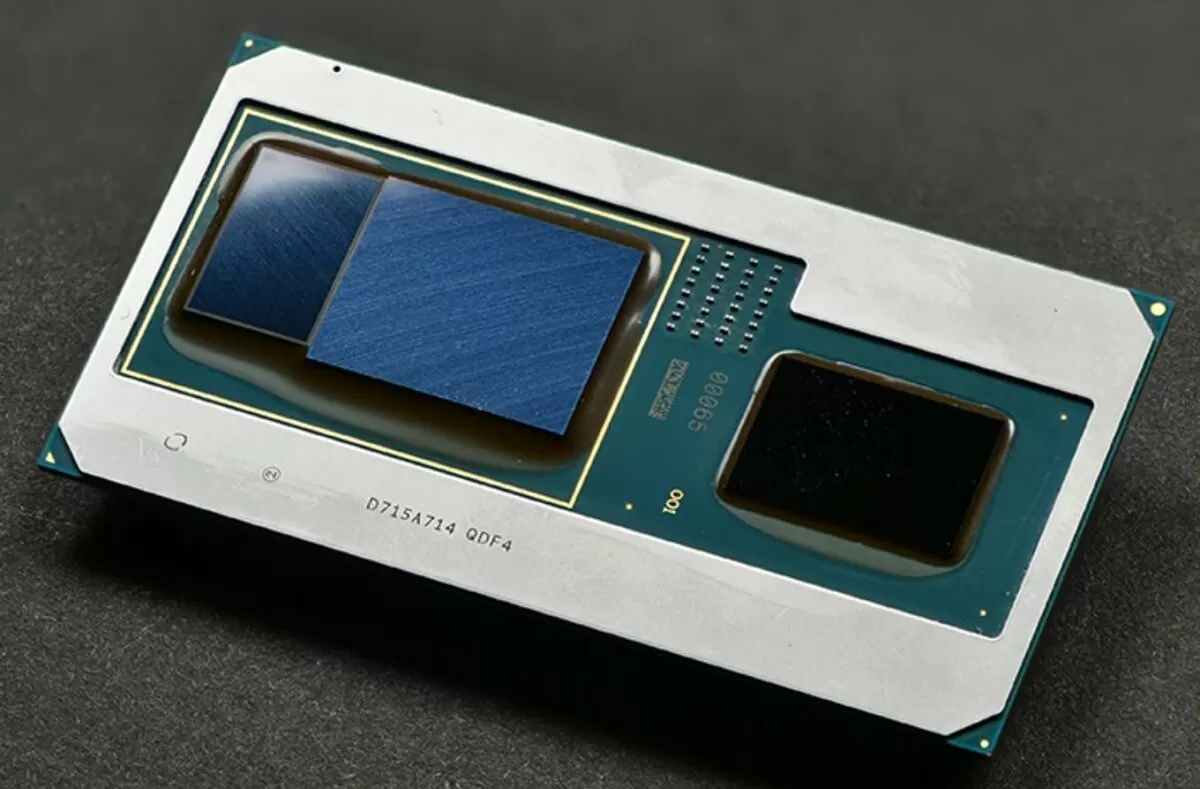
We were pretty impressed with how Kaby Lake-G stacked up to a range of hardware in 2018, but the chips suffered from lack of adoption among OEMs, and the processors required more elaborate cooling designs, which led to longer and more costly development periods. Moreover, the 65W and 100W TDPs seemingly limited what devices the chips appeared in. Kaby Lake-G reached its end-of-life in 2019.

The Nvidia/Intel collaboration will also see Intel build custom x86 data center CPUs for Nvidia that it will sell as its own products.

Nvidia is buying Intel's shares at around 6% less than market value. It's unclear how much influence it will have on Team Blue's business decisions as a result of the investment, which is still subject to approval from regulators.

In August, President Trump and Intel announced an agreement that would give the US government a 9.9% stake in the company, amounting to around $8.9 billion – $5.7 billion will come from undistributed CHIPS and Science Act grants, while $3.2 billion is from the Secure Enclave program. The US government won't have a seat on Intel's board, so it's unlikely that Nvidia will. Softbank also purchased $2 billion worth of Intel stock in August.

Permalink to story:

 
I guess it depends on how quickly they can move on this.

A competitive x86 CPU with an onboard Nvidia GPU using shared memory could be a winning combination. Much preferable to anything still relying on RDNA, for sure. Nvidia stands to gain a lot of presence by having access to the most widely used architecture in personal and server computing and no longer being restricted to ARM.
 
At the Time of writing: Intel stock up 34%, Nvidia up 4%, AMD down 9%

Intel and Nvidia already dominate the GPU market, which could spell trouble for AMD's APU and Radeon products if Nvidia starts encroaching further on Intel. It might also lead to higher prices for consumers, especially if mid-range GPUs like the RTX 5060/70 end up integrated with Intel CPUs in the future.

It’s hard to imagine Nvidia letting Arc survive much longer as well.
 
This makes me a bit worried for Intel's Arc Graphics Cards. They're the only ones with a decent affordable card on the market right now, and (tinfoil hat time) I'd hate for this to be nvidia's attempt at putting those down before they start eating up market share.

-Nvidia doesn't give a flying fart about arc. It's so far off their radar they might as well not even know it exists.
 
At the Time of writing: Intel stock up 34%, Nvidia up 4%, AMD down 9%

Intel and Nvidia already dominate the GPU market, which could spell trouble for AMD's APU and Radeon products if Nvidia starts encroaching further on Intel. It might also lead to higher prices for consumers, especially if mid-range GPUs like the RTX 5060/70 end up integrated with Intel CPUs in the future.

It’s hard to imagine Nvidia letting Arc survive much longer as well.

- AMD just cannot seem to catch a break. With The gubmint buying up 10% of Intel stock and now Nvidia coming in to buy more (wonder how much of that move was known to ole Trump before getting the gubmint in on the cut) Intel has the literal government and the largest corporation on Earth invested in its success.

Lisa Su is probably crying in the shower right now.
 
Somewhat unrelated, I just saw this video today, and I’m thinking this tech might be a game-changer. Especially on laptops.


Give it a decade, nVidia will own intel.

If that happens, I’m pretty sure the cross-licensing agreement will rear its ugly head. Although the big question would be how much leverage would AMD have at that point? Intel is still doing much better in laptop sales on the CPU side, and AMD is virtually non-existent on the laptop dGPU side. Not to mention that since the government now owns a piece of Intel, can they really be expected to be impartial should any disputes go to trial?
 
Chiplet design GPU is much worse than monolithic but better than just totally discrete one. Basically because laptop manufacturers want to pair Intel CPUs with Nvidia GPUs anyway, why not bring them closer?

Still, large majority of laptop users give a **** if GPU is Intel, AMD or Nvidia so this just proves how stupid average laptop buyers actually are.
 
Somewhat unrelated, I just saw this video today, and I’m thinking this tech might be a game-changer. Especially on laptops.


If that happens, I’m pretty sure the cross-licensing agreement will rear its ugly head. Although the big question would be how much leverage would AMD have at that point? Intel is still doing much better in laptop sales on the CPU side, and AMD is virtually non-existent on the laptop dGPU side. Not to mention that since the government now owns a piece of Intel, can they really be expected to be impartial should any disputes go to trial?

The x86 cross license agreements are pretty much set in stone, and the reason that they're so iron clad is that Intel was lying, cheating, and stealing in order to try to get AMD out of x86. That was the sole reason for the Itanic. Since they were meant to prevent AMD from selling (Intel thought they'd never have to worry about it), they are pretty much bullet proof. The bigger question is "does it matter?" Intel and Nvida both put monopoly first, money second, and customers last, kicking ethics or fairness to the curb. I bet they work out some sort of partnership that might as well be co-owners, but nothing on paper to stop it and not needing any approval since they are "only collaborating on a few projects," rather than working toward their respective monopolies.
 
Chiplet design GPU is much worse than monolithic but better than just totally discrete one. Basically because laptop manufacturers want to pair Intel CPUs with Nvidia GPUs anyway, why not bring them closer?

Still, large majority of laptop users give a **** if GPU is Intel, AMD or Nvidia so this just proves how stupid average laptop buyers actually are.
So if laptop buyers do not have the same priorities as you do, they are stupid? That's one hell of an ego bruh. (BTW, the reason they "dont care" is because the average laptop user sees no difference regardless of which sticker is on the palmrest.)

chiplet designs allow for smaller dies and much higher yields, from a cost perspective they are superior to monolithic dies, especially as TSMC continues its monopoly.
- AMD just cannot seem to catch a break. With The gubmint buying up 10% of Intel stock and now Nvidia coming in to buy more (wonder how much of that move was known to ole Trump before getting the gubmint in on the cut) Intel has the literal government and the largest corporation on Earth invested in its success.

Lisa Su is probably crying in the shower right now.
Lisa is crying, with laughter, as she watches the US government and nVidia pump billions into a sinking ship that cant compete. The government purchase merely helped intel pay down debt, not fix any of its architectural flaws. nVidia? Well, they have a ...poor track record on working with others. They probably know, give intel and AMD teamed up before, how poorly this will go.
 
I doubt nVidia invested its money to deliver for Intel to success.
nVidia invested its money to its own success. (ab)using Intel as a pawn.

- Nvidia invested its money so that they can slowly "vulture capital" intel into a subsidiary. An outright purchase would be too anti-competitive on its face for even the current admin to let it slide (Nvidia would have too much power in one go).

Give it a couple years and Nvidia will have slowly hollowed out and prepped Intel for takeover.

Nvidia will get the only thing really standing in their way of complete market dominance: the x86 license which has eluded them for decades.
 
The real reason is for AI server parts to be designed with the Nvidia architecture optimization.

Client Computing Group is not a priority at all.

Matter of fact is Nvidia ARM venture did not pane out and they need to go back to x86.

All this is screaming Nvidia is worried about AMD, which this news might sounds to be in contradiction with.
 
- AMD just cannot seem to catch a break. With The gubmint buying up 10% of Intel stock and now Nvidia coming in to buy more (wonder how much of that move was known to ole Trump before getting the gubmint in on the cut) Intel has the literal government and the largest corporation on Earth invested in its success.

Lisa Su is probably crying in the shower right now.

At the Time of writing: Intel stock up 34%, Nvidia up 4%, AMD down 9%

Intel and Nvidia already dominate the GPU market, which could spell trouble for AMD's APU and Radeon products if Nvidia starts encroaching further on Intel. It might also lead to higher prices for consumers, especially if mid-range GPUs like the RTX 5060/70 end up integrated with Intel CPUs in the future.

It’s hard to imagine Nvidia letting Arc survive much longer as well.

And as of now, AMD stock is down 1.9%, Intel is up 22% and Nvidia is up 3.6%.

People read through this announcement and have seen that Nvidia is finally acknowledging they are worried about AMD, and perceived the company as a threat.

This is an admission that Nvidia ARM venture's was a bust.
This is also an admission that Intel GPU venture's was a bust.

Now I wonder if Grace, Nvidia ARM for desktop, ARC and Gaudi are going to be scrapped.
 
So if laptop buyers do not have the same priorities as you do, they are stupid? That's one hell of an ego bruh. (BTW, the reason they "dont care" is because the average laptop user sees no difference regardless of which sticker is on the palmrest.)
Exactly. Laptop buyers take laptops with Nvidia discrete GPU and then complain about power usage, weight etc etc. And graphically heaviest use they ever do is some social media image platform.

For some reason, Intel CPU desktops rarely come with any discrete GPU. They use Intel integrated. But for some reason basically every laptop "need" Nvidia discrete GPU.

I call laptop buyers stupid for Very good reasons.
chiplet designs allow for smaller dies and much higher yields, from a cost perspective they are superior to monolithic dies, especially as TSMC continues its monopoly.
Lisa is crying, with laughter, as she watches the US government and nVidia pump billions into a sinking ship that cant compete. The government purchase merely helped intel pay down debt, not fix any of its architectural flaws. nVidia? Well, they have a ...poor track record on working with others. They probably know, give intel and AMD teamed up before, how poorly this will go.
Yeah, cost is good but everything else sucks. Earlier Intel also bought some GPUs from AMD and slapped to their own CPU. That went OK. It was not supposed to be large scale anyway. Apple, Sony and Microsoft will never work closely with Nvidia. Perhaps Intel could be soon added on that list.
 
Significant implications for the console market too. There is now a viable alternative to AMD APU silicon. Perhaps we will see a bit more variability for future console hardware.
 
Significant implications for the console market too. There is now a viable alternative to AMD APU silicon. Perhaps we will see a bit more variability for future console hardware.

I think you misunderstand the console market. While consoles may someday go chiplet, so far the have been monolithic designs, same with the handheld market. While NV link may be fast, I seriously doubt it is power efficient. Consoles play in a unique space just like the handhelds do. For that matter, Nvidia hasn't had a lot ot luck getting the bugs worked out with their ARM pc chip with NVlink.
 
If Nvidia were to acquire Intel outright, Intel would lose its rights to use AMD’s x86-64 extension, and AMD would lose rights to Intel’s x86 base. That would effectively cripple both companies’ ability to produce modern CPUs.

- Intel owns the original x86 instruction set, while AMD owns the x86-64 extension (aka AMD64).
- They cross-license these technologies to each other, allowing both to produce modern x86-64 CPUs.
- The license includes a “poison pill” clause: if either company is acquired by a third party, the license automatically terminates.

Instead of a full acquisition (or why Nvidia will never buy Intel), Nvidia is currently pursuing deep collaboration with Intel, the $5 billion investment (is just part of that strategy) for joint development of custom x86 SoCs that integrate Nvidia GPU chiplets. This lets Nvidia tap into Intel’s x86 ecosystem without triggering the license termination and further push into gaining market share.
 
NVLink could be beneficial for GPUs that have low VRAM (like 6GB or 8GB), because it has been proven that these low-VRAM cards benefit most from higher PCIe bandwidth, and NVLink offers higher bandwidth and lower latency than PCIe
 
This is about the X86 license Nvidia does not have... and countering lil~trumpy-poo and republiKans communising intel by dumping federal money into intel.
 
I see only higher prices coming from this, the Leather man has gorged himself on 40K dollar cards and eats the green stuff for breakfast, lunch and dinner. He is not giving his precious tech on the cheap to Intel to pare it with whatever slop they're coming out with.
 
Last edited:
Back