Intel confirms "Big Battlemage" GPU, Arc B770 could debut at CES 2026

DragonSlayer101

Posts: 990   +14
Staff
Something to look forward to: Intel is pressing ahead with its discrete graphics business despite the relatively lukewarm reception from gamers and creative professionals. The company now appears ready to release a new graphics card powered by the BMG-G31 GPU, commonly referred to as "Big Battlemage" across social media, tech sites, and online forums.
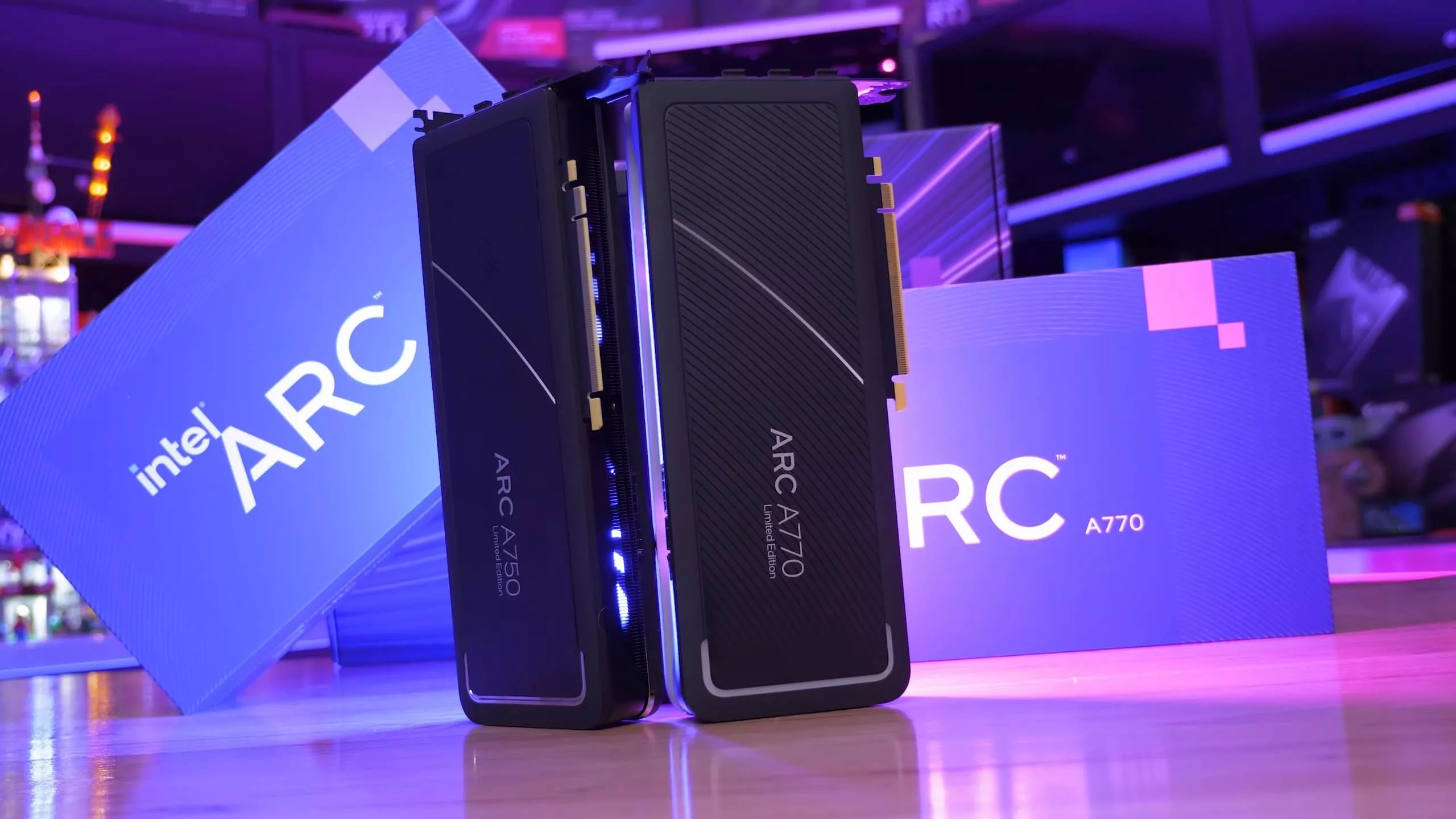
The G31 was recently confirmed after appearing on Intel's official website as one of the GPUs supported by the company's VTune Profiler performance analysis tool. Reports suggest that the first card to feature the new chip could be the provisionally titled Arc B770, although Intel has yet to officially confirm this.

Big Battlemage has been circulating in the news for more than a year, with key specifications leaking from multiple sources. According to these reports, the G31 will be a more powerful successor to the G21, which powers the Arc B580 and B570. The new chip will reportedly be manufactured by TSMC on its 5nm process and feature a larger die than the G21.
The G31 in its B770 form is expected to feature 32 Xe2 cores, a 60 percent increase over the 20 Xe2 cores in the B580 and the 18 found in the B570. Rumors suggest the B770 could ship with 16GB of GDDR6 VRAM on a 256-bit memory bus, along with a PCIe 5.0 x16 interface. Other reported specifications include a possible 19 Gbps memory speed and up to 608 GB/s of memory bandwidth.

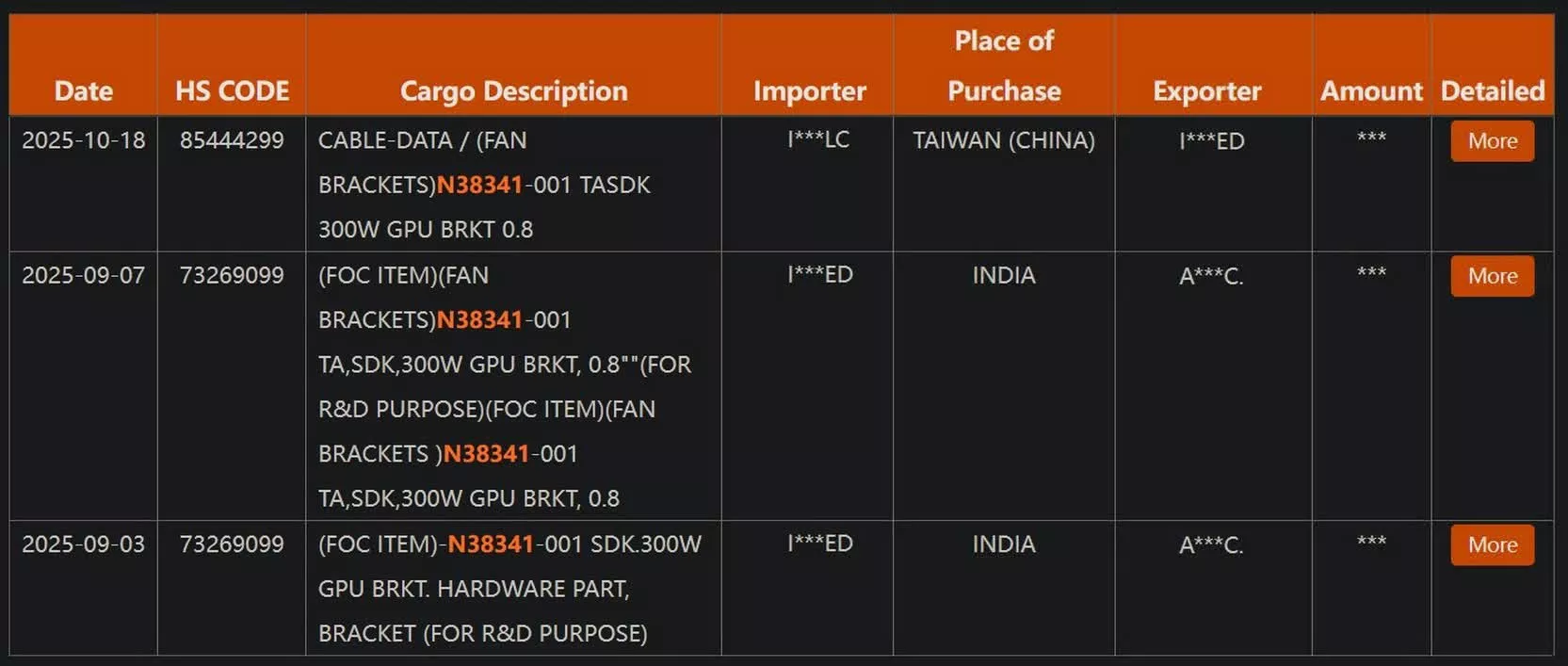
An unofficial leak also indicates that the G31 may be significantly more power-hungry than the G21. According to a listing in an NBD shipping manifest, an engineering sample of the upcoming Battlemage card reportedly carries a 300W TDP, far above the 190W rating of the Arc B580 and even higher than the 225W TDP of the Arc A770.

So far, only the gaming-oriented version of the G31 has surfaced, but Intel is also expected to announce a Pro variant with 32GB of memory. The new GPU is rumored to debut alongside Intel's Panther Lake CPUs at CES 2026 in January. However, we will likely only see the Arc B770 at the show, with the Pro model slated for a later launch.

Permalink to story:

 
Intel is trying to compete with the current status quo using inferior hardware. It’s impossible. To challenge the status quo, you need twice the performance at half the price. AMD has consistently offered better CPUs at lower prices for over a decade, yet Intel, despite years of weaker processors and higher costs, still holds the majority of the market simply because it was the established standard.

Intel needs to find a way to produce HBM memory in-house and at a low cost and ramp up its 1.4 nm fab with 90%+ yields. That’s the only viable path forward in the discrete GPU market and it should be done quickly.

hq720.jpg
 
"could" debut. "might" release". "perhaps" will exist.

This does not inspire confidence. The B770 is over a year late to market. Ask AMD how that went with Vega.

Tbf we only have to look at how the B580 went.

Intel: Aha! Here is Battlemage (cool name, ngl) an RTX 4060 competitor!
Nvidia fans: Aha! This'll show AMD, who we hate for previously being awful and also for daring to try to rise in contention against us. Who, us? No, we're above all that peasant stuff.
AMD fans: K whatever.

The real world: The B580 released and contended with the 4060, yes. Right before Blackwell and RDNA4 dropped. And there's higher gaming tiers than the 1080p one, however big that may still be.
You don't really compete in that game unless and until you're on the level AMD was with RDNA2 after good tries and fails alike from Polaris through Vega etc. Still 'behind' (though not to a huge degree given the pricing difference then and since) in emergent (read: too often forced) tech but at least RDNA2 forced contention to the top tier in regular perf like they hadn't for years. If you can't be at the bleeding edge for RT, multisuperupscaling aso at least you could do that, right?

Eh, but once bad always bad I guess. If regular forums are anything to go by.

Now, not saying Intel are bad for trying, nor that it isn't a slog (we AMD users know all about that) and honestly I'm happy they are whether that product is good enough for my uses or not (3440x1440 gamer so I'm obviously looking for better than my current 7900XTX going forward) But it's been long enough nm Intel's vastly greater resources to make any boasts about matching a low-mid tier of the current gen by the time the next is in the wings... In the same timeframe AMD went from damn near worse to better. With less to play with. On both GPU and CPU fronts. What is taking big bad Intel so long?

Roll on AI too, Crucial have gone over now. Nvidia may follow instead of continuing passing down old AI with 'great' savings. Intel's nascent GPU arm may yet do so too. Save us AMD (but do something with MS to fix the current driver issues first, yeah)
 
Tbf we only have to look at how the B580 went.

Intel: Aha! Here is Battlemage (cool name, ngl) an RTX 4060 competitor!
Nvidia fans: Aha! This'll show AMD, who we hate for previously being awful and also for daring to try to rise in contention against us. Who, us? No, we're above all that peasant stuff.
AMD fans: K whatever.

The real world: The B580 released and contended with the 4060, yes. Right before Blackwell and RDNA4 dropped. And there's higher gaming tiers than the 1080p one, however big that may still be.
You don't really compete in that game unless and until you're on the level AMD was with RDNA2 after good tries and fails alike from Polaris through Vega etc. Still 'behind' (though not to a huge degree given the pricing difference then and since) in emergent (read: too often forced) tech but at least RDNA2 forced contention to the top tier in regular perf like they hadn't for years. If you can't be at the bleeding edge for RT, multisuperupscaling aso at least you could do that, right?

Eh, but once bad always bad I guess. If regular forums are anything to go by.

Now, not saying Intel are bad for trying, nor that it isn't a slog (we AMD users know all about that) and honestly I'm happy they are whether that product is good enough for my uses or not (3440x1440 gamer so I'm obviously looking for better than my current 7900XTX going forward) But it's been long enough nm Intel's vastly greater resources to make any boasts about matching a low-mid tier of the current gen by the time the next is in the wings... In the same timeframe AMD went from damn near worse to better. With less to play with. On both GPU and CPU fronts. What is taking big bad Intel so long?

Roll on AI too, Crucial have gone over now. Nvidia may follow instead of continuing passing down old AI with 'great' savings. Intel's nascent GPU arm may yet do so too. Save us AMD (but do something with MS to fix the current driver issues first, yeah)

As Anand Lal Shimpi would say, "There are no bad products; only bad prices."

The fact is, before the RX 9060 XT arrived, the B580 was the best choice in the budget category, beating both the 4060 and RX 7600. Certainly, prices weren't at MSRP in most places; but post-9060, it has dropped to normal and, depending on one's region, can still be a defensible choice, if the 9060 is too much.
 
Intel is really off in it's own world right now isn't it?

The hell is a B770 even going to compete with while consuming 350W? A 9060XT?
 
Intel is trying to compete with the current status quo using inferior hardware. It’s impossible. To challenge the status quo, you need twice the performance at half the price. AMD has consistently offered better CPUs at lower prices for over a decade, yet Intel, despite years of weaker processors and higher costs, still holds the majority of the market simply because it was the established standard.

Intel needs to find a way to produce HBM memory in-house and at a low cost and ramp up its 1.4 nm fab with 90%+ yields. That’s the only viable path forward in the discrete GPU market and it should be done quickly.

hq720.jpg


Foundry equipment for producing different types of silicon have become extremely specialized. The equipment used to produce various types of memory silicon can't be used on CPU/chipsets, and vice versa.

It would cost Intel billions of dollars to try to do this, which is money they don't have now.
 
If Intel really ships a 300W Battlemage card, it’s going to be fascinating to see how far their drivers have come. Raw specs look competitive for mid-high tier, but Intel’s real boss fight has always been software, not silicon.
 
Intel is trying to compete with the current status quo using inferior hardware. It’s impossible. To challenge the status quo, you need twice the performance at half the price. AMD has consistently offered better CPUs at lower prices for over a decade, yet Intel, despite years of weaker processors and higher costs, still holds the majority of the market simply because it was the established standard.

Intel needs to find a way to produce HBM memory in-house and at a low cost and ramp up its 1.4 nm fab with 90%+ yields. That’s the only viable path forward in the discrete GPU market and it should be done quickly.

hq720.jpg

In the now-long history of semiconductor manufacturing I don't think I've ever seen silicon yields at >90%.

Very very mature nodes, not used for this kind of silicon, and who've been on the market for over a decade, might achieve >90% yield.

But never silicon dies this big and on leading edge processes.
 
Back