A Riot ban followed a used Ryzen CPU to its new owner, but something is not adding up

Daniel Sims

Posts: 2,590   +79
Staff
What we know so far: Riot Games has long been notorious for its controversially strict anti-cheat policies. Although the League of Legends and Valorant maker loosened its rules slightly earlier this year, hardware ID-based bans can still have unintended consequences for the secondhand hardware market, as one user claims to have discovered.
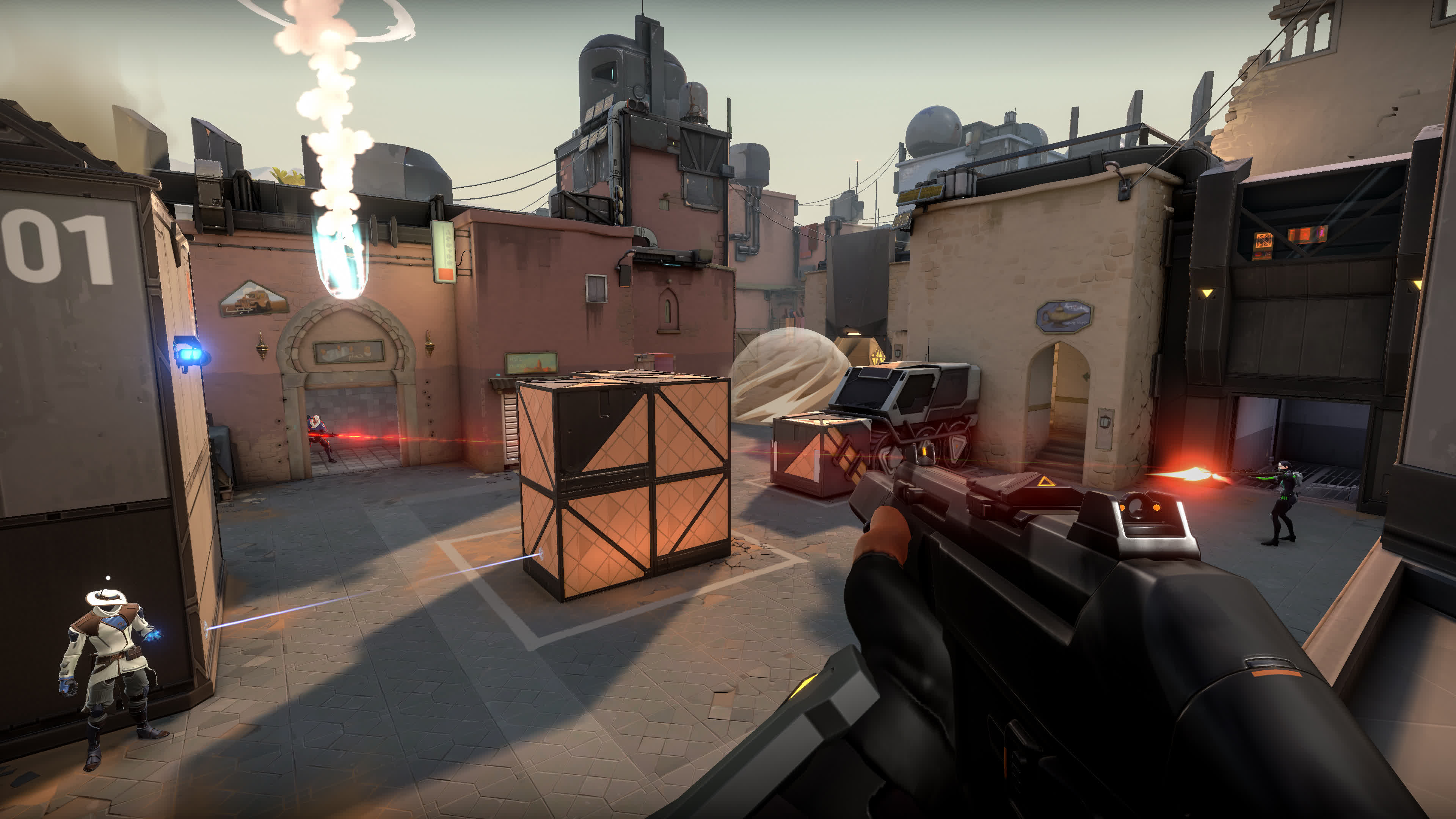
A redditor recently claimed they were banned from Valorant immediately after starting a match following the installation of a recently purchased AMD Ryzen 7 5800X3D. According to the user, Riot said the CPU's serial number was already on the company's anti-cheat blacklist, although Riot says it cannot find the related support ticket.

Assuming the redditor's story is accurate, one possibility is that the CPU's previous owner sold it after being caught cheating. Riot can re-evaluate hardware ID (HWID) bans through its support channels, but he claims Riot told him they had run out of options.

Stranger still, the user says filing a complaint against the seller through PayPal wouldn't fully solve the problem because other components in his PC, including the motherboard and storage drive, had also been blacklisted.

Riot's Phillip Koskinas disputes that account, saying Vanguard does not add an entire system to its denylist simply because it detects one banned component. He also rejected the claim that the entire PC was now banned from all Riot titles, stating that HWID bans are game-specific.
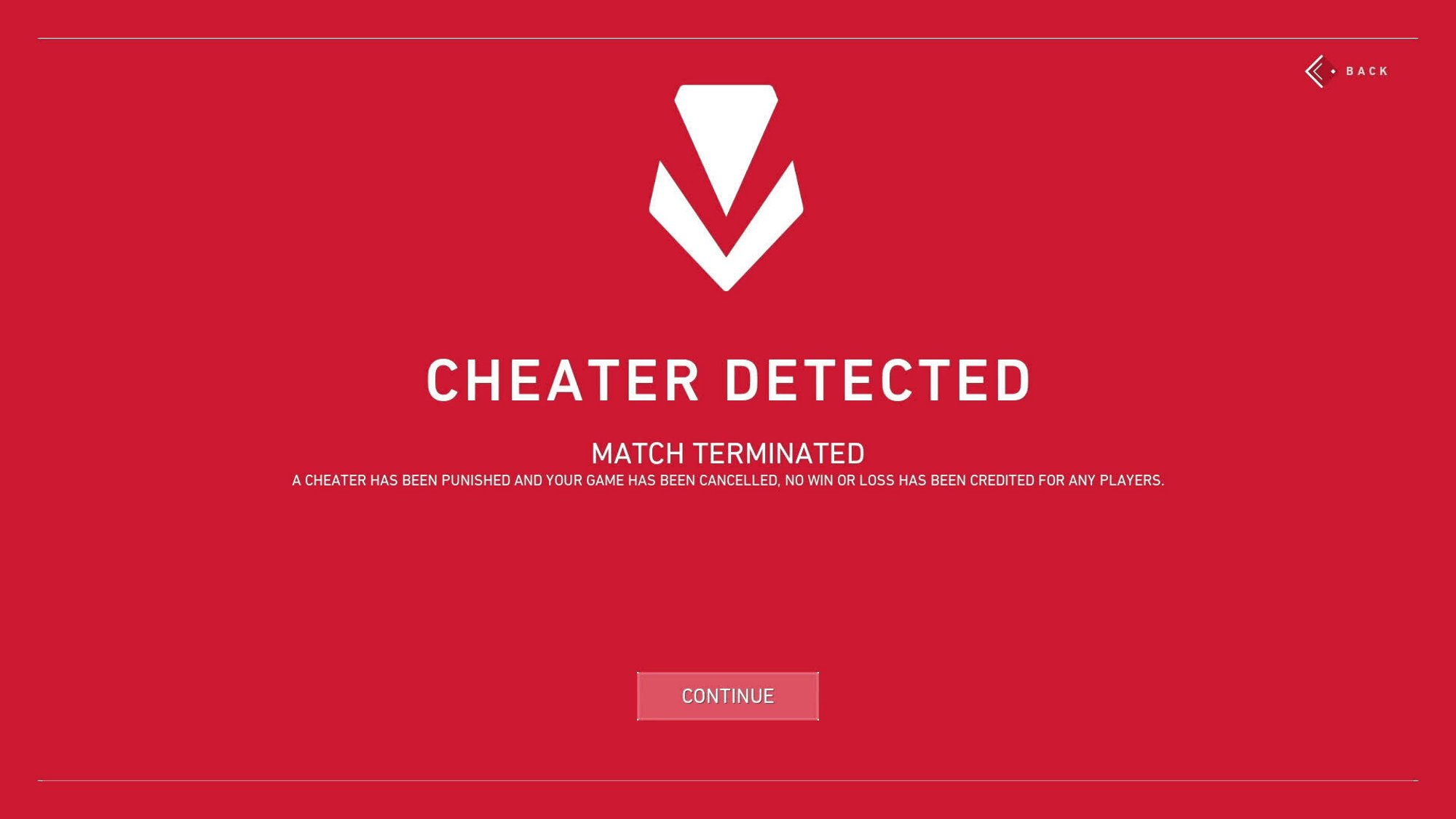
More importantly, Koskinas said Valorant HWID bans last no more than four months and that Riot support would tell a player how much time remains on a ban. The redditor claims the original ban occurred on August 12 and that he received the CPU on September 21, meaning the hardware should become unbanned sometime in December.

While banned PC components entering the secondhand market might concern users looking to save money, Koskinas said Riot has encountered fewer than a dozen such cases, suggesting that inherited HWID bans are extremely rare. He also said Riot can identify clusters of PCs operating as cybercafes, where hardware bans are applied only when multiple users repeatedly cheat.

Riot has long drawn controversy for enforcing kernel-level anti-cheat, requiring TPM 2.0, and forcing players to perform UEFI firmware updates that could brick PCs if something goes wrong. Valorant's anti-cheat even briefly conflicted with the Battlefield 6 open beta.

However, Riot loosened Vanguard's always-on requirement earlier this year with an optional On-Demand mode. PCs that meet a stringent set of Windows security requirements can enable Vanguard Pre-Check, allowing the anti-cheat driver to start when a Riot game launches and shut down after play instead of running continuously from system startup.

Permalink to story:

 
HWID bans don't work. They can easily be spoofed. Anit-Cheat doesn't work, unless the person doing it is an *****. Real cheaters that actually know what they're doing can't be caught. And every single game is riddled with them. All Anti-Cheat does is catch the fringe people.
 
It is for stuff like this I abandoned competitive multiplayer more than a decade ago. It became unbearable to me to deal with all the inconveniences. On cooperative multiplayer games cheating is a lot less common, and you also stress yourself a lot less.

Competitive now is just when I am among friends. And even then at least one will occasionally admit he/she had some cheat installed.
 
I remember when competitive shooters were fun... Now, it is just another way for companies to collect data on you. I remember when the gaming community could deal with cheaters on the server, and it was much more effective than this kernel-level anti-cheat nonsense. Look at Windows...what an abomination...
 
I doubt this is true, the only Unique ID a CPU has is etched into the heatspreader cap.
At least do a little research before declaring the story impossible.

You're confusing a physical serial number with the information software can retrieve from the processor.

Modern CPUs expose plenty of identifying information through CPUID and related system interfaces...processor family, model, stepping, feature information and other characteristics. CPUID itself isn't necessarily a unique serial number for each individual chip, but that's not how hardware fingerprinting has to work.

Riot openly states that Vanguard uses HWID bans against the physical hardware in a machine. A hardware fingerprint can be assembled from multiple components and identifiers rather than relying on one magical CPU serial number.

Riot also isn't going to publish exactly which identifiers Vanguard uses or how they're combined. Doing that would basically hand cheat developers a guide to bypassing it.

So saying "the serial number is etched on the heatspreader, therefore this can't be true" doesn't prove anything.

The honest answer is that we don't know exactly how Vanguard fingerprints the CPU or the machine.

That's considerably different from "this isn't possible."
 
I remember when the gaming community could deal with cheaters on the server, and it was much more effective than this kernel-level anti-cheat nonsense.
This, I miss the days of dedicated services and active admins who played the game and could easily see the cheaters and ban them outright.

Battlefield 3/4, Team Fortress 2, Unreal Tournament 2004, Call of Duty 2/4, all of these I remember playing with or against a cheater and seeing them get banned in real time by the admins.

I remember being kicked myself once in Battlefield 4, me and a friend got kicked for cheating, we contacted the admin, jumped on the servers TeamSpeak, had a chat, explained we aren't cheating and happy to upload footage to YouTube or something to prove it, but we didn't join using a voice changer or anything, and so he let us off.

There's a map in Battlefield 4 where you can hide in a toilet cubicle in such a way, you're basically invisible, and you can glitch through into the cubical next to you, I was in that cubicle, killing everyone who went past, my friend would glitch through and revive me, BF4's revive was instant, so I could just keep going, was on 34 kills 0 deaths, and this was squad deathmatch, so we were miles ahead, the funny thing is, a well placed grenade ends the fun entirely, but none of the other squads thought about throwing a grenade.
 
Back