Intel Core Ultra 9 285K CPU-Z and Blender benchmarks underwhelm, but questions remain

Daniel Sims

Posts: 2,423   +73
Staff
The big picture: Intel's Arrow Lake Core Ultra 200K desktop CPUs begin shipping next week, and third-party benchmark results have started appearing. Intel's unveiling earlier this month tempered expectations regarding performance gains compared to 14th-gen Raptor Lake and AMD Zen 5 Ryzen 9000. Although results in the wild aren't shocking, a full picture has yet to emerge.
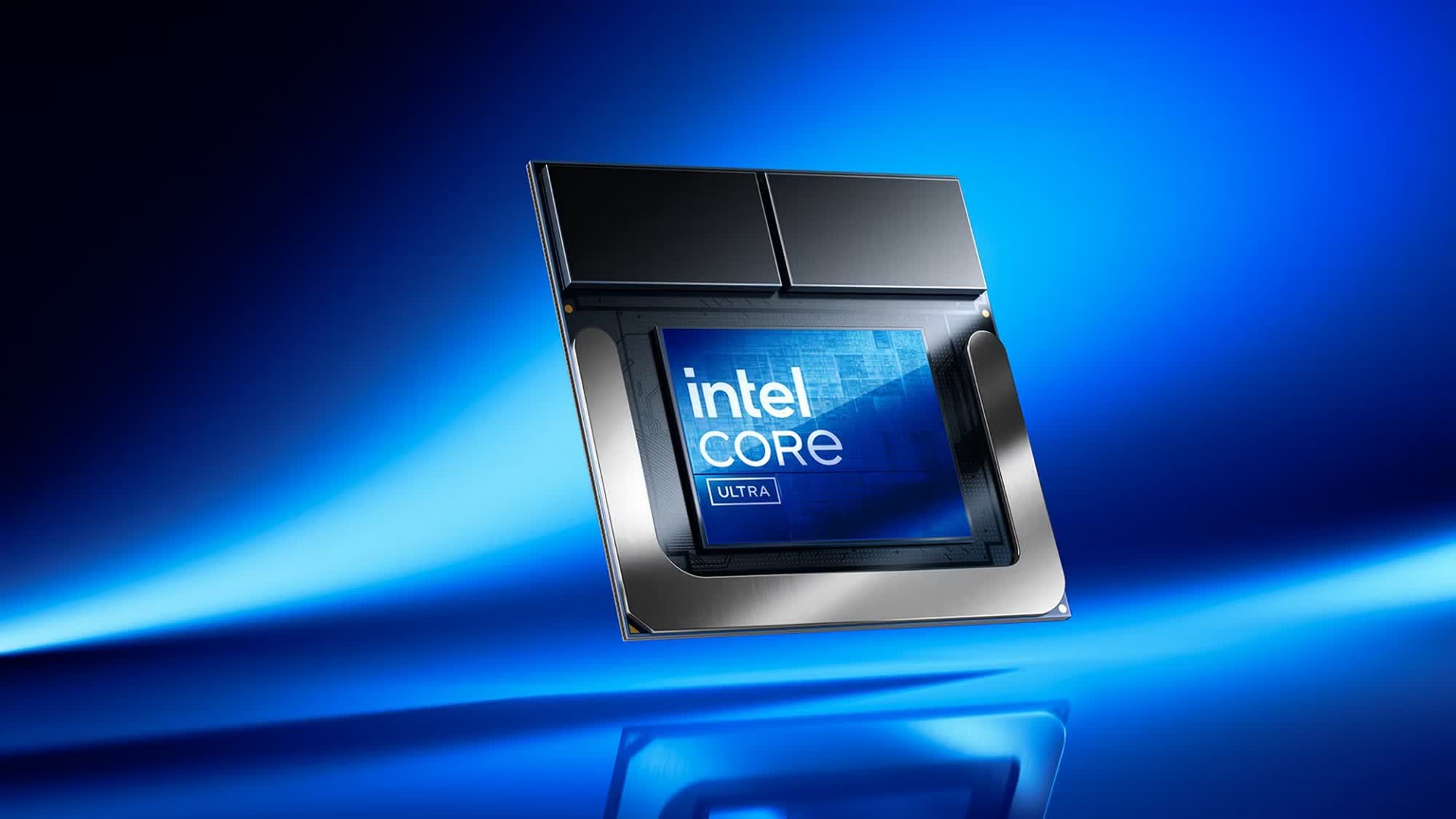
The flagship of Intel's upcoming Arrow Lake desktop lineup has made its benchmarking debut on the CPU-Z and Blender databases. Although a full analysis must wait until reviews from TechSpot and other sites become available, this early sneak peek aligns with the atmosphere from Intel's announcement presentation from earlier this month.

Intel's Core Ultra 9 285K posted a single-thread CPU-Z score of 909 when clocked at 5.4GHz and 889 at 5.3GHz. The higher score falls slightly below the processor's direct predecessor, the Core i9-14900K. Meanwhile, the lower score also struggles against the older 13900K.
Memory is likely one of the main factors dragging the results down. Intel suggested a base memory speed of DDR5-6400 and a sweet spot of DDR5-8000 for Arrow Lake. However, the CPU-Z benchmark units used 5600 and 4800 RAM in dual 16GB configurations.

Thermal throttling is also apparent, as the CPU reached 101 degrees Celsius in the 909-score test. Meanwhile, the multi-thread scores of 18,964 and 18,099 put the 285K soundly above the competition, supporting Intel's claims of a hefty multi-threaded performance boost.

The Blender results offer less data but show a notable ranking between recent flagship consumer processors. A media score of 566.88 puts the 285K well ahead of the 14900K but far below AMD's Ryzen 9 9950X. Another Arrow Lake chip, the Core Ultra 7 265K, also appears here. Its 471.21 score edging just above the Ryzen 9 9900X.

When Intel unveiled the desktop Arrow Lake chips, the company never promised uniform performance gains over Raptor Lake or AMD Zen 5. The new generation's real uplifts are supposedly in power efficiency and productivity. Time will tell if the claims bear out in our full review, but carrying price tags similar to Raptor Lake certainly won't help.

Intel's Arrow Lake processors start shipping on October 24, starting at $294 for the Core Ultra 5 245KF. The 285K will retail for $589. The company also confirmed that Arrow Lake Core Ultra 200H and 200HX will come to high-end laptops in early 2025.

Permalink to story:

 
Underscores in blender, underscores in games. All that efficiency gain is for naught if the thing cant perform. Much like zen 5, you can just underclock a cRaptor lake and gain significant efficiency.
 
"Intel suggested a base memory speed of DDR5-6400 and a sweet spot of DDR5-8000 for Arrow Lake."

I'm sorry, but that sounds ridiculous. These memories are absurdly expensive, especially outside the US
 
Meanwhile, in the datacenter, ironically, Zen 5 is literally the biggest advancement that AMD ever achieved while using the same chiplets.
 
Even though very easy to hate on Intel, would be nice if they make a good product.
If actual reviews are a bit underwhelming then begs the question why is this occurring both to AMD/Intel

Maybe because previous Gens already highly optimised .
Zen 5 is actually a good product, just not as great as people wanted and is actually more progress that Intel yearly tick tocks

As I've stated before, wouldn't be surprised if AMDs best engineers are working on Zen 6 and else where ( AI/servers etc ).

Still next 5 to 10 years should see getting closer much to theoretic. Ie smallest practical with current tech.
AI tools will help speed it up, but probably can't predict all real world problems when you do stuff at nanoscale

I think just going bigger eg GPUs is not sustainable. Can't see EU allowing home gaming GPUs with 1000 plus watts draw.
So next 20 years exciting as must be on cusp of new ways to do things . The demand for tiny powerful low energy brains will grow exponentially, Even if just to look after aging populations
 
Imagine this launch being worse for Intel than Zen 5 was for AMD
Zen 5 is massivly succesful where it matters the most, in the datacenter, providing the biggest uplift since Zen 1.
Ryzen 9000 vanilla has proven to be underwhelming, could be the X3D variants will change that picture.
 
Here's why Arrow Lake and Zen 5 are meh.

The new CPUs suffer from EV-GlobalWarming syndrome. There is enormous pressure to be energy efficient. Performance takes a back seat to electrical efficiency.

Hopefully the 9800x3d will give us a decent boost. If it does, it could be the best selling chip AMD ever made.
 
Here's why Arrow Lake and Zen 5 are meh.

The new CPUs suffer from EV-GlobalWarming syndrome. There is enormous pressure to be energy efficient. Performance takes a back seat to electrical efficiency.

Hopefully the 9800x3d will give us a decent boost. If it does, it could be the best selling chip AMD ever made.
Saying Zen 5 is meh dosn't match reality when Zen 5 EPYC variants provide the largest gen over gen performance gains of all the Zen variants. Zen 5 is not just Ryzen, in fact it's mainly EPYC. And yes ofc, we can all agree Ryzen 9000 vanilla didn't really provide anything to talk about, clearly the redesign done with Zen 5 vs Zen 4 didn't mean much gain's for the desktop variant, but it surely did so for the datacenter variants.

"EV-GlobalWarming syndrome" im guessing you are being sarcastic :)
 
Saying Zen 5 is meh dosn't match reality when Zen 5 EPYC variants provide the largest gen over gen performance gains of all the Zen variants. Zen 5 is not just Ryzen, in fact it's mainly EPYC. And yes ofc, we can all agree Ryzen 9000 vanilla didn't really provide anything to talk about, clearly the redesign done with Zen 5 vs Zen 4 didn't mean much gain's for the desktop variant, but it surely did so for the datacenter variants.

"EV-GlobalWarming syndrome" im guessing you are being sarcastic :)
This is not a data center website.

Shorthand here refers to consumer products not enterprise ones.
 
This is not a data center website.

Shorthand here refers to consumer products not enterprise ones.
Zen5 based datacenter Epyc CPUs are using exactly same type of chiplets than desktop Ryzen CPUs. In other words, performance inside chiplet is exactly same if clock speeds are same. Therefore if datacenter CPU with same core count shows performance improvement, we can get basically same improvement on desktop.
 
Zen5 based datacenter Epyc CPUs are using exactly same type of chiplets than desktop Ryzen CPUs. In other words, performance inside chiplet is exactly same if clock speeds are same. Therefore if datacenter CPU with same core count shows performance improvement, we can get basically same improvement on desktop.
If you are running data center software on your desktop, which you are not, so no, your argument is wrong.
 
If you are running data center software on your desktop, which you are not, so no, your argument is wrong.
And what makes "datacenter software" so special you cannot use same type of software on desktop? Instruction set support is exactly same. Your argument is totally flawed.
 
This is not a data center website.

Shorthand here refers to consumer products not enterprise ones.
Wrong, this is also a site that covers datacenter CPU's.

Shorthand was reffering to "Zen 5", Zen 5 is not limited to desktop CPU's. If he reffered to Ryzen 9000, then he would have reffered to consumer CPU's.
 
Zen5 based datacenter Epyc CPUs are using exactly same type of chiplets than desktop Ryzen CPUs. In other words, performance inside chiplet is exactly same if clock speeds are same. Therefore if datacenter CPU with same core count shows performance improvement, we can get basically same improvement on desktop.
There is huge improvements in Zen 5 vs Zen 4 in servers with same core count, in fact its the largest performance jump, gen over gen we have ever seen since Zen 1.
On desktop we have small performance increase going from Zen 4 to Zen 5.

So clearly the improvements made in Zen 5 does not mean the same for desktop variants as it does for server variants.
Afaik, most of the redesign was done on the front end, but also the IO die is updated for EPYC but desktop get's the same IO die as Zen 4. My point is, the design changes in Zen 5 was made to benefit server cpu workloads primarily. Obvious choice.
 
There is huge improvements in Zen 5 vs Zen 4 in servers with same core count, in fact its the largest performance jump, gen over gen we have ever seen since Zen 1.
On desktop we have small performance increase going from Zen 4 to Zen 5.

So clearly the improvements made in Zen 5 does not mean the same for desktop variants as it does for server variants.
Afaik, most of the redesign was done on the front end, but also the IO die is updated for EPYC but desktop get's the same IO die as Zen 4. My point is, the design changes in Zen 5 was made to benefit server cpu workloads primarily. Obvious choice.
Source for updated IO die for Epyc's? I expect that die is same as before but perhaps some features were disabled on Zen4 variants. At least it's still 6nm, that is confirmed.

Problem is, there are no specifically "server workloads" and "desktop workloads". Generally improving performance will improve both. Main design choice AMD made with Zen5 was to make first actually very usable AVX512 implementation. Some may argue that is server only but it is useful on desktop also. Only need software that takes advantage for it. And like said many times, making software to take advantage of AVX512 takes few seconds work. In other words, with Zen5 there are no longer any excuses not to use AVX512 on desktop software.
 
And what makes "datacenter software" so special you cannot use same type of software on desktop? Instruction set support is exactly same. Your argument is totally flawed.
If you don't understand the difference between running massive cloud infrastructure servers and your personal PC, you don't know enough basics for me to explain it to you.
 
If you don't understand the difference between running massive cloud infrastructure servers and your personal PC, you don't know enough basics for me to explain it to you.
So you need one instruction set for servers and another for desktops, or what are you actually talking about? Instruction set support does not make any difference between AMD Epycs and Ryzens.
 
Wrong, this is also a site that covers datacenter CPU's.

Shorthand was reffering to "Zen 5", Zen 5 is not limited to desktop CPU's. If he reffered to Ryzen 9000, then he would have reffered to consumer CPU's.
This site has dozens of articles on consumer CPUs for every enterprise one.

It has more articles on outer space than data center CPUs. So, again, acting like the default is EPYC rather than Ryzen is flawed.
 
So you need one instruction set for servers and another for desktops, or what are you actually talking about? Instruction set support does not make any difference between AMD Epycs and Ryzens.
Zen 5's improvements focused on enhancing enterprise and server software performance, not desktop software or games.
 
No. Arrow Lake notebook versions come months after desktop version. So much about that theory.
Just because the desktop versions come first doesn't mean the architecture hasn't been designed for laptops in mind over desktops.
 
Back