The takeaway: A few years ago, Intel attempted to sell enterprise processors with certain computing features "disabled," requiring users to pay extra to unlock hardware they had already purchased. Now, the company appears to acknowledge that the idea was widely unpopular, despite claims of customer demand.

The infamous Intel Software Defined Silicon initiative appears to be dead – or at least, Intel has no plans to continue developing it. The US chipmaker first unveiled SDSi in 2021 as a software-based solution that could selectively block or unlock certain CPU capabilities depending on the end customer's budget.
The initiative was later rebranded as Intel On Demand, giving owners of 4th Gen Xeon Scalable processors the option to "activate" in-chip accelerators and hardware-enhanced features. Customers could either pay once to permanently unlock all features or choose a "metered adoption model," where costs were based on actual usage.
Intel pitched SDSi as a flexible benefit for Xeon Scalable owners, claiming that customers could pay for CPU capabilities only when needed, helping them manage budget constraints.
According to Intel's documentation, SDSi supported features such as Dynamic Load Balancer, Data Streaming Accelerator, In-Memory Analytics Accelerator, Quick Assist Technology, Software Guard Extensions, and Virtual RAID on CPU (the latter only available on 5th Gen Xeon chips).
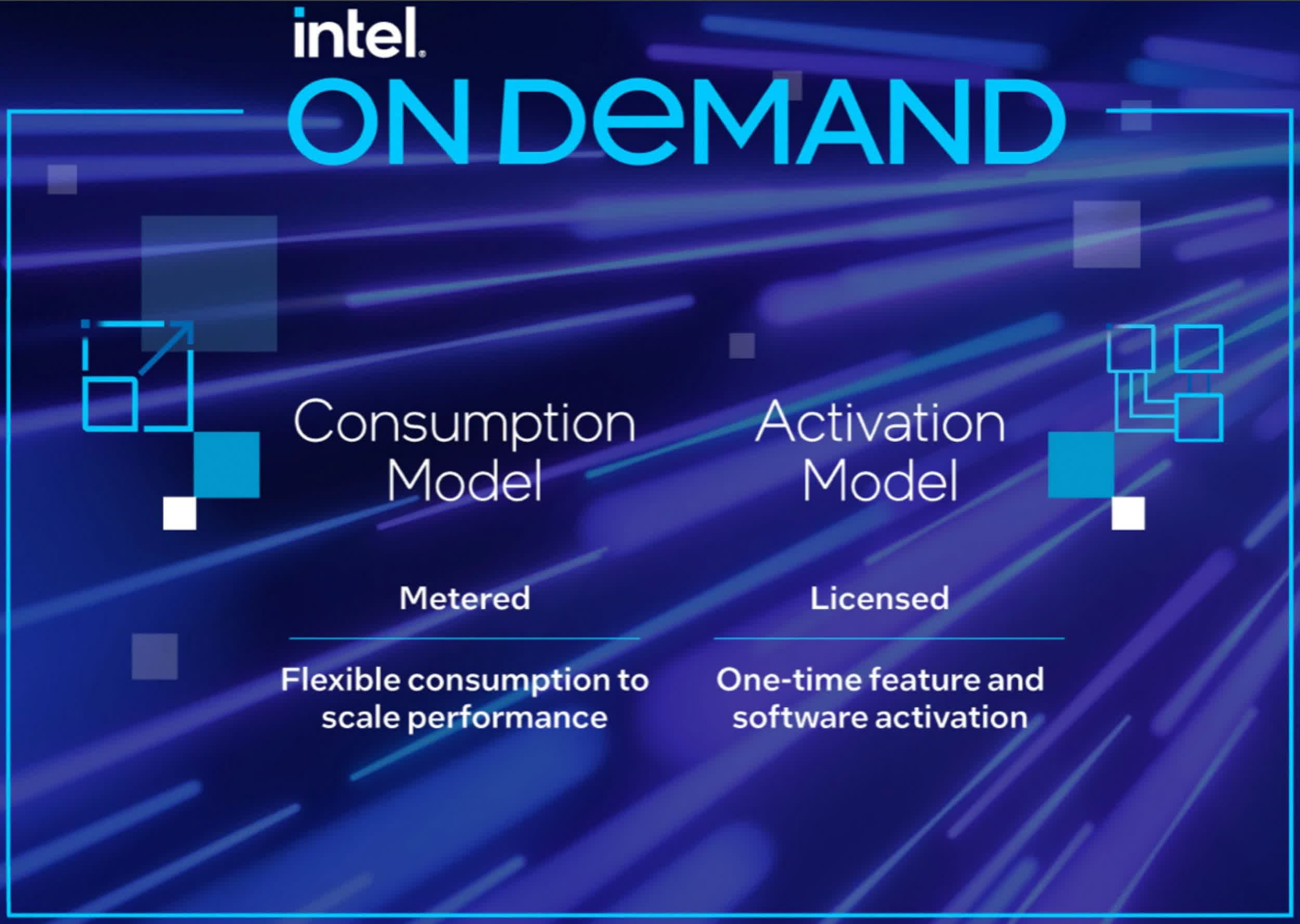
Phoronix recently spotted a significant change in Intel's SDSi GitHub repository, which was archived on November 10, 2025. Intel no longer plans to support the project, though third-party users are free to fork the code. The company officially describes On Demand as a method to "configure" additional CPU features via a license activation process.
In recent years, Santa Clara has quietly stopped referencing the On Demand program. The original SDSi initiative included patches for the Linux kernel, allowing open-source users to participate in the CPU-as-a-service model.
With the GitHub repository now archived, the SDSi program is effectively dead. Intel appears to be distancing itself from the technology, and many SDSi-related pages on the company's website have been removed.
Paying to "unlock" a handful of additional CPU instructions may have seemed unusual to many, and Intel now seems more focused on monetizing AI accelerators anyway. Still, it would be interesting to hear from some of the "customers" Intel cited as requesting these kinds of features in the first place.
Intel has abandoned its controversial "On Demand" processor technology


