Intel sued by shareholders who claim it hid PC sales slump before 29% stock crash

midian182

Posts: 12,069   +184
Staff member
What just happened? It's not just Nvidia being sued by its shareholders over claims it withheld important information. Intel is facing a proposed class-action lawsuit over allegations it hid the severity of the decline in PC sales, which the plaintiffs say caused the company's stock to crash almost 29% in one day.
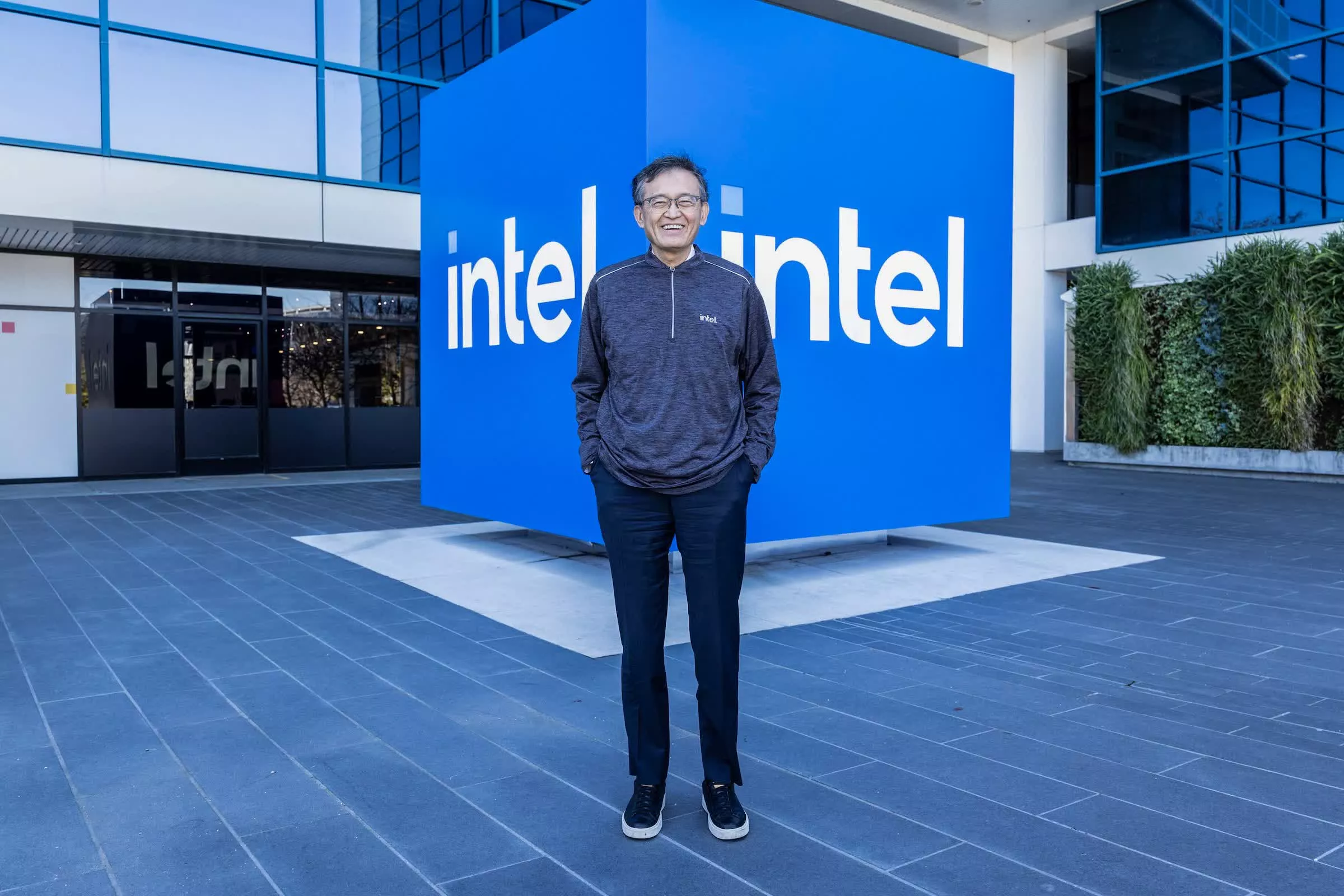
The complaint, filed in federal court in San Jose on November 13, names Intel, CEO Lip-Bu Tan, and CFO David Zinsner as defendants. Michigan's City of Southfield Fire and Police Retirement System is leading the case, seeking unspecified damages.

Shareholders allege Intel took too long to disclose how weakening PC sales and a buildup of unsold inventory would hurt revenue. They argue those problems outweighed the benefits Team Blue was receiving from data center construction and the AI boom.

The suit specifically accuses Intel of making "materially false and/or misleading" statements that suggested demand was improving. Investors say October's results undermined those assurances, revealing the extent of the PC slowdown after they had bought shares at allegedly inflated prices. The complaint covers purchases between July 23 and October 29.

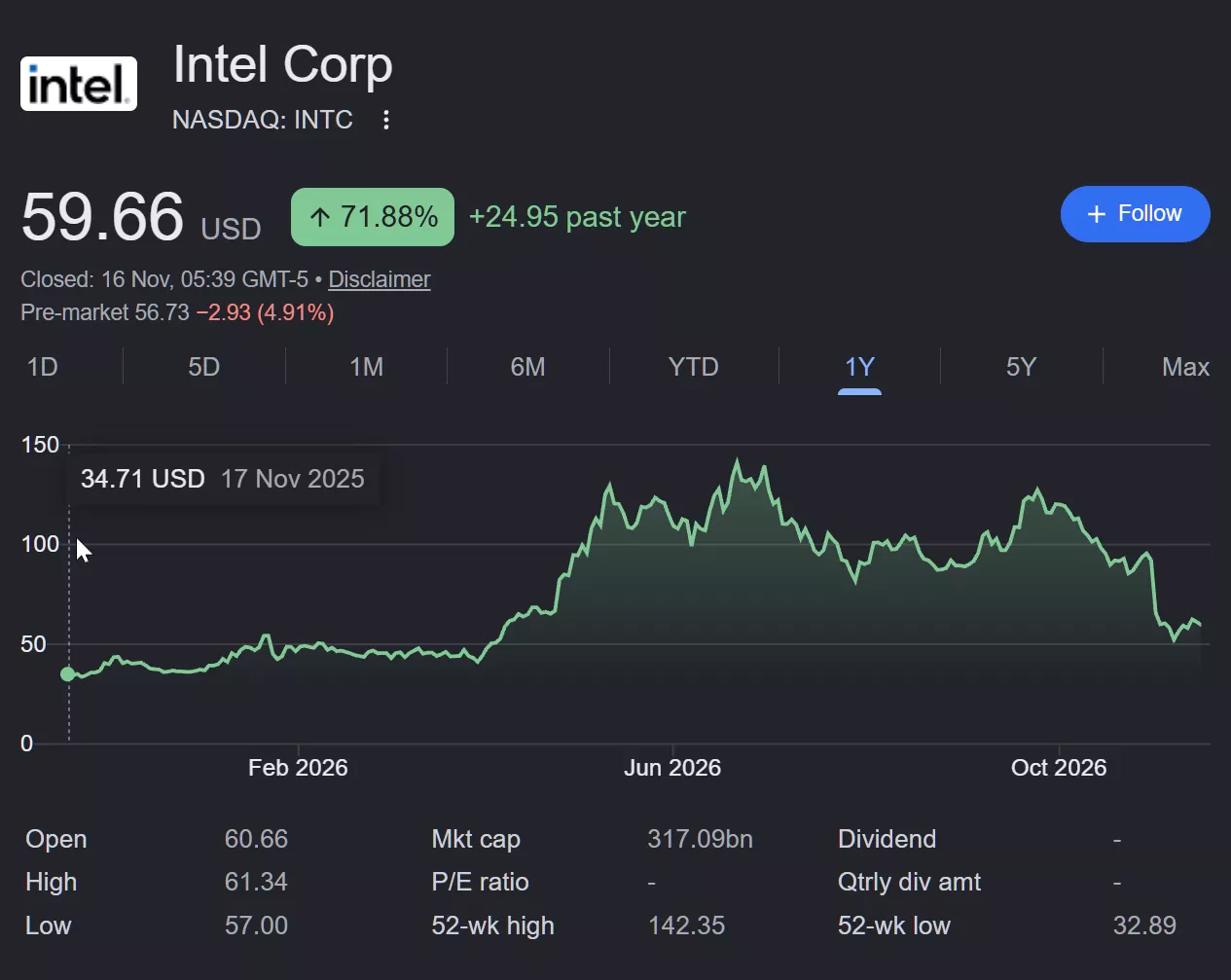
Despite third-quarter earnings beating expectations and data center revenue jumping almost 80%, Intel's outlook disappointed investors. On October 29, the company forecast fourth-quarter revenue of $15 billion to $16 billion, below Wall Street's roughly $17 billion estimate, and warned of a prolonged PC slowdown. Shares plunged 28.6% the following day, wiping out around $140 billion in market value and making it Intel's worst trading day since 1974.
The lawsuit highlights Intel's PC business revenue falling 9% year-over-year, or about $800 million, to $8.1 billion in the third quarter. Its main accusation is that Intel failed to give shareholders a timely and accurate picture of that deterioration.

Shareholders also say Intel had a reason to hide its problems: it sold $23 billion worth of shares at $95 each in August.

Intel expects PC shipments to drop around 12% this year and another 10% in 2027. AI data centers continue to buy up huge amounts of memory, pushing PC prices higher and putting buyers off. Intel doesn't expect that situation to improve until memory supply and prices normalize, but when that will happen is anyone's guess.

There had already been warnings about consumer pricing getting worse. September brought reports of another planned 10% Intel CPU price increase, with the company reportedly prioritizing more profitable server processors at its factories.

The case follows the shareholder lawsuit against Nvidia and Jensen Huang over his relationship with a suspected Chinese intelligence operative. Both cases allege investors lost money after information they say should have been disclosed earlier became public.

Permalink to story:

 
Ag shame, buying shares is never a guarantee that it will increase. Especially TECH shares has always been seen as high risk, high reward.

Besides you can blame Jensen Huang for this, if they want to sue someone, they should sue him.
 
When did investing in the stock market come with a money back guarantee?

Let's apply a little common sense here. The stock market involves risk. Companies make projections, markets change, executives get things wrong, and investors sometimes lose money. That's part of investing, not automatically evidence of fraud.

If Intel knowingly misled shareholders or deliberately concealed material information, then by all means, investigate it and hold those responsible accountable.

But here's the part people seem to forget...Allegations are not proof. The burden of proof belongs to the people making the accusations.

And let's not overlook something rather interesting. Despite Intel's nearly 29% plunge in October, its stock was STILL up approximately 62% for the year as of November 13.

We're living through one of the most volatile transformations the technology industry has seen in decades. The AI boom is reshaping semiconductor demand, memory prices are soaring, manufacturers are shifting priorities, and the traditional PC market is feeling the pressure.

None of this is happening in a vacuum. Much of it has been publicly discussed for months.

If you're going to invest in semiconductor stocks during this kind of market upheaval, doing your homework isn't optional. You cannot blindly chase an AI driven rally, ignore the changing market conditions, and then automatically cry fraud when your investment takes a beating.

Now, if Intel knowingly deceived investors, prove it and hold them accountable. But a disappointing earnings report, an incorrect forecast, or a falling stock price is not, by itself, evidence of securities fraud.

We cannot have a stock market where investors happily pocket the profits when they're right, but expect someone else to absorb the losses when they're wrong.

Investing involves risk. Fraud involves deception. Poor investment decisions involve personal responsibility.

It's about time we remembered the difference.
 
Intel's only value currently is their fabs and I honestly don't understand why no big third party contracts haven't been signed yet. I know TSMC is the leader but I remember when intel was number 1 in fabs. They need to get Qualcomm or some other big name chip designers. If a war breaks out and TSMC is no longer an option intel stock goes to the moon.
 
When did investing in the stock market come with a money back guarantee?

Let's apply a little common sense here. The stock market involves risk. Companies make projections, markets change, executives get things wrong, and investors sometimes lose money. That's part of investing, not automatically evidence of fraud.

If Intel knowingly misled shareholders or deliberately concealed material information, then by all means, investigate it and hold those responsible accountable.

But here's the part people seem to forget...Allegations are not proof. The burden of proof belongs to the people making the accusations.

And let's not overlook something rather interesting. Despite Intel's nearly 29% plunge in October, its stock was STILL up approximately 62% for the year as of November 13.

We're living through one of the most volatile transformations the technology industry has seen in decades. The AI boom is reshaping semiconductor demand, memory prices are soaring, manufacturers are shifting priorities, and the traditional PC market is feeling the pressure.

None of this is happening in a vacuum. Much of it has been publicly discussed for months.

If you're going to invest in semiconductor stocks during this kind of market upheaval, doing your homework isn't optional. You cannot blindly chase an AI driven rally, ignore the changing market conditions, and then automatically cry fraud when your investment takes a beating.

Now, if Intel knowingly deceived investors, prove it and hold them accountable. But a disappointing earnings report, an incorrect forecast, or a falling stock price is not, by itself, evidence of securities fraud.

We cannot have a stock market where investors happily pocket the profits when they're right, but expect someone else to absorb the losses when they're wrong.

Investing involves risk. Fraud involves deception. Poor investment decisions involve personal responsibility.

It's about time we remembered the difference.
there's no guarantee in the stock market, but misleading investors is a different matter. it's financial fraud.
 
Back