Intel's layoff spree continues as hundreds of IT workers face the axe

midian182

Posts: 12,080   +184
Staff member
What we know so far: Intel looks set to make yet more layoffs, potentially cutting hundreds of workers from its IT department. In a rare sight these days, the firm hasn't pointed to AI as the reason for the staff reductions; they're part of CEO Lip-Bu Tan's continuing mission to streamline the company and cut costs.

According to CTech (via TrendForce), Intel began making cuts to its global IT organization on November 16. While it hasn't revealed exact figures, employees claimed on social media that the reductions affected a double-digit percentage of the department's workforce.

Intel wrote in its 2024-25 IT report that it had around 2,607 IT employees supporting staff at 55 sites in 53 countries. If the department is still roughly that size, even a 10% cut would mean about 260 people losing their jobs.

Intel rolled out the usual corpo-speak rationale for the cuts, calling them part of a "broader strategy to become a more focused and efficient company." It added that it regularly reviews its workforce to ensure "priorities and resources are appropriately aligned."

If that first line sounds familiar, it's because Intel used the same wording in July when it confirmed layoffs in its data center group. AI did get a mention in an earlier round of cuts, though. Last year, Intel told marketing staff it was handing work to Accenture, which would use AI to help produce its campaigns.
This is just the latest of several job cuts at Intel since Tan took over in March 2025. The tech giant says last year's restructuring alone cut its core workforce by around 15%. That works out to roughly 14,500 jobs based on the 96,400 people it employed in its core business at the end of June 2025.

The overall drop is even bigger. Intel had 102,600 employees worldwide at the end of March 2025, shortly after Tan took the top job. By September 26 this year, that was down to 81,100, a difference of 21,500 before the latest IT cuts. People leaving voluntarily and Intel selling off businesses also helped bring that number down.

Tan made his feelings about Intel's management structure clear within weeks of taking over. In April 2025, he complained that some teams were buried under eight or more layers of management. By July, finance chief David Zinsner said Intel had stripped out about half of those layers. The company expects to finish the remaining work on its 2025 restructuring plan this quarter.

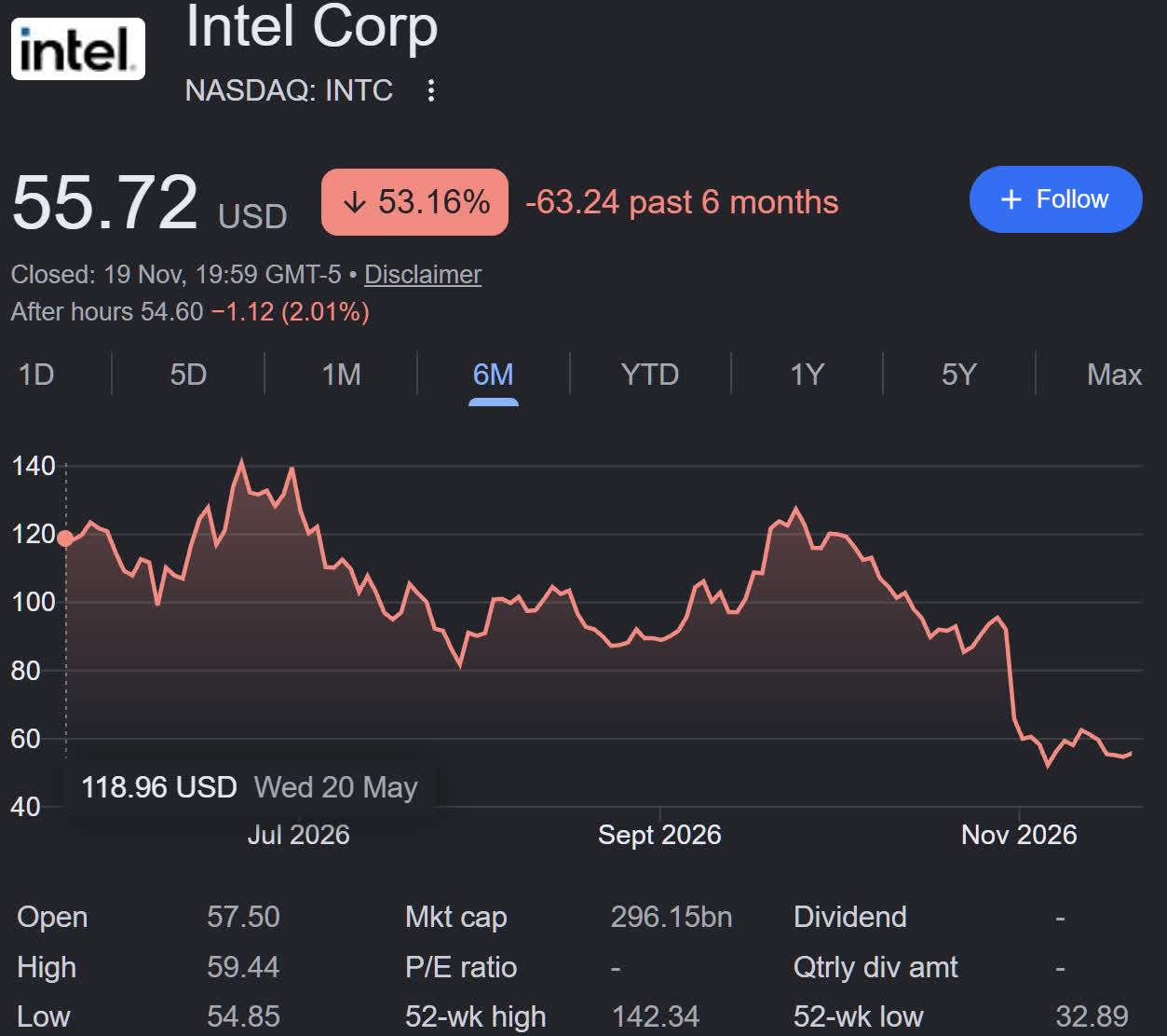
The most recent layoffs began just three days after shareholders filed a proposed class-action lawsuit against Intel, Tan, and Zinsner. They claim Intel took too long to tell investors how badly its PC business was struggling. When the company warned on October 29 that the slowdown would drag on, its shares fell 28.6% the following day, their biggest one-day drop since 1974

Permalink to story:

 
I blame Jensen Huang for the collapse of pc sales and delays in new hardware. Intel just need to focus on getting cheap fast products out the door and everything will be fine again. Maybe try harder with their GPUs as well, or have they given up on that now.
 
You say people left voluntarily and Intel sold off businesses. Ok, how much employment is that of the 21,500 already laid off? How much muscle is Intel cutting into after the sold businesses are accounted for?
 
I find it remarkable how much criticism Lip Bu Tan receives for doing precisely what he was brought into Intel to do...stop a sinking ship from going under.

Intel didn't hire him because everything was running smoothly. They hired him because the company had serious problems that needed fixing, including years of accumulated bureaucracy and organizational bloat. Tan himself pointed out that some departments had eight or more layers of management. Does anyone seriously believe that kind of structure promotes efficiency or innovation?

Is eliminating jobs something to celebrate? Absolutely not. Every one of those positions represents a person with bills to pay and possibly a family to support.

And here's what everyone seems to overlook...What happens if Intel doesn't turn things around? What happens to those remaining employees if the company continues declining?

More importantly, what happens to the semiconductor industry if Intel becomes irrelevant? Competition drives innovation, creates alternatives, and helps keep prices in check. Remove a major competitor and consumers ultimately pay the price.

Tan's restructuring deserves to be judged by whether it produces a healthier, more competitive Intel, not simply by how many positions are eliminated along the way.

Sometimes saving a company means making decisions nobody wants to make. That's why you bring in someone willing to make them.
 
I feel Intel is a long way from recovering to a stable state. There's been a lot of "commitments" or "promises" on using their fab, but I don't really see any chip maker release anything using Intel fab yet. If you comb the news, its just TSMC and Samsung that you will mostly find. With tanking retail and data center sales, and no exciting product in the pipeline that can materially benefit the company, I am not surprised that they need to start laying off their employees. AMD may be in a stronger position now, but again if the AI bubble blows, the circular financing arrangements is going to weigh them down significantly.
 
I feel Intel is a long way from recovering to a stable state. There's been a lot of "commitments" or "promises" on using their fab, but I don't really see any chip maker release anything using Intel fab yet. If you comb the news, its just TSMC and Samsung that you will mostly find. With tanking retail and data center sales, and no exciting product in the pipeline that can materially benefit the company, I am not surprised that they need to start laying off their employees. AMD may be in a stronger position now, but again if the AI bubble blows, the circular financing arrangements is going to weigh them down significantly.
You make some very good points, particularly regarding Intel Foundry. Commitments and announcements are one thing...getting external customers into high volume production and generating sustainable revenue is another thing entirely.

I do think you're overlooking some recent developments. Intel just secured its first external 18A P customer, and its Q3 data center and AI revenue increased 78% year over year. Clearwater Forest is already shipping, and Diamond Rapids is progressing toward its 2027 launch. So I wouldn't necessarily agree that Intel has nothing promising in the pipeline.

None of this guarantees a successful turnaround. Intel still has enormous challenges, especially with foundry profitability and attracting external customers, I agree 100%.

And this is precisely why I believe Tan's restructuring is necessary. He inherited a company that had become inefficient and was losing its competitive position. Maintaining the status quo simply wasn't an option in my opinion.

Your thoughts about AMD and AI financing are also interesting. An AI downturn could expose some very expensive commitments across the industry.

I think we're looking at a difficult turnaround that will take years, not quarters. Whether Tan succeeds remains to be seen, but at least he's addressing the problems rather than pretending they don't exist.
 
I blame Jensen Huang for the collapse of pc sales and delays in new hardware. Intel just need to focus on getting cheap fast products out the door and everything will be fine again. Maybe try harder with their GPUs as well, or have they given up on that now.
they already make good cheap cpus. The 250k plus fell to $150 recently and the 270k plus was $239. But none of that matters if you can’t afford the memory to go with it.

The GPUs are just done. We won’t see many more of them unless something radically changes.
 
An investor is responsible for monitoring the market as well as the company. These investors should sue themselves for not paying attention as they should have!!!!
 
Back