Kodak's retro $30 Charmera keychain digital camera is a sellout hit thanks to a clever stunt

midian182

Posts: 11,726   +177
Staff member
In brief: Kodak's business might be struggling right now, but the company's new retro-inspired tiny digital keychain cameras are proving a success. They're already sold out or pre-order-only at most retailers, including Kodak's own. The popularity has been helped by the use of "blind box" selling, in which buyers don't know which design they will receive until it arrives – unless they purchase all of them in one collection.
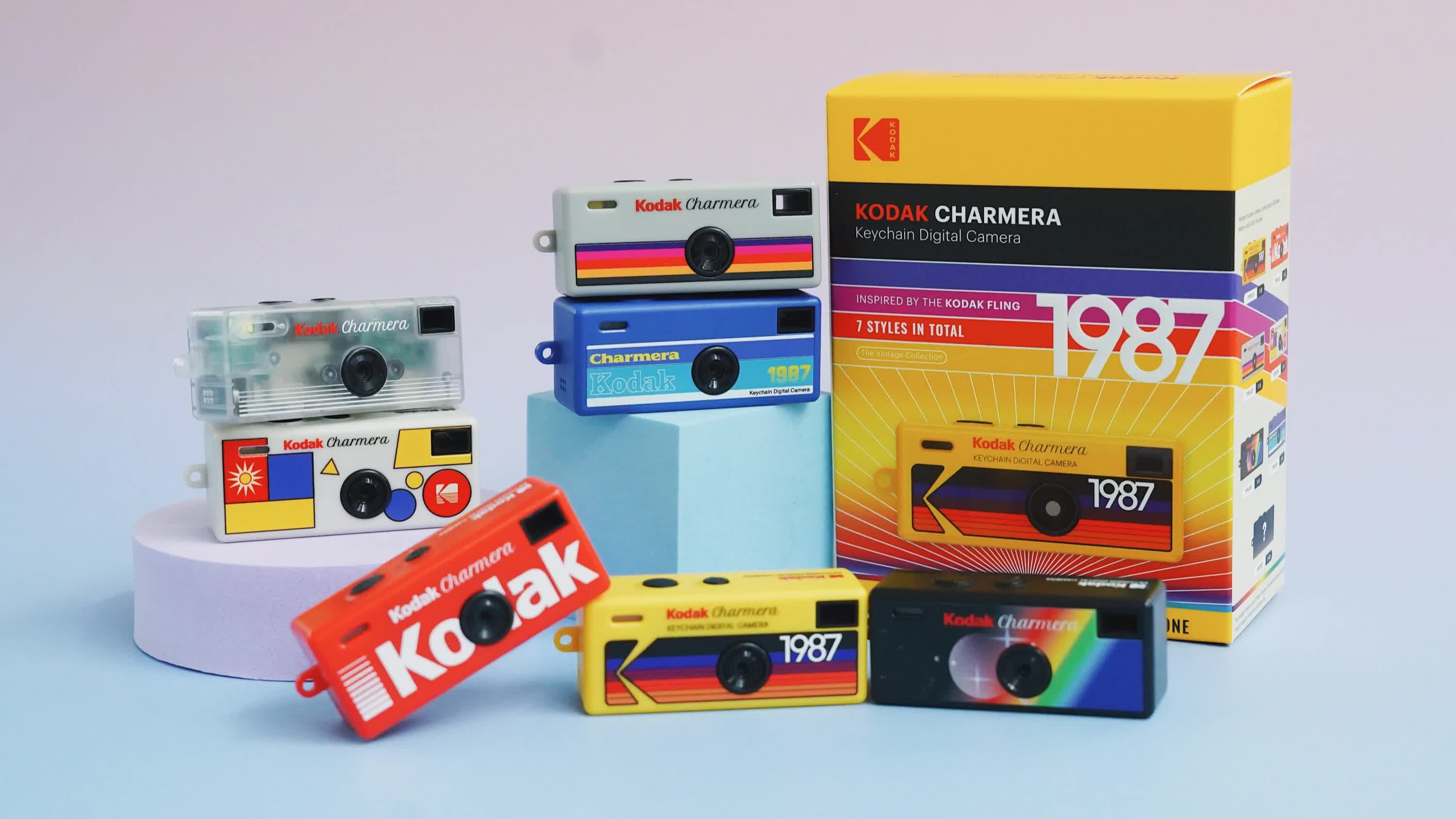
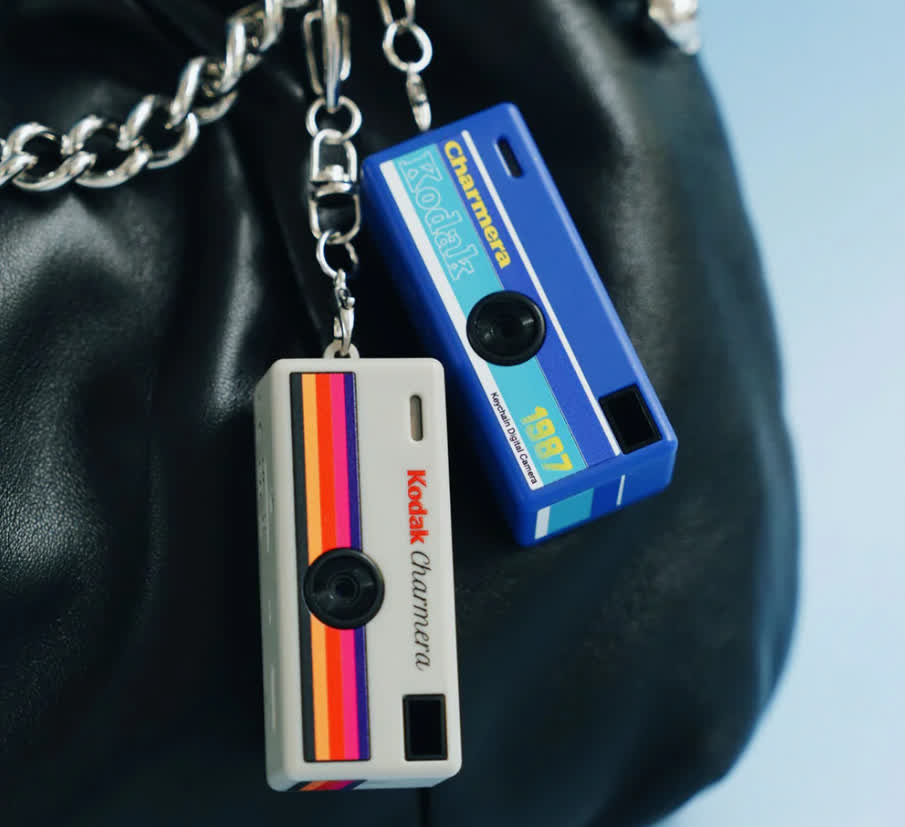
Made in collaboration with camera company Retro, the Kodak Charmera is a nostalgia trip for those who remember throwaway single-use cameras that arrived in the 1980s and were a common sight on nights out decades ago.
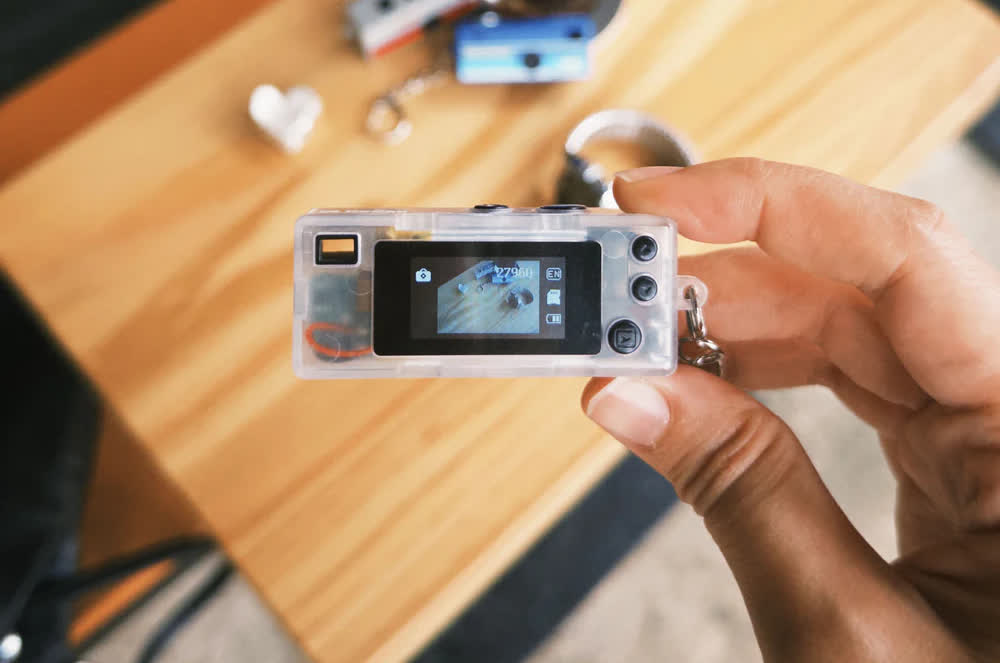
This modern version is, of course, reusable and digital, able to capture both photos and videos. It weighs just 30 grams and measures 2.2 inches, while the media – which is saved onto a microSD card that is not included – is transferable to other devices using a USB-C cable. There's also a screen on the back so you can see your captures.
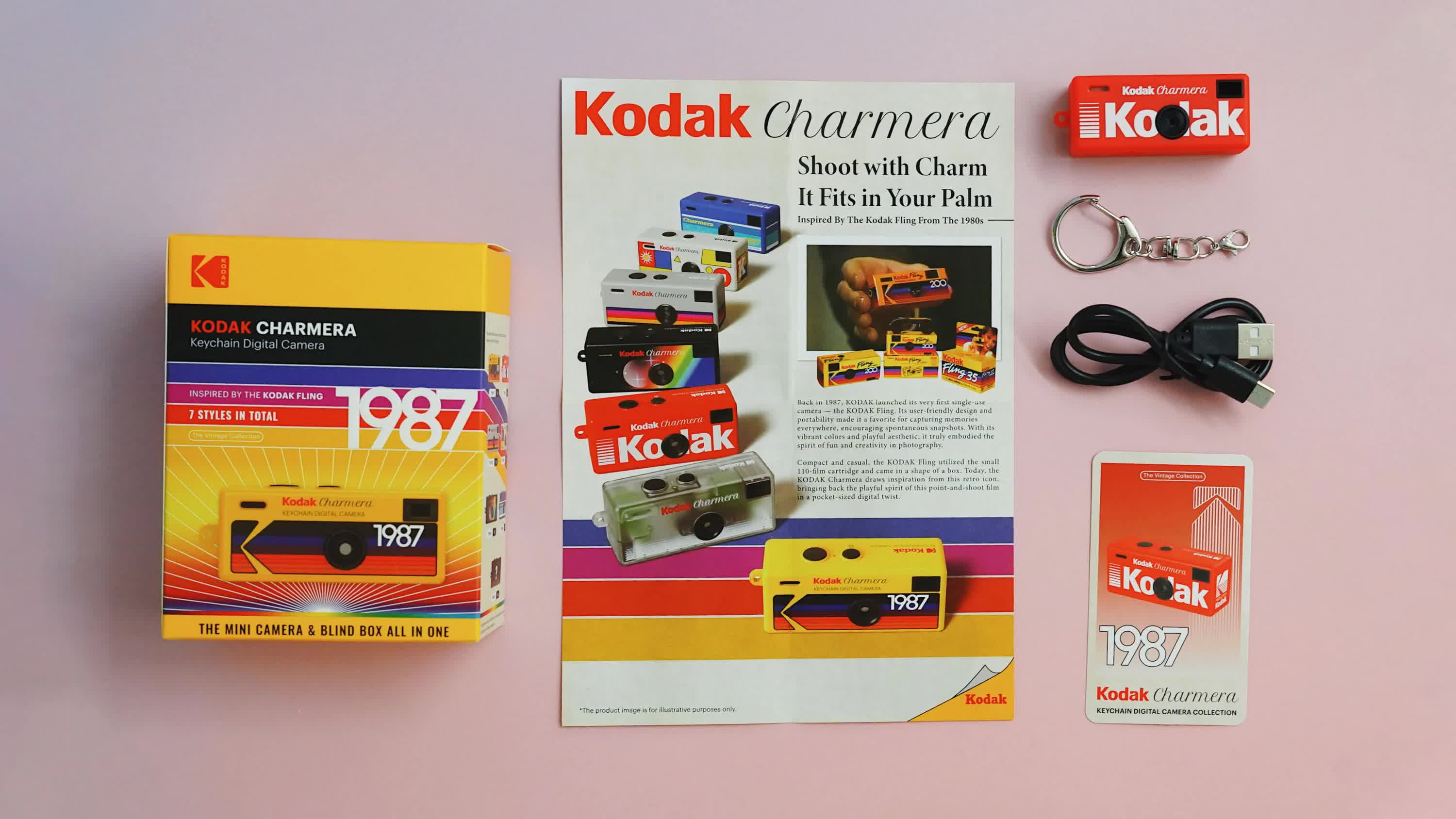
The Charmera's other specs include a 1⁄4 inch CMOS image sensor, 35mm F2.4 lens, 1440 x 1080 (1.6MP) image output in JPEG format, 30fps AVI video recording, and a rechargeable 200mAh battery. It also has its own keychain.
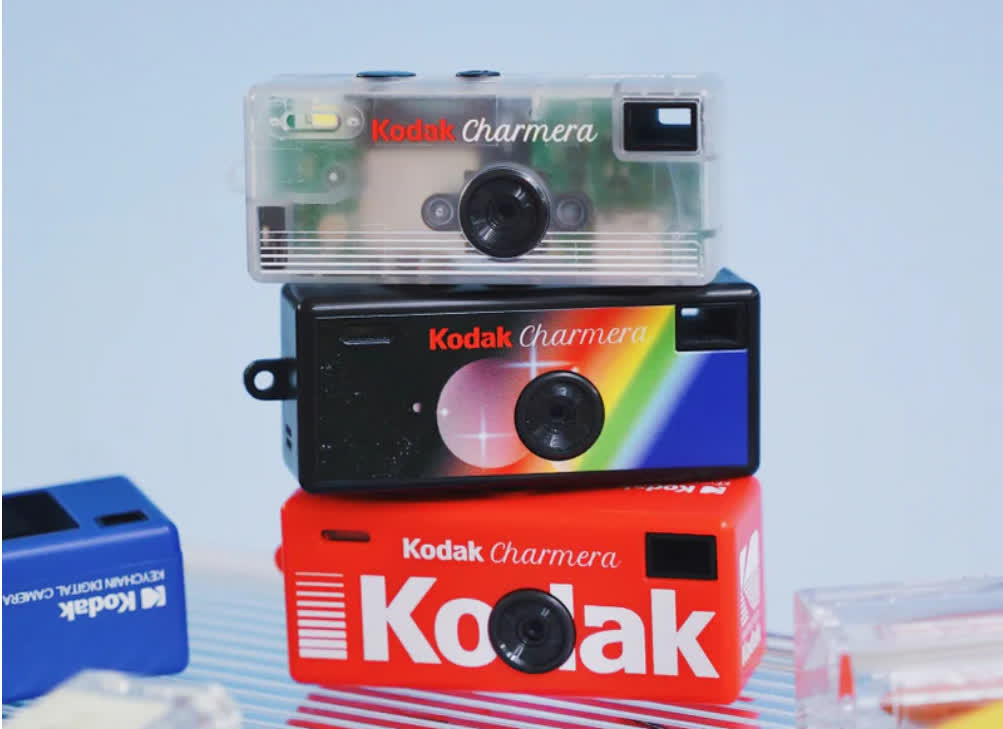
The Charmera comes in seven designs, including a secret edition. Each one uses built-in software that automatically applies a vintage-style frame and filter – unique to each camera – to every shot.
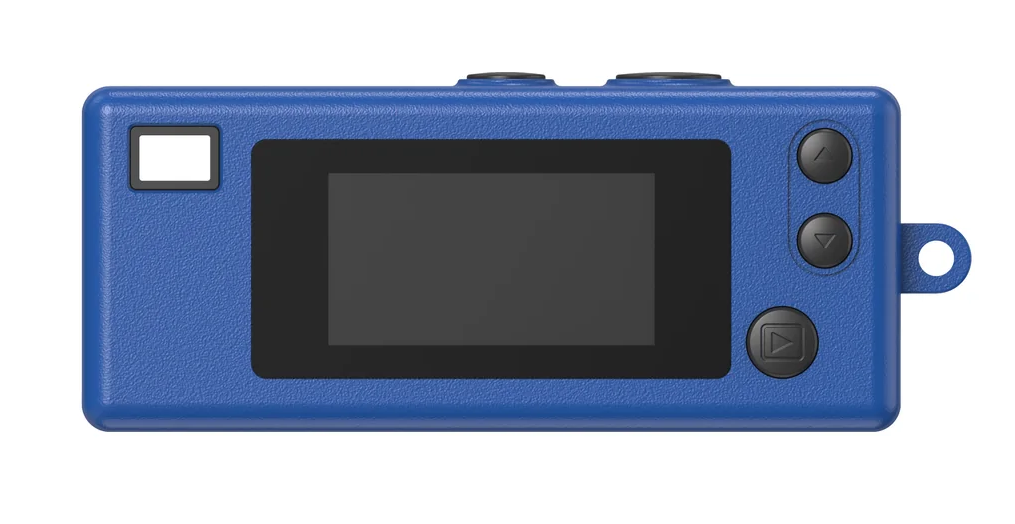
In a particularly clever piece of marketing, buyers of the $30 Charmera don't get to choose the design they want. Each one is sold in a blind box so you won't know which of the seven you've got until it arrives. You might get lucky and secure the special edition, which has a transparent shell that reveals the internal components.
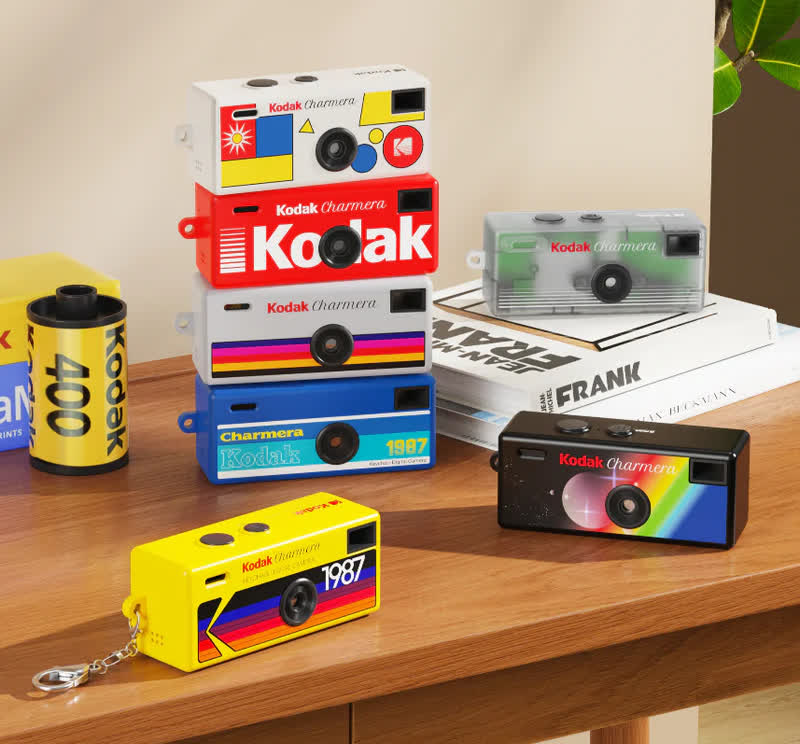
Camera fans who want every model can buy a whole set of six for $180, though this doesn't include the transparent special edition. Both the individual cameras and box sets are sold out on Kodak's website and elsewhere.
Kodak will be overjoyed with the Charmera's success, especially at a time when it is struggling financially. The company said in August that debt obligations were threatening its 133-year existence. However, Kodak quickly put out a press release stating it had no plans to cease operations or file for bankruptcy protection. In its own words, it was confident it would repay, extend, or refinance its debt, and would have its strongest balance sheet in years in 2026.

Permalink to story:

 
Because as a commercial product, using MP4 would cause Kodak to incur a licensing fee to use the container format and related patents. AVI as a container is 100% free to use, even commercially.

Someone should have told them about MKV.
 
Someone should have told them about MKV.
If I had to guess, despite it being a free and open format, MKV does not have native support with Apple products which would preclude its use.

Why would you get one of these, when MOST smartphones would produce better results?
A combination of nostalgia and novelty, more of one than the other depending on age probably. There is also a sense of a sort of subjective quality being emulated when using lower quality imagining and processing, vs the objective quality of a larger/higher resolution sensor and better image processing. And perhaps the form factor and physical buttons might allow someone to feel more in the moment than using their smart phone, but that probably also relies on the aforementioned nostalgia and novelty.

Also, apparently Gen-Z/Alpha are on a retro kick right now, which prompted many companies to produce "retro/vintage style cameras" and even Canon has re-released an older point and shoot to try and capture some of that target audience. Kodak might accidentally do the same, but with the added bonus of being cheap, simple, and small and light weight while also leaning into the "appeal" of blind box toys which have exploded in popularity over the last few years in the west.
 
If I had to guess, despite it being a free and open format, MKV does not have native support with Apple products which would preclude its use.
This is made by Kodak; what does it have to do with Apple? Besides, I'm no expert but it seems rather unlikely that an ancient container format created in 1992 would work any better on Apple products than a modern open source format like MKV.
 
This is made by Kodak; what does it have to do with Apple? Besides, I'm no expert but it seems rather unlikely that an ancient container format created in 1992 would work any better on Apple products than a modern open source format like MKV.
It's not that MKV isn't better (it sure is) or that would not perform better on an Apple device (I'm sure it's just as good as any other OS), it's more the fact that MacOS/iOS/iPadOS can't open them without help. There is no native playback for MKV in iOS/iPadOS through its built in video player, nor for Quicktime in MacOS. A third party media player would be required to open and play pretty much everything that is not MOV, MP4, or AVI, and the moment you complicate something as important as media playback, users are bound to lose interest in even using the thing, especially nowadays.

I make the point of mentioning Apple because A lot of people use iPhones and other Apple devices. Depending on which stats you use, that rate of iPhone ownership is around 50-60% in the US, of which the adoption rate is exceeding 80% for teenage users... the UK, Canada, Japan, Australia all have similar stats and are likely additional markets Kodak will probably sell these things in. These are the same users that (Kodak hopes) will want to upload and edit the videos they made with the Charmera, and Kodak would not want to place any roadblocks for them to do so.

Admittedly I'm probably giving Kodak more credit than it's due and this was a happy little accident.
 
Back