Lenovo-branded retro handheld comes pre-loaded with tons of Nintendo ROMs

Alfonso Maruccia

Posts: 2,577   +958
Staff
Nintendon't: A Chinese manufacturer recently introduced a low-cost portable device for playing retro games that carries the "Lenovo" brand and appears to include a questionable collection of ROM images associated with Nintendo and other game publishers. And Nintendo, as is well known, is not particularly tolerant of large-scale, unauthorized emulation or distribution of its games.
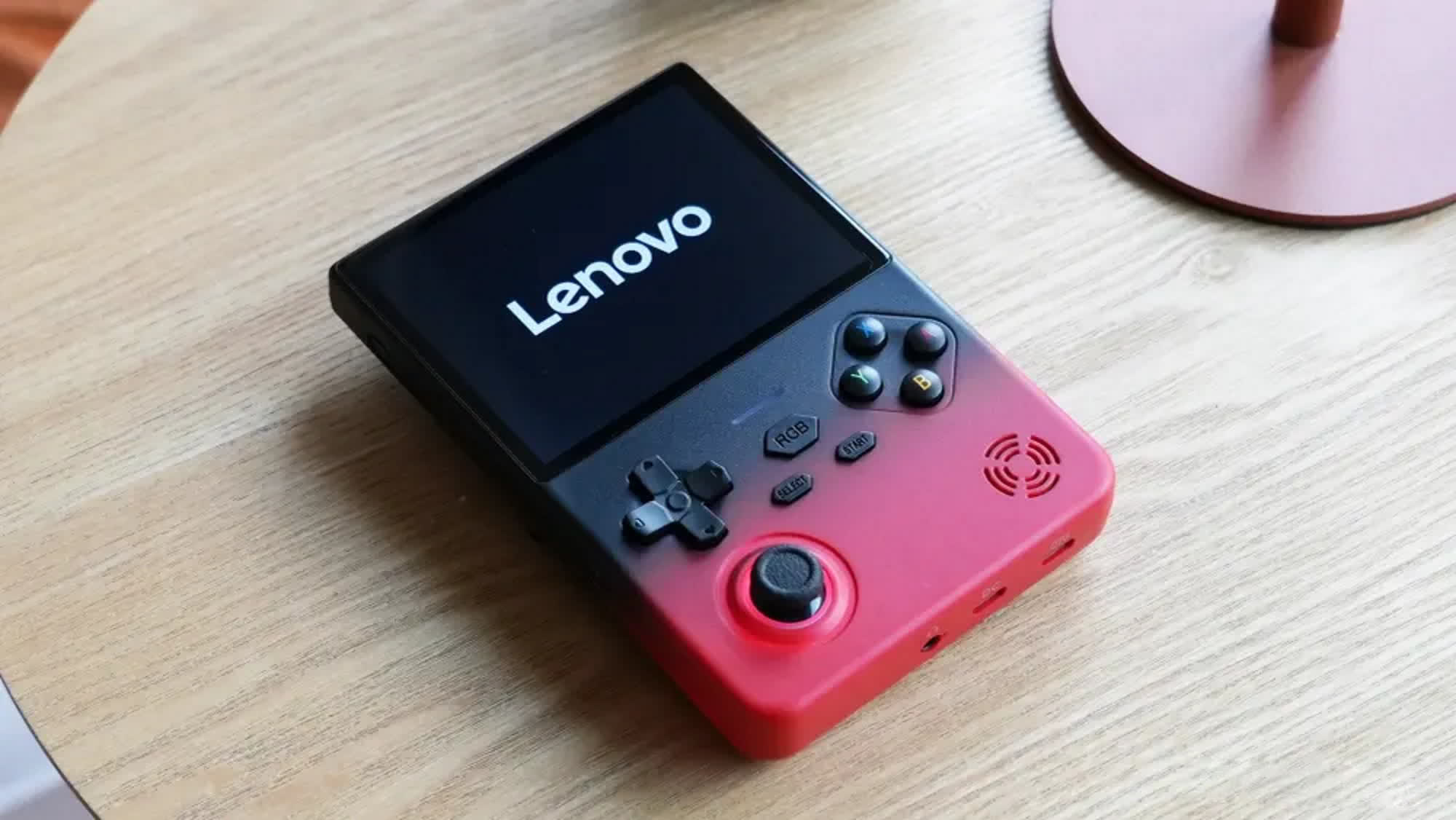
Earlier this month, Lenovo launched a new retro gaming device in China focused on emulation experiences. However, Lenovo was not involved in the device's manufacturing or day-to-day sales operations, instead licensing its brand to a third-party Chinese company producing a white-label product.

That is where the situation becomes more complicated. The retro console, reportedly named the Lenovo G02 – despite having no connection to Lenovo's own Legion Go 2 handheld – appears to include a collection of unlicensed ROM images of several classic games. One of the companies involved is Nintendo, which is well known for its aggressive legal enforcement of intellectual property rights across both software and hardware.

According to an inquiry by Retro Rodo, the "fake" Lenovo G02 handheld is in fact officially licensed under Lenovo's branding through a white-label manufacturing arrangement. Lenovo PR representatives reportedly confirmed the partnership, explaining that the G02 device was produced through a regional brand-licensing agreement focused exclusively on the Chinese market.

The Lenovo G02 is equipped with a Cortex-A35 Arm processor and is said to "smoothly" run both 2D and 3D emulated games. The handheld is based on an optimized Linux distribution and reportedly supports more than 30 classic platforms, including the Sony PlayStation Portable, PlayStation, Sega Dreamcast, Nintendo DS, Nintendo 64, Game Boy Advance, and others. It also includes emulated arcade titles.

Lenovo's PR said products developed through white-label agreements "may differ from Lenovo products sold through authorized channels."

The world's largest PC maker has not taken direct responsibility for the alleged IP violations involving unlicensed ROM images, but it has licensed its brand to the Chinese manufacturer behind the device. White-label agreements are typically used for mass-produced generic products, including electronics, consumer devices, and software packages.

The G02 is still being sold on AliExpress and other online marketplaces, where both domestic and international buyers can reportedly purchase it. The device's inclusion of unlicensed ROM collections could potentially create legal exposure for Lenovo, particularly given Nintendo's history of aggressive IP enforcement.

Nintendo has long stated that it is committed to preserving gaming history and maintaining the commercial viability of its properties. Officially, users looking to play classic Nintendo titles are directed toward licensed platforms such as the Nintendo Switch and its digital storefront, rather than third-party emulation devices.

Image credit: Retro Dodo

Permalink to story:

 
How does a company as large as Lenovo even care about licensing their brand to third-parties? This is something typically done with old brands from bankrupt companies. And if they do choose to do it, how do they not have someone keeping tabs on who they license it to and what they're doing with it? Unreal.
 
Lenovo issued a hardware license, not a software one. If I start selling Dell laptops but I sell them with tons of pirated material on the, is Dell at fault? And if those devices are only being sold in countries where copyright right laws don't apply? These things can easily make their way to other countries by third parties and the third party wouldn't be at fault. The secondary parties wouldn't be at fault because what they were doing was legal where it was being sold and the first party can't be liable because they never committed any crime.

Emulation devices have been making been making their ways out of China for over a decade now and I don't believe I've seen a single case of them being prosecuted.

Frankly, I don't care what they are doing because copyright law has been weaponized and we have all lost because of it. Copyrights and patents weren't intended to be used this way and the DMCA was a stop gap measure as we supposedly worked on something better. After over 25 years, we never got our "something better". So let the pieces fall where they may
 
How does a company as large as Lenovo even care about licensing their brand to third-parties? This is something typically done with old brands from bankrupt companies. And if they do choose to do it, how do they not have someone keeping tabs on who they license it to and what they're doing with it?
Because it currently doesn't matter. It was previously in other countries interests to enforce US law as we had free trade agreements. Trump ripped those to shreds and caused a global oil crisis soon to be followed by a global food shortage in about 4 months(35% of the world's fertilizer goes through the straight). So good luck to Nintendo trying to find a country willing to take on a case favorably about US copyright law. And the legal system in the US, the legal system has been so defunded it could be a decade before this gets in front of a judge. By that time, Lenovo could have made their money and revoked the contract for "violations", which didn't happen because the countries this was allegedly supposed to be sold in don't follow US copyright law
 
Because it currently doesn't matter. It was previously in other countries interests to enforce US law as we had free trade agreements.....
Might want to check that as there were lots of tariffs on USA goods (last count all 195 countries - plus a few extra territories). So whilst the USA did not add tariffs to goods from many countries it was not reciprocal (before you yell MAGA at me I'm from the other side of the pond and have no skin in this game). Trumps tactics stink but there wasn't any free trade agreements to speak of (even NAFTA had protection tariffs on many American exports).
 
Might want to check that as there were lots of tariffs on USA goods (last count all 195 countries - plus a few extra territories). So whilst the USA did not add tariffs to goods from many countries it was not reciprocal (before you yell MAGA at me I'm from the other side of the pond and have no skin in this game). Trumps tactics stink but there wasn't any free trade agreements to speak of (even NAFTA had protection tariffs on many American exports).
Considered in neither countries interest for a very long and were considered illegal until the current administration found a judge to make them legal. The problem with the American legal system isn't that it's a hard set of rules that are unfair for the 95%, it's that the rules are soft and it's more playing a game about sounding right and knowing where to file.

Let's say a couple files for divorce, but in separate states. The husband files in Ohio after his wife cheats on him, but the wife files im California. California is a 50/50 state. He could "win" in California and get a worse outcome than "losing" in Ohio

But something people need to know is that the US war in Iran has such a massive impact on international that US allies are starting to make trade deals with Iran. We put tariffs on our allies and then created a global emergency so massive that our allies we've had for the last 100 years are starting to make deals with US "enemies" and giving,not just credibility, but a microphone with legitimacy on the world stage.
 
Last edited:
Considered in neither countries interest for a very long and were considered illegal until the current administration found a judge to make them legal. The problem with the American legal system isn't that it's a hard set of rules that are unfair for the 95%, it's that the rules are soft and it's more playing a game about sounding right and knowing where to file.

Let's say a couple files for divorce, but in separate states. The husband files in Ohio after his wife cheats on him, but the wife files im California. California is a 50/50 state. He could "win" in California and get a worse outcome than "losing" in Ohio
Tariffs were not illegal. WTAF are you talking about? Copyright law hasn't gone anywhere recently either and is still enforced, also NINTENDO is not an American company, it is Japanese, so Trump has no effect on them pursuing copyright under Japanese law.

Just stick to talking to computers, frankly you suck at international law and corporate politics.
 
Tariffs were not illegal. WTAF are you talking about? Copyright law hasn't gone anywhere recently either and is still enforced, also NINTENDO is not an American company, it is Japanese, so Trump has no effect on them pursuing copyright under Japanese law.

Just stick to talking to computers, frankly you suck at international law and corporate politics.
It's funny you say that. My father wanted me to become a lawyer but I was more computers at the time when I went to college. I met my wife in college, she ended up become a physical therapist and I paid for the rest of her education by dropping out with an associate's in engineering and getting a job in commercial construction. The thing that sucks about my job is that I'm constantly sparing with inspectors anyway so I would have been better off going the lawyer route, but I also never would have met my wife. Funny how those things work.
 
China deserves all the tariffs and other punitive measures its getting, but not because it hurts China. Who sent all the manufacturing over there? Why, the clowns on Wall Street, of course, with the full cooperation of BOTH relevant political parties. Anything that hurts those anti-American, money-grubbing dirtbags gets my support. They can only raise prices so far before the consumer walks away and 3D prints entire industries out of existence - at some point the Blackrocks and State Streets have to accept that endless growth is no longer feasible. I don't care if I can only afford one computer upgrade a decade if it puts people back to work and hamstrings these shadow empires.
 
China deserves all the tariffs and other punitive measures its getting, but not because it hurts China. Who sent all the manufacturing over there? Why, the clowns on Wall Street, of course, with the full cooperation of BOTH relevant political parties. Anything that hurts those anti-American, money-grubbing dirtbags gets my support. They can only raise prices so far before the consumer walks away and 3D prints entire industries out of existence - at some point the Blackrocks and State Streets have to accept that endless growth is no longer feasible. I don't care if I can only afford one computer upgrade a decade if it puts people back to work and hamstrings these shadow empires.
Yeah, not exactly. I mean, it is totally justifiable to be furious about the hollowing out of domestic manufacturing and the massive leverage giant financial institutions hold over our lives. But this narrative that sounds like the world functions anything like some Hollywood-style conspiracy by Wall Street just ignores the harsh reality of the basic math.

Manufacturing was sent to China over decades by Main Street businesses trying to survive. Main Street drives most of the U.S. economy, not Wall Street, by orders of magnitude. Companies, small to large, moved production overseas because Chinese manufacturing was/is that much less expensive. The fact is that, in every competitive market, if a business doesn’t lower its production costs when its competitors do, that business goes bankrupt. End of story. It is just basic survival. Not malice or a conspiracy. Most massive corporations aren’t massive enough to even affect that level of change.

The shift to China was fully driven by globalism and consumer demand for the lowest possible prices, supercharged by the strength of the U.S. dollar and access to mass shipping.

And, while it’s tempting to think consumers could just "3D print entire industries out of existence" to starve out Wall Street, that is an entirely unrealistic scenario. 3D printing is excellent for prototyping, but it absolutely cannot match the speed, material science, or massive economies of scale required for heavy industrial manufacturing (yet, and likely, never). Furthermore, institutional investors don’t actually own most capital—they are asset managers overseeing index funds and retirement pensions funded by everyday workers.

The fact is that accepting a lower standard of living out of spite over corporate power dynamics won't remotely move the needle on the underlying mechanics of supply and demand. The system isn’t run by comic-book villains, it’s run by billions of everyday economic decisions made by millions of people.
 
I think that Nintendo Lawyers are having a Salvia-Problem, thinking about this!
Nintendo hates all Emulation of their Systems Games, so them going against this fits their usual habits.
 
Yeah, not exactly. I mean, it is totally justifiable to be furious about the hollowing out of domestic manufacturing and the massive leverage giant financial institutions hold over our lives. But this narrative that sounds like the world functions anything like some Hollywood-style conspiracy by Wall Street just ignores the harsh reality of the basic math.

Manufacturing was sent to China over decades by Main Street businesses trying to survive. Main Street drives most of the U.S. economy, not Wall Street, by orders of magnitude. Companies, small to large, moved production overseas because Chinese manufacturing was/is that much less expensive. The fact is that, in every competitive market, if a business doesn’t lower its production costs when its competitors do, that business goes bankrupt. End of story. It is just basic survival. Not malice or a conspiracy. Most massive corporations aren’t massive enough to even affect that level of change.

The shift to China was fully driven by globalism and consumer demand for the lowest possible prices, supercharged by the strength of the U.S. dollar and access to mass shipping.

And, while it’s tempting to think consumers could just "3D print entire industries out of existence" to starve out Wall Street, that is an entirely unrealistic scenario. 3D printing is excellent for prototyping, but it absolutely cannot match the speed, material science, or massive economies of scale required for heavy industrial manufacturing (yet, and likely, never). Furthermore, institutional investors don’t actually own most capital—they are asset managers overseeing index funds and retirement pensions funded by everyday workers.

The fact is that accepting a lower standard of living out of spite over corporate power dynamics won't remotely move the needle on the underlying mechanics of supply and demand. The system isn’t run by comic-book villains, it’s run by billions of everyday economic decisions made by millions of people.
While I don't agree that China doesn't deserve the tariffs (they are literally eating economic war on us), I applaud your intelligent reply to the previous poster (who I obviously agreed with). I wish there were more of this sort of discussion in these comments threads than the hair-trigger responses and TDS response that crazily invoke Trump with everything that happens in the universe.

I think the only thing you didn't cover in your reply is the insane regulatory environment that our country has implemented, which made domestic manufacturing so expensive for companies in the first place. That is not to say we should trash the environment like China is doing, but that is to say the US (and the EU) goes WAY too far in the name of fantasies like "climate change" and ends up doing more harm than good, at a point of very, very diminishing returns.
 
While I don't agree that China doesn't deserve the tariffs (they are literally eating economic war on us), I applaud your intelligent reply to the previous poster (who I obviously agreed with). I wish there were more of this sort of discussion in these comments threads than the hair-trigger responses and TDS response that crazily invoke Trump with everything that happens in the universe.

I think the only thing you didn't cover in your reply is the insane regulatory environment that our country has implemented, which made domestic manufacturing so expensive for companies in the first place. That is not to say we should trash the environment like China is doing, but that is to say the US (and the EU) goes WAY too far in the name of fantasies like "climate change" and ends up doing more harm than good, at a point of very, very diminishing returns.
Thank you, I appreciate the civil response. It is always refreshing to read reasoned, constructive exchanges on these forums.

You make a fair point regarding the regulatory environment. There is no doubt that uncoordinated regulation and compliance costs in the US and EU have played a significant role in making domestic manufacturing less competitive globally, especially when competing against nations with vastly different standards.

To be clear, I am in no way suggesting we shouldn't apply strategic economic tariffs or adjust policy to better balance our trade circumstances with China or any other nation. Actively defending domestic labor and interests through smart policy is absolutely something our governance should engage in.

Although I am not an economist by trade, and don’t necessarily know the best foreign policy to enact, I do try to do at least some self-education. My frustrations stem primarily from the flatlined, one-dimensional populist commentary that has become so prevalent across our political spectrum. Regardless of political view, the tendency toward overly simplistic narratives on deeply complex topics—combined with a general decline in constructive civic discourse, or even just basic courtesy—makes it incredibly difficult to solve real problems.

Recognition that being more liberal on some narratives and conservative on others is how thoughtful, intelligent perspective beats political grandstanding and corrupt money-grabs is in far too short supply. We cannot fix highly intricate, systemic economic challenges if our public debate remains stuck in hyper-partisan reductionism.
 
Back