
Ripple effect: What would you rather buy: 64GB of DDR5 or a PlayStation 5 console? Because right now, the memory kit costs more. As the memory crisis keeps worsening, DRAM prices are skyrocketing. Some stores aren't even displaying fixed prices on memory modules, relying on market rates because costs are changing so rapidly each day.
As the AI industry continues to greedily take most of the world's DRAM, the impact on consumers is becoming increasingly obvious.
Newegg, for example, is selling 64GB of G.Skill Trident Z5 DDR5 6000 memory for a stunning $599. That's $200 more than the digital PS5 and the Xbox Series S, and more expensive than the MSRP of an RTX 5070.
Related reading: AI Is Eating All the DRAM. DDR5 Prices Just Doubled. GPUs Could Be Next.
Shockingly, Newegg's price is actually reduced by 6% as part of the retailer's Black Friday deal – the usual price is $640, which is creeping closer to PS5 Pro territory.
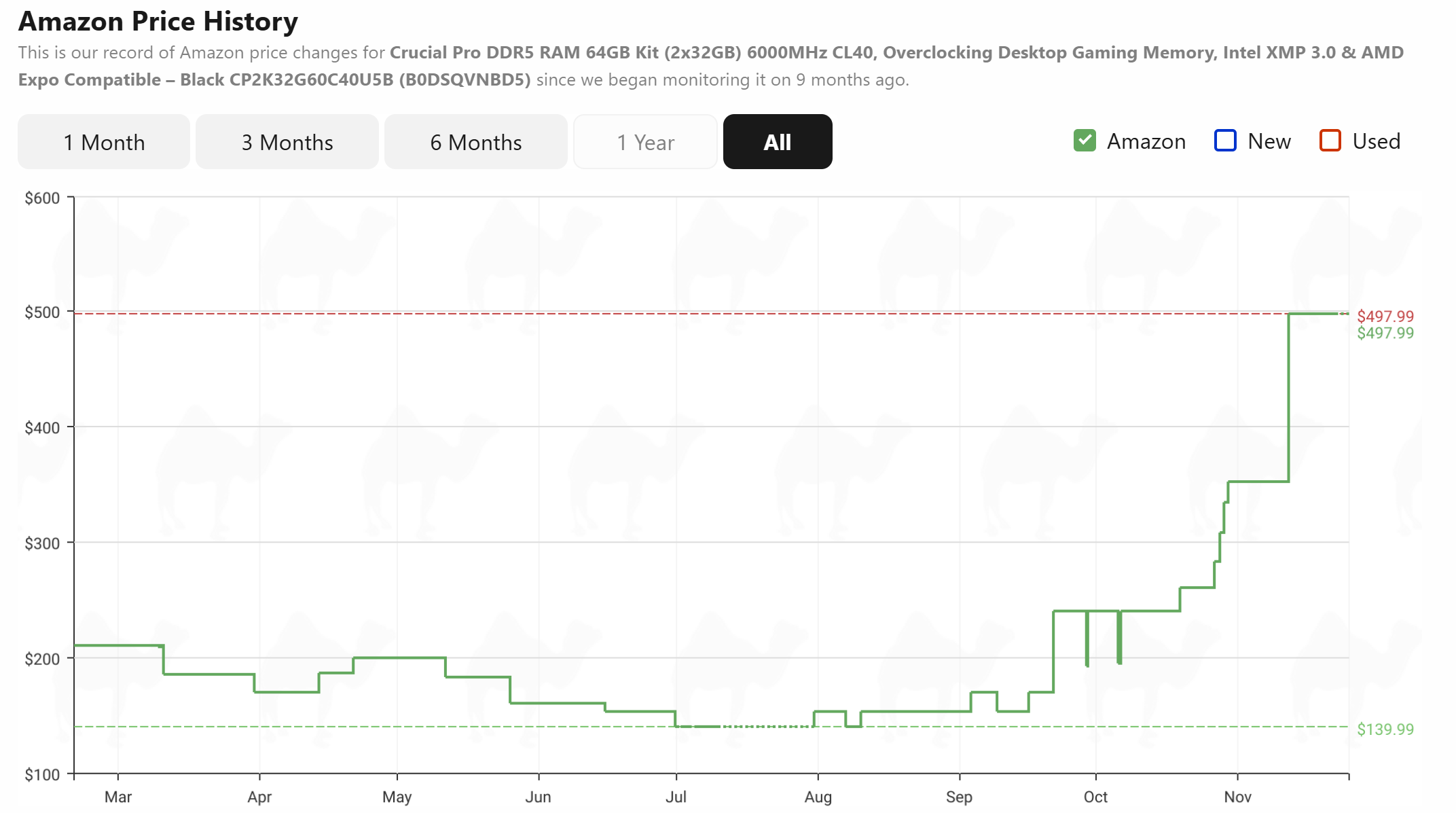
It's the same story elsewhere. Amazon product tracker CamelCamelCamel shows that 64GB of Crucial Pro DDR5 6000 RAM was just $139 between July and August. Today, it's $497, a 257.5% increase.
The situation is so bad that we're now seeing brick-and-mortar stores remove the fixed price tags from their memory displays.
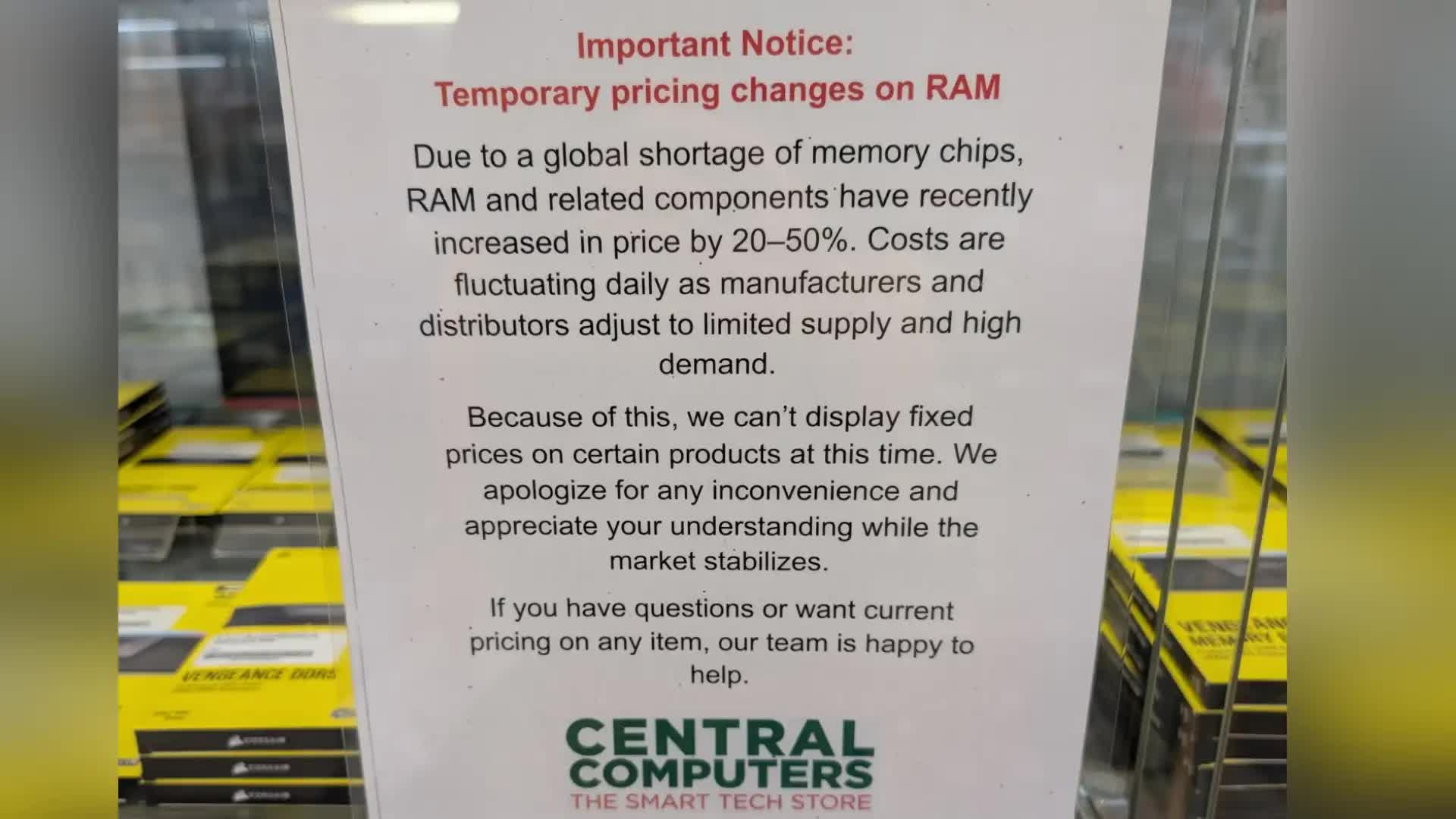
BlueSky user Steve Lin photographed a sign at California retail chain Central Computers that highlights the problem. It states that the global memory chip shortage has caused the price of RAM and other components to increase by 20-50%. Costs are fluctuating massively on a daily basis, which means the store cannot display fixed prices as they change so much and so often.
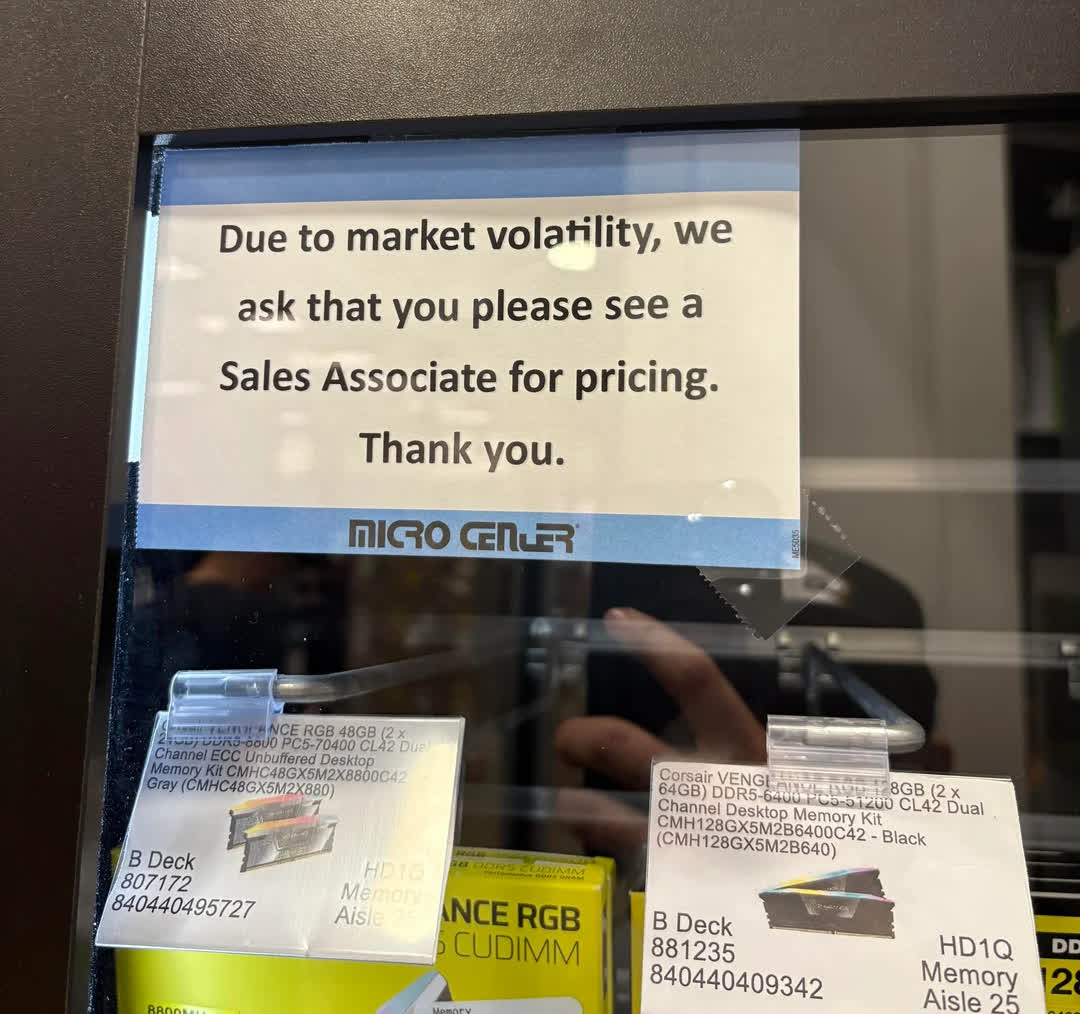
Micro Center has also stopped displaying prices on memory. Reddit user CassTexas posted a photo of the store's warning label, which advises customers to see a sales associate for pricing information.
Taken at Microcenter on 11/23..
byu/CassTexas inpcmasterrace
Memory has experienced volatile pricing over the years, but the current situation brings to mind the graphics card nightmare that happened during the height of Covid.
Speaking of graphics cards, we're starting to see that product segment being affected, too. As noted in our deep dive into the situation, GDDR memory shares manufacturing capacity with other types of DRAM, and when manufacturers prioritize AI products, consumer-focused memory supply takes the hit.
There were reports yesterday that AMD has informed partners to prepare for a 10% price increase across its product line. There were even claims that Nvidia and AMD could kill off some low- to mid-range cards where memory costs account for a large share of the bill of materials. Meanwhile, system builders are panic-buying memory, which could cause a chip shortage lasting until 2027.
AI firms are striking rapid-build deals with data-center developers that aim to bring gigawatts of new capacity online within just two to three years, a surge that is creating a memory crunch.
Modern AI workloads, especially those running on GPUs, demand enormous amounts of DRAM, and suppliers are already feeling the strain. SK Hynix, one of the world's leading memory makers, recently revealed that its DRAM, NAND, and even next-year's high-bandwidth memory (HBM) production have effectively been sold out in advance.
Memory prices are so bad stores won't even list them – 64GB DDR5 now costs more than a PS5


