Micron predicts the memory crisis will last beyond 2026, says it can't meet full demand

midian182

Posts: 11,746   +178
Staff member
Forward-looking: The memory crisis isn't going to alleviate until at least 2027. That's the opinion of Micron CEO Sanjay Mehrotra, who also revealed that the company will only be able to meet half to two-thirds of demand from its "key customers." That's bad news for PC fans, but good news for Micron, which reported record revenue during the quarter.
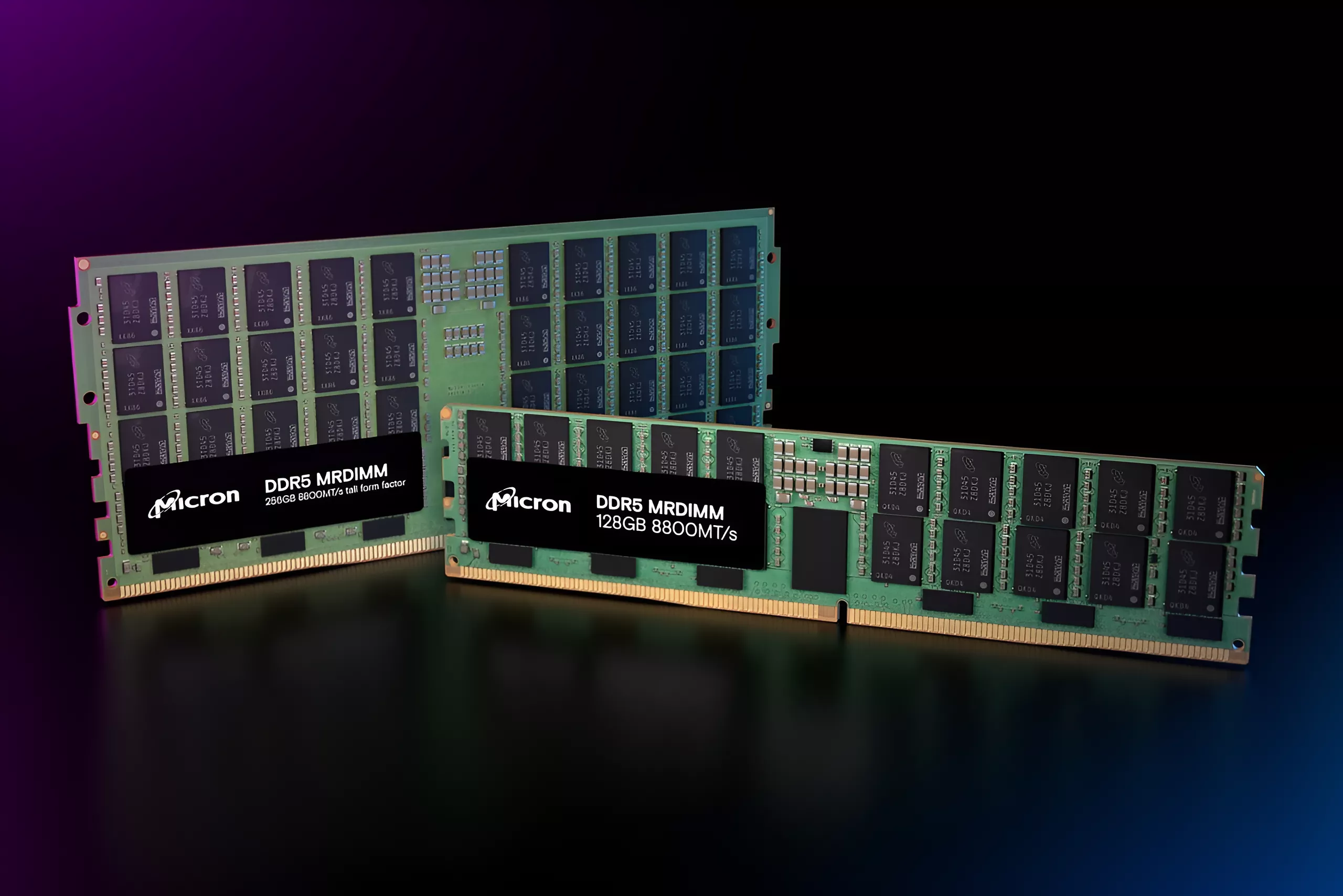
Micron, which retired its popular Crucial brand earlier this month after almost 30 years, reported revenue of $13.64 billion for the first fiscal quarter, up 57% year-over-year. Net income was up from $2 billion to $5.2 billion, and earnings per share were $4.78, beating the expected $3.94.

Micron said the impressive results were due to massive demand from AI data centers, resulting in higher memory prices.

"Over the last few months, our customers' AI data center build-out plans have driven a sharp increase in demand forecast for memory and storage," Mehrotra said. The CEO added that industry supply will remain substantially short of the demand for the foreseeable future – "beyond calendar 2026."

Mehrotra said the two fabs it was working on in Idaho and plans for a fab in New York were progressing well; they will start making memory in 2026 and 2027. He added that efforts to create HBM4 memory are also going well, with yields increasing faster than when Micron started production of HBM3.
Despite the expansion, Mehrotra said Micron's customers are concerned about long-term access to memory, and that it would only be able to meet "half to two-thirds" of demand from its key customers, many of whom are securing multi-year contracts.

Mehrotra also said that the increasing use of AI to produce videos and the move from AI training to inferencing will increase demand for solid-state disks. He expects smartphone and PC manufacturers will want more memory to ensure they can handle AI tasks, too.

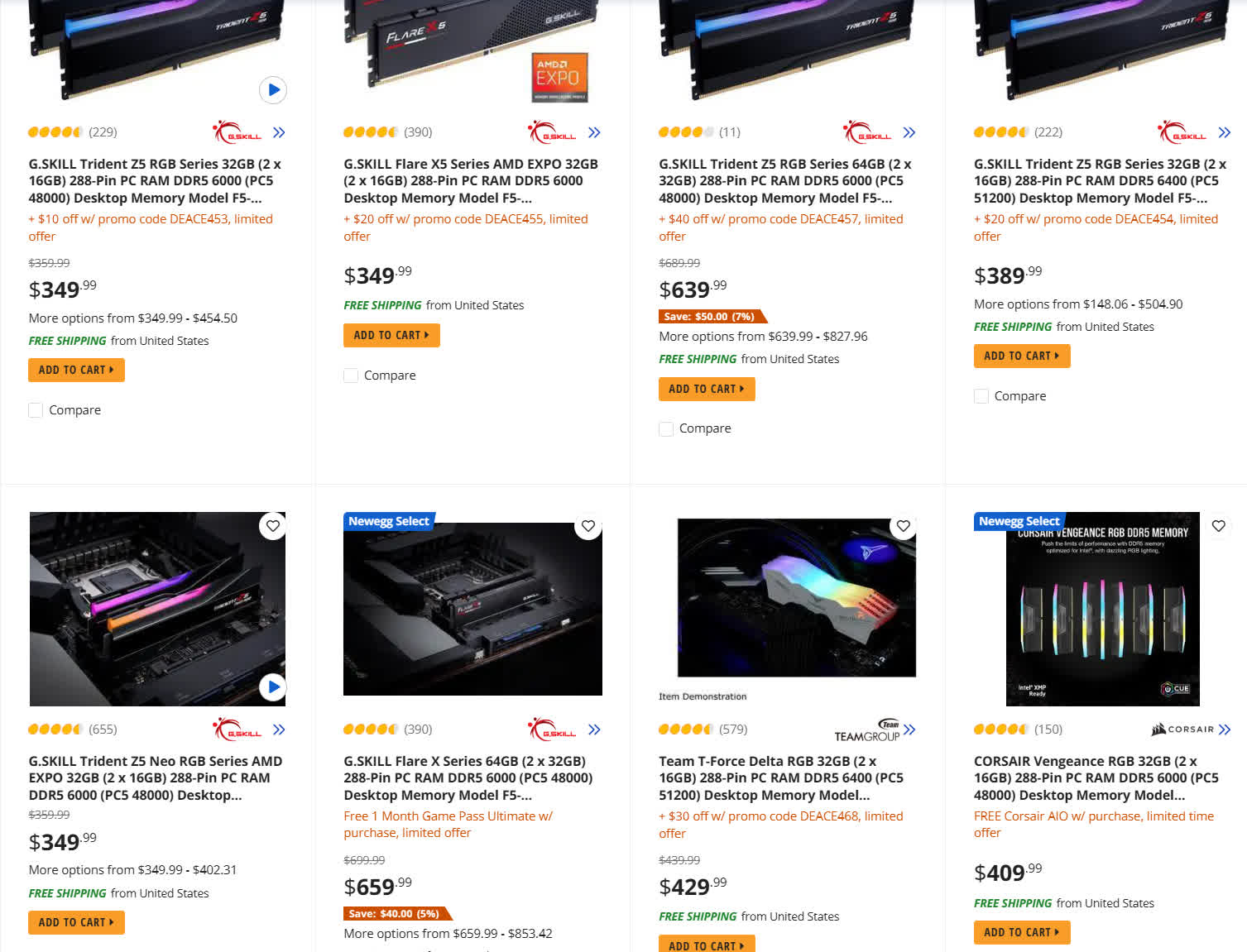
DRAM prices are already stupidly high as the AI boom continues to drive demand. It was reported last month that some physical retailers weren't even listing DDR5 prices as they were changing so quickly. It's now at the point where 64GB of DRR5 can cost more than a PS5 or even a mid- to higher-end graphics card.

Permalink to story:

 
It is in their interest to say this. Getting people to panic. After all, Micron, Samsung and SK Hynix are the ones taking advantage of the situation, and raising prices bigtime. They spot easy money. The actual production costs did not really increase.

RAM prices went up massively, over a few weeks/months, because all scalped the inventory. OEMs bought up massively. Inventory was cleaned in weeks. Long before they raised the price alot really.

Now they have huge margins.

I know several guys in the B2B segment. They bought 1000s of memory kits at "normal prices" now sells them at a 3-4x increase.

Panic mode on. Scalping at business level.

Hopefully some of the smaller DRAM makers will step up and meet demand, now that there's more money here.
 
Last edited:
Ok. So, NOT being a 'key customer'.... I.e. just a non-techbro billionaire peasant, I'm supposed to give a flying f**k? Nah..........sorry to disappoint you my old mate Sanjay. I've already got all the RAM and spare RAM to last me many years. So I think you know what you can do with your RAM......now and until hell freezes over, as they say.
Greedy c********r.
 
It is in their interest to say this. Getting people to panic. After all, Micron, Samsung and SK Hynix are the ones taking advantage of the situation, and raising prices bigtime. They spot easy money. The actual production costs did not really increase.
Obviously, production costs didn't change. That's immaterial. Costs meaningless to prices except as a lower bound.

Unprecedented demand changed prices. Intro to econ stuff.

Hopefully some of the smaller DRAM makers will step up and meet demand, now that there's more money here.
ALL RAM makers will assess the market change and try to get additional sales. BUT new fabs take YEARS to make. Expanding lines -if possible in current fabs- takes months.

Unprecedented demand wasn't forecast so such expansions can only happen after the fact. Any company that can expand their current fabs are doing so - likely with a focus on the highest dollar RAM. But that still would take AI pressure off of the consumer RAM being bought because there isn't enough enterprise RAM.

New fabs are a gamble though. Spending billions over the next 3-5 years just to complete the capacity after the bubble bursts? Bad management. Oh and that unused capacity cost would trickle down to prices so you want efficient capacity use as much as the company.
 
Back