Microsoft Edge now has an official Linux support list, seven years after Chrome's

Alfonso Maruccia

Posts: 2,695   +1,016
Staff
In context: The "modern" Edge browser has been based on the Chromium project since 2019, but Microsoft always finds a way to do things on its own terms. Now, Redmond is falling in line with Chromium's tradition when it comes to officially supported operating systems.
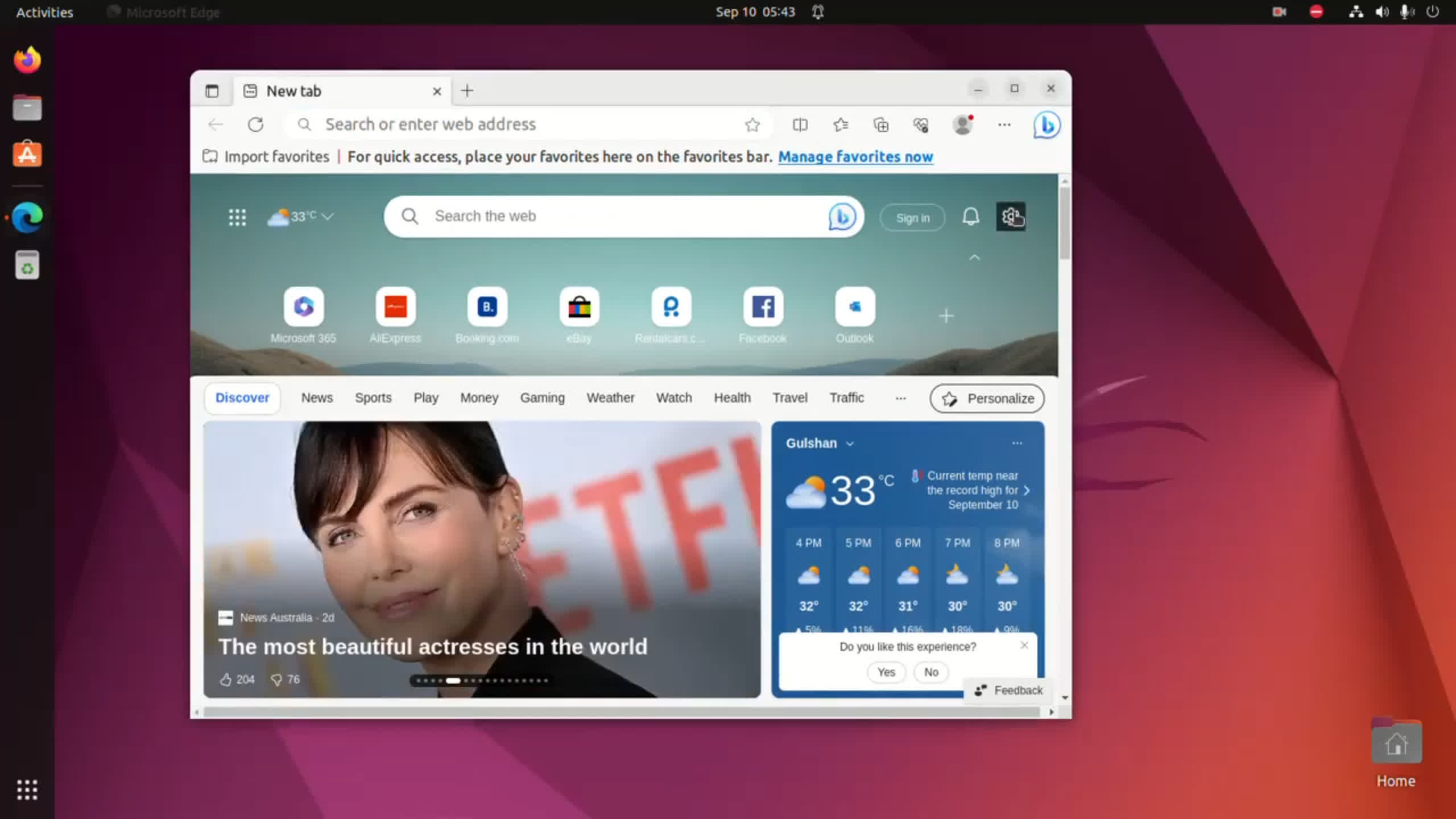
Microsoft recently updated its documentation on the operating systems supported by Edge, providing a comprehensive list of Linux distributions that should offer the best browsing experience. Redmond's web browser has technically been available on FOSS operating systems for years, but an "official" list should prove useful for enterprise organizations and other professional settings.

The updated Edge documentation states that the browser is supported on the following 64-bit Linux distros: Ubuntu 18.04 or later, Debian 10 or later, openSUSE 15.5 or later, and Fedora Linux 39 or later.

Other Linux-based operating systems might run Edge without issue, but they aren't officially supported by Microsoft just yet. The browser also remains unsupported on Chromebooks.

The list of officially supported operating systems also includes some Windows 10 (LTSC) editions dating back to 2015, macOS, and a couple of fairly modern mobile platforms. The new Linux section essentially mirrors Chrome's own list, but Google has published its officially supported Linux distros since at least August 2019.

Edge is now aligning with the Linux support provided by the Chromium project, the open-source framework from which many proprietary browsers, including Chrome and Edge, are derived. In recent years, Microsoft's browser has dropped support for Windows 7, Windows 8.x, and older Pentium 4-era CPUs that lack hardware support for SSE3 instructions.

While built on Chromium, Edge still offers a few features exclusive compared to other Chromium-based browsers. Lately, those extras are focused mostly on generative AI and other LLM-powered tools, with Microsoft baking an ever-growing amount of Copilot functionality into a browser that's essentially able to browse the web on its own if users let it.

As power users and resourceful retro enthusiasts know well by now, "official" documentation and supported OS lists can be safely ignored with the right tools for the job.

Projects like Supermium currently offer an up-to-date, Chromium-based browsing experience that runs on Windows XP, Vista, and 7, requiring as little as 768MB of RAM and a Pentium 4 processor with at least SSE2 support.

Permalink to story:

 
Why the heck would anyone even consider the idea of running MS Edge on a Chromebook? A more likely scenario would be running on Android.
 
Why the heck would anyone even consider the idea of running MS Edge on a Chromebook? A more likely scenario would be running on Android.
Anyone who does chrome administration.

Edge has far better memory segmentation of private tabs. You can have 5 different management accounts logged into at the same time without issue. Chrome, only 1, and it can conflict with the non private window.
 
I would never use edge over Brave. Additionally, the Edge's advantages in windows are result of a tight integration, and are not replicable such nicely in Linux, making edge useless and having too many unneeded bloatware (did you miss copilot yet?)
Brave has an advantage of memory footprint, fewer services and overall better control. There is no point of getting a big corpo blob to pollute linux install.
 
I would never use edge over Brave. Additionally, the Edge's advantages in windows are result of a tight integration, and are not replicable such nicely in Linux, making edge useless and having too many unneeded bloatware (did you miss copilot yet?)
Brave has an advantage of memory footprint, fewer services and overall better control. There is no point of getting a big corpo blob to pollute linux install.
>crying about "corpo blob" while using a Chromium browser
>Brave doesnt have needless bloatware

Bruh, you cant be serious here. Brave is incredibly bloated with its crypto nonsense, a barely functional TOR mode, and all its sponsored home screens.
 
>crying about "corpo blob" while using a Chromium browser
>Brave doesnt have needless bloatware

Bruh, you cant be serious here. Brave is incredibly bloated with its crypto nonsense, a barely functional TOR mode, and all its sponsored home screens.
Chromium is fully open source (bsd), and not a blob. There is not much 'corpo' about it. It is clean from any spyware or telemetry, while edge and chrome aren't.
Brave have no active crypto services running. It only has built in wallet most people don't even touch. It is not loaded to memory of not actively interested with, but that's not the point.
The point is, if you have to use chromium based browser on Linux, brave is faster than edge or chrome, taking less resources, do not use telemetry, is taking less system resources and active processes. Or just use base chromium.

It is not best option for privacy or performance on Linux, but it is much better option then chrome and edge, which have none advantages it had on windows.
Libre Wolfe, waterfox are better for me, but I like as well zen.

Whichever selection on Linux your make, edge simply do not qualify.
 
Last edited:
Back