Ripple effect: The global memory shortage is battering the entire IT industry, and PC manufacturing is feeling it most acutely. Microsoft is well aware of the problem – so aware, in fact, that it's now scrambling to walk back its own earlier guidance on how much RAM a gaming PC actually needs.
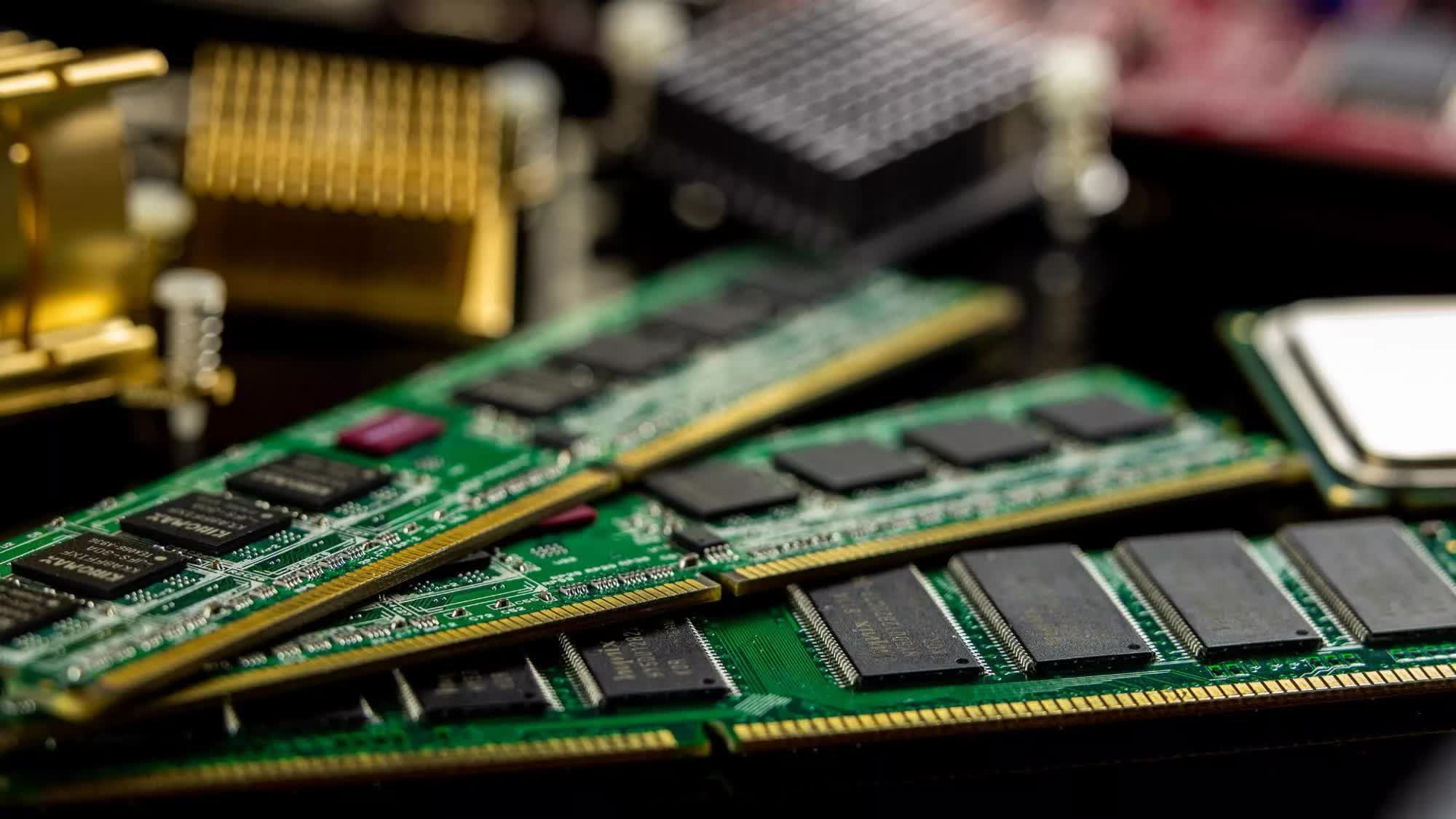
Earlier this year, Microsoft told Windows 11 users that a proper gaming rig needed 32GB of RAM. That support document has since vanished, as Redmond and the rest of the PC industry contend with an unprecedented supply crunch across memory, storage, GPUs, and other core components – fallout from Big Tech's aggressive overprovisioning for AI data centers.
Also check out: How Much RAM Do Gamers Need? 8GB vs. 16GB vs. 32GB vs. 64GB
Microsoft's post was aptly titled "How to optimize your gaming PC setup." It's no longer available on the public web and the original URL now redirects to the Windows Learning Center homepage. The original document can still be found through the Internet Archive's Wayback Machine.
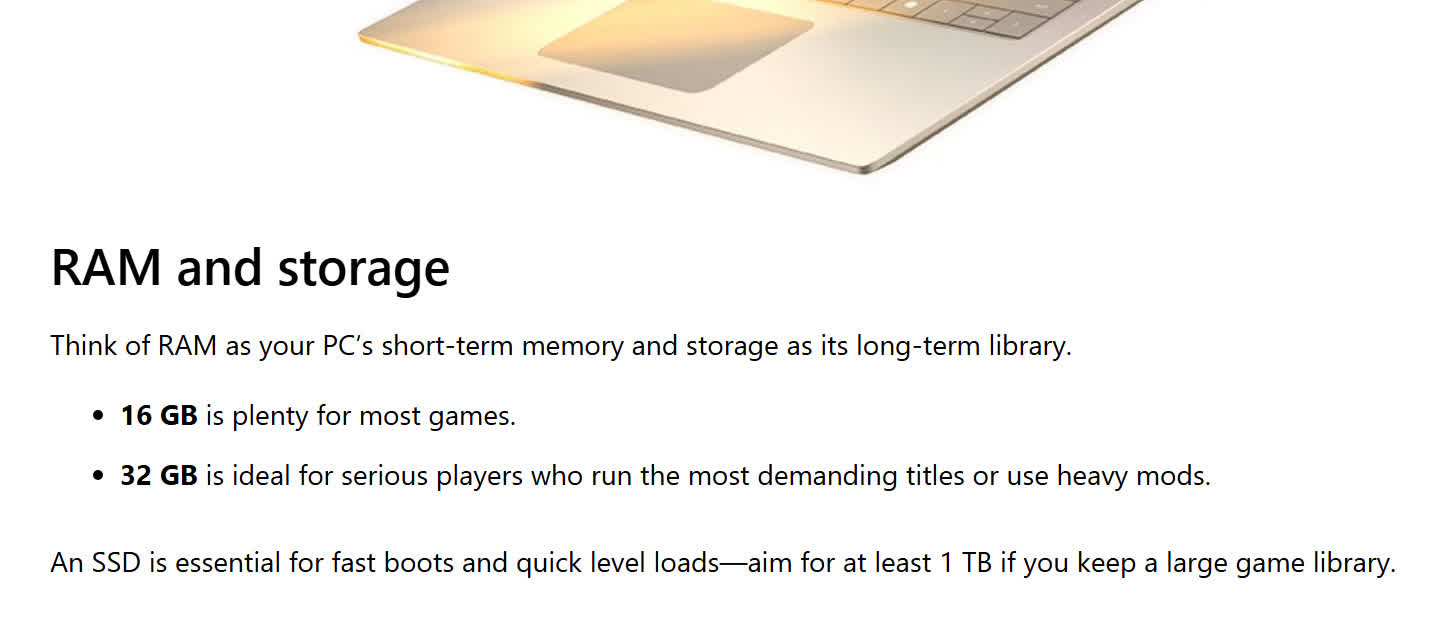
Microsoft published the guidance on November 2025, offering a handful of fairly unremarkable recommendations on the CPU, GPU, and storage needed to reach PC gaming nirvana. The company said 16GB of RAM would be "plenty" for most gamers, while 32GB was the ideal amount for those running the most demanding titles or heavy mods.
How much RAM you actually need to join the PC master race remains one of computing's most heated debates, and Microsoft itself keeps stoking it. Windows 11, after all, is the same operating system routinely criticized for shipping with unwanted advertising apps and unnecessary RAM-hungry bloat.
The AI-driven supply crunch (of which Microsoft is very much a part) has effectively forced the company to move backward through computer hardware history. The company is now selling pricey Surface laptops with just 8GB of RAM, an amount nowhere near sufficient for a modern PC user's needs.
It should be noted that this isn't purely a hardware problem. The lack of proper software optimization is just as much a part of the equation. Microsoft deserves its share of blame, but it's also a symptom of an industry-wide habit: developers have spent the better part of a decade building bloated software because RAM was cheap enough that nobody had to care. Electron and other web-wrapper frameworks became the default for building desktop apps not because they're efficient, but because they let companies ship one codebase everywhere and skip the harder work of writing native code.
Windows 11 is a prime example of that as much of its interface still leans on WebView2 and Electron-style wrappers, which reliably eat more memory than native equivalents ever would. That math worked fine when 16GB was a rounding error on a parts list. But it doesn't work now.
The quiet disappearance of that gaming optimization document says a lot about how aware Microsoft is of the industry's current state. Satya Nadella recently said his company is actively working to win Windows "fans" back through native Windows 11 apps and better coding practices, even as the memory industry isn't expected to recover from the current supply crunch until 2027, or possibly 2028.
Microsoft removes support page recommending 32GB RAM for gaming PCs


