Microsoft steps in after LG monitors were found auto-installing apps with McAfee ads

Alfonso Maruccia

Posts: 2,611   +979
Staff
The big picture: McAfee was a trusted name in the antivirus software market during the MS-DOS days. Many computers came with a copy of the company's VirusScan freeware tool to fend off trojan horses and other virus threats. Today, McAfee is a name that's almost exclusively trusted in the advertising and B2B markets. End users would very much prefer to avoid McAfee products at this point, which is why they tend to get angry when someone tries to push the McAfee brand through bundled advertising pop-ups.
The controversial advertising partnership between LG and McAfee has apparently come to an end after Microsoft got involved in the matter.

Pavan Davuluri, executive vice president of Windows and Devices, recently confirmed that Redmond got in touch with LG, the company that started it all. LG has "agreed" to remove the McAfee pop-up from its Windows Store app, Davuluri said, which likely means that Microsoft forced the South Korean manufacturer to stop pushing McAfee-related advertising to customers who purchased a new gaming monitor.
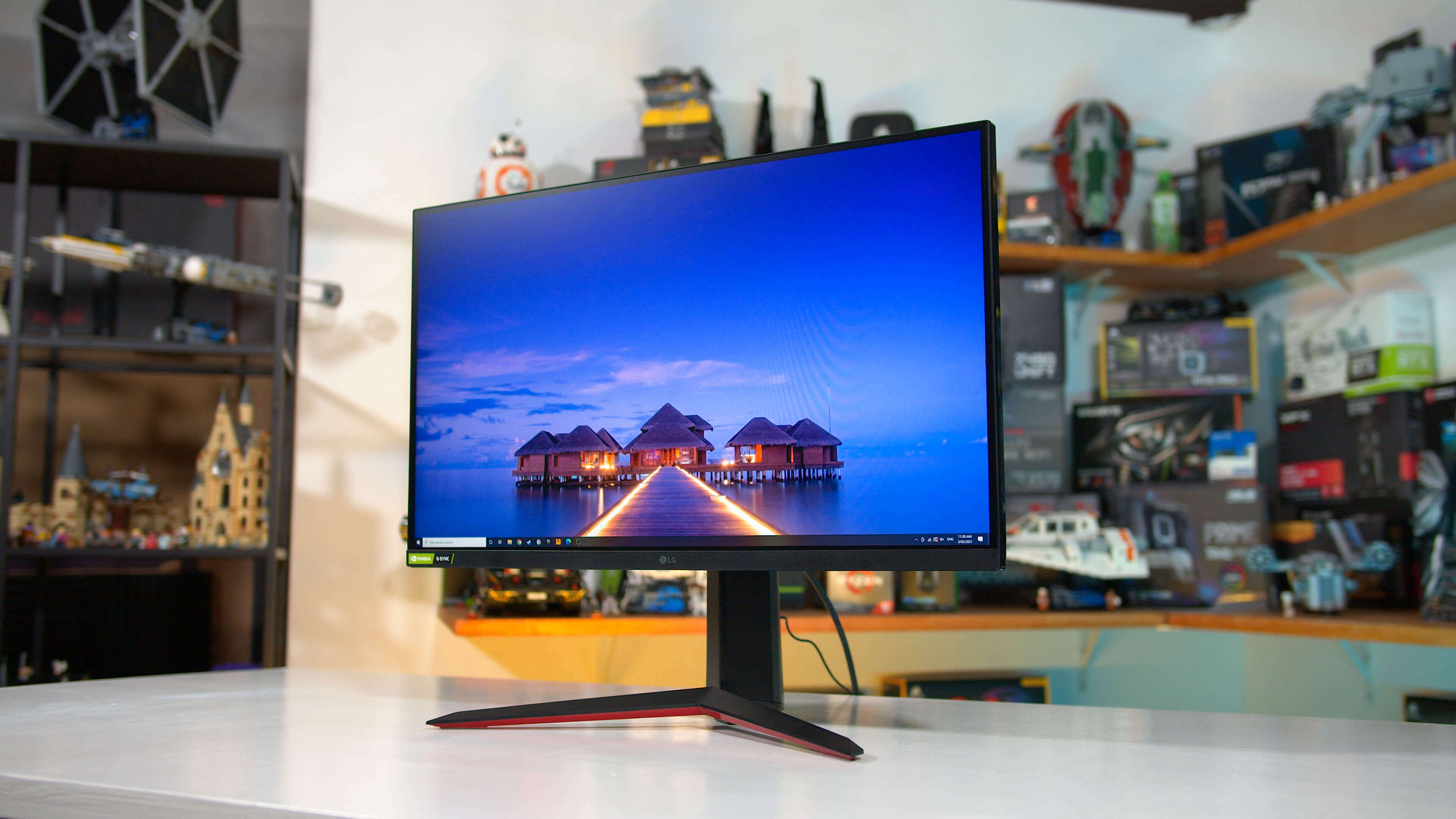
The controversy began earlier this month, when users discovered that the "LG Monitor App Installer" app was displaying McAfee promotions. Windows installed the app after affected users connected their brand-new LG monitors, with no easy way to uninstall the tool without resorting to third-party applications or disabling the Microsoft Store itself.

According to Davuluri's post, Microsoft "connected" with LG before the latter agreed to remove the McAfee adware message from the LG Monitor App Installer app. Both companies apparently share a common goal of improving the Windows ecosystem and providing customers with the best possible software experience.

Per user complaints, the list of LG monitors reportedly found to automatically push the LG Monitor App Installer app onto users' PCs includes the following models: 34GX900A-B, 45GX950-B.AEU, 32GS95UE-B, 39GX950B, 27GP83B-B, 27GN800, 32GS95UE-B, and 27GN850-B.
Apps developed through Microsoft's Universal Windows Platform can be designed to install automatically when a user connects a specific device to a Windows machine. Put simply, Microsoft approved this practice for UWP app developers, and the LG monitor tool was simply working as designed.

The official UWP documentation even states that automatic installation can be a source of confusion because users do not receive any notification about the installation process.

Other companies known to take advantage of this auto-installation feature include Razer, Logitech, Asus, and Gigabyte.

Permalink to story:

 
No mention of the Spyware that is the LG app? The auto installing of the LG app is the bigger problem and the ads were just what made people put it under a microscope. It literally talks about the user needs to comply with wiretapping laws when using their products. It's not that it automatically installs the driver, it automatically downloads the app that does some very worrying things. It also doesn't tell you its being installed or ask for you to agree or disagree
 
Last edited:
As someone who had McAfee's Enterprise products forced upon my corporate laptop for more than 20 years I can say with the utmost confidence that their products are over bloated trash. The Endpoint Security product was basically swiss cheese it was so full of holes that even the most junior network engineer could exploit. Then there is the drive encryption product that would basically deteriorate the partition of the drive after about 150 boots. Pure unadulterated trash product. Forcing installs like LG did is the only way they can make a sale because anyone with any history of their product already knows its trash. (Yes, I have strong feelings about this software trash.)
 
End users would very much prefer to avoid McAfee products at this point....
I'm unsure if you realize this or not, @Alfonso Maruccia, but journalists - even part-time tech journalists -- don't get to invent facts out of thin air, simply to build a story. McAfee remains the second-largest player in the consumer cybersecurity space.
 
I'm unsure if you realize this or not, @Alfonso Maruccia, but journalists - even part-time tech journalists -- don't get to invent facts out of thin air, simply to build a story. McAfee remains the second-largest player in the consumer cybersecurity space.
Hate to burst your bubble @Endymio, but you are conflating market footprint with consumer preference. High presence gained through parasitic distribution isn't proof of user preference.
Adware is a very big 'player', that is not the same as popularity.
McAfee pays PC manufacturers for factory pre installs and bundled bloatware (Dell, HP, Lenovo, Samsung), I know that's hard to believe without more examples, wonder if anyone can help me find one more example of these McAfee adware installs for the very smart and clever Endymio. Could have sworn there was an article about it recently somewhere around here...
 
Hate to burst your bubble @Endymio, but you are conflating market footprint with consumer preference. High presence gained through parasitic distribution isn't proof of user preference.
Oops! You just failed Accounting 101. As you note, McAfee doesn't garner revenue from pre-installed software -- they pay OEMs to pre-install it. But every penny from McAfee's second-place consumer revenue comes from consumers choosing to keep that software AND pay to renew the license.

I'm not a fan of McAfee myself, nor their business practices. But, unlike @Alfonso Maruccia, I'm not willing to fabricate false facts against them.
 
I'm unsure if you realize this or not, @Alfonso Maruccia, but journalists - even part-time tech journalists -- don't get to invent facts out of thin air, simply to build a story. McAfee remains the second-largest player in the consumer cybersecurity space.
Stop being ridiculous just to make an invalid point. Do you have proof that what @Alfonso Maruccia says is false? I highly doubt you do.

I am sure no one wants ads just popping up on their PC from any company through an installation of adware that they knew nothing about because it was done without their knowledge.

If people want ads on their PC, they are likely to install such software willingly.
 
Stop being ridiculous just to make an invalid point. Do you have proof that what @Alfonso Maruccia says is false? I highly doubt you do.
First, learn how both logic and journalism work: the one making the claim carries the burden of proof, not those disputing it.

Secondly, I gave my evidence: so many consumers are paying to use McAfee products that they're the second largest firm globally in the consumer cybersecurity sector. That alone is proof enough.

I am sure no one wants ads just popping up on their PC
Next time read the article. The claim wasn't about unwanted ads, but McAfee products in general.
 
Today's market for security software in the consumer space is non-existent. Period.
McAfee made $2B last year selling to what you call a "nonexistent" space. Your claim is wrong. Period.

They are malware, adware, spyware, and crapware. Almost all of them.
You're expressing an opinion. Did you frame your post as an op-ed piece, or straight news? Do you know the difference? And even if your opinion here is correct, it doesn't support your original claim.

@Julio Franco has done an excellent job in the past finding op-ed contributors and, while I don't always agree with their opinions, I never quibble over their right to express them -- when they're clearly delineated as such. But when you fabricate a "news story" filled with fabricated facts and unsupported opinions, expect to be called out on it. You can do better.

From WSJ News Literacy: "Journalistic ethics require a strict structural and visual separation between opinion pieces and straight news reporting to maintain public trust, uphold factual neutrality, and prevent bias from leaking into objective fact-finding. This separation relies on clear labeling, separate staffing, and defined content formats"
 
Last edited:
Back