
In brief: OLED monitors are becoming increasingly popular among gamers for their fantastic colors, infinite contrast, and lightning fast response times. But the fear of burn-in still puts some people off buying one. MSI has just carried out its own experiment into this problem and found that after constantly running an OLED monitor for over 533 days, the burn-in impact was "basically none."
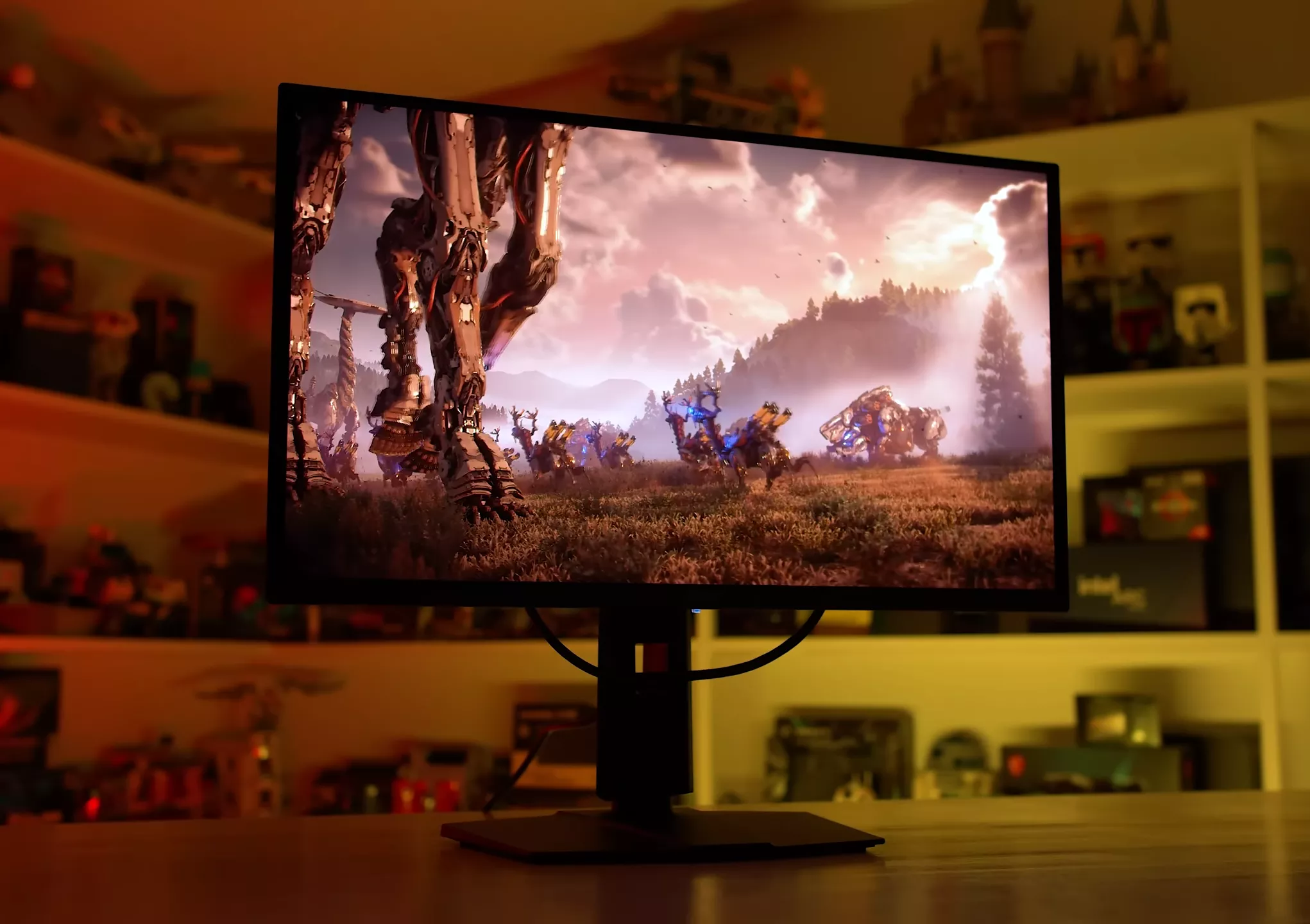
There have been several new OLED monitors shown off during Gamescom in Cologne, including MSI's 271QR QD-OLED X50, which it calls an AI-powered QD-OLED.
It's pretty much accepted that the danger of burn-in from OLED monitors is much lower than it was several years ago, mostly due to new technologies that mitigate the issue.
Speaking to PC Gamer, MSI explained how its OLED Care 2.0 protects against image retention. The system combines scheduled pixel shifting, luminance reduction, static screen detection, and other features.
An MSI rep explained that an OLED Care monitor had been tested by being left on continuously for 533 days, seven hours, and 22 minutes straight, or about one year and five and a half months. Thanks to the protection system, burn-in signs were "basically none."
The rep said the display was running in a split screen mode with Windows taskbar, tabs, and other static images being shown.
In June, our own Tim Schiesser revealed the results of his 15-month OLED monitor burn-in test. Faint signs of burn-in appeared at 650 to 700 hours of usage and 71 compensation cycles, but progression was very slow and more prominent taskbar burn-in didn't appear until around 2,700 to 3,000 hours of use and 322 compensation cycles.
It's also worth noting that Tim used the panel protection cycle every eight hours of use rather than the recommended four.
MSI's OLED Care 3.0 utilizes a CMOS sensor paired with an NPU, capturing images every 0.2 seconds to detect whether a user is present. When the user steps away, the monitor either starts its burn-in protection cycle or powers off automatically. It's one of the features in the MPG 271QR QD-OLED X50.
Asus has a similar feature in its new high-refresh-rate OLED monitors. Its integrated OLED Care Pro system includes a Neo Proximity Sensor that can detect whether someone is in front of the monitor and switch to a black screen if they're not.
MSI ran its OLED monitor continuously for over 533 days and found the burn-in was "basically none"


