What just happened? Intel's new co-CEO Michelle Johnston Holthaus firmly dispelled rumors about the company's exit from the discrete graphics market during her keynote address at CES 2025. This announcement comes on the heels of controversial comments made by former CEO Pat Gelsinger, who was ousted from the tech giant last month.
During her presentation, Holthaus emphatically stated, "We are very committed to the discrete graphics market and will continue to make strategic investments in this direction." This declaration directly contradicts Gelsinger's previous remarks in November, which suggested a diminishing need for discrete graphics investments. Specifically, he said during the company's earnings call that Intel's focus on graphics will increasingly become "large integrated graphics capabilities," which the market took to mean that it would build graphics into CPUs, not gaming graphics cards.
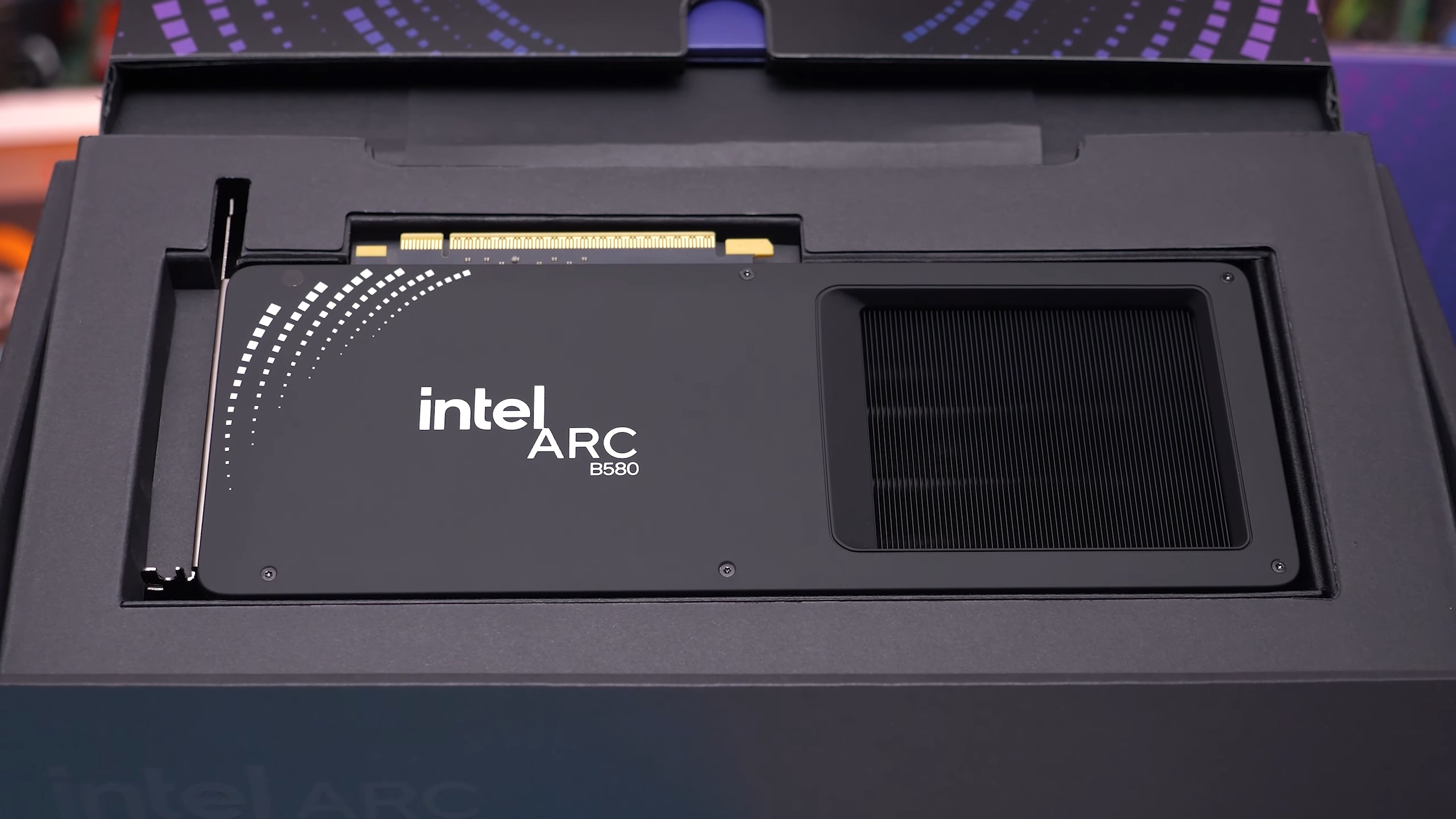
The reassurance from its new leadership that Intel is still committed to the graphics market comes at a critical time for the company. Despite recent challenges, including the perceived financial failure of the Lunar Lake laptop processors, Intel's silver lining has been in the graphics card market. The company recently celebrated its first major success with the Intel Arc B580 graphics card, which sold out rapidly in most markets.
However, industry analysts remain cautious about Intel's long-term strategy. Some speculate that Holthaus' upbeat tone might be masking a more gradual retreat from the discrete graphics space. The company's focus may be shifting towards AI-centric developments, mirroring recent trends set by competitors AMD and Nvidia.
Nevertheless, Intel is pushing forward with its graphics card lineup. Holthaus announced the imminent launch of the B570 GPU, an even more budget-friendly option than the popular B580.
It should be noted, though, that while the Arc B580 has garnered positive reviews, it's not without its challenges. Users have reported significant performance issues when pairing the card with CPUs older than five years, resulting in stuttering and low frame rates in many games. This problem isn't limited to older Intel processors; similar issues have been observed with AMD's Ryzen 5 2600X.
Meanwhile, the upcoming B570 model is garnering attention from tech enthusiasts. While both cards share the same architectural lineage, they cater to different segments of the market with distinct specifications and price points.
The Arc B580 has 12GB of GDDR6 memory, positioning it as a capable contender for high-performance gaming at 1440p with ultra-quality settings. This memory configuration gives it an edge in handling memory-intensive tasks and games, especially at higher resolutions.
In contrast, the soon-to-be-released B570 is set to feature 10GB of dedicated GPU memory. This 2GB reduction in VRAM might impact its performance in certain scenarios, particularly in applications or games that demand substantial memory resources. While Intel has yet to release specific performance metrics for the B570, industry experts anticipate it will be tailored more towards 1080p gaming performance.
New Intel co-CEO confirms the company is not exiting the graphics card market


