NHTSA opens new Tesla crash probe after Model 3 slams into home and kills resident

Skye Jacobs

Posts: 2,010   +58
Staff
What we know so far: The National Highway Traffic Safety Administration has opened a probe into a Tesla crash in Katy, Texas, where a Model 3 slammed into a home on June 19. According to sheriff's officials, the Tesla Model 3 veered off the road at a high rate of speed, crossed a yard and driveway, and crashed into a brick home, killing a woman inside.
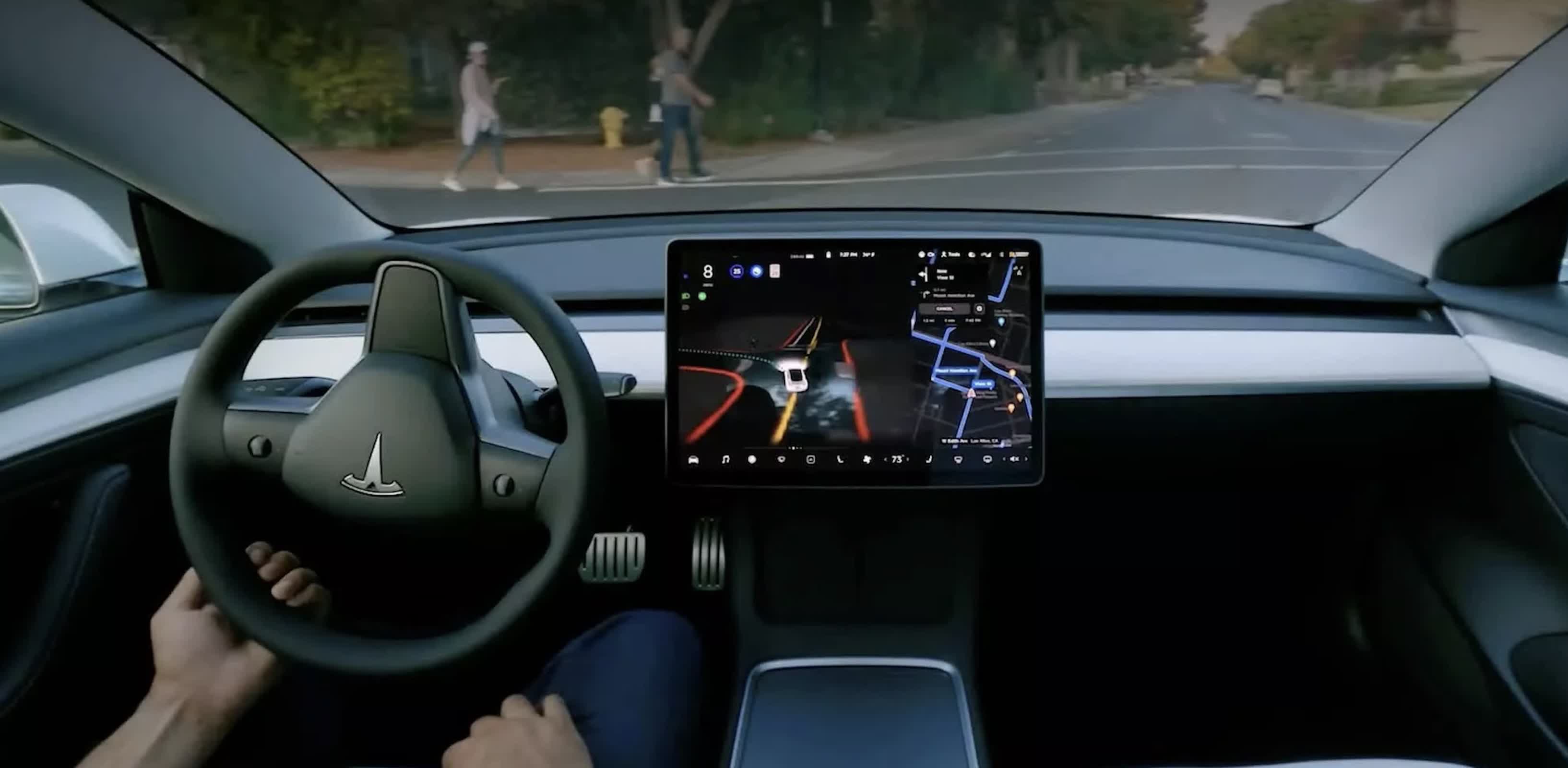
According to the Harris County Sheriff's Office, the driver told deputies he was using an automated driving assistance system at the time of the crash. Inside the home was Martha Avila, who later died from injuries sustained in the collision.

Video captured by a home security camera and later shared on social media appears to show the blue Model 3 speeding across a yard and driveway before crashing through the front wall of the house. Investigators have not yet released a detailed account of the events leading up to the collision.

What role, if any, the vehicle's software played remains unclear. Tesla's Full Self-Driving (supervised) system can handle steering, acceleration, braking, and other driving tasks, but it is designed to operate under active human supervision. The company offers the feature as part of a $99-per-month subscription, although authorities have not confirmed whether it was in use at the time of the crash.

There are early indications that driver input may have been a significant factor. In a post on X, Tesla Vice President of AI and Software Ashok Elluswamy said the driver pressed the accelerator pedal and continued doing so even after the vehicle crashed. However, that claim has not been independently verified by investigators. The detail underscores the challenge of determining how much responsibility rests with the driver versus the vehicle's automated systems.

The NHTSA's special crash investigations unit, which examines incidents involving unusual circumstances or potentially significant safety issues, handles more than 100 cases each year. This latest probe adds to a growing list of investigations involving Tesla vehicles and advanced driver-assistance technologies.

The agency is also conducting a broader defect investigation into Tesla's system. The review is examining how the technology performs in real-world conditions and whether it complies with federal safety standards. Such investigations can ultimately lead to recalls if regulators identify systemic problems.

Tesla has been the subject of more than 40 NHTSA special crash investigations in recent years involving the suspected use of driver-assistance systems. Federal rules require automakers to report fatal crashes involving these technologies to the agency.

Locally, the investigation is still unfolding. "This remains an active and open investigation," a spokeswoman for the sheriff's office said. She added that once all evidence has been gathered, the sheriff's office will present it to the local district attorney's office to determine whether charges are appropriate.

Tesla did not respond to a request for comment.

The crash highlights the challenges of determining responsibility when semi-automated driving systems are involved. Tesla's technology still requires drivers to remain attentive and ready to take control at all times, and incidents like this underscore how difficult it can be to distinguish between driver actions and the system's behavior.

Permalink to story:

 
When the accelerator pedal is pressed safety features are inactive.
The driver was probably drunk or high, and lied to blame it on FSD. He was apparently still drunk or high when he lied, otherwise he would have figured out everything's recorded.
 
When the accelerator pedal is pressed safety features are inactive.
The driver was probably drunk or high, and lied to blame it on FSD. He was apparently still drunk or high when he lied, otherwise he would have figured out everything's recorded.
NHTSA and Tesla have both corroborated that the accelerator pedal was pressed fully and the car reached 67 MPH. Its possible the floor mat or something got in the way and held the accelerator pedal down - it happens. That would account for him saying "AP did it" and Tesla saying "Driver did it" and both thinking they're correct. The most likely story though is the guy just simply mashed the accelerator instead of the brake, panicked, and mashed the same pedal harder, still thinking it was the brake. This is a very common driver mistake - and is even more common when the driver is drunk / high / on phone / getting oral pleasure / getting self pleasure / doing makeup / reading a book / waking from sleep or near sleep / what else can I think of here - lets make this fun, add onto the list everyone! lol
 
0% accountability from any of the parties responsible for setting the vehicle in motion and yet the victim is 100% dead, so it obviously happened.
 
This shows one of the biggest issues with self driving tech: When the robot inevitably screws up, who is to blame? Do we believe the computer over the human? Do we blindly trust the machine gods to not smite us?
 
0% accountability from any of the parties responsible for setting the vehicle in motion and yet the victim is 100% dead
Only one party set the vehicle in motion: the driver.

It's also worth noting that, despite impacting a brick wall at 67mph, the driver walked away unscathed: a miracle of safety engineering. Unfortunately there was a human behind the brick wall the driver struck.
 
NHTSA and Tesla have both corroborated that the accelerator pedal was pressed fully and the car reached 67 MPH. Its possible the floor mat or something got in the way and held the accelerator pedal down - it happens. That would account for him saying "AP did it" and Tesla saying "Driver did it" and both thinking they're correct. The most likely story though is the guy just simply mashed the accelerator instead of the brake, panicked, and mashed the same pedal harder, still thinking it was the brake. This is a very common driver mistake - and is even more common when the driver is drunk / high / on phone / getting oral pleasure / getting self pleasure / doing makeup / reading a book / waking from sleep or near sleep / what else can I think of here - lets make this fun, add onto the list everyone! lol
The driver exhibited no signs of being intoxicated, and there is no mention of a passenger in the vehicle. Panic, however, can be an extreme driving force.
https://electrek.co/2026/06/22/nhtsa-tesla-katy-crash-federal-investigation/
The driver has been identified as Michael Butler, 44. He told Harris County deputies the vehicle was on Autopilot, showed no signs of intoxication, and was cooperating with investigators. No charges had been filed as of Sunday.
 
Last edited:
Only one party set the vehicle in motion: the driver.
Yup, and with at least one open investigation into Teslas, NHSTA is well within their bounds to open yet another investigation into Tesla and its "miracle engineering."

Certainly, anyone speaking in an official capacity for Tesla will deny it was caused by their "miracle engineering" since that would open Tesla to liability for the incident.
It's also worth noting that, despite impacting a brick wall at 67mph, the driver walked away unscathed: a miracle of safety engineering. Unfortunately there was a human behind the brick wall the driver struck.
Yes, the overused Brick Wall adage. :rolleyes:
 
Last edited:
The driver exhibited no signs of being intoxicated
Extreme alcohol intoxication is generally easy for an officer on the scene to detect, but other forms of intoxication are not. That's not terribly relevant to fault, however, as it's already been determined the driver had the accelerator pedal fully depressed. Intoxication would merely change his liability from civil to criminal.

Yes, the overused Brick Wall adage. :rolleyes:
It's not an "adage". This driver literally drove his vehicle into a brick wall ... and walked away without a scratch.
 
Last edited:
Either way, hitting the brakes would override autonomous control by the vehicle. Considering the vehicle was traveling at 60-70 mph at the time of impact (about double residential speed limits), at best the driver had a long time and failed to take control of the vehicle. The other situation (more plausible) is that the accelerator was physically applied. In this situation, hitting the brakes simultaneously would also override the accelerator press, and the driver failed to do that too. With Teslas, applying the brakes in any capacity will cause the motor to start slowing down the vehicle with regenerative braking, and a warning will appear if both pedals are pressed.

On the other hand, if the driver applies the accelerator while the vehicle is being controlled autonomously, this will override the vehicle applying the brakes autonomously. That would then align with both the driver's account that some form of Autopilot was on and Tesla's account that the accelerator was physically pressed all the way.
 
I think what many people do not realize about autopilot's complexity is that it is just not as good at being
"aware" 100% of the time while driving. these incidents are rare, we have to admit it.
But every time it stops seeing the road, there is a risk of heavy accident or death.
I think THIS more than anything else is the reason that so many companies pour
billions into AP and still cannot offer complete safety.
Also, with each next accident, the company needs to raise the price
of this tech because their judicial expenses grow.
 
NHTSA and Tesla have both corroborated that the accelerator pedal was pressed fully and the car reached 67 MPH. Its possible the floor mat or something got in the way and held the accelerator pedal down - it happens. That would account for him saying "AP did it" and Tesla saying "Driver did it" and both thinking they're correct. The most likely story though is the guy just simply mashed the accelerator instead of the brake, panicked, and mashed the same pedal harder, still thinking it was the brake. This is a very common driver mistake - and is even more common when the driver is drunk / high / on phone / getting oral pleasure / getting self pleasure / doing makeup / reading a book / waking from sleep or near sleep / what else can I think of here - lets make this fun, add onto the list everyone! lol
Ah yes, the tesla apologists are quick to respond. How about this:

A NHTSA report on its investigation into crashes in which Tesla vehicles equipped with the automaker's Autopilot driver assistance feature hit stationary emergency vehicles has unearthed a troubling detail: In 16 of those crashes, "on average," Autopilot was running but "aborted vehicle control less than one second prior to the first impact."

I.e. AP lets go right before the accident so that Musk can say it wasn't an AP accident. 1 second before the crash. How convenient <3

I've been working for a self-driving company for 10 years. It's REALLY not that good. Everyone has nice tech demos. It works _most_ of the time. But that's not self-driving, that's just... better driver assistance.
 
I.e. AP lets go right before the accident so that Musk can say it wasn't an AP accident. 1 second before the crash. How convenient <3

This is false.

"The 5-Second Rule: To counter claims of data manipulation, Tesla’s internal safety reporting guidelines state that if Autopilot or Full Self-Driving (FSD) was active at any point within five seconds leading up to a collision, the crash is counted as an Autopilot/FSD accident."
 
It's not an "adage". This driver literally drove his vehicle into a brick wall ... and walked away without a scratch.
The condition of the wall is/was unknown. "Miracle Engineering" is not necessarily required for the driver to walk away.

The proper combination of composites and sandwich construction would easily accomplish the same feat especially if the wall was in some state of degradation.
 
I think what many people do not realize about autopilot's complexity is that it is just not as good at being
"aware" 100% of the time while driving. these incidents are rare, we have to admit it.
But every time it stops seeing the road, there is a risk of heavy accident or death.
I think THIS more than anything else is the reason that so many companies pour
billions into AP and still cannot offer complete safety.
Also, with each next accident, the company needs to raise the price
of this tech because their judicial expenses grow.
And then there's this:
Demonstrating that at least one company can accomplish the feat at least some of the time, assuming, of course, any credibility can be placed in a You Tube video.

That's a great point about the growth of judicial expenses.
 
And then there's this:
Demonstrating that at least one company can accomplish the feat at least some of the time, assuming, of course, any credibility can be placed in a You Tube video.

That's a great point about the growth of judicial expenses.
Only one-month-old video, but uses a much older Model Y. Did they go out of their way to find a car with non-current hardware and software?
 
"Miracle Engineering" is not necessarily required for the driver to walk away.

The proper combination of composites and sandwich construction would easily accomplish the same feat especially if the wall was in some state of degradation.
Drive your car -- '76 Pinto? -- off a 250 foot high cliff and see if you walk away without a scratch. Shall we take a bet on the outcome?
 
Last edited:
Those are not skid marks, those are the drag marks of the undercarriage hitting the cement from going too fast.
 
Back