Tesla Robotaxis are crashing more often than human drivers, data shows

Skye Jacobs

Posts: 2,030   +59
Staff
A hot potato: Federal data from Tesla's autonomous test fleet in Austin shows the company's Robotaxi program has yet to achieve the reliability promised by CEO Elon Musk. Between July and November 2025, nine crashes involving the company's self-driving Model Y were reported to the NHTSA. Across roughly 500,000 logged miles, that equals one crash for every 55,000 miles traveled, nearly an order of magnitude more frequent than typical human driver incidents.
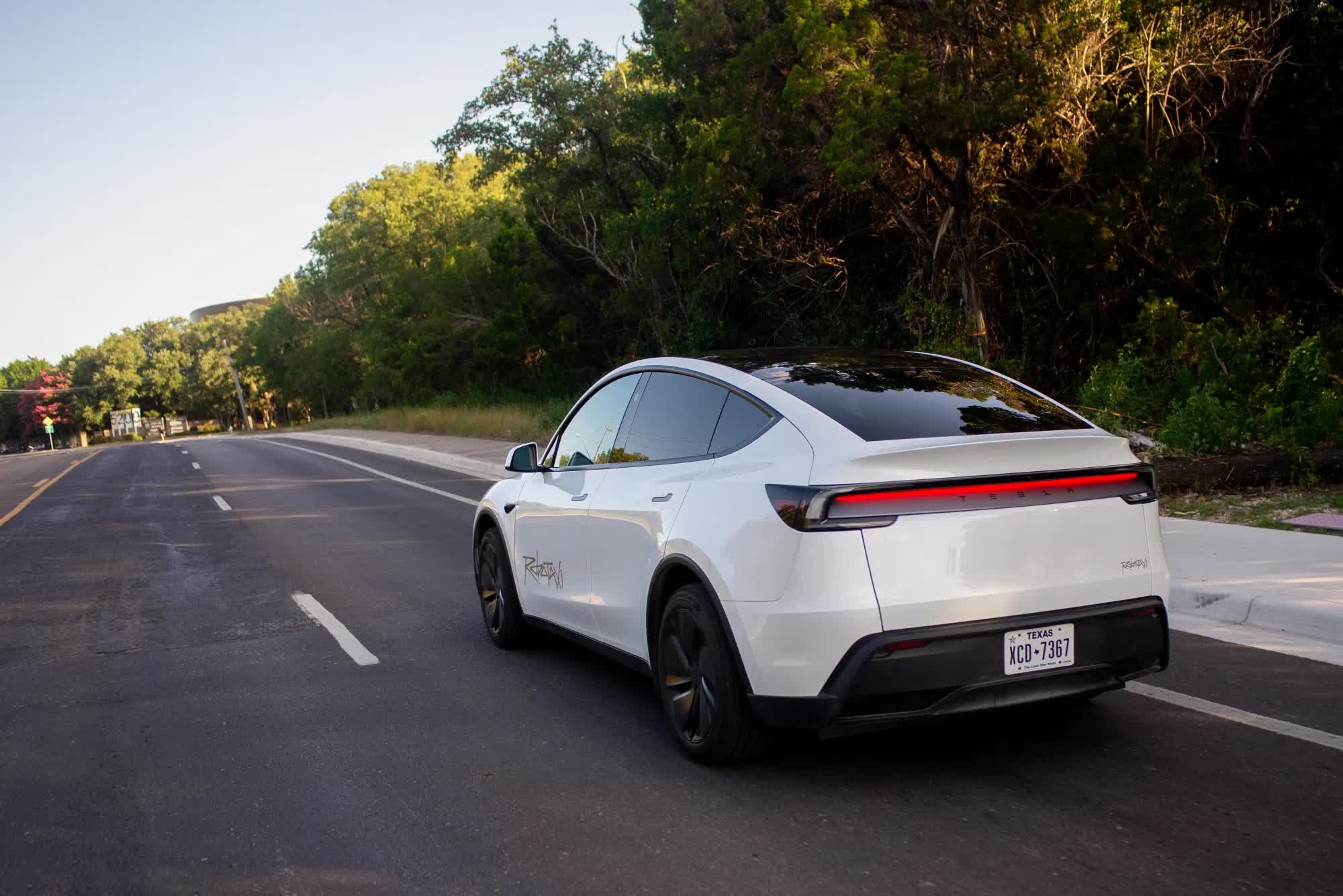
Human drivers in the United States, according to NHTSA data, average a police-reported crash roughly once every 500,000 miles. Even after adjusting for underreporting to a more realistic estimate of once per 200,000 miles, people still outperform Tesla's autonomous system by a wide margin, according to data originally surfaced by Electrek.

While Tesla markets its Robotaxi fleet as "autonomous," each vehicle still carries a trained safety monitor in the front passenger seat, ready to intervene if the system fails. Despite those human safeguards, the vehicles have been involved in collisions ranging from minor fender-benders to more concerning encounters with cyclists and roadway obstacles.

The NHTSA filings themselves reveal only fragments of what occurred. Tesla's reports are heavily redacted, obscuring many of the circumstances behind the crashes.

One September report, for instance, notes a collision with an animal at 27 mph; another cites an unspecified crash during a "right turn." Separate incidents that same month involved a cyclist and two collisions with stationary objects, including one in a parking lot.

Additional reports describe a rear impact while backing up and two July collisions involving SUVs, one of which caused a minor injury. Without full context or Tesla's internal data, it remains difficult to determine how much of the fault lies with vehicle software versus human intervention timing.

Despite the setbacks, Tesla continues to frame its Robotaxi project as central to its long-term vision of autonomous mobility. Musk told investors last year that the service would reach "half of the US population" by the end of 2025, a deadline that has quietly passed.

Instead, the fleet remains active only in Austin, Texas. The company has also launched a limited ride-hailing variant in the San Francisco Bay Area, though those Model Ys must retain human drivers due to the state's regulatory limits on unsupervised autonomy.

Even with only modest progress, Tesla is signaling that expansion is coming. On its latest earnings call, executives confirmed that the Robotaxi program will extend to seven additional markets – including Dallas, Houston, Phoenix, Miami, Orlando, Tampa, and Las Vegas – within the first half of 2026. That timeline would represent a major geographic jump, but it will test whether Tesla can improve its collision record before any large-scale deployment.

Permalink to story:

 
This is the shiny new tech that'll lead us (and especially Tesla) to salvation, right? All after the 4680, gigacasting, Cybertruck, Semi, drive-by-wire, 48V, Optimus... among others.
 
Another article painting Tesla in a poor light but no article about the Waymo hitting a girl outside her school?

Federal officials investigate after Waymo self-driving vehicle strikes child near elementary school - ABC News https://share.google/0JDsMm1RmDJob11Oy

It's not just Tesla that are involved in accidents but my gosh you'd think it was.
 
Another article painting Tesla in a poor light but no article about the Waymo hitting a girl outside her school?

Federal officials investigate after Waymo self-driving vehicle strikes child near elementary school - ABC News https://share.google/0JDsMm1RmDJob11Oy

It's not just Tesla that are involved in accidents but my gosh you'd think it was.
Here is your data. https://arstechnica.com/cars/2025/0...s-waymos-crash-a-lot-less-than-human-drivers/

Waymo, by the data, is considerably more safe than Tesla. This latest incident shouldn't be dismissed but from the data, Tesla is significantly more likely to have an accident. Given all the videos of Tesla vehicles running into test dummies (
), there will probably be a story at some point of Tesla have a similar accident, it will just be with much fewer miles on the road than Waymo.
 
To be fair, the article compares the national average of miles per crash against Tesla's average which is isolated to Austin, Texas only. Population/vehicle density will differ dramatically between the two.

To properly gauge just how well Robotaxis are performing, you need to compare it to the average miles per crash of human drivers in Austin, Texas, not the national average.

Taking a look at the Texas Department of Transport website, the best data I could find was a report for crashes by town from 2024. This shows that there were 10,791 crashes for the year, but there is no data indicating how many miles were covered by vehicles involved. The NHTSA website does not allow reports on individual States for non fatal incidents, so getting the data for a fair comparison seems difficult.
 
Last edited:
Another article painting Tesla in a poor light but no article about the Waymo hitting a girl outside her school?

Federal officials investigate after Waymo self-driving vehicle strikes child near elementary school - ABC News https://share.google/0JDsMm1RmDJob11Oy

It's not just Tesla that are involved in accidents but my gosh you'd think it was.
Techspot did do an article on this:

https://www.techspot.com/news/111131-nhtsa-opens-investigation-waymo-after-robotaxi-hits-child.html
 
To be fair, the article compares the national average of miles per crash against Tesla's average which is isolated to Austin, Texas only. Population/vehicle density will differ dramatically between the two.

To properly gauge just how well Robotaxis are performing, you need to compare it to the average miles per crash of human drivers in Austin, Texas, not the national average.

Taking a look at the Texas Department of Transport website, the best data I could find was a report for crashes by town from 2024. This shows that there were 10,791 crashes for the year, but there is no data indicating how many miles were covered by vehicles involved. The NHTSA website does not allow reports on individual States for non fatal incidents, so getting the data for a fair comparison seems difficult.
Yep, but we know that crashes in urban areas happen more frequently than in rural areas, so the number is likely to be less than 200,000 miles per human crash. Furthermore, Electrek made no effort to demonstrate any trend based on their own previously reported data. They only opt for an average that will include their earliest, worst performing Robotaxi data. Right now, TechSpot has reported on Robotaxi accidents 3 times, with the following sources: July / September / November

If you actually break down the number of accidents by each period, there is a definite sign of improvement, and old Robotaxi safety (October-November) is at most around 125,000 miles between accidents (more than twice as safe as reported here):


Separately, unlike what the article reports, Robotaxis without any safety monitor started ride hailing a little over a week ago in Austin, TX. They started operating these with chase vehicles, and this week they removed those. That said, there's almost certainly some number of remote operators monitoring the safety of these vehicles, although Tesla has made no comment on that:
https://x.com/I/trending/2016939984792756284

TechSpot also skipped out on reporting that there have been at least two cross-country intervention-free drives of customer-owned FSD in v14. One of these was documented and completed by a team of independent autonomy experts: https://www.thedrive.com/news/a-tesla-actually-drove-itself-from-los-angeles-to-new-york-exclusive
 
Last edited:
"Without full context or Tesla's internal data, it remains difficult to determine how much of the fault lies with vehicle software versus human intervention timing."

In EVERY crash in a Robotaxi, 100% of the fault lies with the vehicle software. The entire point of the test is to see if the software is capable of performing the job for which it was designed. If there needs to be human intervention to prevent accidents, the answer to that question is, it isn't. I note others here saying "what about Waymo?" Well, what about them? At the very least, their cars are fully autonomous, with no human "safety monitor" to baby-sit the obviously beta-testing of the software in the Tesla. If Waymo cars crash, then it's the fault of the car and its software or possibly the other driver. They're at least not trying to beg off with a "the safety monitor failed to catch it" excuse.

If Tesla trusts their cars to Robotaxi, then turn them loose. If they get into accidents, let them take the heat. But don't try to foist off responsibility for software failings on the safety monitors, and them compare yourself to true autonomous taxis.
 
Tesla unlike Waymo, don't use lidar. Elon Musk and Tesla have consistently argued that lidar is unnecessary and too expensive for mass-market self-driving, and they do not equip their cars with lidar sensors.
 
"Without full context or Tesla's internal data, it remains difficult to determine how much of the fault lies with vehicle software versus human intervention timing."

In EVERY crash in a Robotaxi, 100% of the fault lies with the vehicle software. The entire point of the test is to see if the software is capable of performing the job for which it was designed. If there needs to be human intervention to prevent accidents, the answer to that question is, it isn't. I note others here saying "what about Waymo?" Well, what about them? At the very least, their cars are fully autonomous, with no human "safety monitor" to baby-sit the obviously beta-testing of the software in the Tesla. If Waymo cars crash, then it's the fault of the car and its software or possibly the other driver. They're at least not trying to beg off with a "the safety monitor failed to catch it" excuse.
Good point, IMO. How long has Tesla had FSD software in beta testing now? Perhaps @Plutoisaplanet can tell us since he's so happy to make excuses for fElon no matter what endeavor fElon is failing at undertaking.
 
Tesla unlike Waymo, don't use lidar. Elon Musk and Tesla have consistently argued that lidar is unnecessary and too expensive for mass-market self-driving, and they do not equip their cars with lidar sensors.
Yep. It costs fElon too much to make a superior product and save lives.
 
TechSpot also skipped out on reporting that there have been at least two cross-country intervention-free drives of customer-owned FSD in v14. One of these was documented and completed by a team of independent autonomy experts: https://www.thedrive.com/news/a-tesla-actually-drove-itself-from-los-angeles-to-new-york-exclusive
Wow! Two whole intervention free cross-country drives by Tesla owners? Why that proves, beyond a shadow of a doubt, that FSD is a stunning success everywhere for all time and space. :rolleyes: Maybe that will fuel fElon's trip to Mars.
 
Yep, but we know that crashes in urban areas happen more frequently than in rural areas, so the number is likely to be less than 200,000 miles per human crash. Furthermore, Electrek made no effort to demonstrate any trend based on their own previously reported data. They only opt for an average that will include their earliest, worst performing Robotaxi data. Right now, TechSpot has reported on Robotaxi accidents 3 times, with the following sources: July / September / November

If you actually break down the number of accidents by each period, there is a definite sign of improvement, and old Robotaxi safety (October-November) is at most around 125,000 miles between accidents (more than twice as safe as reported here):


Separately, unlike what the article reports, Robotaxis without any safety monitor started ride hailing a little over a week ago in Austin, TX. They started operating these with chase vehicles, and this week they removed those. That said, there's almost certainly some number of remote operators monitoring the safety of these vehicles, although Tesla has made no comment on that:
https://x.com/I/trending/2016939984792756284

TechSpot also skipped out on reporting that there have been at least two cross-country intervention-free drives of customer-owned FSD in v14. One of these was documented and completed by a team of independent autonomy experts: https://www.thedrive.com/news/a-tesla-actually-drove-itself-from-los-angeles-to-new-york-exclusive
Almost all Tesla and Robotaxi accidents have been obfuscated and we don't have any good details.

"Robotaxis without any safety monitor started ride hailing a little over a week ago in Austin, TX" - it's a lie, they have the safety monitor in a car following the taxi


And another lie is that they have 2 places (San Francisco Bay Area), but in reality it's just Austin.

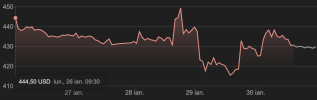
Both of these "announcements" were just meant to boost stock prices right before the pre-earnings in order to deceive investors/stakeholders. (which worked and then abruptly went down again)

Screenshot 2026-02-02 at 11.51.54.png
 
"Robotaxis without any safety monitor started ride hailing a little over a week ago in Austin, TX" - it's a lie, they have the safety monitor in a car following the taxi

Why don't you read the sentences directly after the one you quoted?
They started operating these with chase vehicles, and this week they removed those. That said, there's almost certainly some number of remote operators monitoring the safety of these vehicles, although Tesla has made no comment on that:
https://x.com/I/trending/2016939984792756284
It's not a lie, your sources are just out of date. The second source even more so. If you look at who Electrek cited, David Moss later got two rides in unsupervised Robotaxis. He is the one who first reported the news that supports my claim.

You're quick to call me a liar when deceptively quoting me though. And of course, Electrek is biased against Tesla so they didn't report on a follow-up. Electrek primary reports on bad news and skips good news or spins it negatively. That's why I was able to show an improving safety track record using Electrek's own numbers, but Electrek includes the oldest, 1/2 year old safety data for Robotaxis as part of the current driving behavior.
 
Why don't you read the sentences directly after the one you quoted?

It's not a lie, your sources are just out of date. The second source even more so. If you look at who Electrek cited, David Moss later got two rides in unsupervised Robotaxis. He is the one who first reported the news that supports my claim.

You're quick to call me a liar when deceptively quoting me though. And of course, Electrek is biased against Tesla so they didn't report on a follow-up. Electrek primary reports on bad news and skips good news or spins it negatively. That's why I was able to show an improving safety track record using Electrek's own numbers, but Electrek includes the oldest, 1/2 year old safety data for Robotaxis as part of the current driving behavior.
This was literally written 3 days ago:

I really love this part:
"Every single Tesla crash narrative in the NHTSA database is redacted with the same phrase: “[REDACTED, MAY CONTAIN CONFIDENTIAL BUSINESS INFORMATION]”"

and this one:
"What is also not captured in the statistics is exactly how many interventions were made by the safety operators."

And this is just the "minor" cherry on top of the pedo/investor fraud cake:
 
Last edited:
This was literally written 3 days ago:

I really love this part:
"Every single Tesla crash narrative in the NHTSA database is redacted with the same phrase: “[REDACTED, MAY CONTAIN CONFIDENTIAL BUSINESS INFORMATION]”"

and this one:
"What is also not captured in the statistics is exactly how many interventions were made by the safety operators."

And this is just the "minor" cherry on top of the pedo/investor fraud cake:
You didn't respond to anything that you quoted. So I'm not going to respond to anything I quoted ;)
 
You didn't respond to anything that you quoted. So I'm not going to respond to anything I quoted ;)
There was no need to respond because you didn't understand what I wrote.

First off, I said the cars have tailing supervisors, not there are none without one inside. Good on them that they finally did some rides without the tail too.

Second, none of the other things I wrote particularly pertain to anything you said or lied about. It's just statements that you couldn't refute. And my second quote just reinforced what I said.

Edit: There is another thing I want to mention, I do not believe that Tesla will ever achieve true FSD with just a bunch of cameras. This much was made painfully obvious in 2025 even with the "improvements". No amount of Ai training will fix this glaring flaw. It's just Elon refusing to accept that he was wrong and he's also afraid of a lawsuit that would tank the stock market value.
 
Last edited:
Second, none of the other things I wrote particularly pertain to anything you said or lied about.
If you’re still claiming I lied while intentionally ignoring what I actually said (it includes what you said from before you first responded, and also newer information), then I will no longer respond to you.

You haven’t proven I’ve lied about anything (because I haven’t lmao), and that you continue to lie about what I actually said. Stop lying Puiu or actually read the full quote that you deceptively left out.
 
Back