Nuclear fusion edges closer to reality thanks to new tungsten reactor

zohaibahd

Posts: 978   +19
Staff
What just happened? The pursuit of virtually limitless fusion energy recently achieved a significant breakthrough at an experimental reactor in France. Scientists operating the WEST tokamak successfully sustained a superhot plasma at astonishing temperatures for a record-breaking six minutes. The achievement marks a major milestone in the journey towards viable fusion power.
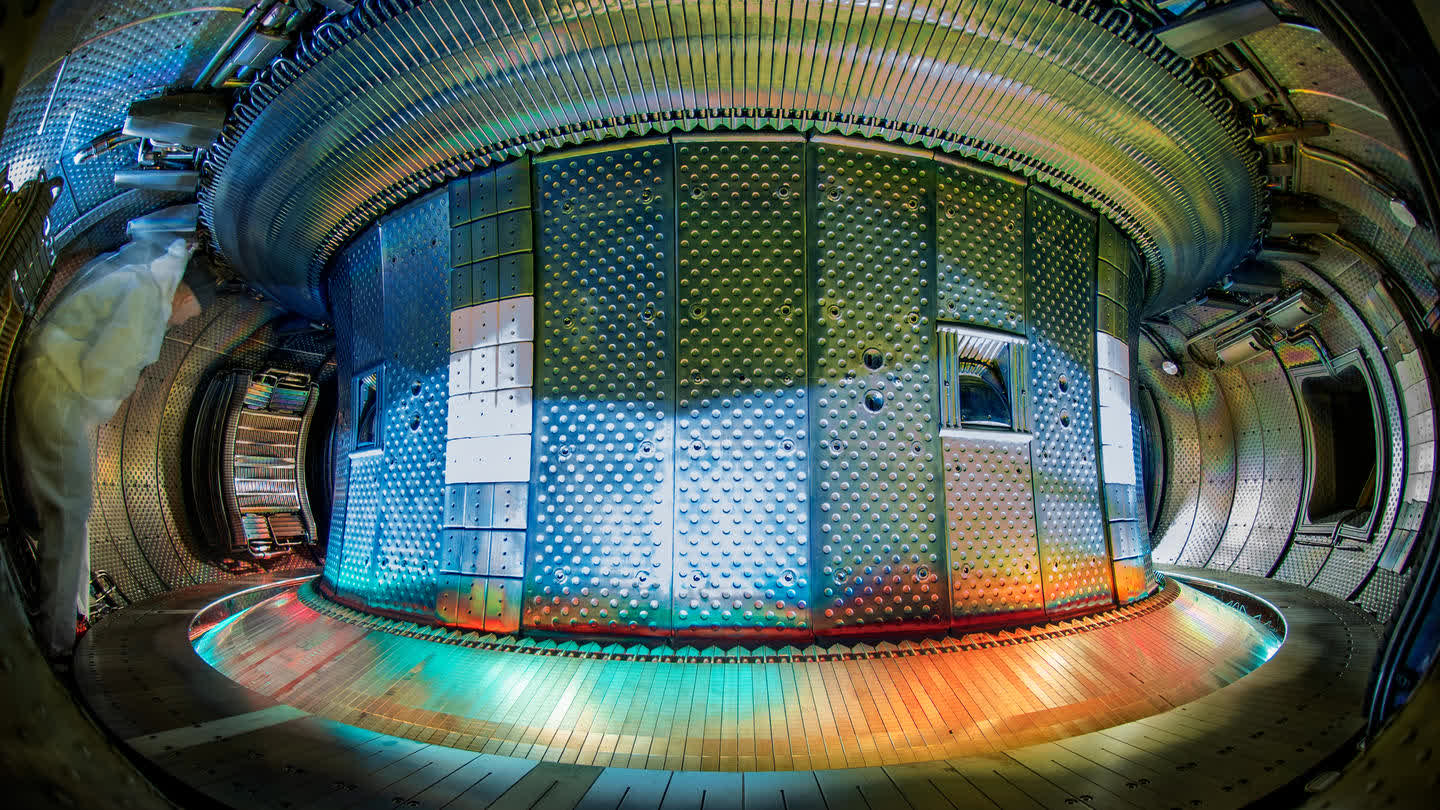
For those unfamiliar, a tokamak is essentially a donut-shaped device that utilizes powerful magnetic fields to contain and control plasma – an extremely hot, charged gaseous mixture crucial for replicating the fusion reactions seen in stars. The WEST (Tungsten Environment in Steady-State Tokamak) reactor, operated by the French Alternative Energies and Atomic Energy Commission (CEA), stands at the forefront of this research.

The breakthrough hinged on the use of tungsten, the grayish-white metal commonly found in light bulb filaments. The interior of the WEST tokamak is lined with this metal, known for its exceptional heat-resistant properties, enabling the plasma to reach incredibly high temperatures and densities without causing the chamber walls to melt.

During the record-setting run, the team injected 1.15 gigajoules of power into WEST, sustaining a plasma burning at approximately 50 million degrees Celsius – over three times hotter than the core of the Sun.
The Princeton Plasma Physics Lab (PPPL) played a crucial role in this achievement by providing specialized X-ray diagnostic tools to accurately measure the intense plasma conditions within WEST. According to Luis Delgado-Aparicio of PPPL, "The plasma fusion community was among the first to utilize hybrid photon counting technology to monitor plasma dynamics."

CEA scientist Xavier Litaudon explained why this achievement with the tungsten tokamak is such a significant breakthrough. "We need to deliver a new source of energy, and the source should be continuous and permanent."

Nuclear fusion could be that game-changing energy source – a virtually inexhaustible supply of clean power without any radioactive waste or carbon emissions.

However, achieving the holy grail of self-sustaining fusion reactions that generate more energy than they consume has proven to be an immense challenge. The extreme temperatures and confinement times required make it devilishly difficult to extract more energy from the superhot plasma than what's needed to initiate and maintain the fusion process.

That's why this recent breakthrough at WEST is so promising. As Remi Dumont, who coordinated the experiment, succinctly put it – "a spectacular result." While humankind's fusion energy dreams are still years or decades away, milestones like this show we're steadily inching closer.

Major players are also doubling down on fusion's promise. Microsoft partnered with Helion to develop commercial fusion by 2028, while Japan unveiled the massive JT-60SA tokamak reactor last year – a six-story behemoth designed to crack the fusion confinement challenge.

Scaling up this new tungsten reactor approach, meanwhile, could bring that long-awaited fusion future into an even sharper focus.

Permalink to story:

 
Hopefully by the time I retire fusion reactors are ready. In an all electric future Fusion would be required to make it sustainable.
 
Pure waste of time, plain and simple.

In my opinion, the sun is the safest possible source of "green energy". Everyone should have off-grid systems and not depend on third-party infrastructure.
 
"The WEST (Tungsten Environment in Steady-State Tokamak) reactor,[...]'

It would have been helpful to transliterate the acronym fully, as WEST equaling 'Tungsten Environment in Steady-State Tokamac' doesn't quite make sense. It's WEST because they use the alternative name for Tungsten which is "Wolfram".
 
The whole "electric future" does kinda hang on the "unlimited clean energy" thing.
The problem here is that, if and when fusion power becomes a reality, environmentalists will oppose it just as vehemently as they do hydroelectric and nuclear. For one, these D-T based reactors aren't fully aneutronic -- they do generate small amounts of low-level waste. For another, a large branch of the environmental movement hates and fears abundant energy for its own sake. As environmentalist icon Paul Ehrlich once said, "giving society a source of cheap, clean, abundant power is like giving a machine gun to an ***** child." Many of them actually believe this nonsense.
 
The problem here is that, if and when fusion power becomes a reality, environmentalists will oppose it just as vehemently as they do hydroelectric and nuclear. For one, these D-T based reactors aren't fully aneutronic -- they do generate small amounts of low-level waste. For another, a large branch of the environmental movement hates and fears abundant energy for its own sake. As environmentalist icon Paul Ehrlich once said, "giving society a source of cheap, clean, abundant power is like giving a machine gun to an ***** child." Many of them actually believe this nonsense.
Case in comments:
Pure waste of time, plain and simple.

In my opinion, the sun is the safest possible source of "green energy". Everyone should have off-grid systems and not depend on third-party infrastructure.
They really DO fear abundant clean energy, to the point of proposing absurd ideas like this that would waste tremendous amounts of resources. Electrical generation was centralized for a reason: its a lot more efficient.
 
Case in comments:
They really DO fear abundant clean energy, to the point of proposing absurd ideas like this that would waste tremendous amounts of resources. Electrical generation was centralized for a reason: its a lot more efficient.
Nuclear fusion is a fairy tale and a waste of money.

I'm not an environmentalist, a leftist or a fan of the green agenda, but everyone generating their own energy off-grid is the best thing that can happen. As well as freedom, it creates a circular business chain. The reason it hasn't happened so far is that the technology wasn't here, but sodium-ion batteries, LFP and cheap solar panels are on the horizon. At some point, spending only something like U$2000-3000, you'll have hundreds and hundreds of Kwh of monthly generation.
 
Pure waste of time, plain and simple.

In my opinion, the sun is the safest possible source of "green energy". Everyone should have off-grid systems and not depend on third-party infrastructure.

If we can get the battery tech up to speed and slash prices, then installing small community based batteries rather than in every house would be good.
 
If we can get the battery tech up to speed and slash prices, then installing small community based batteries rather than in every house would be good.
We don't need batteries if we have unlimited clean energy because we can make fuel from things we pull out of the atmosphere. A battery that stores charge cannot store as much energy per liter as things like gasoline or diesel. gasoline could be 100% carbon neutral if we had unlimited clean electricity.
 
As environmentalist icon Paul Ehrlich once said, "giving society a source of cheap, clean, abundant power is like giving a machine gun to an ***** child." Many of them actually believe this nonsense.

I have never heard of him and haven't read his material. But based on this single sentence, he does have a point and it's not nonsense IMO. I can imagine that clean infinite energy would be heavily misused and abused in a lot of ways.

Of course the benefits would probably far outweigh the cons. Still, in such a world we would probably have to put strict regulations on things we don't even think about today.
 
Last edited:
Pure waste of time, plain and simple.

In my opinion, the sun is the safest possible source of "green energy". Everyone should have off-grid systems and not depend on third-party infrastructure.
Nuclear fusion is a fairy tale and a waste of money.

I'm not an environmentalist, a leftist or a fan of the green agenda, but everyone generating their own energy off-grid is the best thing that can happen. As well as freedom, it creates a circular business chain. The reason it hasn't happened so far is that the technology wasn't here, but sodium-ion batteries, LFP and cheap solar panels are on the horizon. At some point, spending only something like U$2000-3000, you'll have hundreds and hundreds of Kwh of monthly generation.

Battery storage is exceptionally expensive - you pay a lot for very little. Most people cannot afford solar or battery storage... I live in a country with frequent power cuts... very few can afford just batteries for backup power. Our coal power stations are very dirty - they do not have the same standard of emissions filtering found in other countries. And the utility burns billions worth of diesel to generate power also... if that could instead be fusion, a big improvement would be achieved. Other nations have offered loans for us to build greener power stations - if fusion was on the table, we'd probably take it as it provides 24/7 power, no need to pay for storage of that energy. Most people do not factor energy storage cost into wind and solar. I personally have solar with 10kwh of batteries - its very expensive.
 
Pure waste of time, plain and simple.

In my opinion, the sun is the safest possible source of "green energy". Everyone should have off-grid systems and not depend on third-party infrastructure.
Terrible take, solar panels are only one part of a whole renewable power source. The sun doesn't shine all the time and their efficiency isn't good enough to power most modest home with the number of panels that would fit on a rooftop. People living in cities often don't have a roof they can access and if they did it would still not be enough roof space to power a single apartment. You're out of touch with the reality of solar power.
 
Case in comments:
They really DO fear abundant clean energy, to the point of proposing absurd ideas like this that would waste tremendous amounts of resources. Electrical generation was centralized for a reason: its a lot more efficient.

The only people who fear abundant clean energy are the people who run or profit from power plants.


Nuclear fusion is a fairy tale and a waste of money.

I'm not an environmentalist, a leftist or a fan of the green agenda, but everyone generating their own energy off-grid is the best thing that can happen. As well as freedom, it creates a circular business chain. The reason it hasn't happened so far is that the technology wasn't here, but sodium-ion batteries, LFP and cheap solar panels are on the horizon. At some point, spending only something like U$2000-3000, you'll have hundreds and hundreds of Kwh of monthly generation.

What you've recommended isn't possible for anyone who's living in an apartment in a city. Additionally, are there are sodium-ion batteries available for purchase that can hold more than enough power to run a fridge, computer, and air conditioning all night and is there a power generation technique that would fill such a battery every day? No of course not. If it isn't possible today, you can't count on it being possible tomorrow. Researching power generation isn't a waste of time or money, since all the technology you're forecasting is currently being researched.
 
What you've recommended isn't possible for anyone who's living in an apartment in a city. Additionally, are there are sodium-ion batteries available for purchase that can hold more than enough power to run a fridge, computer, and air conditioning all night and is there a power generation technique that would fill such a battery every day? No of course not. If it isn't possible today, you can't count on it being possible tomorrow. Researching power generation isn't a waste of time or money, since all the technology you're forecasting is currently being researched.

Which is why Solar + Batteries work well together, or at worst backed up by grid supply to handle periods where Solar generation is low and the Batteries need topping off.

Regardless, while *in theory* you can have per-unit power generation via Solar/Wind and send it where it needs to go at a national level, it's still a near certainty at least some amount grid-level power generation is required at the local level to handle low-generation periods. It is worth noting the amount of generation that would be required would be much lower if more buildings were built with solar/wind generation as part of their designs.
 
Which is why Solar + Batteries work well together
Batteries don't work when your roof simply doesn't get enough solar insolation to power your home, period. In high-latitude areas, areas with shaded by nearby trees or tall buildings, or areas large amounts of rain/clouds, the numbers don't add up. The worst case are apartments -- if you live in a high-rise, the roof area might not receive enough energy to power even 1% of the entire building ... and for many high-rises, those roof areas already contain pools, gardens, and/or recreational areas.

In the ultimate irony, I recall a neighbor of mine who removed several tall (CO2-absorbing) trees on his property to get his rooftop solar to perform better. It did ... but the lack of shade resulted in a net increase to his summer utility bills.
 
Nuclear fusion is a fairy tale and a waste of money.

I'm not an environmentalist, a leftist or a fan of the green agenda, but everyone generating their own energy off-grid is the best thing that can happen. As well as freedom, it creates a circular business chain. The reason it hasn't happened so far is that the technology wasn't here, but sodium-ion batteries, LFP and cheap solar panels are on the horizon. At some point, spending only something like U$2000-3000, you'll have hundreds and hundreds of Kwh of monthly generation.
Agree, but big oil will never allow this.
 
I'm glad everyone doesn't have this attitude or we'd still be living in the middle ages.

Are you happy with governments and investors throwing tens of billions literally into the trash on something obviously unviable? The other guy just said the obvious.

https://www.notebookcheck.net/First...at-can-be-charged-in-12-minutes.836720.0.html

"Clean electricity generation paired with the first grid-level sodium battery energy storage system can bring costs down to just $0.028 per kWh. The 10 MWh storage capacity is executed with sodium-ion cells that can be charged in just 12 minutes."

The simplest and most effective solution is already available. The only nuclear fusion that truly works and matters is the one occurring in the sun, which provides free energy to our planet every day for most of the year. While other energy sources can complement it, solar power, in my opinion, is the most affordable and reliable option.

 
What is with the solar panel brigade at the moment? Solar doesn't work anywhere near as well as it's made out to.

At least, in the UK, I know only a few people that have gone for it, none of them really recommend it, they all say "yeah my electric bill is lower for sure" but none of them really recommend it. The savings aren't really there and it's a very expensive thing to do, takes many years to pay itself back, and that's assuming it's operating at its peak for the whole 10 years or however long it takes to pay back.

I didn't really say this to the people I know but they're also all older people, with even older houses. I suspect the UK having the worlds oldest housing stock + famously bad weather really hurts Solar's ability to be useful here.
 
What is with the solar panel brigade at the moment? Solar doesn't work anywhere near as well as it's made out to.

At least, in the UK, I know only a few people that have gone for it, none of them really recommend it, they all say "yeah my electric bill is lower for sure" but none of them really recommend it. The savings aren't really there and it's a very expensive thing to do, takes many years to pay itself back, and that's assuming it's operating at its peak for the whole 10 years or however long it takes to pay back.

I didn't really say this to the people I know but they're also all older people, with even older houses. I suspect the UK having the worlds oldest housing stock + famously bad weather really hurts Solar's ability to be useful here.
Intermediary companies and the government are simply in the middle of the road stealing and disrupting what they supposedly defend, 3-4Kwh of solar panels costs only about US$1000, the current ROI is only 4-5 years, the panels last decades and decades.

This depends on the country, but in some places on-grid solar panels generate savings of up to 80% for companies.
 
The problem here is that, if and when fusion power becomes a reality, environmentalists will oppose it just as vehemently as they do hydroelectric and nuclear. For one, these D-T based reactors aren't fully aneutronic -- they do generate small amounts of low-level waste. For another, a large branch of the environmental movement hates and fears abundant energy for its own sake. As environmentalist icon Paul Ehrlich once said, "giving society a source of cheap, clean, abundant power is like giving a machine gun to an ***** child." Many of them actually believe this nonsense.
Says the guy with the bug up his butt about environmentalists. That 8-ball of yours must be functioning perfectly to give you such an accurate forecast of a future that no one can see.

I do agree that things have a long way to go with Fusion and merely using a material that has one of the highest melting points of any material does not necessarily imply success.

From the amount of money that is currently spent on Fusion research, I think the ship of abandoning Fusion research sailed on a voyage of no-return long, long, long ago. The research and advancements are progressing at a relatively slow pace, and perhaps the realistic approach is to abandon the research, but, you know, the research has developed its own Inertia which will be hard to overcome unless there is some sort of catastrophic failure.

And despite what you think about environmentalists and your tendency to tell us all "The Sky is Falling," Fission has received a big boost in the US by, OMG, Biden. https://www.world-nuclear-news.org/Articles/Nuclear-supporting-infrastructure-bill-becomes-US And, believe it or not, new FISSION plants are being and have been built. https://www.cnbc.com/2023/03/07/a-n...-starts-up-for-first-time-in-seven-years.html
https://www.technologyreview.com/2024/01/18/1086753/advanced-nuclear-power/
But what they heck - feel free to continue to misinform everyone about environmentalists. It's your First Amendment right.

EDIT: Oh yeah, there's this, too https://nuclearinnovationalliance.o...ear-energy-production-meet-clean-energy-needs
 
Says the guy with the bug up his butt about environmentalists. That 8-ball of yours must be functioning perfectly to give you such an accurate forecast of a future that no one can see.

I do agree that things have a long way to go with Fusion and merely using a material that has one of the highest melting points of any material does not necessarily imply success.

From the amount of money that is currently spent on Fusion research, I think the ship of abandoning Fusion research sailed on a voyage of no-return long, long, long ago. The research and advancements are progressing at a relatively slow pace, and perhaps the realistic approach is to abandon the research, but, you know, the research has developed its own Inertia which will be hard to overcome unless there is some sort of catastrophic failure.

And despite what you think about environmentalists and your tendency to tell us all "The Sky is Falling," Fission has received a big boost in the US by, OMG, Biden. https://www.world-nuclear-news.org/Articles/Nuclear-supporting-infrastructure-bill-becomes-US And, believe it or not, new FISSION plants are being and have been built. https://www.cnbc.com/2023/03/07/a-n...-starts-up-for-first-time-in-seven-years.html
https://www.technologyreview.com/2024/01/18/1086753/advanced-nuclear-power/
But what they heck - feel free to continue to misinform everyone about environmentalists. It's your First Amendment right.

EDIT: Oh yeah, there's this, too https://nuclearinnovationalliance.o...ear-energy-production-meet-clean-energy-needs
A few points:

1: The main reason Fusion ended up much more difficult then expected was due to the overall simplistic view on containment that existed even as late as the mid-70s; it wasn't until the 90s where we had enough computing horsepower to simulate the reactions *good enough* to get an idea how to move forward. What we're seeing now is a direct consequence of having a much stronger understanding of what is actually required to maintain a fusion reactions.

2: In regards to Fission, you still have the same fundamental problems. Specifically:
-General Atomics has lost a *lot* of the experience building reactors since most of its personnel have retired, leading to significant (and unsustainable) cost overruns on new construction
-Classic designs are still fundamentally unsafe to human error
-No long-term plan to store waste (and no, Yuka Mountain, a Limestone cavern prone to leaking, next to a heavily used water source, in an earthquake prone location, is *not* acceptable for reasons that should be obvious)

I'm not *against* fission, but all three points need to be addressed. Right now, for the same cost of a single Fission reactor, you can have a large-scale Solar installation that produces more per dollar spent. At the end of the day, economics is king.
 
Back