Nvidia could bring back the RTX 3060 in mid-March as the memory crisis bites

midian182

Posts: 11,624   +176
Staff member
Rumor mill: Following reports earlier this year that Nvidia was preparing to restart production of the RTX 3060 due to the memory crisis, it's now claimed that the Ampere-era card(s) will return in the middle of March. It's still unclear which models will be reintroduced – the 12GB or 8GB version – or whether Nvidia will relaunch both.
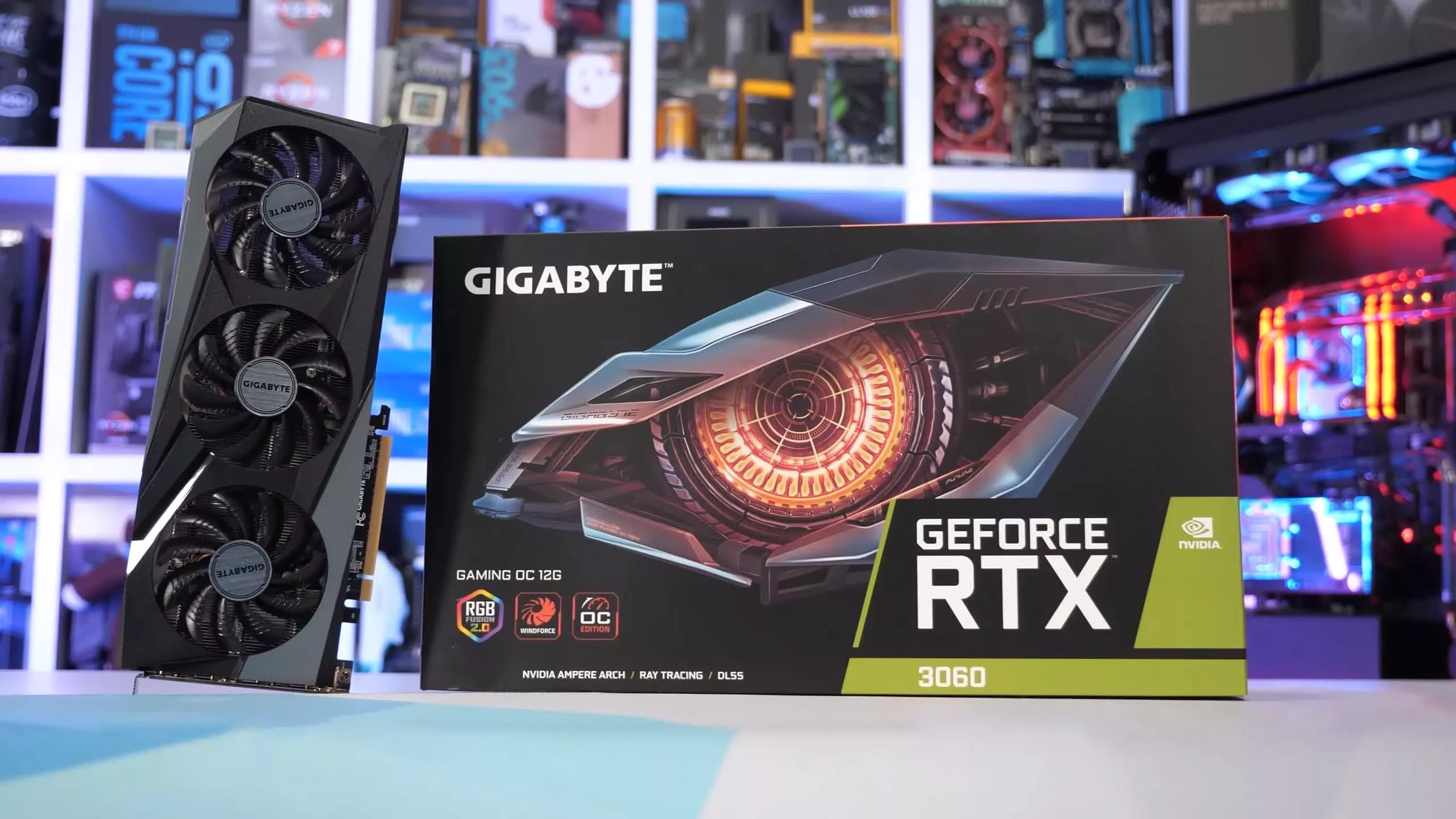
At the beginning of January, leaker hongxing2020, who has a long and impressive record when it comes to revealing Nvidia's plans, claimed Team Green has told its partners that the RTX 3060 will be returning in the first quarter of 2026.

Now, a post on the Chinese forum Board Channels has given a more solid timeline. It claims that the RTX 3060 series from various brands will begin to arrive between March 10 and March 20, which is when manufacturers can officially start shipping.

In addition to the original RTX 3060 and its 12GB of VRAM, there's a cut-down model with 8GB and a reduced memory bus (192-bit vs. 128-bit). If a relaunch does happen, we still don't know if it will involve one or both of these cards.

The impact of the AI-driven memory crisis has been well-documented, affecting a myriad of products. During its blockbuster earnings call last month, Nvidia warned that GPU supply is going to be very tight over the next few quarters as a result.

Why Nvidia has decided to return the RTX 3060 rather than the RTX 4060 isn't clear. One likely reason is simple capacity. The RTX 4060 (AD107) is made on TSMC's custom 4N process, which Nvidia relies on for much of its newer lineup, so ramping that card back up could mean fighting for the same wafer capacity Nvidia wants reserved for higher-margin parts.

By comparison, the RTX 3060 (GA106) is an older Samsung 8N product, which could let Nvidia add volume without pulling from TSMC allocations.

There's also a product-positioning angle: the 12GB RTX 3060 has stayed popular largely because it offers more VRAM than mainstream successors like the 8GB RTX 4060, making it an easy stopgap in a market where memory capacity has become a bigger selling point.

These are still rumors and speculation, of course, so take them with a grain of salt. However, Nvidia CEO Jensen Huang said in January that releasing older cards featuring modern AI tech was a "good idea." Ultimately, the potential relaunch of a card from two generations ago really illustrates the state of the market right now.

Permalink to story:

 
Bringing back the 3060 makes sense from a Fab capacity point of view. But even at 8 GB it’s a only wash on memory.

It only really helps people just getting into gaming from now until 2028, because current gamers interested in a 3060 would have upgraded to it or the 4060 or 5060 already. But maybe there’s enough PC gaming growth to justify that.
 
Also, it came with 12gb?! Then why did they drop it to 8gb on the RTX 4060 and RTX 5060?!
 
Also, it came with 12gb?! Then why did they drop it to 8gb on the RTX 4060 and RTX 5060?!
To make you buy the next tier up in cards. And if you go by die space, the 4060 and 5060 are closer to 50 class cards anyway.

But I have a bit of a conspiracy. What if nVidia planned on having massive amounts of memory on its AI chips and thought have console levels of memory for low-end, excuse me, mid ranged GPUS was "good enough" and redirected that memory supply to AI chips?
 
To make you buy the next tier up in cards. And if you go by die space, the 4060 and 5060 are closer to 50 class cards anyway.

But I have a bit of a conspiracy. What if nVidia planned on having massive amounts of memory on its AI chips and thought have console levels of memory for low-end, excuse me, mid ranged GPUS was "good enough" and redirected that memory supply to AI chips?
Valid reasoning tbh
 
Same as Apple.. give you something at the bottom end which seems "cheap"... then make the "mid level" much more expensive again for something you actually want, and the "high end" stupidly expensive / your big profit margins. So basically allows nvidia an excuse to jack everything above the ampere series $200-300.

I'm interested to see how they spin the marketing on this, because it's pretty much "heeey.. remember those cards that were obsolete years ago THEY'RE BACK!!"
 
Let's say they put GDDR6X memory on Blackwell and sell it at half the price, would you buy it? Probably not. In reality, they likely wouldn't sell it at half the price. So, why would anyone buy Ampere today? For CUDA? If you are looking to buy Ampere now, CUDA isn't the deciding factor. It's not just that it can no longer withstand competition from AMD and Intel, it is also overshadowed by newly introduced features.

The only sensible move would be to go back one generation but take a step forward by doubling the memory to GDDR6X and increasing the bus width. Imagine a 4060 Ti, 4070 Ti, and 4080 Ti with 32 GB of GDDR6X and double the memory bus width at the same price. Furthermore, NVIDIA should prepare to double the memory on later revisions of Blackwell, as the market will soon expect higher capacities for Blackwell as well. In short, today there are no margins left in Ampere.

Back in 2022, when NVIDIA attempted to acquire Arm for $40 billion, SK Hynix was also valued at approximately $40 billion. Today, Arm's valuation stands at $130 billion, while SK Hynix's is $440 billion. NVIDIA should have predicted that in the AI era, "memory is the new logic," and instead should have attempted to acquire SK Hynix, which likely would not have triggered regulatory scrutiny.

Even now, if NVIDIA were to try to build memory fabs, it would be noteworthy if they could keep the total cost under $40 billion (for approximately 300,000 wafers per month with high yields), while at the same time resolve the involved patents and build the facilities "Elon-style" in under a year. If they could accomplish all of those things, it would be an “Athlon”. An alternative, though with different challenges (mainly political), would be to acquire ChangXin Memory Technologies (CXMT) and technologically improve and expand its capacity, which is currently around 300,000 wafers per month.

If NVIDIA remains without memory manufacturing capacity, it is akin to leaking its strategic essence. It is building an ecosystem where its strategic position is becoming less important than that of memory manufacturers. It is not as bad as it sounds, but it is not optimal for NVIDIA. It will also result in higher prices for the end products.
 
It makes some sense from the business perspective since Ampere was Samsung 8nm and they want as much as possible TSMC allocation for AI. Now who will buy this 3060 today it's a hard question. Depends on the price and the VRAM buffer size of course. Second hand right now I see 230-250 Euro the 12Gb model. How low are they releasing this?
 
Let's say they put GDDR6X memory on Blackwell and sell it at half the price, would you buy it? Probably not. In reality, they likely wouldn't sell it at half the price. So, why would anyone buy Ampere today? For CUDA? If you are looking to buy Ampere now, CUDA isn't the deciding factor. It's not just that it can no longer withstand competition from AMD and Intel, it is also overshadowed by newly introduced features.

The only sensible move would be to go back one generation but take a step forward by doubling the memory to GDDR6X and increasing the bus width. Imagine a 4060 Ti, 4070 Ti, and 4080 Ti with 32 GB of GDDR6X and double the memory bus width at the same price. Furthermore, NVIDIA should prepare to double the memory on later revisions of Blackwell, as the market will soon expect higher capacities for Blackwell as well. In short, today there are no margins left in Ampere.

Back in 2022, when NVIDIA attempted to acquire Arm for $40 billion, SK Hynix was also valued at approximately $40 billion. Today, Arm's valuation stands at $130 billion, while SK Hynix's is $440 billion. NVIDIA should have predicted that in the AI era, "memory is the new logic," and instead should have attempted to acquire SK Hynix, which likely would not have triggered regulatory scrutiny.

Even now, if NVIDIA were to try to build memory fabs, it would be noteworthy if they could keep the total cost under $40 billion (for approximately 300,000 wafers per month with high yields), while at the same time resolve the involved patents and build the facilities "Elon-style" in under a year. If they could accomplish all of those things, it would be an “Athlon”. An alternative, though with different challenges (mainly political), would be to acquire ChangXin Memory Technologies (CXMT) and technologically improve and expand its capacity, which is currently around 300,000 wafers per month.

If NVIDIA remains without memory manufacturing capacity, it is akin to leaking its strategic essence. It is building an ecosystem where its strategic position is becoming less important than that of memory manufacturers. It is not as bad as it sounds, but it is not optimal for NVIDIA. It will also result in higher prices for the end products.
You are approaching this wrong. They are not trying to make a good product. They are trying to make a just good enough to hold off the masses wanting a somewhat affordable price product.
 
Let's say they put GDDR6X memory on Blackwell and sell it at half the price, would you buy it? Probably not. In reality, they likely wouldn't sell it at half the price. So, why would anyone buy Ampere today? For CUDA? If you are looking to buy Ampere now, CUDA isn't the deciding factor. It's not just that it can no longer withstand competition from AMD and Intel, it is also overshadowed by newly introduced features.

The only sensible move would be to go back one generation but take a step forward by doubling the memory to GDDR6X and increasing the bus width. Imagine a 4060 Ti, 4070 Ti, and 4080 Ti with 32 GB of GDDR6X and double the memory bus width at the same price. Furthermore, NVIDIA should prepare to double the memory on later revisions of Blackwell, as the market will soon expect higher capacities for Blackwell as well. In short, today there are no margins left in Ampere.

Back in 2022, when NVIDIA attempted to acquire Arm for $40 billion, SK Hynix was also valued at approximately $40 billion. Today, Arm's valuation stands at $130 billion, while SK Hynix's is $440 billion. NVIDIA should have predicted that in the AI era, "memory is the new logic," and instead should have attempted to acquire SK Hynix, which likely would not have triggered regulatory scrutiny.

Even now, if NVIDIA were to try to build memory fabs, it would be noteworthy if they could keep the total cost under $40 billion (for approximately 300,000 wafers per month with high yields), while at the same time resolve the involved patents and build the facilities "Elon-style" in under a year. If they could accomplish all of those things, it would be an “Athlon”. An alternative, though with different challenges (mainly political), would be to acquire ChangXin Memory Technologies (CXMT) and technologically improve and expand its capacity, which is currently around 300,000 wafers per month.

If NVIDIA remains without memory manufacturing capacity, it is akin to leaking its strategic essence. It is building an ecosystem where its strategic position is becoming less important than that of memory manufacturers. It is not as bad as it sounds, but it is not optimal for NVIDIA. It will also result in higher prices for the end products.
There are no bad products, only bad prices.

This can be made on older nodes that aren't seeing as much use and cheaper. If these hot the market for cheap and help someone put together their first gaming PC, great. Cheap ways to enter the hobby these days are getting difficult to find. Should the hardware landscape be better? Yeah, but this is the world we live in. You've gotta piss with the **** you've got.
 
You are approaching this wrong. They are not trying to make a good product. They are trying to make a just good enough to hold off the masses wanting a somewhat affordable price product.

Indeed. Steer all GPU wafer capacity towards business grade products, and direct faster memory towards professional products as well. Plus, by using GDDR6 for the 3060, they can also steal from AMD's GDDR6 supply. Implying that the volume of GPU's for the consumer will not increase, but rather decrease, as Nvidia and AMD will be fighting over the same GDDR6 bone.
 
Kinda insulting to their gaming community. They could’ve allocated more memory towards their 5xxx series - they just choose not to, instead they’re planning a «here’s a piece of rotten bread! What?! At least it’s food!»
 
Same as Apple.. give you something at the bottom end which seems "cheap"... then make the "mid level" much more expensive again for something you actually want, and the "high end" stupidly expensive / your big profit margins. So basically allows nvidia an excuse to jack everything above the ampere series $200-300.

I'm interested to see how they spin the marketing on this, because it's pretty much "heeey.. remember those cards that were obsolete years ago THEY'RE BACK!!"
This is such a simplistic post. I mean… the RTX 3060 having 12GB of VRAM ironically makes it less obsolete than some newer mid range cards. Currently, there is a memory supply issue, reviving a mature GPU that’s cheap to produce and already validated is a pretty logical stopgap. Nobody’s pretending it’s a new product it’s just filling the budget slot while newer GPUs are constrained due to TSMC.

And.....Apple isn’t raising Mac prices despite the same memory supply pressure, so not every company is using it as an excuse to jack prices. Some are just adjusting production instead. The MacBooks, Minis and AIO's are all the same price they were at launch.
 
This is such a simplistic post. I mean… the RTX 3060 having 12GB of VRAM ironically makes it less obsolete than some newer mid range cards. Currently, there is a memory supply issue, reviving a mature GPU that’s cheap to produce and already validated is a pretty logical stopgap. Nobody’s pretending it’s a new product it’s just filling the budget slot while newer GPUs are constrained due to TSMC.

And.....Apple isn’t raising Mac prices despite the same memory supply pressure, so not every company is using it as an excuse to jack prices. Some are just adjusting production instead. The MacBooks, Minis and AIO's are all the same price they were at launch.
There is no guarantee this will have 12gb of RAM. People such as yourself are just assuming so. With the pricing of memory right now it would be counter-intuitive for profit margins to even consider 12gb, and why would you even offer it? The only reason you release such a card is for profit margin - old tech, older production, cheaper memory = bigger profit.

And.....Apple isn’t raising Mac prices despite the same memory supply pressure

The price jump between say 16gb, 24gb and 32gb has always been huge, way above the retail difference of each, similar for storage sizes, way before recent memory pricing. It only seems more reasonable now because of the skyhigh pricing of memory for everybody else.
 
There is no guarantee this will have 12gb of RAM. People such as yourself are just assuming so. With the pricing of memory right now it would be counter-intuitive for profit margins to even consider 12gb, and why would you even offer it? The only reason you release such a card is for profit margin - old tech, older production, cheaper memory = bigger profit.


The price jump between say 16gb, 24gb and 32gb has always been huge, way above the retail difference of each, similar for storage sizes, way before recent memory pricing. It only seems more reasonable now because of the skyhigh pricing of memory for everybody else.
The 12GB wasn’t some random generosity from Nvidia, it was a byproduct of the 192-bit bus configuration. That layout basically lands you at 6GB or 12GB. You should go read on how memory bus works.

If they’re reviving the same Ampere design, 12GB is the logical option unless they deliberately cripple it. But I digress, Nvidia does Nvidia.

And Apple hasn’t raised Mac prices despite the same memory pressure. I never said they did not charge a higher price for more, only that they have not raised their prices today versus last year.
 
Back