
What we know so far: As the server battle between AMD and Nvidia enters a new phase, the two companies have begun trading jabs through performance estimates and early benchmarks. While Nvidia-approved results suggest its Vera processors outperform most AMD Epyc chips, Team Red believes its upcoming Venice lineup can leave Vera in the dust.
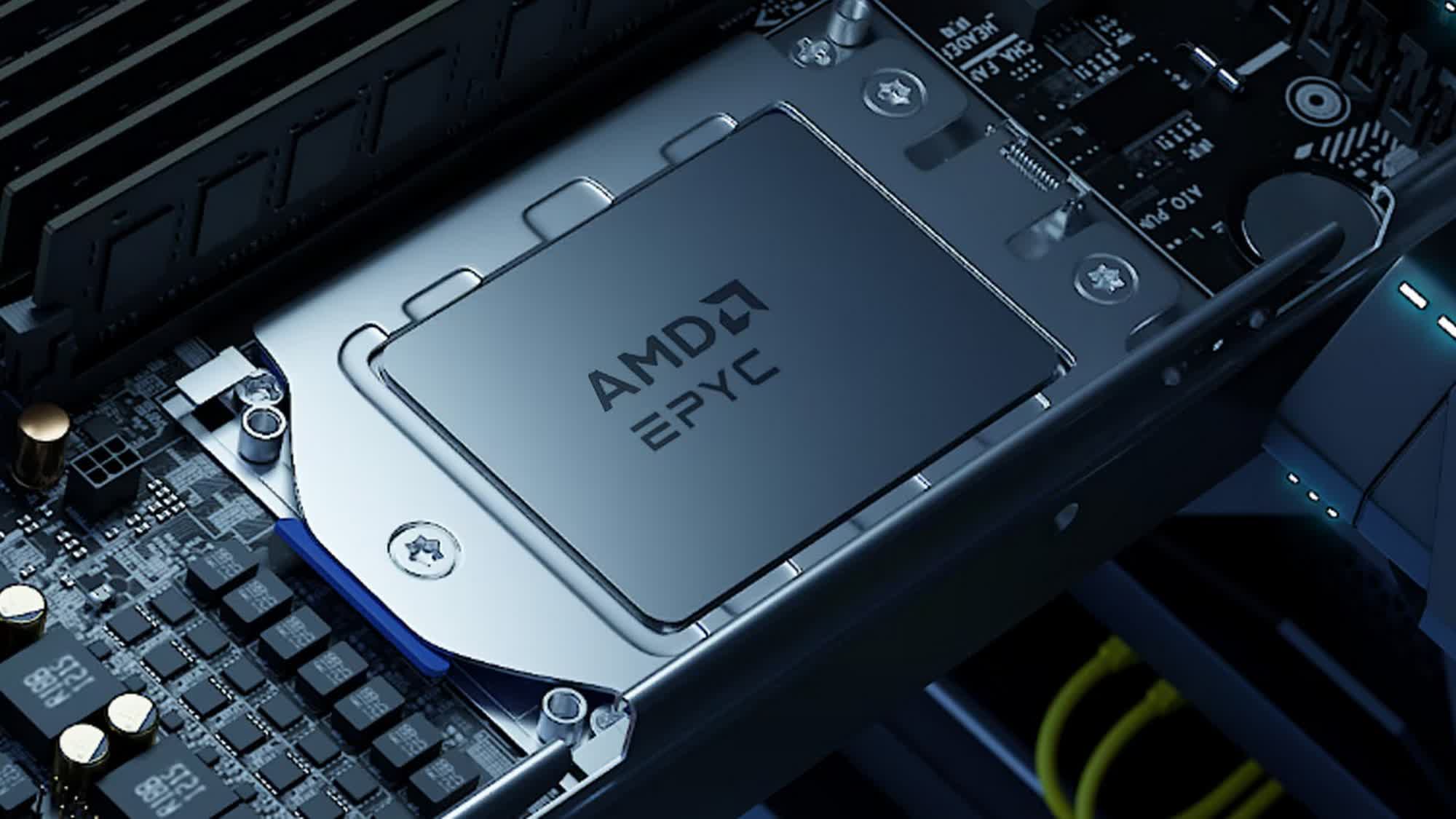
AMD recently published performance projections claiming its upcoming server CPU platform will dramatically outpace Nvidia's latest showing. AMD's estimates directly reference earlier results from controlled benchmarks that had favored Nvidia's processor.
Team Red's next data center CPU platform recently entered production and is on track to launch later this year. Built on AMD's Zen 6 architecture, Epyc Venice chips will offer up to 256 cores and 512 threads. The lineup also marks AMD's transition to TSMC's 2nm process, a jump directly from the 4nm Epyc Turin that skips the 3nm node entirely.
AMD is projecting a 70% overall improvement in performance and efficiency over Turin, along with a 30% increase in thread density.
Nvidia, for its part, formally launched its Vera server CPU at GTC in March. The Arm-based SoC packs 88 cores and 176 threads. In recent benchmarks, Phoronix described Vera as the most capable Arm processor it has ever tested, outclassing Intel Xeon and AMD Epyc across most workloads. However, the tests were conducted at Nvidia's headquarters and came with several restrictions to ensure Nvidia's sign-off.
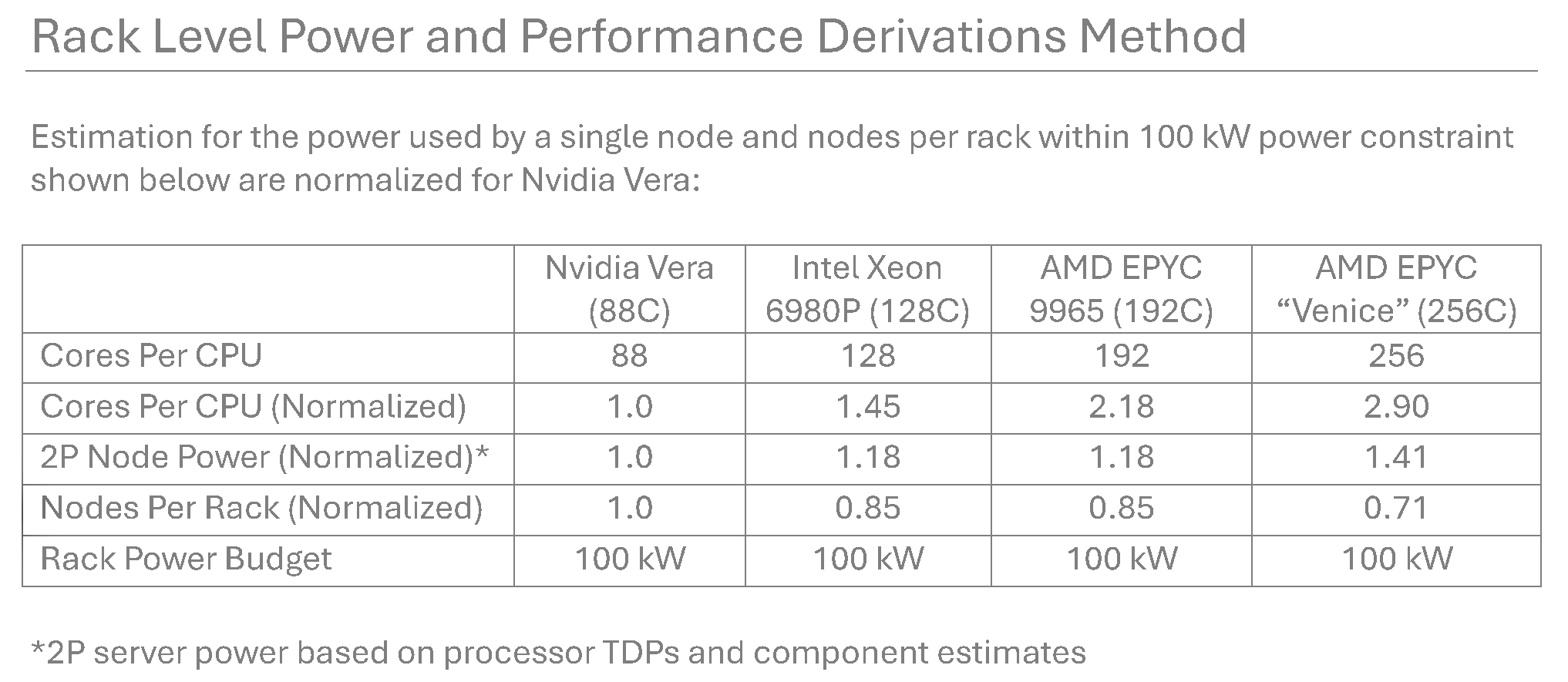
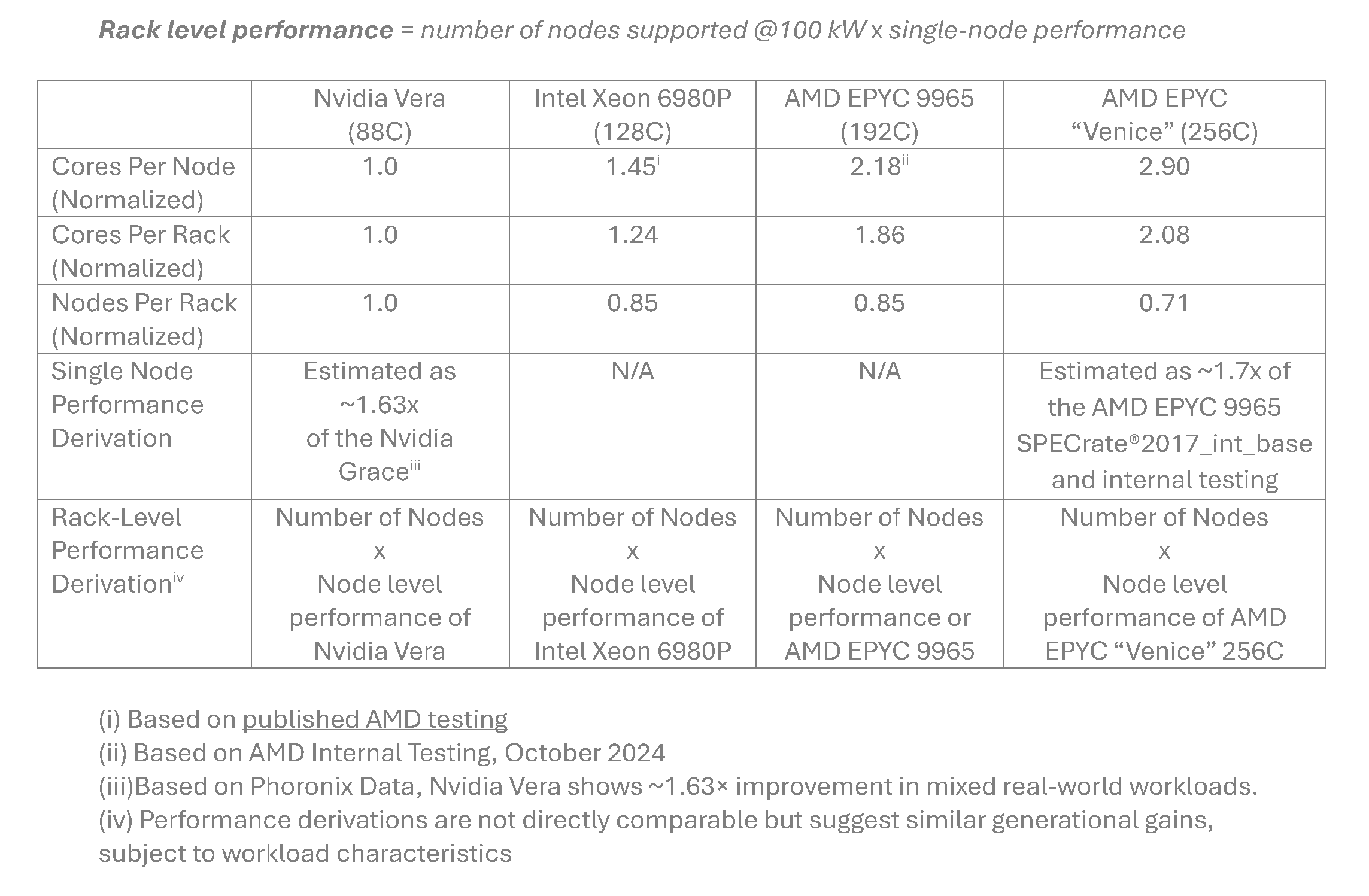
AMD drew on Phoronix's figures when building the methodology for its Venice projections.
Comparing core counts per CPU, node power, nodes per rack, and a 100kW rack power budget, the company estimates Venice will deliver 3.3 times Vera's per-rack performance. AMD also projects its 192-core Epyc 9965 Turin and the 128-core Intel Xeon 6980P GNR-AP can reach 2.37x and 1.46x of Vera's output, respectively.
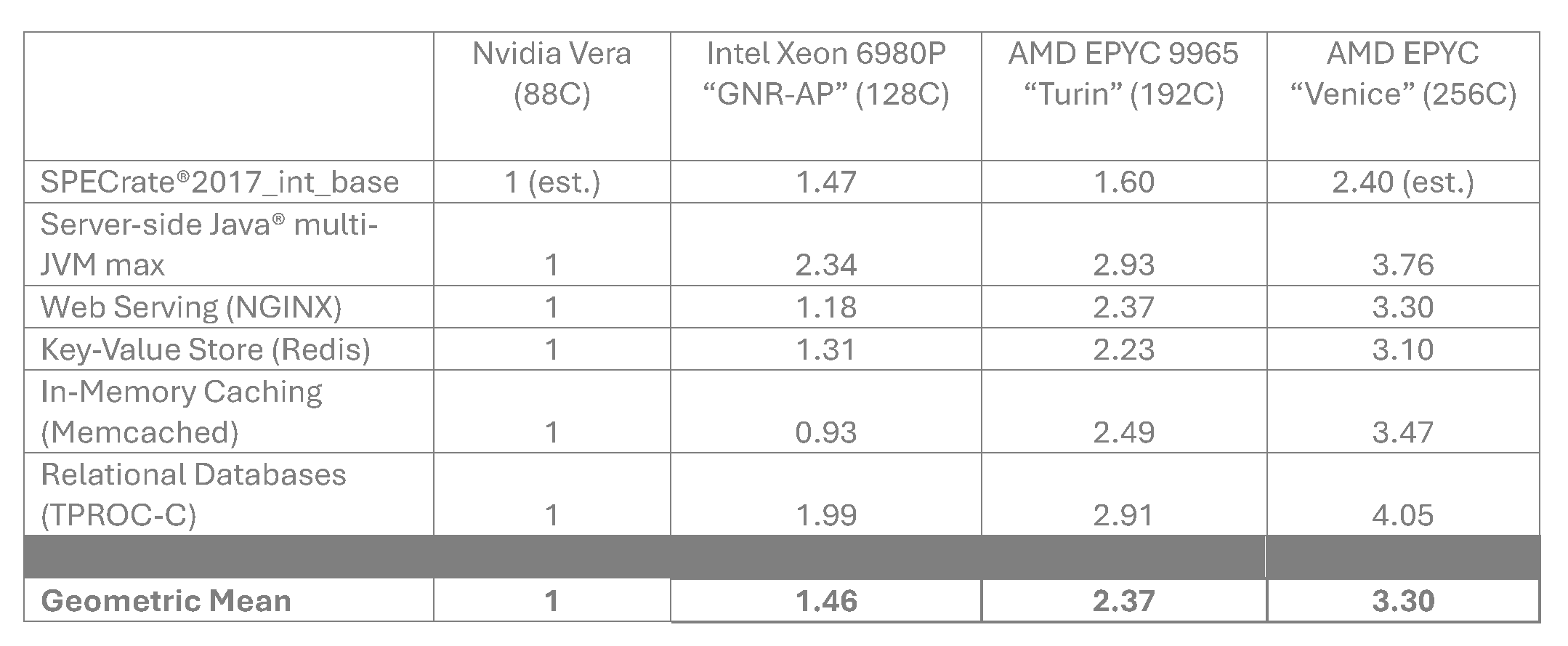
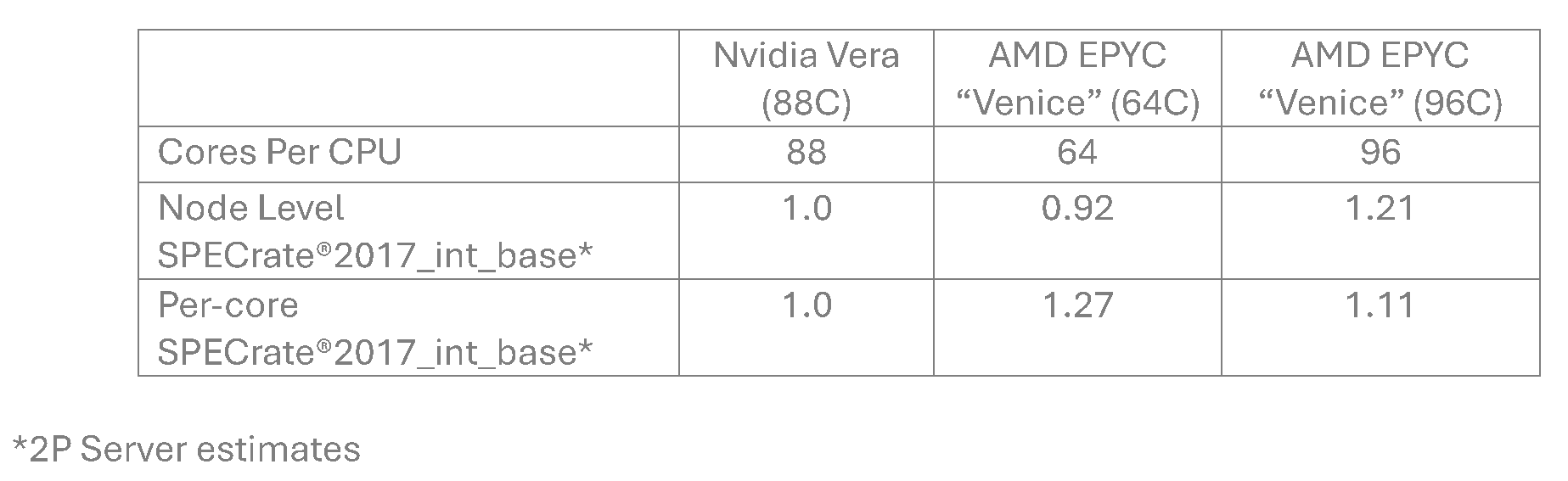
AMD is also challenging Nvidia on per-core performance, claiming a 64-core Venice chip can beat Vera by 27%, with the 96-core variant edging it by 11%.
As both processors target AI workloads, AMD argues that Venice's higher core counts will translate into a meaningful advantage for agentic AI deployments. Even so, the true performance gap will remain uncertain until independent benchmarks arrive.
While promoting Venice's theoretical performance, AMD is already hinting at what comes next. "Verano" will be AMD's first CPU designed specifically for AI infrastructure. That chip is expected to introduce the Zen 7 architecture. Supply chain reports suggest Zen 7 will target TSMC's A14 node, a 1.4nm-class process that would mark AMD's entry into the angstrom era and deliver further gains in performance and efficiency beyond 2nm. AMD has not confirmed those details.
AMD claims next-gen Zen 6 server CPU will deliver 330% of Nvidia Vera's performance per rack


