Nvidia's $57 billion quarter shows the AI boom isn't slowing down, for now

Skye Jacobs

Posts: 1,913   +58
Staff
TL;DR: Nvidia's third fiscal quarter, which ended on October 26, 2025, not only surpassed the company's previous sales records but further cemented its position at the center of the artificial intelligence hardware ecosystem. The Santa Clara-based chipmaker reported $57 billion in GAAP revenue, a 62 percent increase year-over-year and a 22 percent sequential rise from the previous quarter. Gross margins reached 73.4 percent, remaining within a narrow and stable range quarter-over-quarter despite ongoing supply constraints at the high end and intense competition for GPU capacity.
Nvidia's data center segment accounted for $51.2 billion, an extraordinary 66 percent increase year-over-year and a 25 percent sequential rise.

Compute hardware – specifically Nvidia's Blackwell and Blackwell Ultra platforms – was in such high demand among hyperscale cloud providers, large enterprise AI deployments, and sovereign AI initiatives that the company effectively ran out of inventory throughout the quarter.

Networking hardware contributed an additional $8.2 billion, a substantial increase from prior periods as the market continued shifting toward larger rack-scale AI systems and away from isolated server clusters.

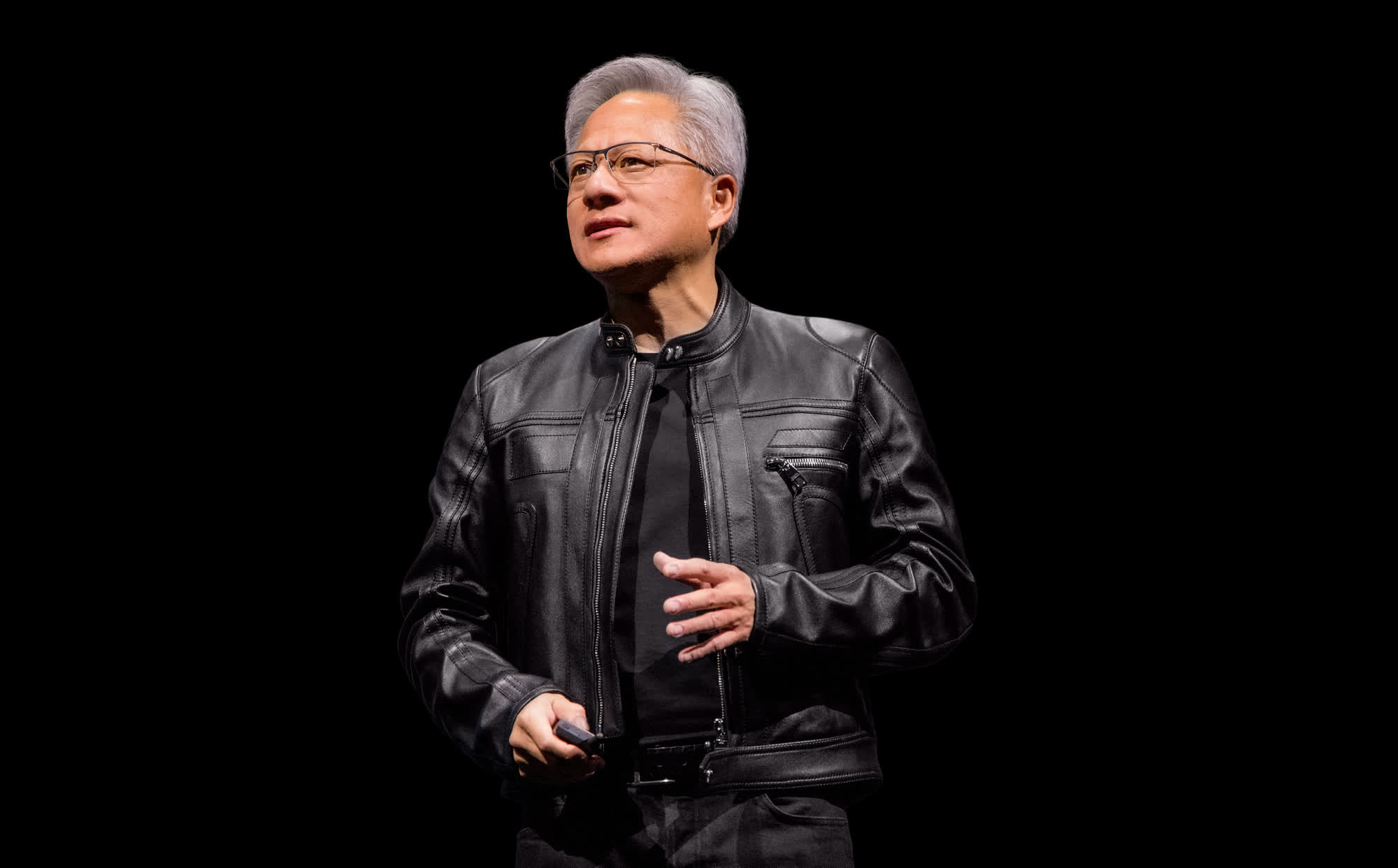
CEO Jensen Huang described the overwhelming demand as a reflection of the rapidly expanding AI ecosystem. He characterized GPU acceleration for both training and inference as "compounding," and expressed strong confidence in the durability of the current growth trajectory.

Huang also addressed concerns about a potential "AI bubble." On the earnings call, he emphasized that Nvidia sees broad, diversified demand spanning cloud providers, industries, and global regions – not a speculative spike.

He rejected comparisons to past technology cycles, including the dot-com era, arguing that Nvidia is being propelled by three simultaneous platform shifts: the widespread adoption of accelerated computing, the transformation driven by generative AI, and the rapid emergence of agentic and physical AI applications. "There's been a lot of talk about an AI bubble. From our vantage point, we see something very different," Huang said.

Growth was not uniform across segments. Gaming GPUs generated $4.27 billion in revenue – a 30 percent year-over-year increase but slightly below the previous quarter. With consumer graphics demand peaking and inventories stabilizing ahead of the holiday season, the segment trailed Nvidia's strong performance elsewhere, though it still marked the company's second-best quarter on record for consumer GPUs.
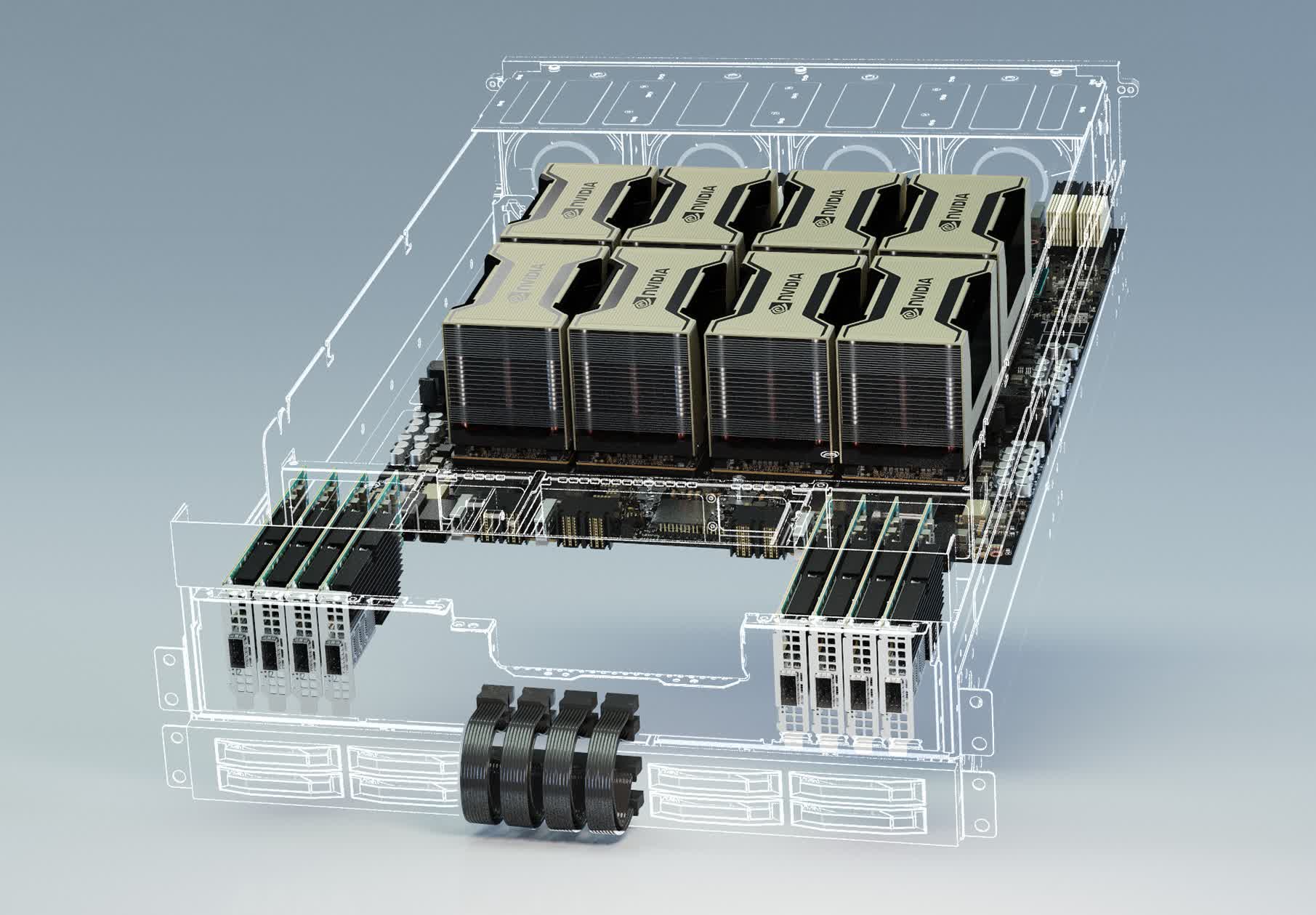
Professional visualization products – including the DGX Spark AI workstation and Blackwell-based GPUs for industrial workloads – reached $760 million, setting new industry benchmarks for workstation compute in fields such as CAD, digital content creation, and AI-driven design.

Nvidia's acceleration since the release of OpenAI's ChatGPT has been central to the AI market's explosive expansion. The company now holds a commanding lead in the global GPU market, and executives cited more than $500 billion in outstanding orders for the Blackwell and Rubin platforms.

Strategic corporate investments have also helped fuel Nvidia's growth. The company has repurchased its own shares and committed capital to AI firms that, in many cases, are also major customers – including OpenAI, CoreWeave, and Elon Musk's xAI. A growing number of partnerships – now including OpenAI competitor Anthropic – are integrating their generative AI platforms directly onto Nvidia hardware to deepen technical collaboration and accelerate workloads as AI applications diversify.

Despite the optimism, some institutional investors have raised concerns about potential overextension. Their worries focus on the possibility of a slowdown if supply chain constraints or energy limitations hinder data center construction – a significant risk given that roughly 90 percent of Nvidia's revenue now comes from data center demand, a dramatic shift from its gaming-focused origins.

Nvidia's guidance projects continued expansion, forecasting Q4 revenue of $65 billion, well above average analyst estimates. However, company leadership acknowledges that headline growth may begin to normalize, with annual revenue expansion expected to ease from recent triple-digit gains to roughly 64 percent in the next fiscal year.

Permalink to story:

 
The data centers are being built not just for AI, but for our own digital prison - the surveillance state is being built out right in front of us, with some of the obvious benefits (/s) being higher electricity/energy prices, water shortages and/or price increases, and of course Big Brother being in your own neck of the woods. The data centers will house your every single post, video, picture, SMS, literally everything you do online, a profile is being built around you for future compliance with the State and your Digital ID. 1984 is already here.
 
When the boom turns to dust, Jensen is going to have to sell that leather jacket. 🤣

I wish him well, but I think he's addicted to the success Nvidia is presently seeing. Like all success stories, it will not last forever.

In this case, I think that once more people satisfy their curiosity cat, AI will be relegated to a niche product, if it survives at all.
 
"Nvidia's $57 billion quarter shows the AI boom"
There's no AI boom. Nvidia gives money to companies like OpenAI, as "investments", so they can purchase AI accelerators from it using that money. Nvidia only gets back the money it gave to said companies, but can put that on its books as revenue. In the end it appears as if Nvidia would have made money, when all it did was giving its product away without actually ending up with more money in the bank.
 
"Nvidia's $57 billion quarter shows the AI boom"
There's no AI boom. Nvidia gives money to companies like OpenAI, as "investments", so they can purchase AI accelerators from it using that money. Nvidia only gets back the money it gave to said companies, but can put that on its books as revenue. In the end it appears as if Nvidia would have made money, when all it did was giving its product away without actually ending up with more money in the bank.
If Jensen/Nvidia had even an iota of integrity, this would be accounted for or at least explained in their earnings statement. I have to wonder if what they are doing is even legal without explaining how this is happening. Most people are only going to look at the bottom line, however, this sort of thing is very deceptive since they are, essentially, recycling their profit which makes it look like they are more profitable than they really are.

It sounds like the SEC should look closely at them.
 
If Jensen/Nvidia had even an iota of integrity, this would be accounted for or at least explained in their earnings statement. I have to wonder if what they are doing is even legal without explaining how this is happening. Most people are only going to look at the bottom line, however, this sort of thing is very deceptive since they are, essentially, recycling their profit which makes it look like they are more profitable than they really are.

It sounds like the SEC should look closely at them.
Circular investing is considered a scam, but the SEC won't do anything because, much like 2007, they don't want to crash the economy to stand on principle.
The data centers are being built not just for AI, but for our own digital prison - the surveillance state is being built out right in front of us, with some of the obvious benefits (/s) being higher electricity/energy prices, water shortages and/or price increases, and of course Big Brother being in your own neck of the woods. The data centers will house your every single post, video, picture, SMS, literally everything you do online, a profile is being built around you for future compliance with the State and your Digital ID. 1984 is already here.
Just look at what is being recorded with those FLOK cameras.

There is no privacy anymore.
 
What chip shortage? There are plenty of chips, so much so that utility companies can't provide power to all the data centers we are building. Companies are buying stuff they can't use and sitting on it so their competition can't have access to it. Banks and VC have stopped lending money to AI, that should be a warning for everyone.
 
No matter how real the numbers are, panics is down on Wall Street over the typical clueless investors because a bunch of shorters brainwashed everyone into believing the biggest market caps technological companies were broke...

Just FYI, they are not, and this whole bear market is going to phase out sooner than later.
 
What chip shortage? There are plenty of chips, so much so that utility companies can't provide power to all the data centers we are building. Companies are buying stuff they can't use and sitting on it so their competition can't have access to it. Banks and VC have stopped lending money to AI, that should be a warning for everyone.
No, that's MS stance, not the industry. Google is not in this position as much as others.

MS main business are datacenter and cloud, they cannot modify their footprint that they already maximized.

And as I mentioned and told you, these companies are going to find power in other countries if they really need to. It is a non-issue in reality.
 
Circular investing is considered a scam, but the SEC won't do anything because, much like 2007, they don't want to crash the economy to stand on principle.
The economy ALWAYS was circular. You are the one not understanding anything.

2008 happened because the loans in commercial paper were unsolvable at the minute the housing market drop because the assets were worth less than the loans since people were having no down payments. That's how the banks crashed.
 
No, that's MS stance, not the industry. Google is not in this position as much as others.

MS main business are datacenter and cloud, they cannot modify their footprint that they already maximized.

And as I mentioned and told you, these companies are going to find power in other countries if they really need to. It is a non-issue in reality.
I work in commercial construction for the largest construction company in the north east US. I have built several data centers over the last 2 years. I am privvy to information you don't have access to and have multiple NDAs preventing me from talking about this further. All I can say is that if MS is having issues opening their data centers as a trillion dollar company where capital is not an issue then it stands to reason that many smaller companies are having similar issues. Just because this information is not public does not mean it is not true
 
Just wait for these "AI centers" to become self aware & start communicating with each other...
SKYNET! ;) 🤣
 
The economy ALWAYS was circular. You are the one not understanding anything.
Yeah, it seems it's you who doesn't understand even the principles. Because everything you brought up (like availability of energy) is irrelevant in spite of:
1) AI not leading to any benefits or net returns in 95% of cases where it is applied, according to several studies, despite being free or offered at prices far under the actual cost in virtually all cases
2) AI not being sustainable, not in the environmental, and not in the financial sense. Investments by OpenAI, Microsoft,etc. into AI hardware/energy have no chance to pay off and make a profit, not even in 100 years at their current rates. In reality they all these companies are just hemorrhaging money every time someone uses their AI services - just like banks were on the housing market (which, again, defeats your own argument for AI being somehow "different" - it's not).

Of course these companies could try to charge more, but that would just lead to that 95% of (non-)use cases (where using AI would not make financial sense) to increase 99.99999% of all cases, and therefore would lead to AI companies generating possibly even less revenue than now.

And don't even get me started about how much harm is done to both society and economy by AI (through fake news, fake products, fake reviews, allowing people to pass exams without actually knowing things, hallucinating completely false/fabricated information even when not specifically intended to create false narratives or propaganda, etc.). So, even if AI would be able to deliver on most of its promises (which it's actually incapable of), the net result of using it would still be a negative as a whole.
 
Why the..."for now" part in the title? We've all seen Nvidia go from a small GPU company in the 2000s to the titan it is today. U need to buy a new GPU every3-4 years, AI will be no different. It'll keep growing and growing just like the gaming GPUs did. We are still in the ridiculously early stages of generitive AI. Agentic is next, and then full General AI and each of these will have their own stages. Blackwell GPUs will be to Agentic AI the way a Geforce 1070 is to Cyberpunk. It simply wont run at full settings.
 
Back