Nvidia's upcoming Blackwell RTX GPUs might feature a Titan AI model

midian182

Posts: 11,722   +177
Staff member
Rumor mill: Will Nvidia resurrect the mighty Titan brand with its next-generation Blackwell GPUs? It's been years since we last saw a new model, but according to several rumors, including one from what is a typically reliable source, there will be a new Titan graphics card, but you might never be able to buy one.
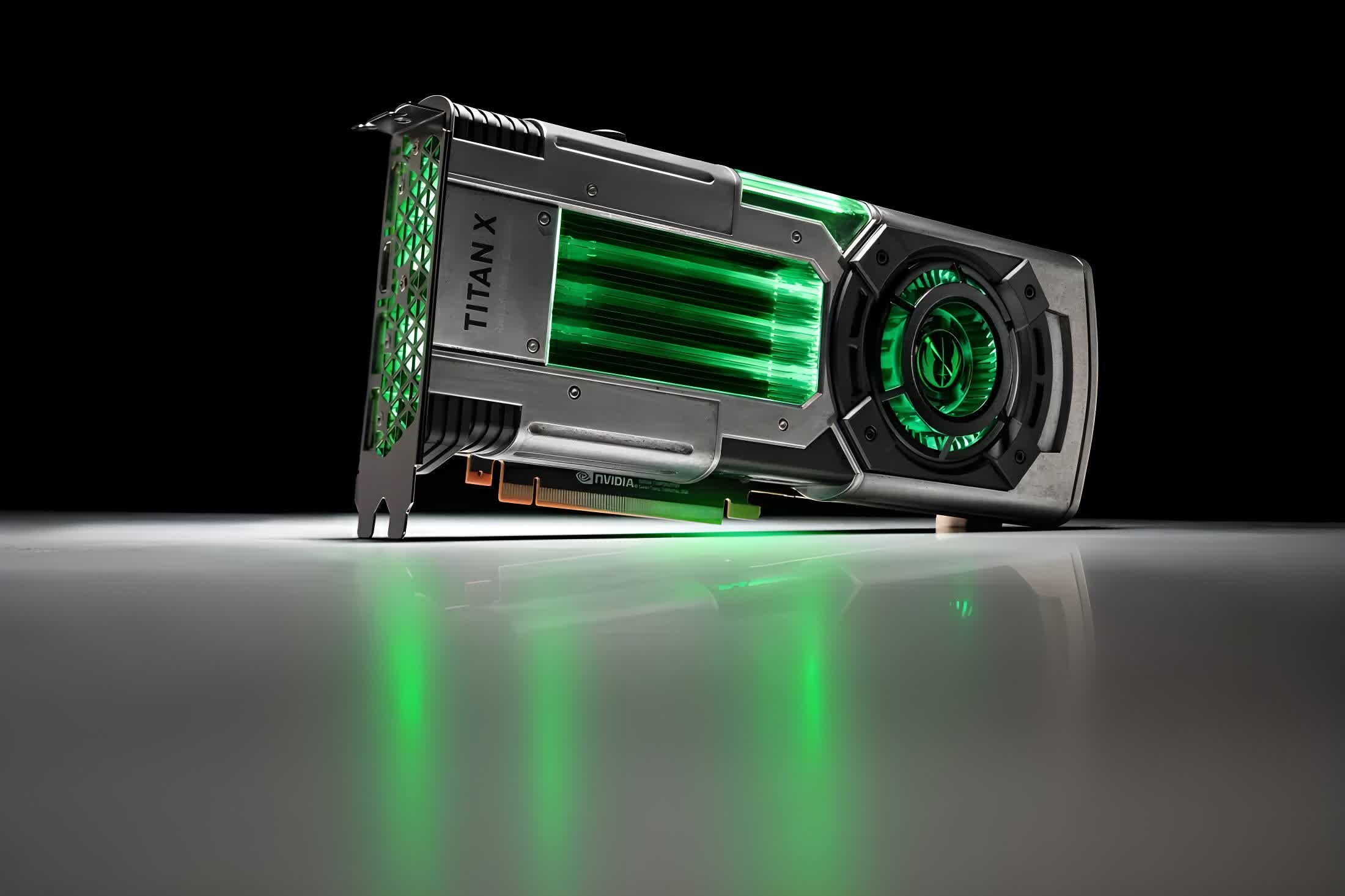
A video from RedGamingTech claims there will be a "Titan AI" graphics card. It's said to be based on the GB202 GPU, which is supposedly also heading for the RTX 5090. According to rumors in March, the GPU will use the same TSMC 4N foundry node as the GB100 designed for AI acceleration and computing applications. TSMC still considers 4N a derivative of the 5nm EUV node.

The YouTube channel believes that the Titan AI will have a wider bus and more memory than the RTX 5090, 50% more Cuda cores, and Nvidia will enable more Streaming MultiProcessors. All of which will push its performance 15% higher than the RTX 5090 and a massive 63% higher than the RTX 4090.

When asked by VideoCardz if there are plans for a new Titan, prolific and usually accurate leaker Kopite7kimi said "The big thing exists."

Nvidia released the first Titan card, based on the Kepler architecture, in 2013. Others followed – Titan Black, Z, X, Xp, V – with the last official release being the Turing-based Titan RTX in 2018.

There were rumors that Nvidia planned to release a Titan as part of the RTX 3000-series Ampere line, but the RTX 3090 Ti became the top card. With the current Lovelace generation, there were reports of a Titan Ada that was allegedly canceled due to it tripping breakers, melting PSUs, and occasionally dissolving.
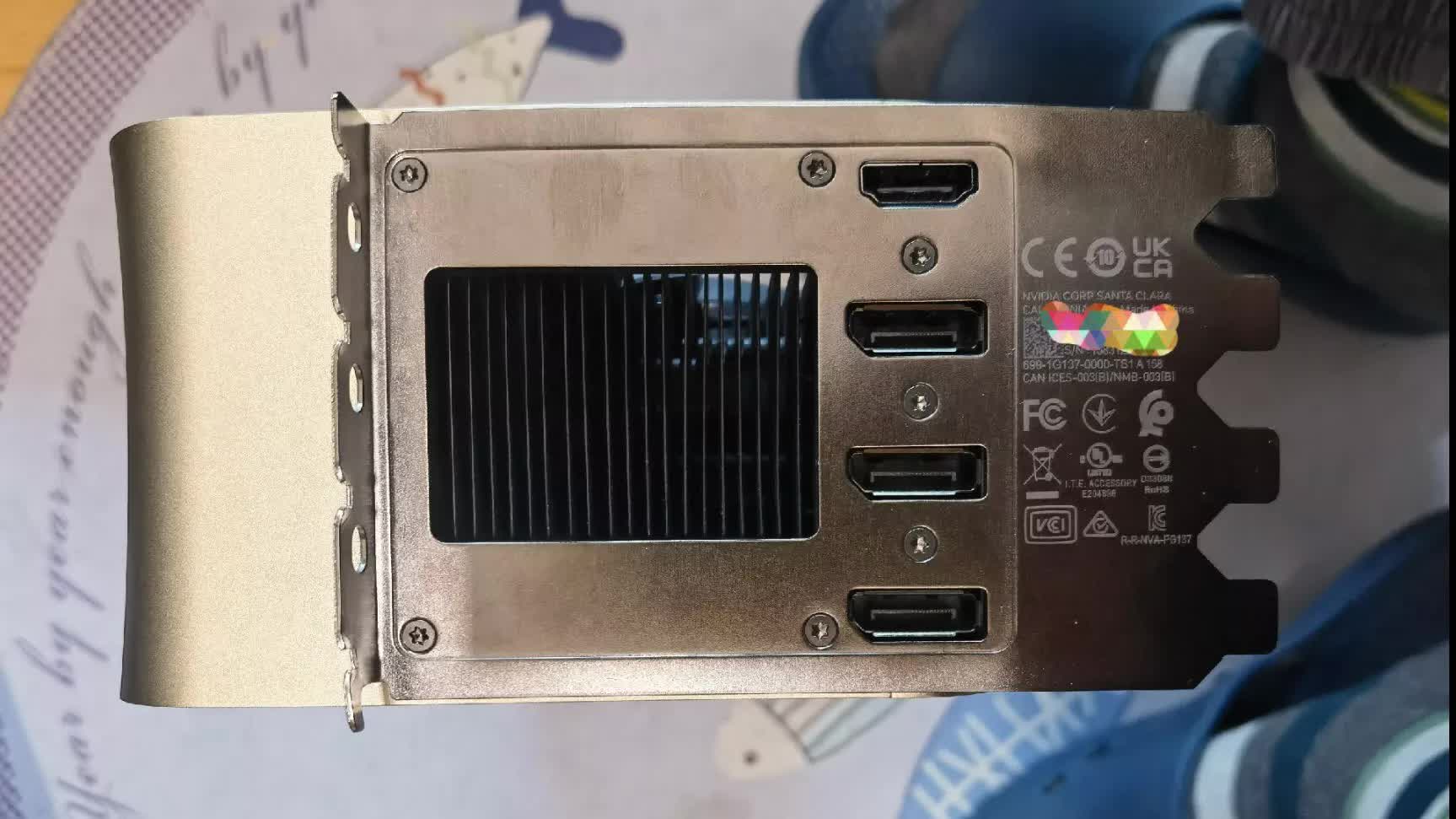
We even saw what were claimed to be images of a four-slot, 800W Titan RTX Ada featuring a vertical port layout. Nvidia could have considered factors like the price – it was a time of economic uncertainty – the lack of competition, and the restrictions on Chinese exports as other reasons not to release Titan RTX Ada, or whatever it might have been called.

In a separate post, kopite7kimi wrote "The biggest problem is whether it will actually be used for sale. Titan based on Ada Lovelace also exists, but it has never been sold."

It is interesting that the Blackwell Titan is rumored to carry the AI moniker. The industry is still obsessed with slapping the initialism on everything. But does it mean that the Titan will be more like a successor to the Nvidia RTX 6000 Ada Generation, which is designed for Gen AI, LLM development, content creation, and data science?

Permalink to story:

 
I suspect we never got a Titan because nVidia was busy selling their big chips to AI companies. Why sell a $30,000 card for $2000 when you can sell an $800 card for $2000?

I think sales are slumping on the hyperscale side for them and they might have to start selling graphics cards to gamers again. I also think that only the fattest of the whales will replace a 4090 with a 5090 or a Titan card. I know I **** on nVidia all the time, but I think history will remember the 4090 in the same way it remembers the 1080ti. I don't care how good the 5090 is, I don't think the hype train will compete even if it does provide mind blowing performance.
 
How do you get gamers to pay more for a x080ti card willingly just rebrand it as x090 card aka upcoming 5090. How do you get consumers to pay more for a x090 card just rename it as a Titan and add more vram aka upcoming Titan ai. I predicted this months ago when there was a 512 bit Blackwell gpu and the cut down version afterwards with 448 bit bus.
Pre 4090 launch there was rumors of a 7950xtx that was potentially better in rasterization than a 4090. This caused the 4090 to be overbuild with tdp heatsinks and some might say competitively priced in 2022. Unfortunately Blackwell has no such competing products in the pipeline. Unfortunately.
 
Last edited:
Lol, even if I had the money I wouldn't buy a giant card. Even if its 3 times faster than 4090. I might reconsider if its 10 times faster tho. ;p Anyways, too bad Total biscuit is not around anymore, he loved these titan cards. RIP.
 
I suspect we never got a Titan because nVidia was busy selling their big chips to AI companies. Why sell a $30,000 card for $2000 when you can sell an $800 card for $2000?

I think sales are slumping on the hyperscale side for them and they might have to start selling graphics cards to gamers again. I also think that only the fattest of the whales will replace a 4090 with a 5090 or a Titan card. I know I **** on nVidia all the time, but I think history will remember the 4090 in the same way it remembers the 1080ti. I don't care how good the 5090 is, I don't think the hype train will compete even if it does provide mind blowing performance.

5090 will be $2K, Titan Ai will be $3.5K+ It's still cheaper than a quadro though.
 
5090 will be $2K, Titan Ai will be $3.5K+ It's still cheaper than a quadro though.
See, I just don't see the demand being there for either the server side or the consumer side. Right now the issue for training on these AI models isn't the lack of power, it's the lack of data. Once you train the model actually running it isn't too demanding.

I see your prices for the 5090 and titan AI being relatively accurate, but I think we are about to see a slump in GPU sales from both consumers and datacenters.

I call them frame junkies, people who squeeze every last frame out of something they can, but I can't see anything after about 120 hz. 60 is acceptable and anything above 90 is perfect, imo. I notice a bigger difference going from 60 to 75 than I do going from 90 to 120.

The 4090 can already do just about every game with RT4k in the 75+ range just fine and I don't think going from 75 to 100fps is going to be worth spending ANOTHER 2k. They might launch at those prices, but I have a feeling after the scalpers buy the first round of cards we will see unofficial price drops instead of manufactures having to sell cards over MSRP to meet their margins.

TLDR; I don't think nVidia will sell another round of over priced cards considering current performance levels, economic conditions and market saturation.
 
Back