OpenAI is booming, but some say it's becoming "too big to fail"

Skye Jacobs

Posts: 2,006   +58
Staff
The takeaway: OpenAI's expansion continues unabated, fueled by investor optimism, government backing, and the promise of technological transformation. Whether OpenAI becomes a lasting cornerstone of the digital economy or a cautionary case study in excess may depend on its ability to turn the vision of superintelligent machines from aspiration to reality.

For nearly a decade, OpenAI has been Silicon Valley's most closely watched experiment. The company began as a nonprofit research lab in 2015 and now stands at the center of the global race to build artificial intelligence. Its valuation has climbed to about $500 billion, an extraordinary sum for a company that has yet to turn a profit.

OpenAI's rapid ascent has raised questions not only about its long-term sustainability but also about whether it has grown so large and intertwined with the broader economy that its failure could pose systemic risks.

The company's financial and operational structure links it to some of the most powerful organizations in the world. Microsoft's share price rose after OpenAI's most recent restructuring announcement, briefly pushing its own market value past $4 trillion. Later in the week, Nvidia became the first company valued at $5 trillion – gains that analysts attribute partly to its deep involvement in AI development and its collaboration with OpenAI.

The ChatGPT maker's partnerships extend beyond software and data, including commitments to major hardware purchases from companies such as Nvidia and Oracle, as the startup builds its computing infrastructure.

Supporters say these arrangements reflect sound long-term planning; OpenAI secures critical components for its models, while those providers lock in a growing customer base. Critics, however, note that these connections echo the interdependencies that once tied major banks together before the 2008 financial crisis – institutions that were deemed "too big to fail."
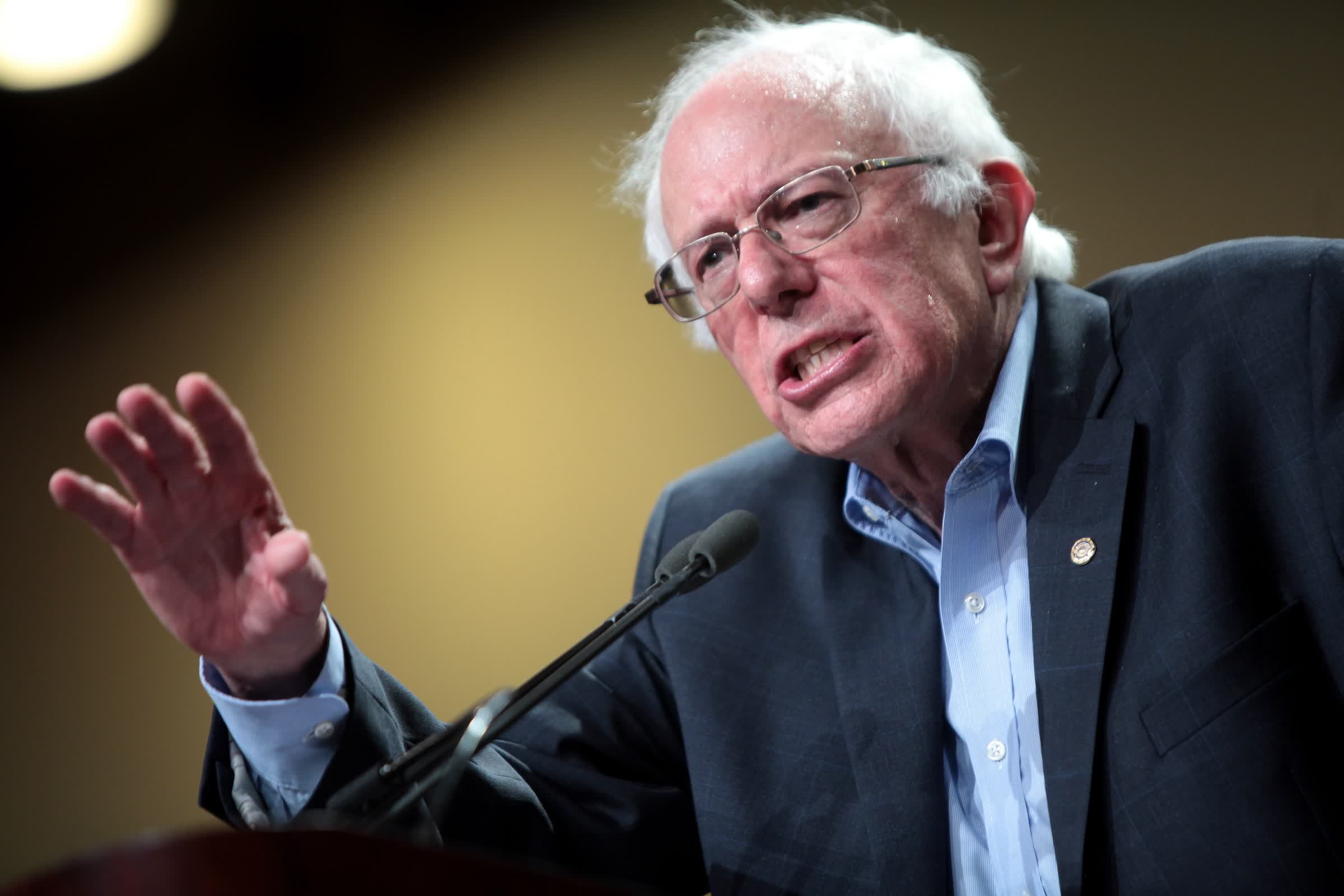
Senator Bernie Sanders of Vermont recently called for OpenAI and its ChatGPT platform to be broken up, saying in an interview with Axios that the technology's ubiquity and disruptive power require serious public oversight.

As OpenAI reorganizes, a new, simplified corporate structure aims to make it easier to raise private capital and prepare for a potential public listing. That shift could lay the groundwork for what some investors believe could become a trillion-dollar IPO – an outcome that would mark one of the largest debuts in corporate history.

Bret Taylor, OpenAI's chairman, marked the restructuring in a blog post emphasizing that the company remains "built to benefit everyone." Chief Executive Sam Altman continues to frame OpenAI's mission in similarly sweeping terms. He has often said that artificial general intelligence, or AGI, could solve humanity's most complex challenges – from curing cancer to addressing climate change. "I think AGI is probably necessary for humanity to survive – our problems seem too big to solve without better tools," he wrote in a message shared years earlier.

Much of Silicon Valley views OpenAI as the next great transformational company, capable of reshaping multiple industries simultaneously. Microsoft AI chief Mustafa Suleyman, speaking at a recent Paley Center for Media event in Menlo Park, said the sector's investment levels still "underrate" the magnitude of what is coming. He described recent progress in AI as "truly exponential," predicting that those gains would "drive incredible improvements in capabilities" across virtually every business.

Skeptics, meanwhile, warn that the enthusiasm surrounding OpenAI resembles past speculative cycles – from the Dutch tulip bubble to the dot-com boom. Some fear that the immense expectations placed on AI could lead to a painful correction if the company fails to deliver the breakthroughs its supporters anticipate.

"We need to take a deep breath and understand that it's like a meteor coming to this planet – we gotta be prepared to deal with it in all of its complexity," Sanders said.

Permalink to story:

 
I think calling OpenAI too big to fail is absurd. If they fail, it doesn't have the same repercussions as the banking or auto industry collapsing. People saying that just want a safety net so they don't lose money if OpenAI were to fail. And OpenAI won't fail unless they waste all that money and fall behind other AI makers. If OpenAI were to fail then it just means Google, Meta, and the other AI guys is going to be all the richer. AI is the future, but like the dot com "bubble," people invested expecting quick returns, but these kind of technologies don't happen overnight. If you're investing in AI, you should be playing the long game. If there is a bubble in AI it is only because people expect quick gains and become impatient. People wanting to invest in AI shouldn't put all their eggs in one basket. OpenAI very well could be the Yahoo or AOL of AI. Doesn't mean AI won't happen, but we all know that Google and Meta are the winners of the dot com era when everyone in the 90's expected it to be AOL and Yahoo.
 
OpenAI doesn't have the software catalog that a company like Microsoft has where they can spread the twenty billion dollars of money "invested" in LLM AI over multiple divisions and products to pay for it. OpenAI only has LLM chatbots that have some value, but not enough to justify the ever increasing cost of operation.
 
NO company is too big to fail. Allowing that breaks a significant part of what makes capitalism work: RISK.

But our Crony-Capitalism now rewards entrepreneurs when they succeed and then rewards them when they fail (at tax payer expense) so their is no reason to engage in ever increasingly risky strategies because you literally can't lose.
 
NO company is too big to fail. Allowing that breaks a significant part of what makes capitalism work: RISK.

But our Crony-Capitalism now rewards entrepreneurs when they succeed and then rewards them when they fail (at tax payer expense) so their is no reason to engage in ever increasingly risky strategies because you literally can't lose.

Counterpoint: Allowing certain companies to fail can (and has) caused economic cascades that are in excess of the cost of keeping said company afloat.

But hey: We're in a golden age of corporate consolidation, so when this party ends (and let's be real here: It's ending *soon*), we're going to see an economic consequence that I personally believe will be worse then '29.
 
We’ve conditioned society that “failure” is a bad word and shouldn’t be part of anyone’s lexicon. People nowadays can’t deal with failure or how to evolve or innovate out of it. Dumb society is what we have, by design.
 
Simply turn it off, erase the program, remove the code, erase the drive(s)...etc., it is just programs running in a computer people!! To big to fail, beyond pathetic!!! You all have already surrendered to A.I, lost all capacity for motivation, critical thinking, problem solving, rational thought, you have already given up control!!! Enjoy your mindless servitude to software!!!
 
Last edited:
I'm shocked every time I see AI compared to the Dutch tulip bubble, or the dot-com boom.

If you're looking for a modern day tech equivalent of the Dutch tulip bubble - check NFTs, not OpenAI.
The dot-com boom wasn't a bubble, it merely separated the wheat from the chaff - and then the internet truly flourished.
 
Counterpoint: Allowing certain companies to fail can (and has) caused economic cascades that are in excess of the cost of keeping said company afloat.

But hey: We're in a golden age of corporate consolidation, so when this party ends (and let's be real here: It's ending *soon*), we're going to see an economic consequence that I personally believe will be worse then '29.
Counter counterpoint: Only in the short term and overlooking other cascade effects. Failed company's assets get purchased for cheap by others that step in to fill the void faster than people expect. Big failures prevent future reckless exec/investor behavior causing positive cascades in the economy.
 
Big failures prevent future reckless exec/investor behavior causing positive cascades in the economy.
Only if the cascade isn't immediate; with upwards of 40% of GDP growth and 80% of stock growth tied to AI, the risk of a cascade that is simply impossible to stop is *very* real. The entire economy is being held together by ONE industry; that is not sustainable.
 
Back