In a nutshell: Memory prices have climbed amid worsening shortages of consumer DRAM, primarily driven by surging demand for high-bandwidth memory from AI data centers. A new report warns that if the imbalance persists, PC prices could rise by up to eight percent.
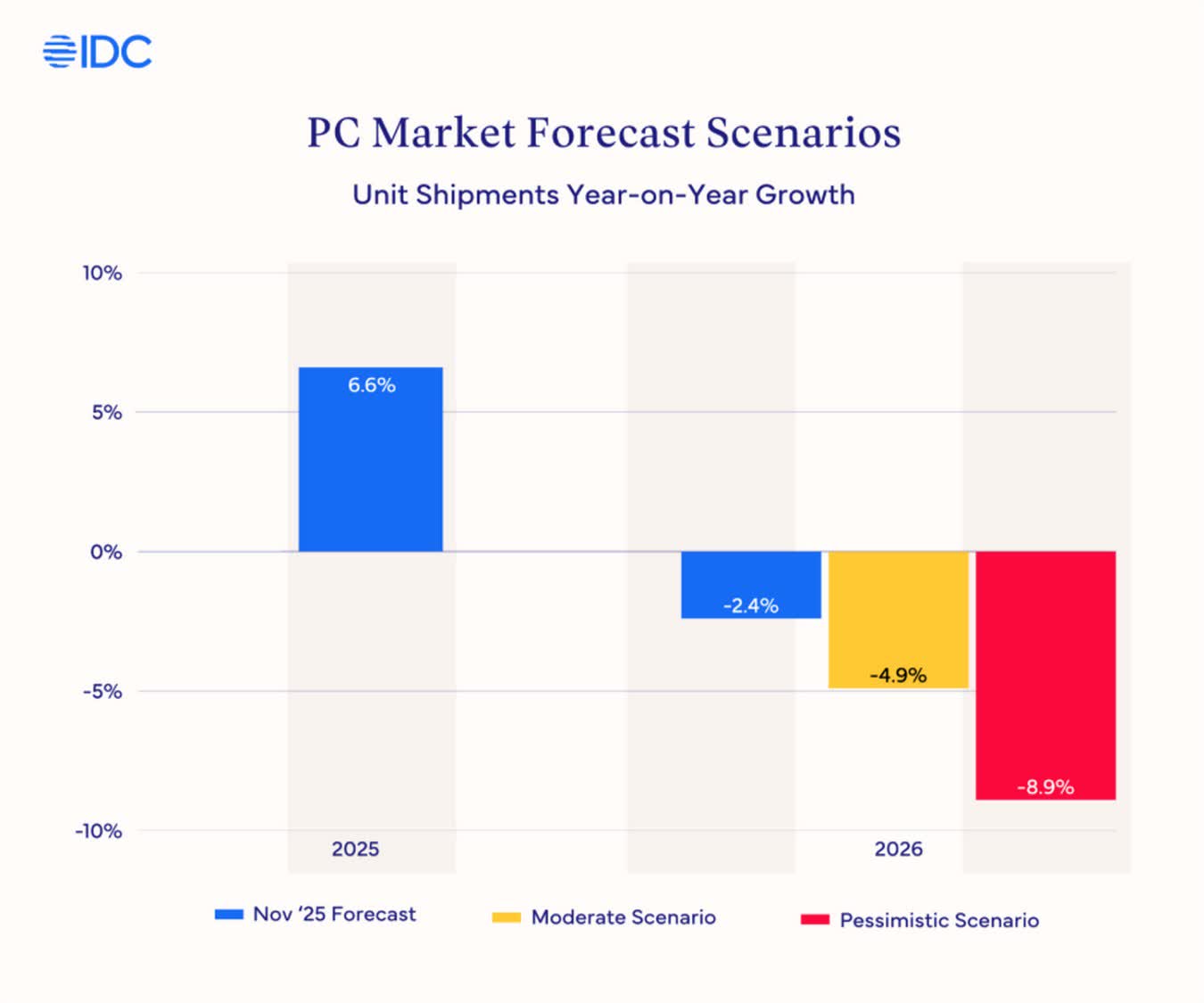
IT market research and analytics firm IDC warns that PC sales could decline by as much as 8.9 percent next year if DRAM shortages worsen. Even under current conditions, the market is expected to contract another 4.9 percent, compared with an earlier forecast of a 2.4-percent drop in 2026.
Computer manufacturers are preparing for price hikes of up to eight percent as memory shortages drive up component costs. Major brands – including Dell, Lenovo, HP, Asus, and Acer – have already confirmed upcoming increases, and analysts expect other OEMs to follow, meaning consumers could see noticeably steeper PC prices in the coming months.
Experts at IDC predict that NAND and DRAM shortages will continue well into 2027, marking the end of an era of cheap, abundant memory and storage. The price increases arrive at a difficult moment for the PC industry, as Microsoft pushes consumers to upgrade to memory-intensive AI-ready PCs following the end of mainstream support for Windows 10 in October.
Rising memory prices are also likely to make smartphones and tablets more expensive next year, forcing manufacturers to either raise prices or cut specifications. The average selling price for smartphones could increase three to five percent under a moderate scenario, or six to eight percent in a more pessimistic case. Budget brands, such as TCL, Transsion, Xiaomi, Realme, Oppo, Vivo, Honor, and Huawei, are likely to be most affected due to their low margins and are expected to pass the added costs on to consumers.
Conversely, Samsung and Apple may take a wait-and-see approach, having already secured memory supplies for the next 18 – 24 months, which cushions them from acute price fluctuations. However, the tighter market could prevent them from increasing RAM from 12GB to 16GB in next-generation flagships.
If the memory shortage continues into 2027, consumers may face significantly higher prices for memory upgrades and new SSDs. With no relief expected soon, the PC and smartphone markets could see costs continue climbing before the supply-demand imbalance begins to ease.
PC and smartphone prices could jump as much as 8% as memory shortages worsen


